Your Winery Website Isn't Broken. It's Just Not Selling: 7 Signs It's Quietly Costing You Tasting Bookings
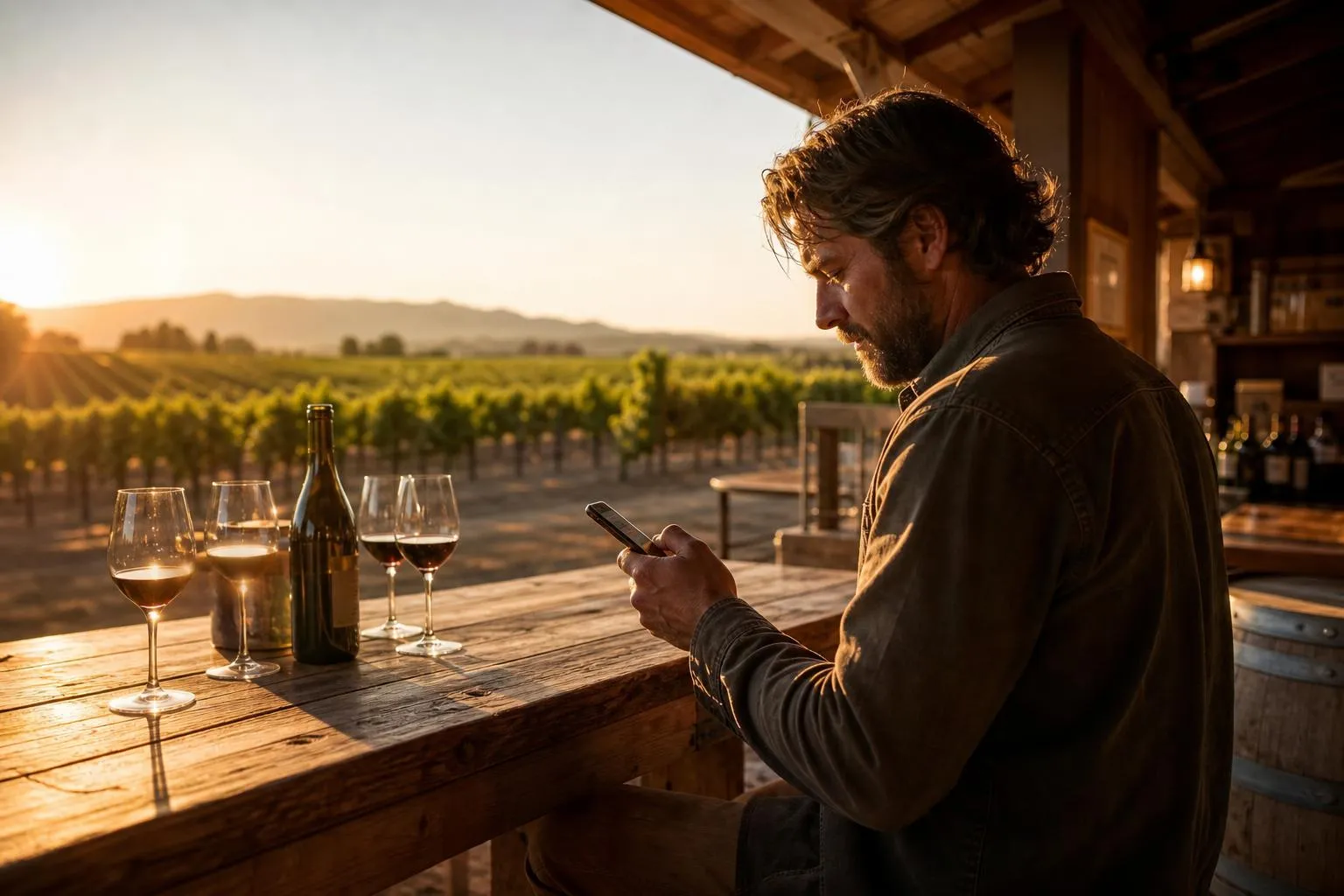
Picture a tasting room host who stands at your gate every day the winery is open, waves at every car that drives past, and never once invites a single one in for a pour. Weekends go by. The patio stays quiet.
You’d have found a new host months ago.
That host is your website. It’s open around the clock, it’s the first taste a stranger gets of the winery before they ever taste the wine, and if you’re honest, you couldn’t say when it last put a group on the patio. Nothing about it looks broken. The estate photos are there, the varietals are listed. That’s exactly the problem: a website that fails quietly never forces you to fix it. Here are the seven signs it’s happening at yours.
You can’t point to a single reservation from the site
Sign 1: you can’t remember the last tasting reservation that started on your website. Not a wine club member who already knew to call. A stranger who searched, found you, and booked. If nothing comes to mind from last month, the site isn’t selling tastings. It’s a scenic photo gallery with a hosting bill.
Sign 2: you tell people to call instead of trusting the site. When someone asks about visiting, do you say “just call the tasting room,” because deep down you know the booking flow on the site doesn’t actually work? Routing people around your own website is the tell.
The wine club and repeat visitors are carrying you
Sign 3: every full weekend traces back to club members and people who’ve been before. That loyalty is the backbone of a winery and it should stay that way. But if it’s the entire calendar, growth only moves as fast as your mailing list does. A working site is the second tasting room: it turns weekend day-trippers into booked visits while you’re in the cellar. Getting customers for a winery business covers the wider playbook, but search brings in people who’ve never heard of you yet.
Booking a tasting takes more effort than it should
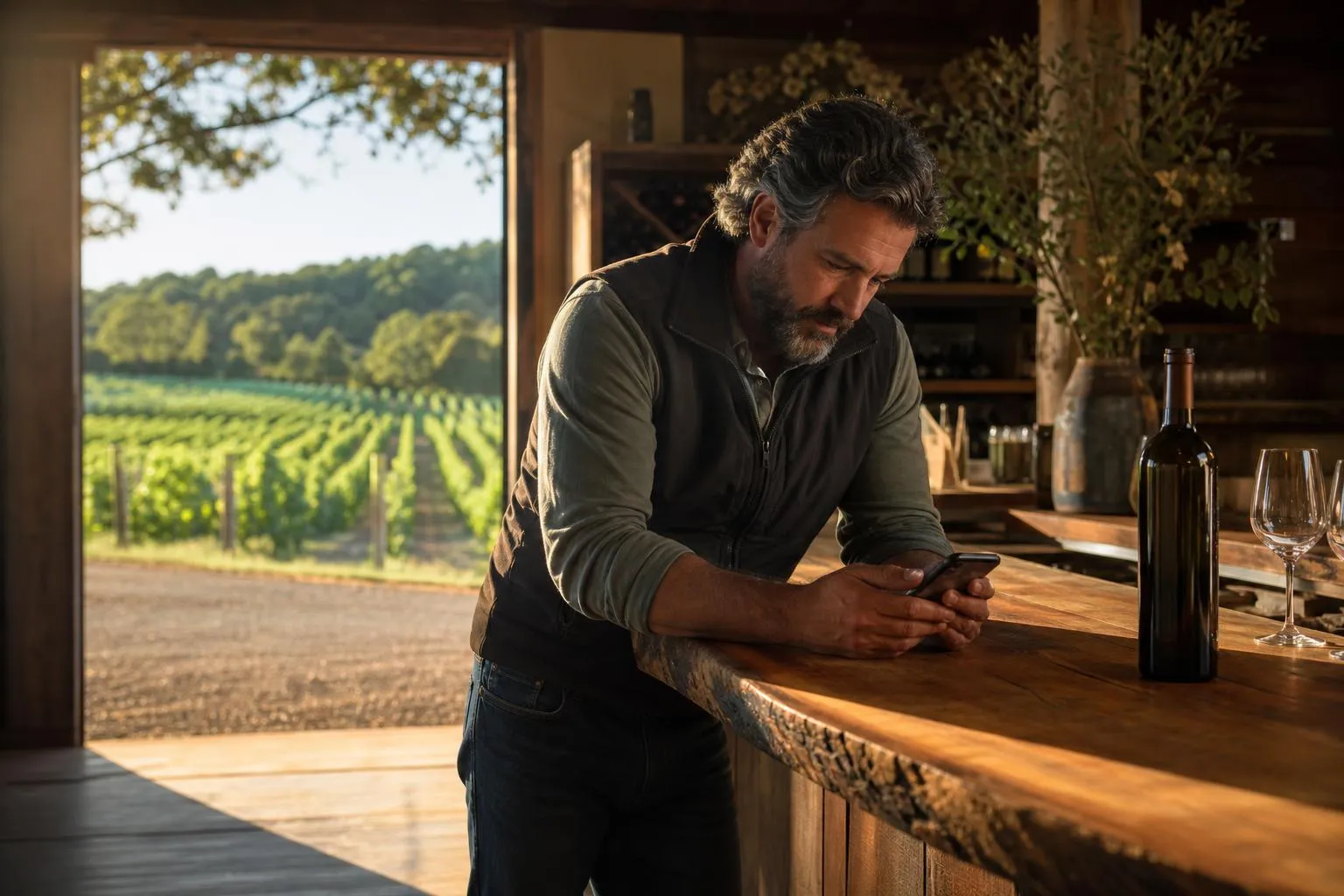
Sign 4: a visitor can’t reserve a tasting slot in under a minute. Load your own site the way a Saturday day-tripper would, on a phone, from the car. Is there a live booking calendar, or a phone number buried at the bottom of an “About” page? Every extra step, especially a voicemail with no callback for two days, is a reason they book the winery next door instead.
Visitors give a site about 8.6 seconds before deciding whether it’s worth the drive. Someone planning a wine country day with three stops picked from a list doesn’t hunt for your hours; they tap whichever site lets them book fastest.
The site still shows last year’s harvest
Sign 5: nothing on the site has changed since it launched. Scroll to the footer. Is the copyright year current? Are the vineyard photos from before the last replant? A frozen site tells a visitor one of two things, either nobody’s minding the business, or the winery might not be pouring anymore. Neither gets a reservation.
Sign 6: there’s no proof it’s worth the drive. A stranger can’t taste the wine through the screen, so they judge what they can see, reviews, photos of an actual full patio, the view, real people enjoying a pour. About 88% of people trust online reviews as much as a friend’s word, so the winery showing forty reviews and real crowd photos beats the one running a generic vineyard stock shot that could be anywhere in the state.
You’ve only ever checked it on the office desktop
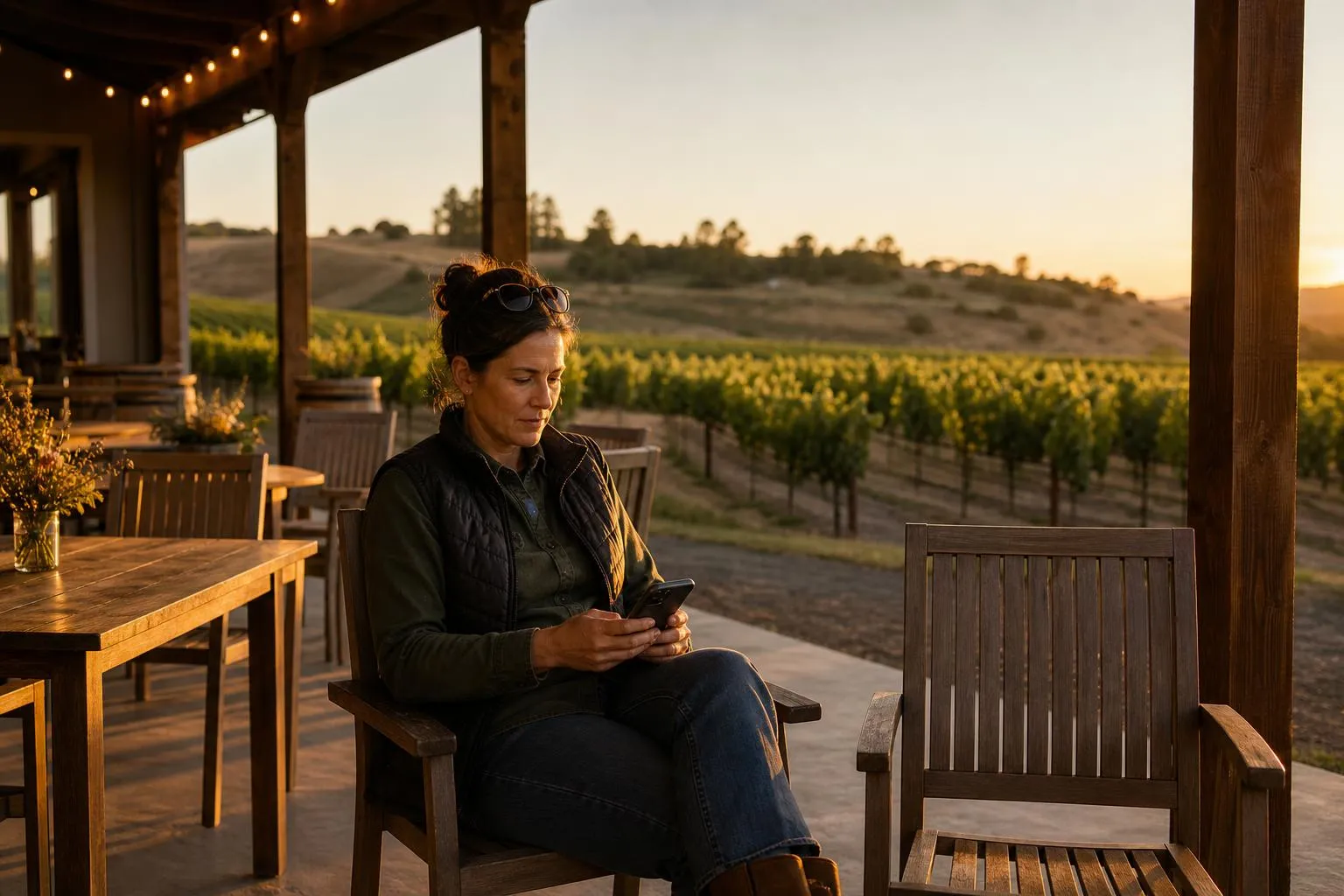
Sign 7: your visitors meet your site on a phone, usually while planning a route. Most wine-country searches happen on mobile, in the car or the night before over a glass at home. If you’ve only ever looked at the desktop version, you and your visitors are seeing two different websites, and theirs decides whether you get the reservation. Worth its own read: how mobile visitors actually use winery websites.
Phones are where slow sites lose the most ground. The research is blunt:
| Page load time | What it does to your visitors |
|---|---|
| Over 3 seconds | 53% of mobile visitors abandon the page (Google) |
| Each extra second from 0 to 5 | Conversions drop about 4.4% per second (Portent) |
| 1 second slips to 5 seconds | Bounce probability rises 90% (Google) |
| 1 second slips to 10 seconds | Bounce probability rises 123% (Google) |
If your homepage needs 7 seconds to load in a car with one bar of signal, most would-be visitors give up before seeing the vineyard at all. How a slow winery website loses bookings breaks down exactly where those seconds go.
What an actual booking site needs to do
None of this means the site needs prettier photography. Pretty isn’t the job here. A working winery site does three things, without exception: it shows up in local and regional wine searches (the fight for the Google top 3 local results), it convinces a stranger in seconds that the drive is worth it, and it lets them book a tasting or join the club without picking up the phone. That’s the whole spec. Drone footage, a paragraph about the founder’s vision, and a slow-loading hero video are decoration sitting on top of a job that isn’t getting done.
So do you patch what’s there or start fresh?
Patching the existing site
- Cheap this month: a live booking widget and current photos can go up this week
- You keep your domain and whatever regional search ranking it’s earned
- No rebuild disrupting harvest or OND, your biggest quarter
Patching the existing site
- An old theme caps your speed no matter how much you trim
- The mobile layout is locked in, and that’s where most weekend planners are
- Every change routes through whoever built it, on their timeline
- You keep paying hosting on a site that’s never actually filled the patio
The gap between a scenic brochure and a real booking engine doesn’t show from the road, which is why good wineries sit on quiet websites for seasons at a time. It shows up in one place only: how full the tasting room is on a random Saturday. If more than two of these signs sound familiar, take ten minutes and watch the free video walkthrough of a real winery site built to convert: live tasting-room booking, wine club signup that actually converts, shipping compliance that stops losing you orders, live in 7 days, and you own everything, pricing posted on the page, no contracts. Once bookings are steady, ongoing growth services can push the OND surge even further.
Frequently asked questions
How do I know if my website is actually costing me bookings?
Count reservations, not page views. If you can’t name a single tasting booking from the last 30 days that started with a stranger finding you online, the site isn’t doing its job. Watch your booking source for two weekends and it becomes obvious.
Can’t I just keep relying on the wine club and repeat visitors?
They should stay your foundation, but that caps growth at the pace your mailing list grows. Even loyal visitors check the site before bringing friends, and a stale one quietly costs you some of that word of mouth too.
How much does a winery website that actually gets bookings cost?
Our Standard build is $2399£1,899 one-time, and the Elite package is $7500£5,900 one-time, pricing posted openly with no contracts. Build takes 7 days from kickoff, and you own everything outright.
Should I fix my current site or replace it?
If the bones are solid, add a live booking calendar and current photos this week. If it fails the 3-second phone test and every edit needs a developer, patching is just paying rent on a site that isn’t filling the patio.
Next in this series: why the worse winery down the road keeps winning the bookings you deserve
Your move
Reading this does not book a job.
The owners who pull ahead are the ones who change one thing this week. If you want that one thing to be a website that sells and ads that put it in front of the right people, we build and run both for you.
Straight answer on whether we can help, usually the same day.