Your Winery Website Looks Great on a Monitor. Your Visitors Are Deciding From the Passenger Seat
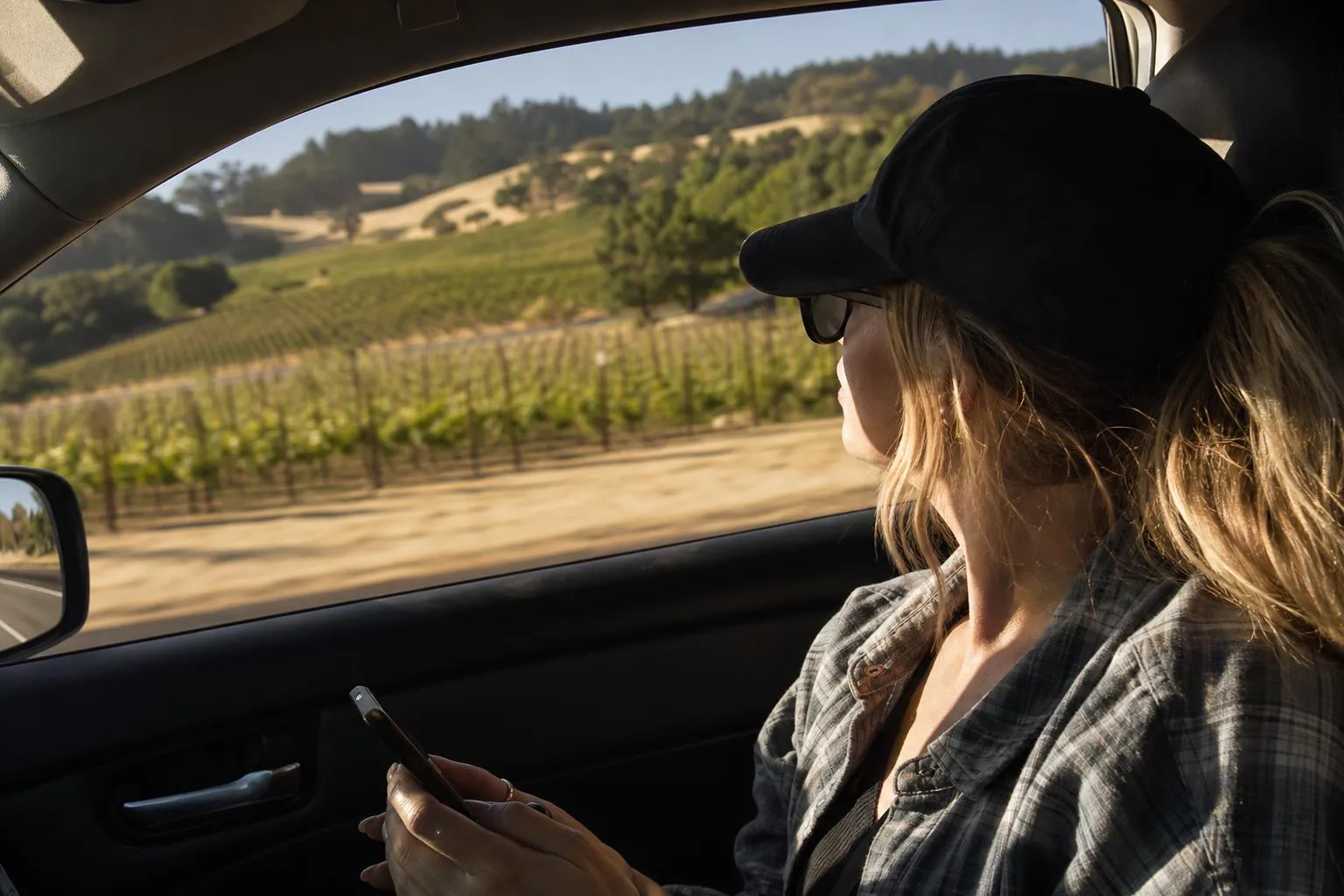
Saturday, 1:15 p.m. A couple is somewhere on a wine-country back road, three tastings into the day, trying to decide where to point the car next. The passenger has the phone; the driver has opinions.
She is scrolling with one thumb while the other hand braces against the door. This is the exact moment your website was built for: the moment a visitor with a free afternoon and a full tank of gas decides whether you are worth the detour.
Here is what happens next, on searches like this one, weekend after weekend. She taps a result. The page takes its time. Half loaded, it is a desktop layout squeezed onto a screen it was never built for: a hero image still spinning, a reservation widget frozen mid-load, text too small to read at highway speed. She pinches and zooms hunting for tasting hours. When she finds them, there is no way to book on the spot.
“Never mind, let’s just go to the one down the road.” The winery down the road gets the car.
You and your visitors have never seen the same website
Here is what makes this failure invisible: you and the people deciding whether to visit have never looked at the same site.
You saw it on the tasting room’s desktop, probably the day the designer handed it off. It looked elegant. It still does, on that screen.
Your visitors meet it on a phone, usually while already on the road weighing three or four stops. Not settled at a table: bouncing along a county highway, half a bar of signal, a decision to make before the next turnoff. The research puts numbers on how little runway that gives you.
| Mobile reality | The number |
|---|---|
| Visitors gone if the page takes over 3 seconds to load | 53% (Google) |
| Conversion lost per extra second of load time | about 4.4% (Portent) |
| Rise in bounce probability from a 1-second load to 10 | 123% (Google) |
| Average mobile page load time | 8.6 seconds |
The average page takes 8.6 seconds; the patience window closes at 3. Most winery sites live on the wrong side of that gap, which is why page speed gets its own article later in this series.
So you see a beautiful website and a slow Saturday, and never connect the two. There is no error message when a car keeps driving. The site fails silently, dozens of times a weekend, in a version of itself you never open.
Road-trip visitors are the least patient decision-makers you have
For most businesses, a clunky mobile site loses a browser. For a winery, it loses a visitor who is one thumb-swipe from a competitor with a working reservation button.
Your best traffic (weekend day-trippers, bachelorette parties scouting a route, out-of-towners planning one stop before dinner reservations) arrives on a phone mid-decision, with three other tasting rooms open in other tabs. A tasting-room visit runs $25 to $60 a head before a single bottle sells, and a party of six who also joins the wine club is worth far more over a year. The visitor who already knows your name might forgive a clunky site. The couple deciding between you and the winery next door will not.
The cruel math: the busier the wine-country weekend, the more decisions are made in a moving car, and the faster a bad mobile site loses them. Even wineries that cracked the Google local top three lose the visit when the page behind the ranking stalls on a phone.
What “built for the passenger seat” actually means
A mobile-first winery site is not the desktop site shrunk down. It is designed for someone in a moving car with spotty signal and a route to finalize:
- Loads in a couple of seconds on a phone, on real cellular signal, not just on the tasting room’s Wi-Fi.
- A tappable reservation button in the first screen. No scrolling, no hunting. Their afternoon, your calendar, one tap between them.
- The essentials above the fold: what’s pouring, tasting fee, hours today, and proof: real vineyard photos, review stars.
- A wine club signup that isn’t three clicks deep, since that recurring revenue is worth more than any single tasting.
- No decoration ahead of the booking. Autoplay video and a stacked photo carousel cut in front of the one action that matters and drag down your conversion rate.
None of this is exotic. It is simply a site designed around the person in the passenger seat instead of the owner’s office monitor.
Can you just patch the site you have?
Rarely well, honestly. Here is the trade.
Patching the old site for mobile
- Cheapest move upfront: a responsive theme swap runs a few hundred dollars.
- You keep the label photography and brand voice you already like.
- No rebuild project to run; live within a week.
Patching the old site for mobile
- The 8-second load usually survives the patch: the bloat causing it (hero video, oversized vineyard photos, a bulky reservation plugin) comes along for the ride.
- Tap targets and the buried reservation link rarely get rethought. The site shrinks; it does not adapt.
- You keep paying the invisible bill: at 53% abandonment, a patched-but-slow site still loses the car full of visitors like the old one did.
A patch makes the site look mobile friendly in a screenshot. The couple deciding your fate from the passenger seat does not grade screenshots.
The test you can’t unsee
We opened this series with a blunt claim: your website is not broken, it is just not doing its job. Mobile is where that gets literal. The regulars who found you years ago show up despite this version of your site. The strangers driving past it never leave a trace.
Built for the car deciding where to stop
We build winery websites mobile-first: the passenger-seat visitor is the design brief, and the desktop version is the adaptation. The reservation button sits in the first screen, the page loads in about a second on cellular, and tasting hours, wine club signup, and reviews sit above the fold.
Watch the free video walkthrough of a live site on a phone screen, next to yours. The gap explains itself in about two minutes. Once mobile finally pulls its weight, marketing spend compounds instead of leaking; our ongoing growth services exist for that stage.
Frequently asked questions
What does a mobile-first winery website cost?
Our Standard build is $2399£1,899 one-time, and the Elite package is $7500£5,900 one-time, with pricing published on the get-website page. No contracts, you own everything, the site goes live within 7 days, and changes land within 24 hours.
Is a responsive theme the same as mobile-first?
No. Responsive means the layout reflows to fit a small screen; mobile-first means the phone version is the primary design. A responsive patch on a heavy site still loads in 7 to 9 seconds and still buries the reservation link.
How many of my visitors are actually on phones?
For tasting-room searches, the large majority. Open your analytics and check the devices report: weekend day-trip traffic typically runs 75 to 90% mobile.
Will fixing mobile help me rank on Google?
Yes. Google uses mobile-first indexing: it ranks the mobile version of your site, not the desktop one. Speed and usability feed the same local rankings that decide who shows up for “tasting room near me” on a Saturday drive.
Next in this series: The trust tax: how an outdated winery website kills the referrals you already earned
Your move
Reading this does not book a job.
The owners who pull ahead are the ones who change one thing this week. If you want that one thing to be a website that sells and ads that put it in front of the right people, we build and run both for you.
Straight answer on whether we can help, usually the same day.