How to get clients and customers for a winery business
Getting customers for a winery is not one problem, it is four, and most owners only work on the first one. They chase strangers with ads and social posts, get a few people through the door, pour a flight, ring up $25, and then let that person walk out the door forever. The winery that grows treats every visitor as the start of a funnel: stranger to taster to buyer to club member. The money is not at the front of that funnel where everyone is fighting. It is at the back, in the members and repeat buyers you already earned and then have to keep.
Know the four stages and what each costs
You cannot fix a funnel you have not measured. Each stage has its own conversion rate, and improving the weakest one is almost always cheaper than pouring more strangers into the top.
| Stage | The job | Realistic rate | What moves it |
|---|---|---|---|
| Stranger to taster | Get them to visit | 1-3% of ad/social reach | Google Maps, tourism, events |
| Taster to buyer | Sell a bottle at the bar | 40-60% of tasters | A pourer who knows the wine |
| Buyer to email | Capture the address | Aim for 70%+ | A reason: releases + club perks |
| Buyer to club member | Convert to recurring | 8-15% of visitors | The ask, at the end of a good flight |
The stage that owners neglect and that pays the most is taster-to-club. Getting one more stranger to visit is expensive and competitive. Converting a taster already enjoying your wine into a member is nearly free and worth ten times as much. Fix that stage first.
The tasting bar is the sales floor, not a cost center
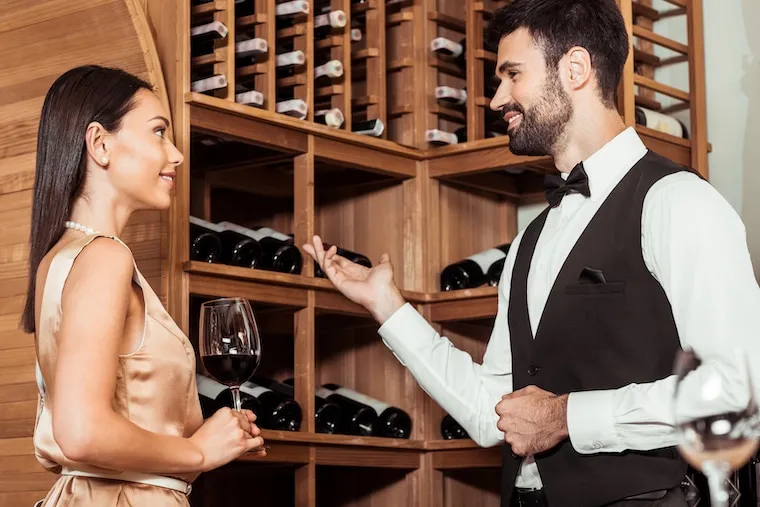
Owners tend to see the tasting room as an expense, staff, wine poured, glassware. It is actually your best-converting sales channel, because the customer is relaxed, already spending, and can taste exactly what they would be buying. Forty to sixty percent of tasters will buy a bottle if the pourer can talk about it. That is a close rate no ad campaign will ever touch.
The lever here is the person behind the bar. A pourer who can tell the story of the vineyard, name the food that pairs with the wine, and make a genuine recommendation converts far better than one who just pours and rings up. That is a hiring and training question, and it is worth doing right; see when and how to hire and train staff. Price the flights so they either profit or clearly funnel to a bottle sale, which is covered in setting prices and billing.
The club is the whole reason to do the rest
The wine club is why the funnel is worth building. A one-time taster is $25 and gone. A club member commits to recurring shipments, usually quarterly, at a tier that runs $40-$150 per shipment, and stays for a year or more. That is the difference between a business that lives on tourist season and one with predictable revenue every quarter.
Design the club to be easy to join and painful to leave in a good way: member pricing, free tastings when they bring friends (who become new tasters), and allocation access to limited bottles. Retention is where the profit compounds, because a member who renews into a second year cost you nothing to keep.
Build a wine club
- Recurring revenue: quarterly shipments smooth out the seasonal tasting-room cycle.
- Full margin: DtC club sales skip the 50% distributor cut of the three-tier system.
- Members bring friends, who become tasters, who become members. The funnel feeds itself.
Build a wine club
- Fulfillment is real work: compliant shipping, ShipCompliant fees, and packaging per shipment.
- Attrition never stops: expect 20-40% annual churn you must constantly backfill.
- You must reserve inventory for members, which constrains what you can sell in the room.
The verdict is not close for most wineries: the club is the engine, and the tasting room exists in large part to fill it. Build the club, then work backward to feed it.
Getting found is the part that decides everything
Two free things fill the top of the funnel this week. Complete your Google Business Profile so locals and tourists searching “wineries near me” actually find your door, and get listed on your regional wine trail and tourism board for pre-qualified referrals. The channel-by-channel detail is in how to advertise your winery and how to promote your winery locally.
But the stages that decide whether a visitor becomes revenue, the booking page, the club signup flow, the email capture, are high-stakes work that quietly leaks money when built badly. A tasting page that does not load fast or a club form with too much friction wastes every visit you worked to earn. That is the work we do. To have the website and booking flow handled, get a free video walkthrough. For managed ads, SEO, and email that fill and convert the funnel, see our marketing services. If you are still building the winery concept and plan, start at expntl.com.
Should you win customers on your own, or hand it off?
Most of what fills a winery’s funnel is yours to run and should stay that way: the tasting-bar club pitch, the email capture, and the review-link card convert better coming from the people who actually pour the wine than from any outside team. The real question for a small estate is the paid and digital layer, and whether hiring a specialist nets more than doing it in the margins of a harvest week. We worked through that honestly for small businesses: is a marketing agency worth it for a small business?. Keep the bar and the list yours whatever you decide. When you want the rest handled, request a free proposal.
Frequently asked questions
What is the fastest way to get more winery customers?
Improve the stage you already control: convert more of the tasters standing at your bar into bottle buyers and club members. That is cheaper and faster than acquiring new strangers, because the person is already there and enjoying the wine. Train pourers to recommend bottles and always offer the club at the end of a good flight.
How do I turn tasting-room visitors into repeat customers?
Capture their email while they are at the bar and give them a real reason to hand it over: first access to releases and club pricing. Then mail that list a genuine monthly newsletter. The owned email list is the single highest-leverage tool for turning a one-time visit into repeat revenue, and it does not depend on any algorithm.
What conversion rate should I expect from tasters to club members?
A well-run tasting room converts roughly 8-15% of visitors into wine-club members, and the best rooms go higher. The biggest driver is not the wine, it is whether the club offer is made every time rather than only when a guest asks. If you are below 8%, the fix is almost always training the ask, not more traffic.
Is a wine club really worth the extra work?
For most wineries it is the difference between seasonal and stable. A club member is worth roughly $220-$600 in year one versus a one-time $25 flight, sells at full DtC margin instead of the 50% distributor cut, and renews for free. The fulfillment and compliance are real work, but they are the work that makes the rest of the business predictable.
How do I compete with bigger, better-known wineries?
Do not fight them on reach; win on relationship. A small winery can convert tasters and retain members at rates a large brand cannot, because you offer a personal experience and a real story at the bar. Build a strong, consistent brand and a club that treats members like insiders, and you keep the customers the big names never actually meet.
Your move
Reading this does not book a job.
The owners who pull ahead are the ones who change one thing this week. If you want that one thing to be a website that sells and ads that put it in front of the right people, we build and run both for you.
Straight answer on whether we can help, usually the same day.