Setting the Best Prices and Billing for a Winery Business
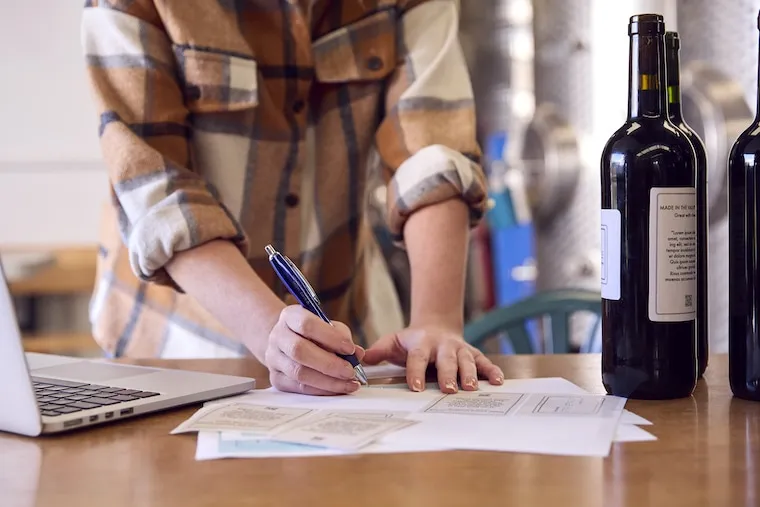
Most winery pricing advice tells you to add up your costs and mark them up. That is how you go broke in wine, because a bottle does not have one price, it has three, and which one applies depends entirely on how it leaves your building. A $30 bottle sold across your tasting-room counter nets you close to $30. That exact same bottle sold to a distributor nets you about $15, because the three-tier system takes roughly half before it ever hits a store shelf. If you price for the tasting room and then try to sell wholesale, every distributor case loses money. Price the bottle for the channel that has to carry it, then let the direct channel be pure gravy.
Know your true cost per bottle before you price anything
You cannot price what you have not costed. Add up everything that goes into a finished bottle: fruit or bulk juice, the glass, cork or screwcap, capsule, label, and the winemaking overhead (barrel amortization, cellar labor, lab work, TTB and licensing). For a modest commercial red, cost of goods typically lands somewhere around $6 to $15 a bottle depending on whether you bought $1,500-a-ton fruit or $6,000-a-ton fruit and whether it saw new oak.
That number is your floor, and it has to clear the hardest channel, not the easiest. The classic pricing ladder in wine is roughly cost times four to five to reach the direct retail price. So a bottle that costs you $8 wants a retail shelf price near $32 to $40. That fourfold gap is not greed; it is the only markup that survives being cut in half by distribution and still leaves a margin. Get your full startup cost picture straight in how much you need to start before you set a single price.
Price each channel for what it actually nets you
Run the same bottle through all three channels and the picture gets clear fast. Direct-to-consumer, over your own counter or shipped from your own site, keeps essentially the full retail price minus card fees and shipping. Wholesale to a distributor keeps roughly half. Selling straight to a restaurant or shop yourself (self-distribution, where your state allows it) splits the difference.
| Channel | You charge | You net per bottle | Trade-off |
|---|---|---|---|
| Tasting room (DtC) | $32 retail | ~$30 | Highest margin, capped by foot traffic |
| Wine club (DtC) | $32 less 15 to 20% | ~$26 | Recurring, prepaid, best lifetime value |
| Self-distribution to restaurants | $32 retail / ~$21 wholesale | ~$20 | You do the selling and delivery |
| Three-tier distributor | $32 retail / ~$16 to distributor | ~$15 | Volume and reach, half the money |
The lesson is not “avoid distribution.” Distribution is how you move volume and get on lists you could never reach yourself. The lesson is that direct dollars are worth about twice wholesale dollars, so the whole game is shifting your case mix toward the tasting room and club. Weigh that channel mix against how much profit a winery can make, because it swings the answer more than volume does.
Build the wine club, because it is your best billing
The single most valuable pricing move a small winery makes is a wine club: members agree to recurring shipments, usually three to four times a year, of a set number of bottles at full retail minus a member discount, billed automatically to a card on file. It is direct-margin revenue that is recurring and prepaid, which no wholesale account will ever be. A club member is worth far more over their lifetime than the same wine sold once to a distributor.
Price the club so the discount feels real (typically 10 to 20 percent off retail plus free or reduced shipping and member-only pours) while the net per bottle still crushes wholesale. Run the billing on winery-specific software like Commerce7, WineDirect, or Vin65 so cards rerun cleanly, failed payments retry, and members self-manage. Then feed the club from the tasting room, because the room is where you sign members. Pair this with how to grow a winery and getting customers for the tasting room, since club growth is downstream of both.
Make billing frictionless in the room and online
The counter is where most of your dollars close, so the payment experience there directly moves revenue. Run a modern POS built for wineries or hospitality (Square, Commerce7, or a wine-specific system) so a guest can taste, buy a case, and join the club in one card swipe without a clumsy handoff. Take Apple Pay, Google Pay, and tap-to-pay, because a fumbled checkout at the moment of maximum enthusiasm loses the club sign-up you just earned.
Online, keep the checkout honest and short. Show shipping cost before the final screen, since surprise freight is the number-one reason wine carts get abandoned, and offer local pickup to skip shipping entirely for nearby buyers. Transparency is not just goodwill; a clear total and a saved card is what turns a one-time buyer into a club member who never sees the charge hit. When you’re ready to sell online seriously, how to make a website for a winery covers the storefront side.
Lead with the tasting room and club
- Direct dollars net roughly double wholesale, so every case you keep in-house is worth two you ship out.
- Recurring club billing is prepaid and predictable, smoothing the cash flow farming never does.
- You own the customer relationship and data, so you can raise prices and launch new wines to a warm list.
Lead with the tasting room and club
- Direct volume is capped by how many people physically visit, which is a location and marketing problem.
- Running a club means real compliance, POS, and fulfillment overhead you carry every single shipment.
- You grow one guest at a time, which is slower than a distributor placing you in 200 stores at once.
Getting found is what fills the high-margin channel
Your best prices only matter if people walk in or find your online store, because the tasting room and club are where the good margin lives. Two moves are free and worth doing this week: fully build out your Google Business Profile with hours, real photos, and a link straight to your online shop and reservations, and put your price list and club terms clearly on your own site so a searcher can buy without calling. Those alone start converting traffic into direct sales. Work through promoting the winery locally to keep the room busy.
The higher-stakes work is a website and ads that actually turn a searching wine buyer into a checkout or a booked tasting. A site that loads fast on a phone, shows your wines, prices, and a reserve button above the fold, and makes joining the club one tap is the difference between full margin and none. That gap between a store that converts and one that just looks nice is invisible until you compare the numbers, and it is the work we do. To have it built to convert, get a free video walkthrough. For Google Shopping, Meta, and SEO, see our services. If you have the wine but not the business plan, start at expntl.com.
Frequently asked questions
How do I price a bottle of wine?
Work backward from the retail shelf, not up from your cost. Decide what the wine can realistically sell for next to its competitors, then check that it still nets you a margin after a distributor takes roughly half. The rule of thumb is cost of goods times four to five to reach the direct retail price, because that fourfold markup is the only one that survives being cut in half by three-tier distribution and still leaves profit.
Why is wholesale so much less profitable than selling direct?
Because the three-tier system inserts a distributor and a retailer between you and the drinker, and each takes a markup. A distributor marks up around 30 percent and the retailer another 30 to 50 percent, so a bottle that sells for $34 on the shelf leaves your dock at roughly $16 to $17. The same bottle sold over your own counter keeps close to the full $34, which is why direct dollars are worth about double wholesale dollars.
What is a wine club and why does everyone push it?
A wine club is a recurring shipment program: members get a set number of bottles a few times a year at a member discount, billed automatically to a card on file. It matters because it is direct-margin revenue that is recurring and prepaid, so a single member is worth far more over time than a one-off wholesale case. Software like Commerce7 or WineDirect runs the billing, and the tasting room is where you sign members up.
Do I have to collect sales tax when I ship wine to another state?
In most cases yes. Direct-to-consumer wine shipping is regulated per state, and the roughly 45 states that permit it generally require you to hold a shipping permit, collect and remit that state’s sales tax, and file volume reports. A few states ban DtC shipping entirely. Compliance software such as ShipCompliant or Avalara automates the tax and permits and typically costs $1,500 to $10k+ a year depending on your volume.
Should I use dynamic pricing like hotels and airlines?
Sparingly. You can flex around demand by releasing library or reserve wines at a premium, raising prices on a bottling that’s selling out, and running slow-season club perks or event pricing to move inventory. What you should not do is constantly reprice a released vintage on the shelf, because wine buyers anchor to a price and distributors need it stable. Adjust by tier and release, not by changing the sticker on a bottle already in the market.
Your move
Reading this does not book a job.
The owners who pull ahead are the ones who change one thing this week. If you want that one thing to be a website that sells and ads that put it in front of the right people, we build and run both for you.
Straight answer on whether we can help, usually the same day.