Why you're not in Google's top 3, and what moves you
Search “emergency plumber” on your phone and Google answers with a map and three pinned businesses before it shows a single website. Search “wedding cake near me” and it does the same. For most local services, that small block of three is where the decision gets made, and everyone who is not in it is competing for whatever attention is left.
What the top 3 actually is
Google calls it the local pack. It is a map with three businesses, each with a star rating, a review count, a phone number and a button for directions or a website. It is assembled from Google Business Profiles, not from websites, which is why a business with a mediocre site can still sit in it and a business with a beautiful site can be missing.
Below the pack sit the ordinary results. That is where a business’s own pages compete, and where people go when they are comparing instead of rushing: a family weighing three contractors for a kitchen, a company shortlisting a courier, a parent reading about daycare programs before booking a tour.
So there are two lists, and they reward different things. The pack rewards a complete, trusted profile. The ordinary results reward a site that actually answers the search.
Why three names get the call
How people use the pack depends on how urgent the problem is.
A homeowner with a tripped breaker and no power in the kitchen does not browse. They tap the first profile that looks real and call. If it rings out, they call the second. The third pin is the backup, and a fourth business never enters the picture.
A bride shopping caterers moves slowly, but the shape is the same. She opens the profiles of the top few, checks whether there are real event photos and reviews that name a venue, and writes to one or two. A business on page two is not rejected. It is simply never seen.
The same happens at the other end of the price scale. A homeowner planning an addition starts with a shortlist, and the shortlist starts with the map. Being left off it costs you the lead without telling you it existed: there is no lost-bid email, only a slow month.
What Google weighs
Google says its local results come down to three things: relevance, distance and prominence.
Relevance is how well your profile and site match what was searched. A roofer filed under “Contractor” matches “roof repair” less cleanly than one filed under “Roofing contractor”. A dentist with a page for emergency visits matches “emergency dentist” better than one with a single services list.
Distance is how close you are to the searcher, or to the area they named. You cannot change where you are, but you can set your service area honestly and make sure your address, hours and phone number agree everywhere they appear.
Prominence is how well known you look: review count and rating, how recent the reviews are, links to you from other sites, and how you appear in general. It is the slowest of the three to build, and it rewards steady habits more than one-off pushes. A business that asks for a review after every finished job beats one that sends a burst of requests once a year.
Where your website fits
Many owners treat their ranking and their website as separate problems. They are connected. Google reads your site as part of judging relevance, and visitors judge it in seconds.
Speed is the clearest example. Google’s own 2016 research found that 53% of mobile visitors leave a page that takes longer than 3 seconds to load. More recently, Portent’s 2022 analysis found that a page that loads in 1 second converts about 3 times better than one that loads in 5. Both findings point the same way: a slow page loses people who were ready to call.
Structure matters just as much. A homepage that says “we do electrical work” gives Google nothing to match against “EV charger installation” in your town. A separate page for each service you sell, and each area you cover, is the raw material for relevance. A cleaner with pages for move-out, office and recurring work can rank for each. A cleaner with one page ranks for none of them well.
The page also has to work once someone arrives. A tap-to-call button that appears late, a quote form that needs pinch-zooming, or a menu in a PDF the visitor has to download all send people back to the map, to the next pin.
What you can do this week, and what needs a build
Some of this is a profile job you can start today:
- Check that your primary category is the specific one, such as Roofing contractor, Child care center, Caterer or Electrician, not a vague parent label.
- Make your hours, phone number and service area match your website exactly.
- Add real photos of your work, your team and your premises.
- Answer every review, good or bad, in plain words.
- Ask for a review while the job is still fresh, every time.
Other parts are construction. A site that is fast on a phone, has a real page for each service and area, and puts the call or the quote request within a thumb’s reach is a build, not a setting. If yours is slow, thin or out of date, tuning around it only goes so far.
Nobody can honestly guarantee a first place, but the inputs are known and mostly in your hands.
If the website is the weak link, we build one. The video walkthrough shows what a site structured for local search looks like, with prices on the page, a launch in 7 days and full ownership. If the gap is the profile and the reviews, our local SEO work covers that side. And if you need calls this month while the free listings build up, the ads offer at get leads is the faster route.
See it for your trade
Each trade has its own searches, its own urgency and its own mistakes. These versions go further:
- Dental practices: new-patient searches and booking
- Electrical businesses: emergency calls and licensed-work pages
- Auto repair shops: same-day repairs and the review ask at pickup
- Cleaning businesses: recurring clients and move-out jobs
Frequently asked questions
How do I get into Google’s top 3 for my business?
Start with a complete Google Business Profile that uses the most specific category for your trade, then keep reviews coming in after every job. Behind that sits a fast website with a page for each service and area you cover. Profile changes can move things in weeks. The website side usually takes longer.
Can anyone guarantee a top 3 ranking?
No. Google decides, and results shift with competitors and distance. Be wary of anyone who promises a fixed position. What a business controls is the quality of its profile, its reviews and its site.
Does my website affect my Google Maps ranking?
Yes, indirectly. Google reads your site when judging how relevant you are to a search, and visitors who leave a slow or confusing page do not call. The profile does most of the work for the map, and the site decides whether the click turns into a call.
How long does it take to show up?
Fixing a wrong category or adding photos can show an effect within a few weeks. Building a review history and a site with real service pages takes months in a competitive area, which is why it helps to start before your busy season.
Read it for your trade
The same story, written for each of 30 trades, with the examples that fit that kind of business.

Accounting firm not showing up on Google? If you're not in the top 3, you don't exist
Read more


Car rental company missing from Google's top 3? Travelers book someone else
Read more
Caterer not showing up on Google? If you're not in the top 3, you don't exist
Read more
Cleaning business not showing up on Google? If you're not in the top 3, clients book someone else
Read more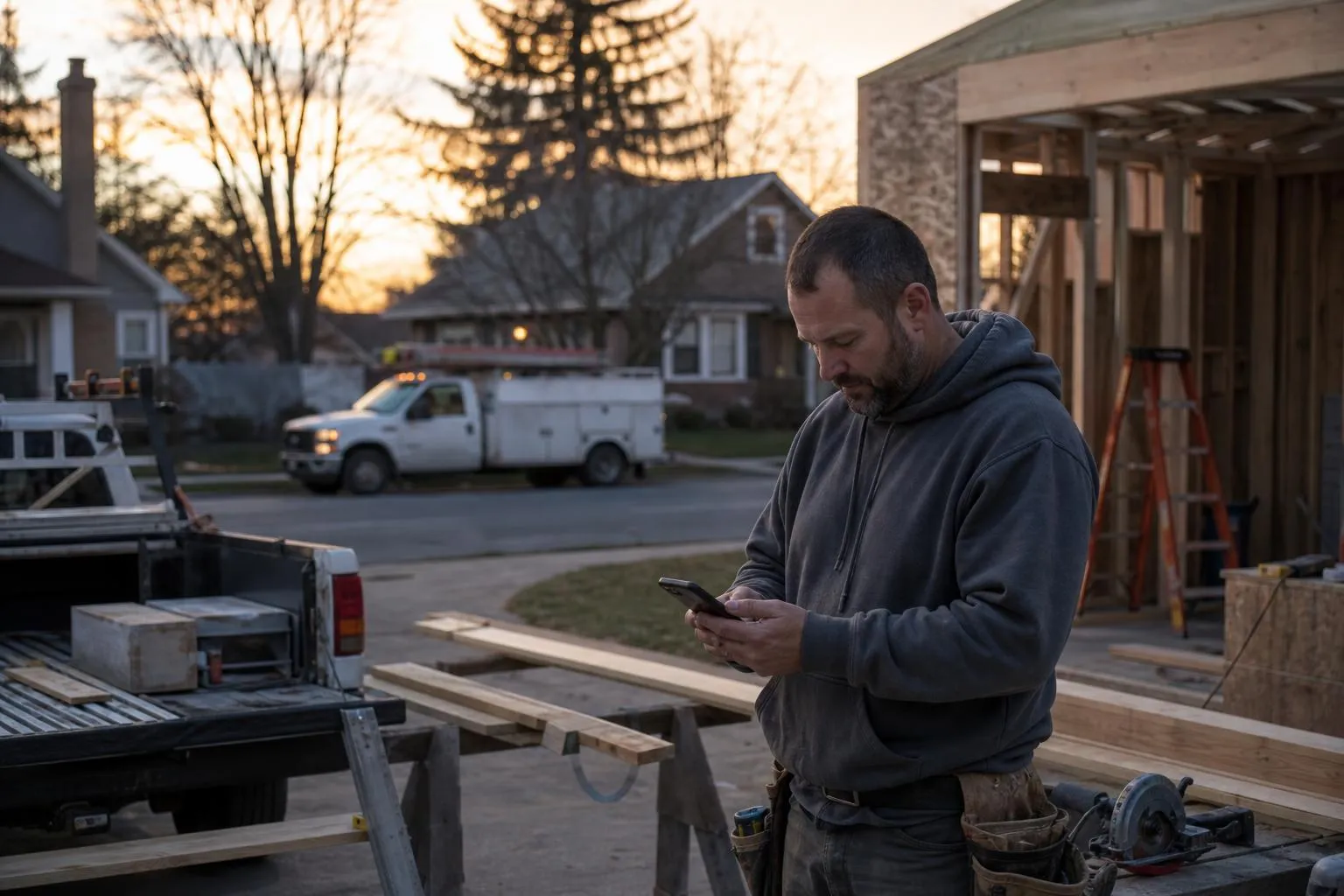
Construction company not on Google? Outside the top 3, you never get the call
Read more
Courier business not showing up on Google? If you're not in the top 3, dispatch never calls
Read more
Daycare not showing up on Google? If you're not in the top 3, parents never find you
Read more
Delivery business not showing up on Google? If you're not in the top 3, merchants never vet you
Read more
Dentist not showing up on Google? If you're not in the top 3, new patients never find you
Read more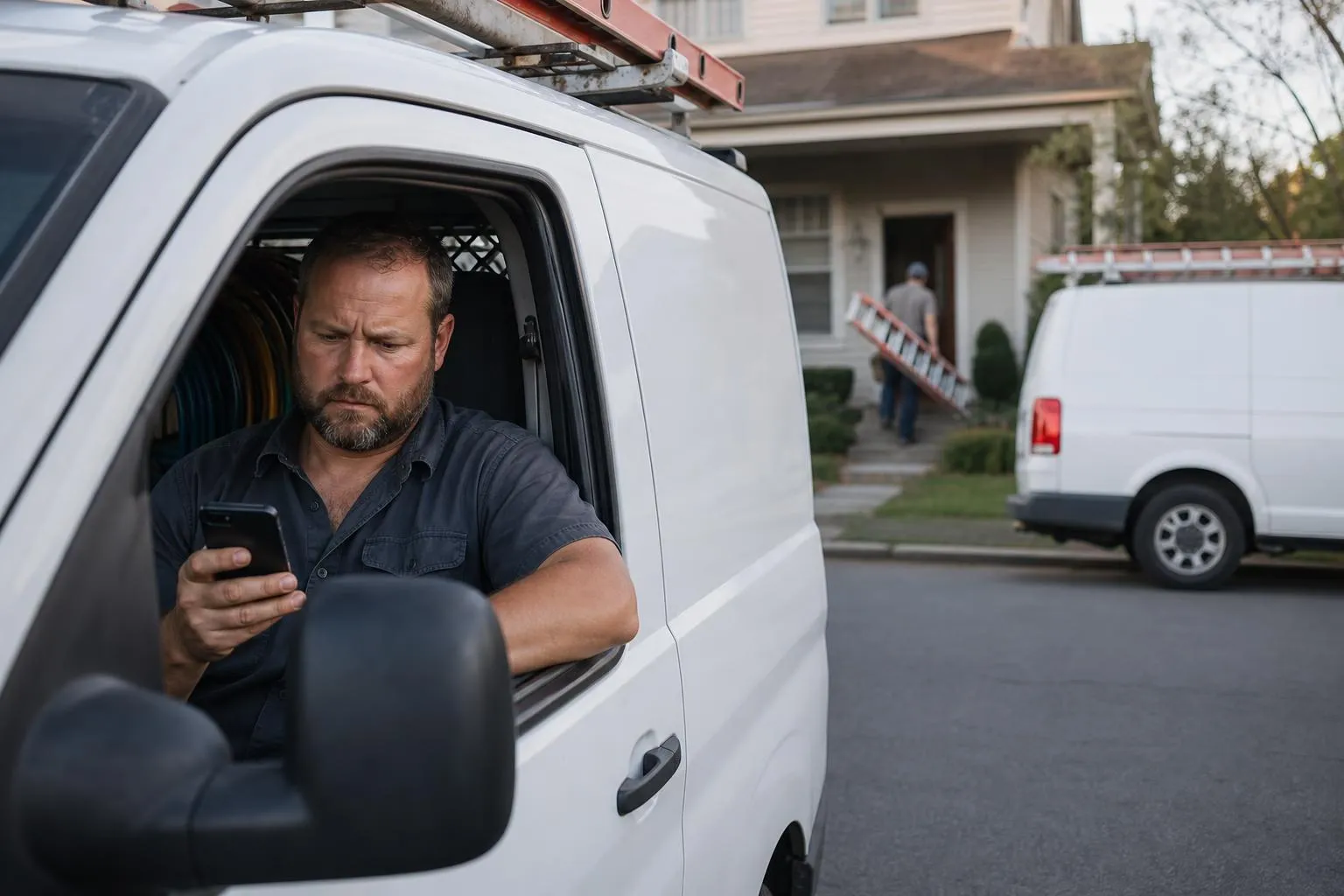
Electrician not showing up on Google? If you're not in the top 3, you don't exist
Read more
Excavation contractor not ranking on Google? If you're not in the top 3, GCs never call
Read more
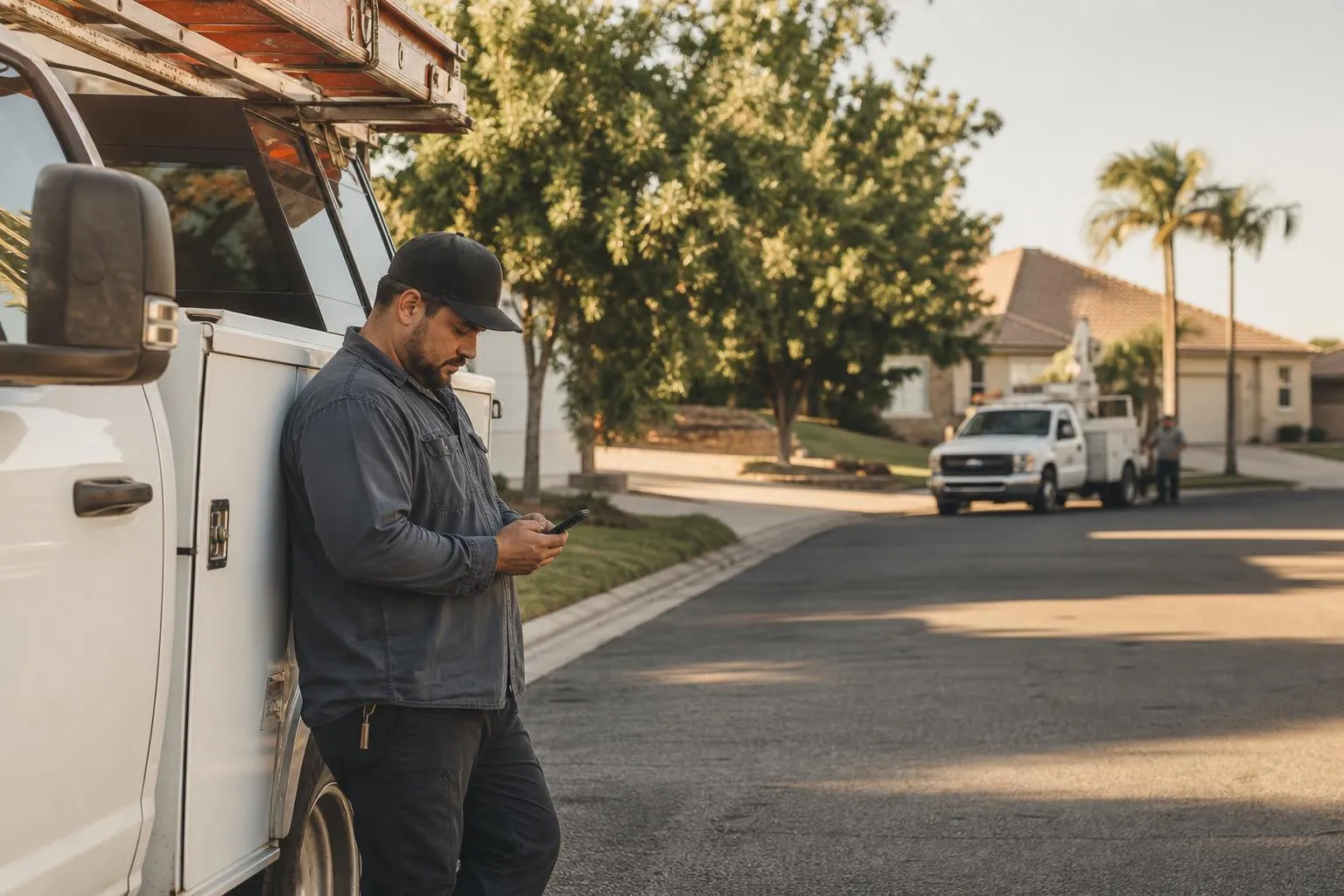
HVAC company not on Google's first screen? You don't exist to a sweating homeowner
Read more Junk removal business not showing up on Google? If you're not in the top 3, the job goes elsewhere
Read more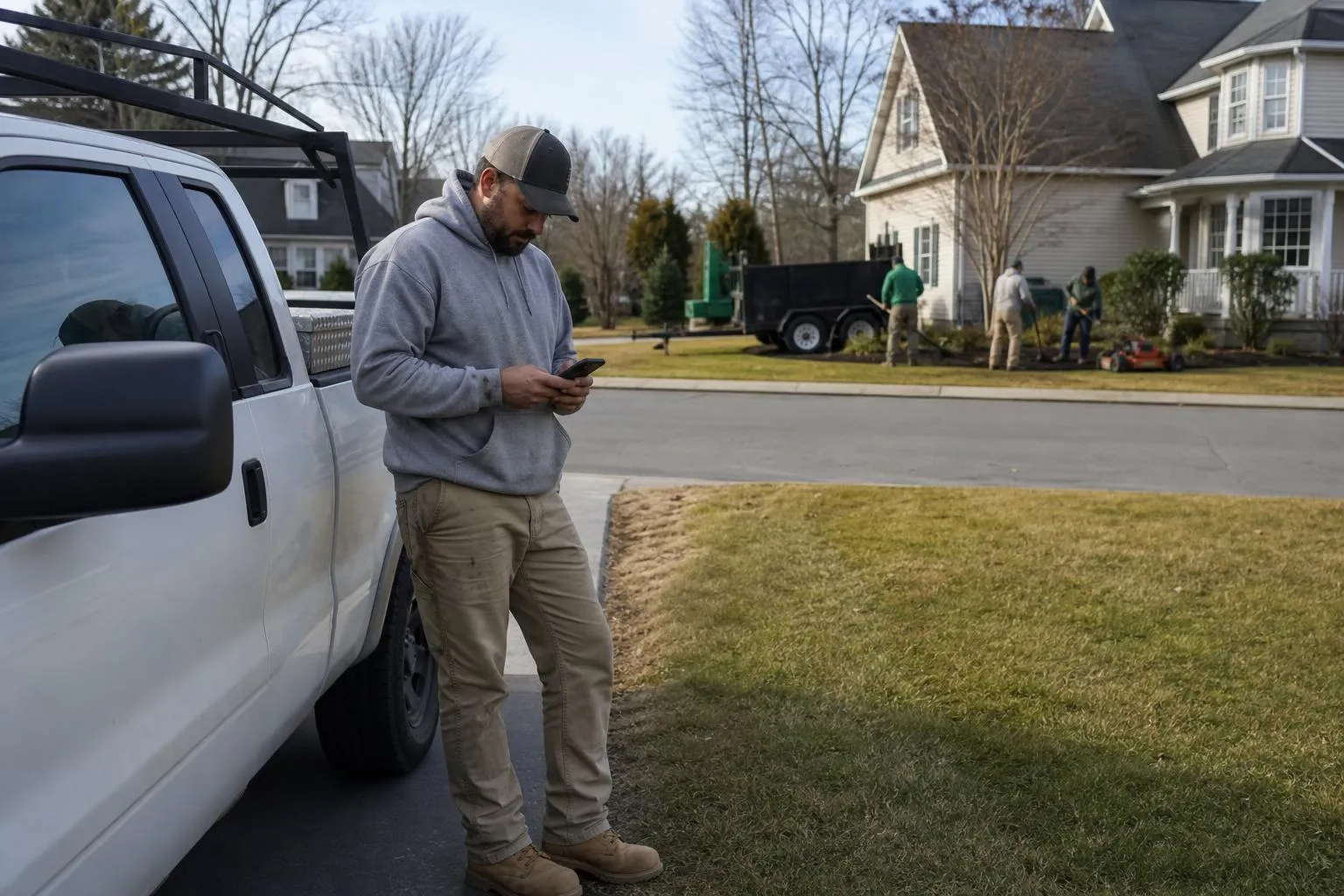
Landscaper missing from Google's top 3? That's where every new client stops looking
Read more


Phone repair shop not in Google's top 3? Cracked-screen customers can't find you
Read more
Plumber not showing up on Google? If you're not in the top 3, you don't exist
Read more
Pressure washing business not in Google's top 3? The HOA board never finds you
Read more
Real estate agent not showing up on Google? If you're not in the top 3, sellers skip you
Read more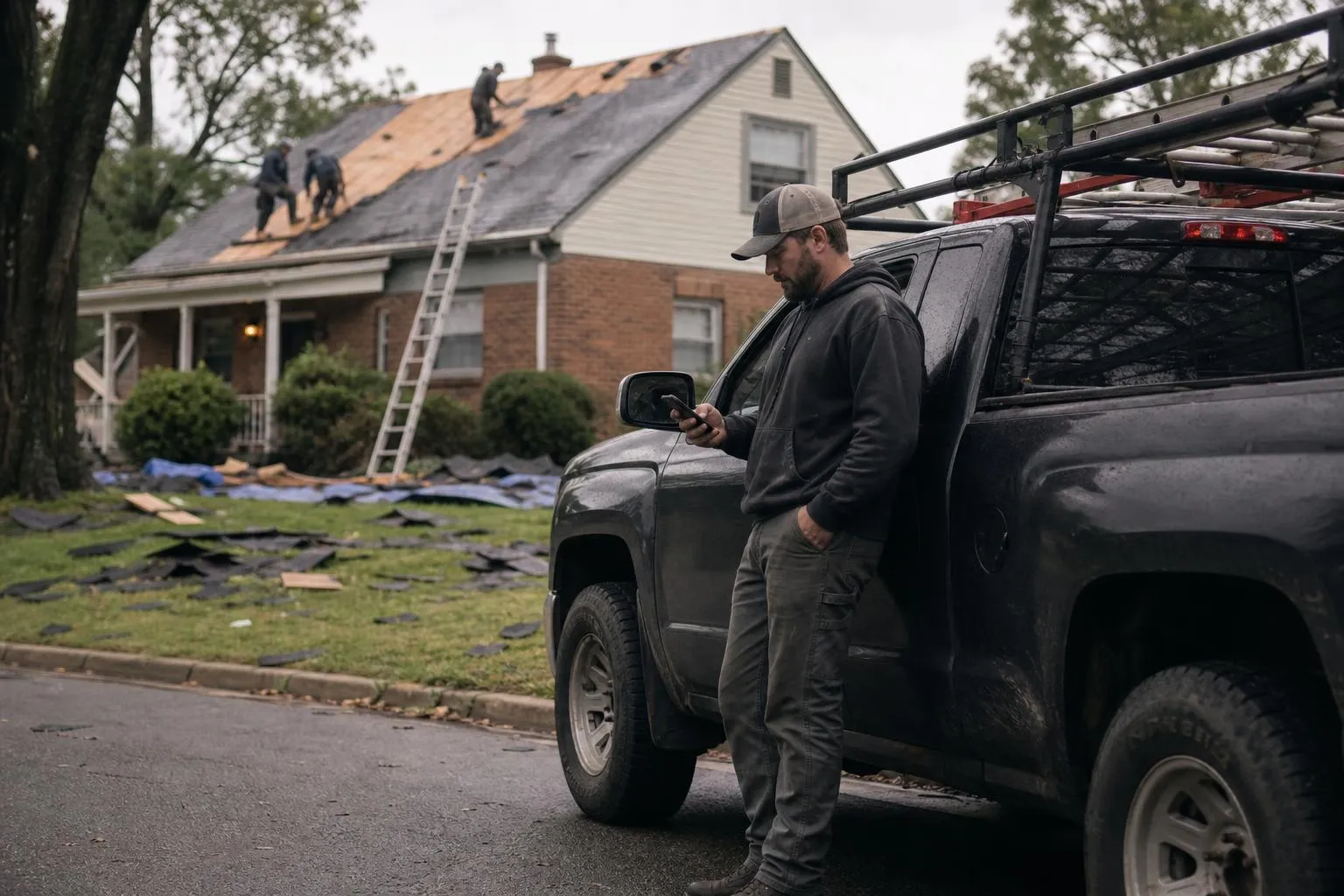
Roofer not showing up on Google? If you're not in the top 3, you don't exist
Read more

Your move
Reading this does not book a job.
The owners who pull ahead are the ones who change one thing this week. If you want that one thing to be a website that sells and ads that put it in front of the right people, we build and run both for you.
Straight answer on whether we can help, usually the same day.