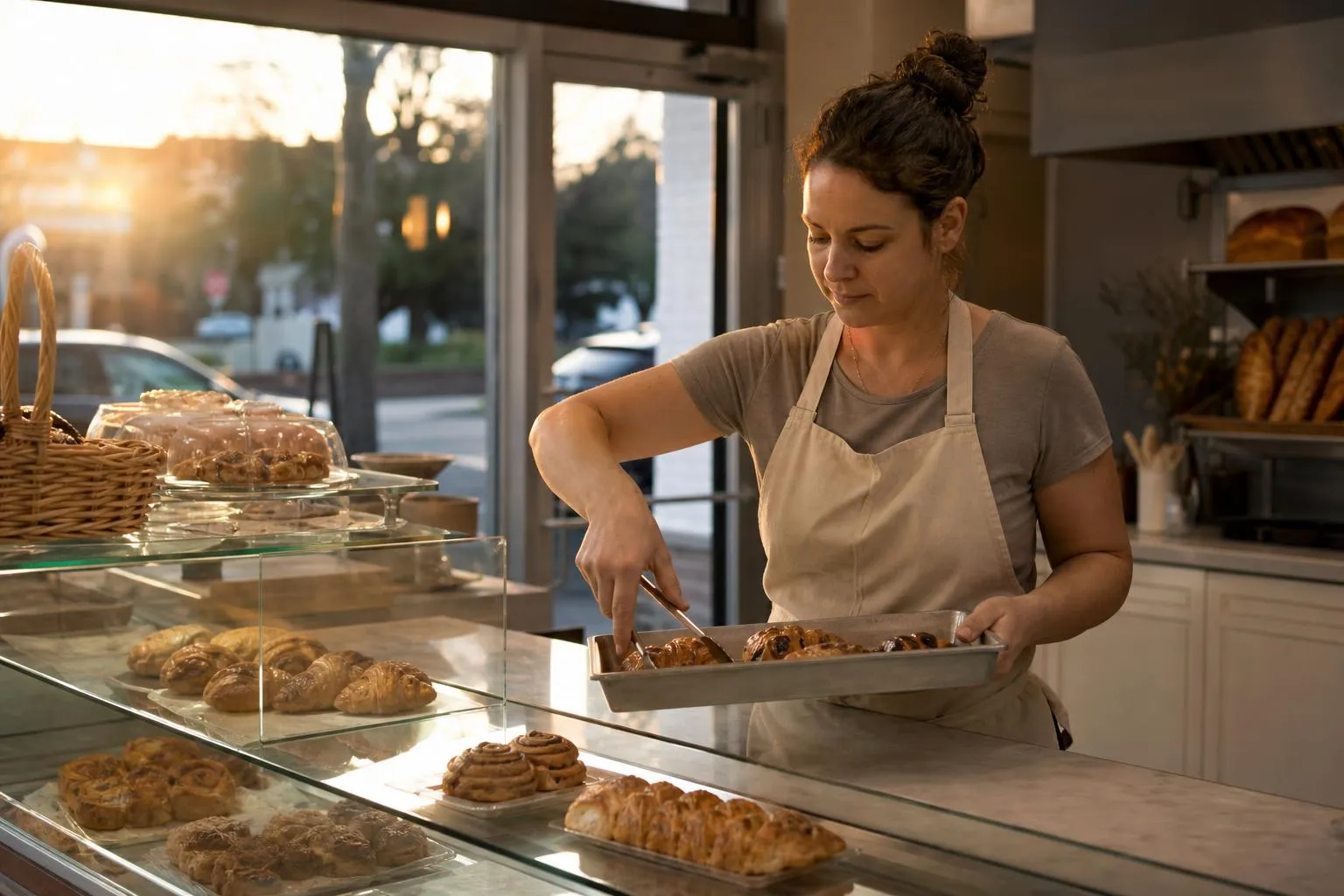
Bakery missing from Google's top 3? The bride picked someone else's cake
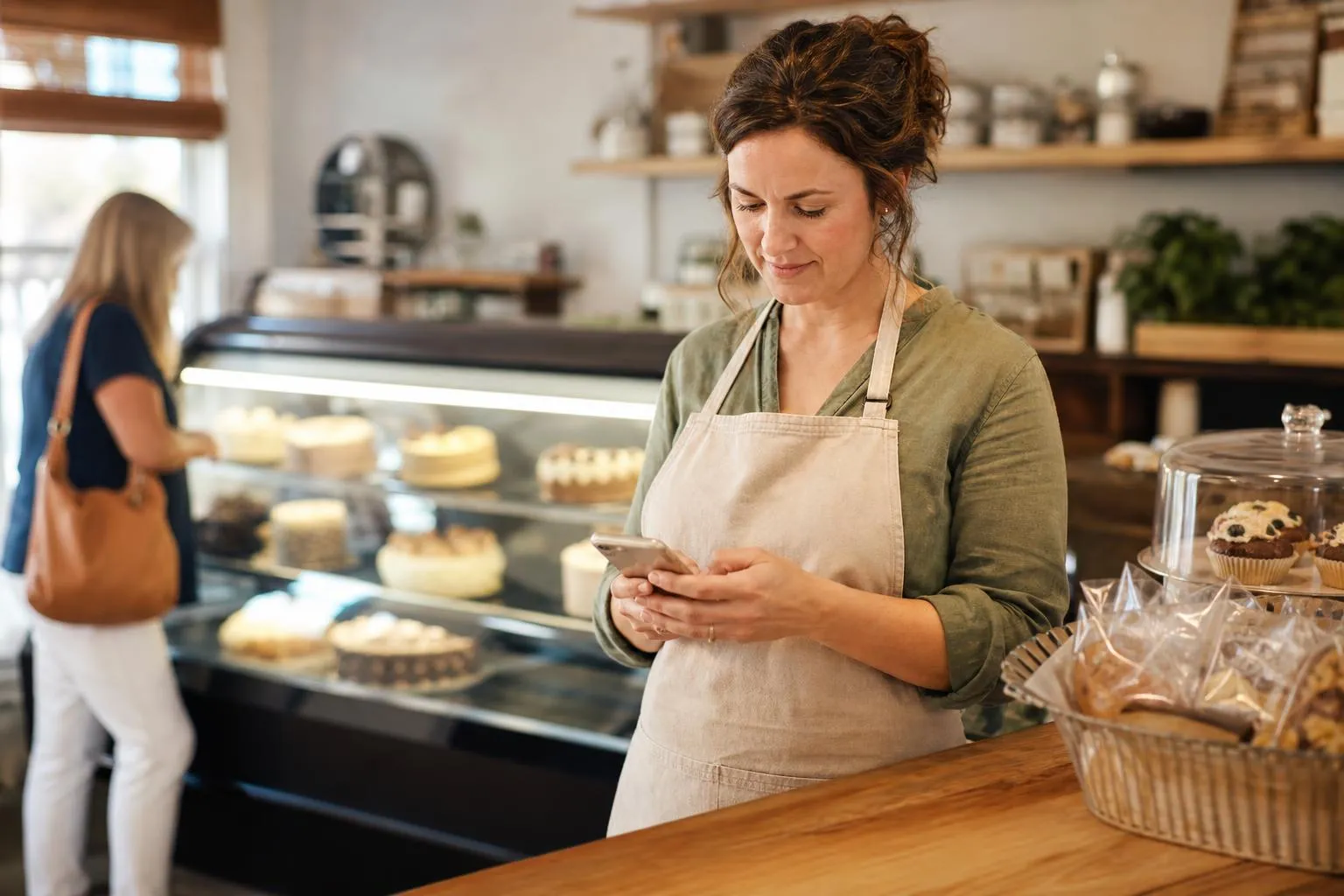
Picture the bride who’s about to decide who bakes her wedding cake. Not the imagined customer from a marketing plan. The real one, sitting in her car in a parking lot on her lunch break, twelve weeks out and no cake baker booked yet.
She opens her phone and types “wedding cake bakery near me” or “bakery” plus her city. Google surfaces a map with three shops pinned. She taps into one to scroll the cake photos, checks the reviews, and calls or fills out the inquiry form. If nothing loads or nobody answers, she moves to the next pin.
That’s the entire decision. Under a minute, three shops, one deposit sent.
She’s not scrolling to page two. She’s barely scrolling past the map at all. If your bakery isn’t one of those three pins, you weren’t too expensive, you were never seen. For the bride deciding on her lunch break today, you don’t exist.
The two lists deciding your weekend orders
Every local search produces two lists that matter, and most independent bakeries barely think about either one.
The map pack is the three pinned shops at the top, and it runs almost entirely on your Google Business Profile: review count, star rating, how recent those reviews are, correct categories, and hours that actually match your posted hours.
The organic results below it are where your website competes, and it’s where the big decisions happen, wedding cakes, corporate catering orders, custom celebration cakes someone researches for weeks before reaching out.
Most bakeries chase neither, live off whatever Instagram sends them, and conclude Google doesn’t matter for a small shop, while the bakery two blocks over quietly books every wedding inquiry that searches locally. You can chase visibility with advertising on Google, but that spend disappears the moment the budget does. The free lists keep paying as long as you hold the spot.
Your own website is pushing you down the list
Owners treat their website and their Google ranking as separate problems. They’re not. Google looks directly at your site to decide where you land, and a neglected one actively works against you.
It’s slow. Google counts speed in its ranking. Its own 2016 research found 53% of mobile visitors give up on a page that needs more than 3 seconds, and in 2022 Portent found a 1-second load converts about 3 times better than a 5-second one. The bakery version is a gallery of forty uncompressed cake photos: the bride on her lunch break waits, then taps back to the next pin.
Check yours from the parking lot. If the first cake photo is still loading after you count to three, she is already on the next bakery’s page.
It’s not built for a phone. Google ranks the mobile version of your site, not the desktop layout somebody’s nephew set up years ago. A slow-loading cake gallery costs you ranking before the bride ever sees a single photo.
It’s thin. A homepage that says “we bake cakes” gives Google nothing to match against “wedding cake” plus a city name. No dedicated page, no ranking for that search, no matter how good your cakes taste.
It’s frozen in time. A gallery with four photos from 2018 tells Google, and the bride scrolling it, that this shop might be too.
Why “just do some SEO” fails on an old site
The usual fix is paying someone to bolt SEO onto the existing site. That’s icing over a cracked crumb. The site is the actual problem, and Google measures your foundation against the best-built bakery site in town every day.
Buying SEO for the old site
- A smaller outlay than a new site while the wedding calendar is filling
- No new platform to learn, no design decisions to make
- Keeps your existing URLs and whatever link history they carry
- Works fine if the site underneath is already fast and mobile-first
Buying SEO for the old site
- The retainer polishes a site the bride can’t browse on a phone
- You can’t retrofit a fast cake gallery into a bloated 2016 theme
- Twelve months at $750 is $9,000 rented, nothing owned
- Most honest audits quietly end with “you actually need a new site”
What a top 3 spot is really worth
Think about what the map pack really is: every customer in your area with an occasion and a budget, sorted into a line and handed to three bakeries. A wedding cake is the biggest ticket in the case. A steady stream of daily pickup orders adds up fast on top of that. That line gets divided every week whether your shop is standing in it or not.
The bakeries holding those three spots aren’t decorating better cakes (see why the worse bakery wins your customers). Their online foundation just gives Google no reason to hide them.
How you actually get there
Nobody honest can guarantee you the #1 spot. Anyone promising it is selling you a stale loaf dressed up fresh. But the real inputs aren’t a mystery:
- A fast, mobile-first website with a real gallery and a page for your wedding, custom order, and pickup offerings, the raw material Google needs to rank you at all.
- A complete, active Google Business Profile. Correct primary category, real cake photos, hours that match reality.
- A steady drip of reviews. Asking after every pickup and every wedding beats one panicked push a year, because Google rewards recent proof. It also fuels your local promotion elsewhere.
The profile and the review ask are weekly habits. The gallery, the order pages and the speed are a build, and that is what turns a bride’s tap into a deposit.
Get the foundation Google wants to rank
We build bakery websites structured for local search from day one: fast on a phone, mobile-first, a real cake gallery, an inquiry form that captures the date and budget, online pickup ordering right on the homepage. The ranking is the setup. The bride sending a deposit is the point.
The video walkthrough shows a live bakery site with the cake gallery, an inquiry form that captures date and budget, and pickup ordering built in. Standard website: $2399£1,899. Growth website: $7500£5,900. Both are on that page, both launch 7 days after kickoff, and you keep ownership of everything. Most changes go live within 24 hours. The map side can be handled too, through Google Business Profile management and local SEO.
Frequently asked questions
Why isn’t my bakery showing up on Google?
Most often the profile lists only “Bakery” when you also do custom and wedding cakes, there are no reviews from this season, or the homepage says “we bake cakes” over a gallery that crawls. Fix the first two this week. The website is the part that needs a rebuild.
Can anyone guarantee me a top 3 ranking?
No. Anyone who promises a top 3 spot for your bakery is selling something else. You control the categories, the photos, the hours, how fast the gallery loads on a phone, and whether every pickup ends with a review request.
How long before I land in the map pack?
Photo and hours fixes plus a few fresh reviews can move you within weeks. In a city with several established cake shops the website side takes months, and brides book far ahead, so start well before wedding season. Our sites launch in 7 days.
How much does a website built for local search cost?
Prices are published: $2399£1,899 one-time for the Standard website, $7500£5,900 one-time for the Growth website. No contracts, and you own everything. Compare that with, say, a $750 monthly retainer: $9,000 a year spent working on a gallery that crawls.
Next in this series: Your website looks fine on your laptop. Your bride is standing in a parking lot with a phone.
Your move
Reading this does not book a job.
The owners who pull ahead are the ones who change one thing this week. If you want that one thing to be a website that sells and ads that put it in front of the right people, we build and run both for you.
Straight answer on whether we can help, usually the same day.