Roofing website maintenance: your best hours belong on the roof, not fighting your web developer
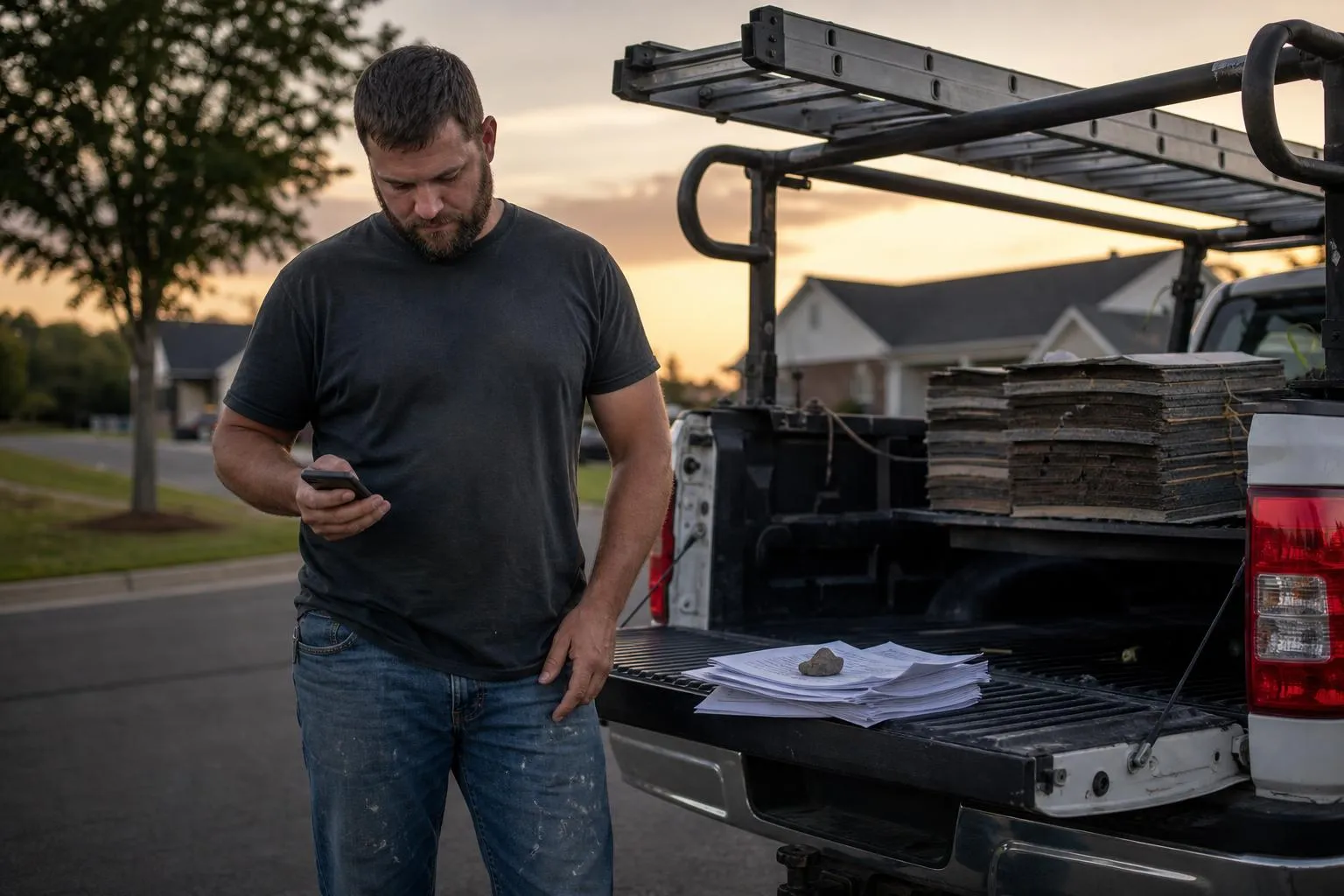
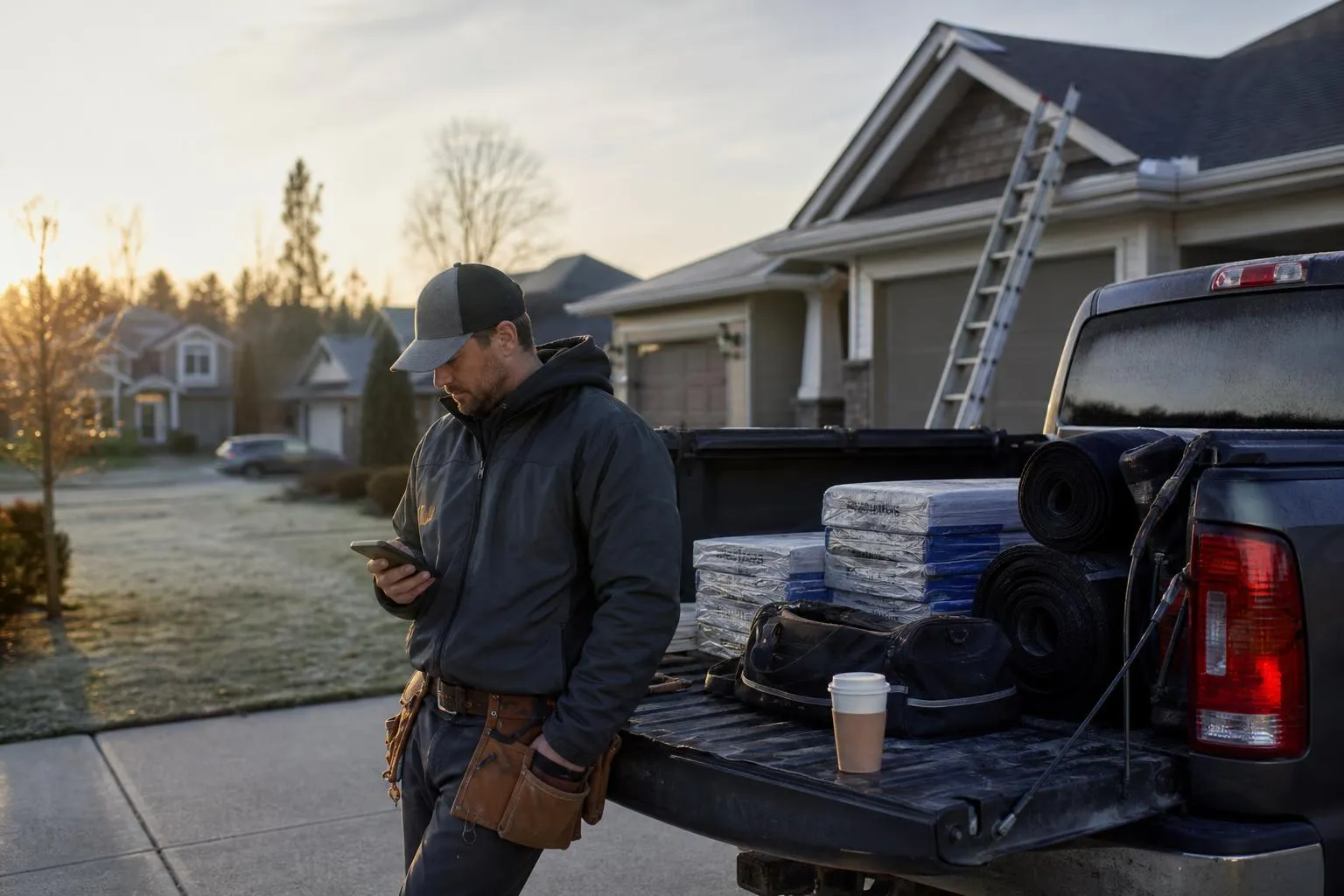
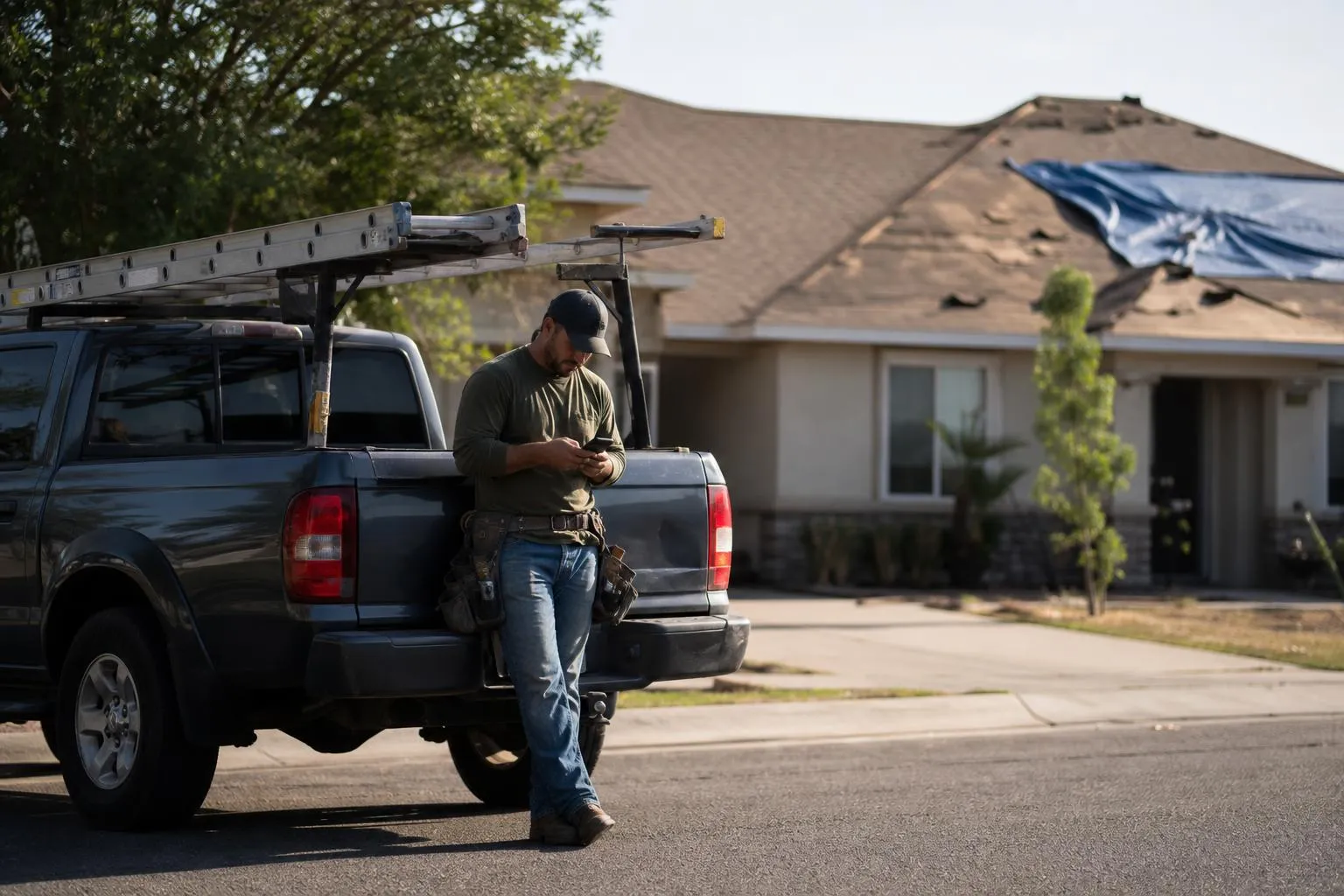
Three days after the hailstorm, and you are typing your third email about the same thing. Westgate and the streets around Birchwood Park took the worst of it, and your website still does not list either as a service area. Somewhere over there, a homeowner is scrolling past your name because the roofer whose site already claims that zip code shows up first.
“Just following up on this…”
Meanwhile, the estimate for the $16,000 storm-damage reroof on Maple Street is still half-finished on the clipboard on your passenger seat.
If that stings, here’s the real question: who is actually working for whom? You hired a developer so the website would be handled. Instead you became its unpaid project manager, chasing, re-explaining, checking, following up. The site was supposed to hand back your hours. Instead it bills you for them.
Price your own hours the way you price a reroof
You would never send a two-man crew across town to patch a $150 flashing leak during storm season. You already know what a skilled hour is worth, it is the whole basis of how you set prices and billing. Apply that same discipline to yourself.
An owner’s working hour, spent walking damage, writing estimates, and closing signed contracts, is worth something like $175 to $275. Now count honestly: the emails asking for a service-area update, the texts checking whether a banner went live, the re-explaining of a half-finished fix. None of it ever gets billed.
Priced at a modest $200 an hour, four small changes look like this:
| Website task | Wait in this example | Your time chasing it | Cost of your time |
|---|---|---|---|
| Add storm-hit zip codes to your service area | 1-2 weeks | 60 minutes | $200 |
| Add a new five-star review | 2-3 weeks | 30 minutes | $100 |
| Update a tear-off and replace price | 1-2 weeks | 45 minutes | $150 |
| Post-storm inspection banner | 3-4 weeks | 75 minutes | $250 |
Four small edits, $700 of owner time, and the site still looks like it did before the storm. Across a year of changes like these it becomes a four-figure bill for the privilege of asking for your own website to be updated, paid in the one resource nobody else on the crew can spend for you. The chasing is pure overhead.
You are already the bottleneck somewhere in the business, usually the estimate only you can write. Making the website a second bottleneck, customer and project manager both, is a choice.
The quiet cost: the updates you quit asking for
The chasing is only half the damage. The other half is the updates you stopped sending after the last storm, because each one meant another round of emails.
When every update means an email chain and a two-week wait, you start rationing. The post-storm service-area update: pushed to next week, then forgotten. The five-star review from the Birchwood reroof: still sitting in your phone, though fresh reviews are a big part of why a worse roofer keeps beating you to the job. The GAF certification an adjuster needs before approving a claim: buried three clicks deep, untouched in a year. The site does not go stale from neglect, it goes stale because the process taxes every improvement until none feel worth the fight.
That is how a solid roofing company ends up with the tired site this series keeps describing, the kind that quietly leaks jobs to the next search result. Not carelessness, friction.
Manage the relationship harder, or replace it?
Most owners try fixing the relationship first: clearer emails, a shared checklist, one more benefit of the doubt. Be honest about what that actually buys you.
Sticking with the developer you already have
- No switching effort, the same site and the same person stay in place
- Some months it works, and a small fix lands inside a few days
- A $75 to $150 monthly retainer keeps someone nominally on call
Sticking with the developer you already have
- You are still the unpaid project manager, because follow-up emails are the whole system
- Turnaround stays at days to weeks, and the misses land during your busiest stretch, storm season
- The rationing continues, so the site keeps drifting further from reality
- You pay twice, the retainer in cash and the chasing in $200-plus owner hours
Managing it harder does not remove the overhead, it just trains you to absorb it between roof walks. The real fix is a setup where adding a zip code after a hailstorm never needs a project manager.
What being handled is actually supposed to look like
Here is what a roofer should expect from whoever runs the site, since after a storm the roofer whose page already lists the neighborhood gets the call. It is the one we build to.
Changes land within 24 hours, from one message. Text it like you would text a foreman: “add Westgate and Birchwood,” “post this review,” “tear-off and replace is now $6,900.” AI applies it straight to the site, with no WordPress dashboard in the way, live the next morning. No ticket, no thread, no third email.
You own everything. Domain, site, content: yours, under your name, no exceptions. Nothing proprietary holds it hostage, nothing dies the day you leave.
No contracts. No retainer acting as a leash, no lock-in doing loyalty’s job. If the work is worth keeping, the 24-hour turnarounds prove it every month.
Notice what that list removes: not the developer’s labor, yours. The chasing, the project management, the rationing. That is the real product, a website that hands back the hours to the only person who can walk the roof, write the estimate, and close the adjuster.
Running the crews is the job
There is a version of your week where the website is simply not on the list. It updates when you send a text, and stays accurate because keeping it accurate costs thirty seconds, not three emails. Monday morning goes to the estimate on Maple Street, and the service area list already includes every neighborhood last week’s storm touched.
Roofers get two prices from us, printed on the page and paid once. The Standard website is $2399£1,899. The Growth website is $7500£5,900 and adds lead routing that pushes storm-damage and insurance-claim calls ahead of quote requests, custom branding and deeper SEO for every town and roof type you cover. Both are live in 7 days, new zip codes go up within 24 hours of a text, nothing is under contract, and the certifications page stays in your name. Watch the free video walkthrough to see what “handled” actually looks like before you talk to anyone. If your current site is watertight and only slow to load, optimizing it is the repair instead of the reroof.
Your best hours were never meant for a follow-up email about a zip code. They are for the one thing only you can do: running the company the website is supposed to work for.
Frequently asked questions
How much time does roofing website maintenance really take?
Count every email, follow-up and check, not just the edit. The two-truck company in the worked example above logged 16 small changes in a year, two hail events included, at about 45 minutes each: 12 hours, $2,400 at $200 an hour. A season with more storms adds more service-area updates, so count your own.
What does a done-for-you roofing website cost?
$2399£1,899 for the Standard website and $7500£5,900 for the Growth website, one-time, both listed on the page. No contract holds you through storm season. Service-area and price changes are live within 24 hours of a text, and the domain, site and content are owned by your company.
Is a monthly retainer what gets a roofing site ready for hail season?
Usually not. A roofer’s site built without plugins has almost nothing to patch before the season starts. What it needs after a hailstorm is the affected zip codes added within a day of asking, plus a working call button, and both come from a fast turnaround, not a monthly fee.
What if I like my current developer?
Keep them, but test them before storm season: send a service-area change and see whether it is live in 24 hours or you are emailing again on day five. If it is, you found a rare one. If not, you are retiring a process that bills you $200-plus an hour to exist.
Will rebuilding the site cost us our local rankings?
No site change can promise your rankings, but a careful rebuild protects them: the old site stays live until the new one launches, and redirects carry over the links and pages you already earned. Rankings can still shift after any rebuild, and improving them over time is ongoing local SEO work.
Next in this series: what actually happens when you finally replace the site, in 7 days, and how it handles the next storm
Your move
Reading this does not book a job.
The owners who pull ahead are the ones who change one thing this week. If you want that one thing to be a website that sells and ads that put it in front of the right people, we build and run both for you.
Straight answer on whether we can help, usually the same day.