The trust tax: how an outdated roofing website kills referrals you already earned
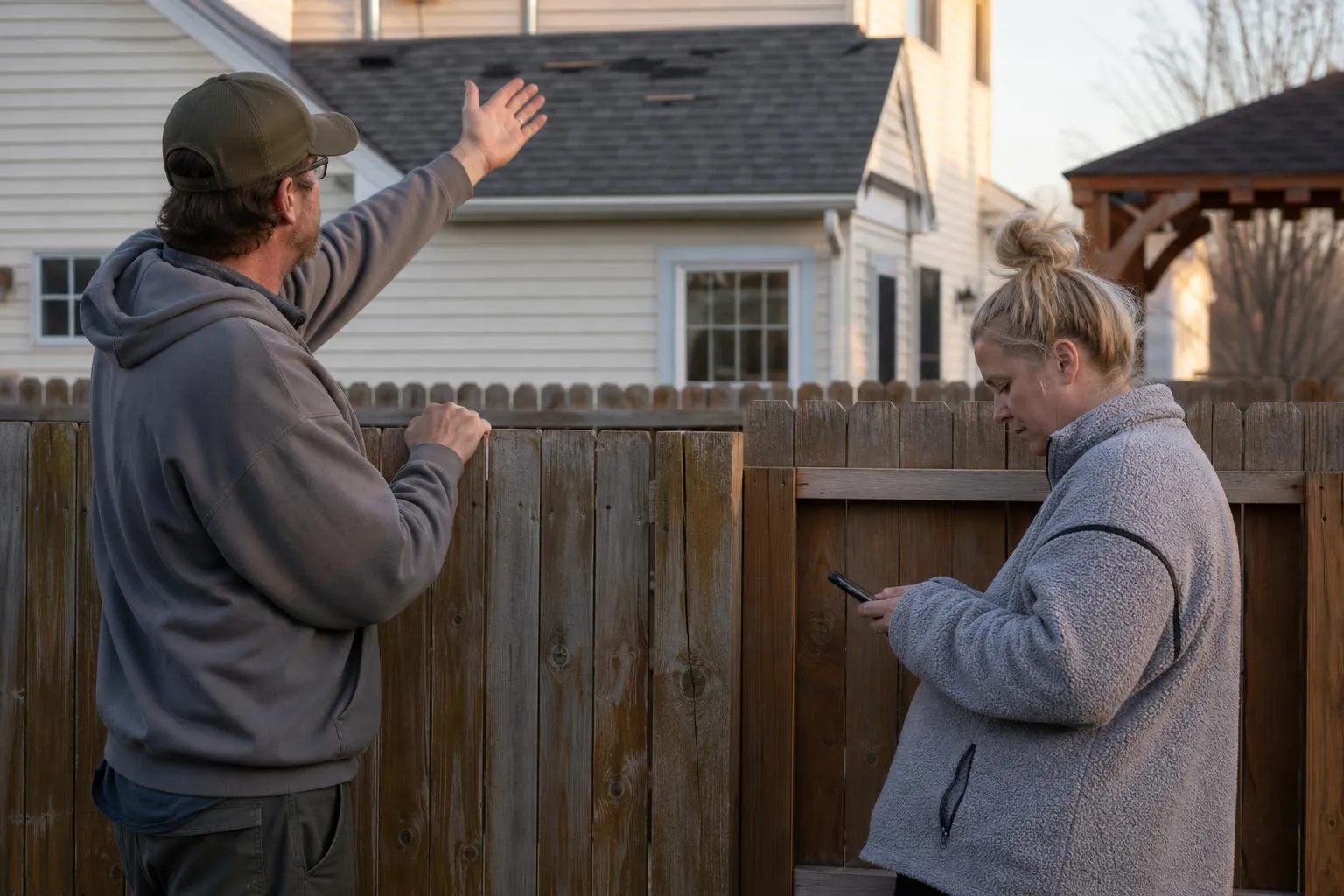
Your best salesperson is a retired mail carrier named Walt Pruitt whose roof you replaced after a hailstorm three years ago. You showed up on time and handled his insurance claim. He’s talked you up around the cul-de-sac ever since.
Last week he mentioned you to a neighbor whose bedroom ceiling had a fresh water stain from the same storm. She asked who did his roof, and that evening did what every referred homeowner now does.
She looked you up.
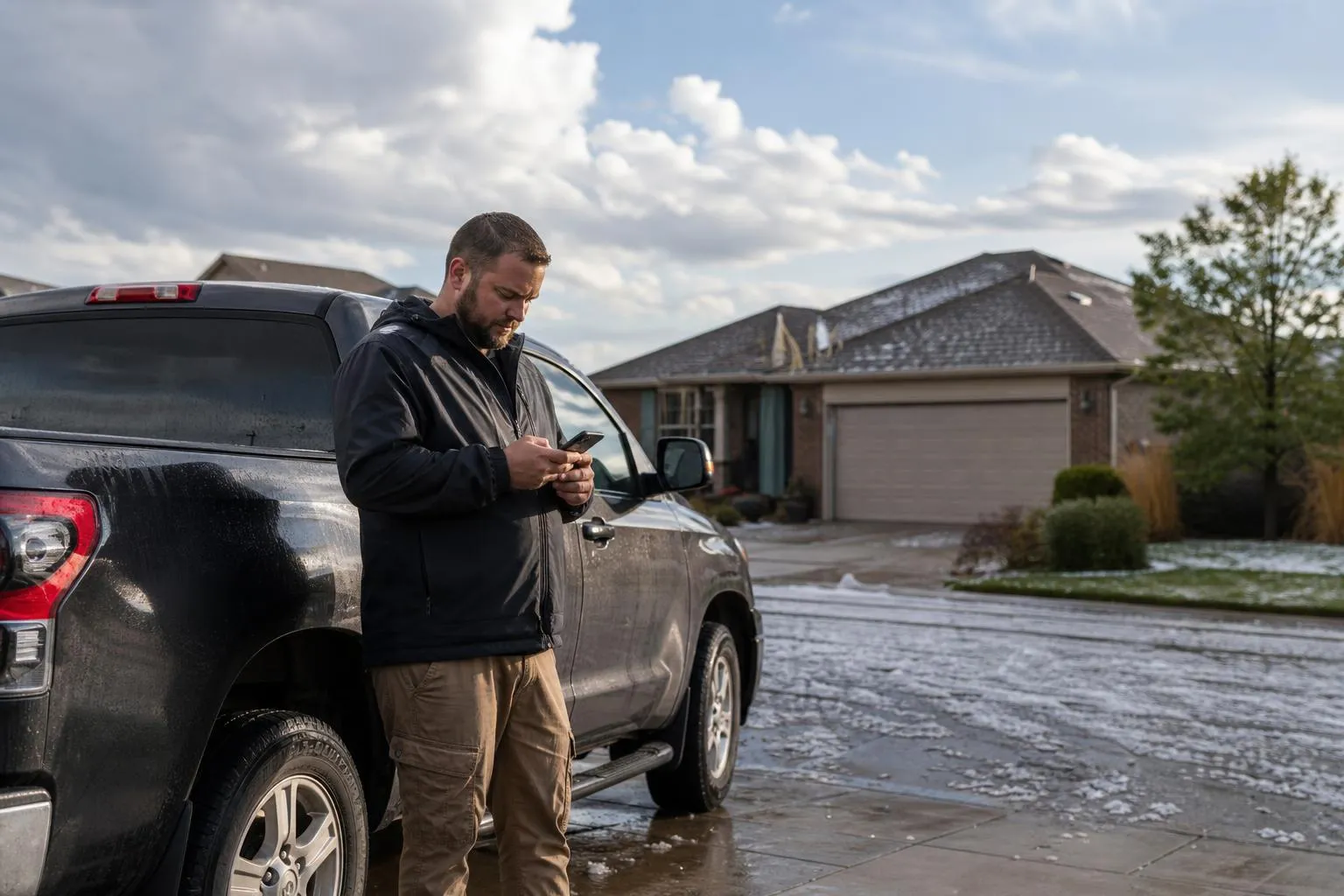
Your name, typed into a phone in her driveway. And whatever loaded in the next few seconds went head-to-head with everything Walt had told her.
A referral doesn’t close the job anymore. It opens a search.
Owners love referrals because they arrive pre-sold. A roof is different from most home projects, because the first reason for the call is usually a leak or a storm and the homeowner has been warned about door-to-door storm chasers. Walt can say you handled his insurance claim and showed up on time. What she wants from the page is proof you are a local, licensed, insured company and not the crew that left town after the last hailstorm.
That gives your website a vote on every referral you earn. One with no license, no insurance details and no recent storm work votes against you.
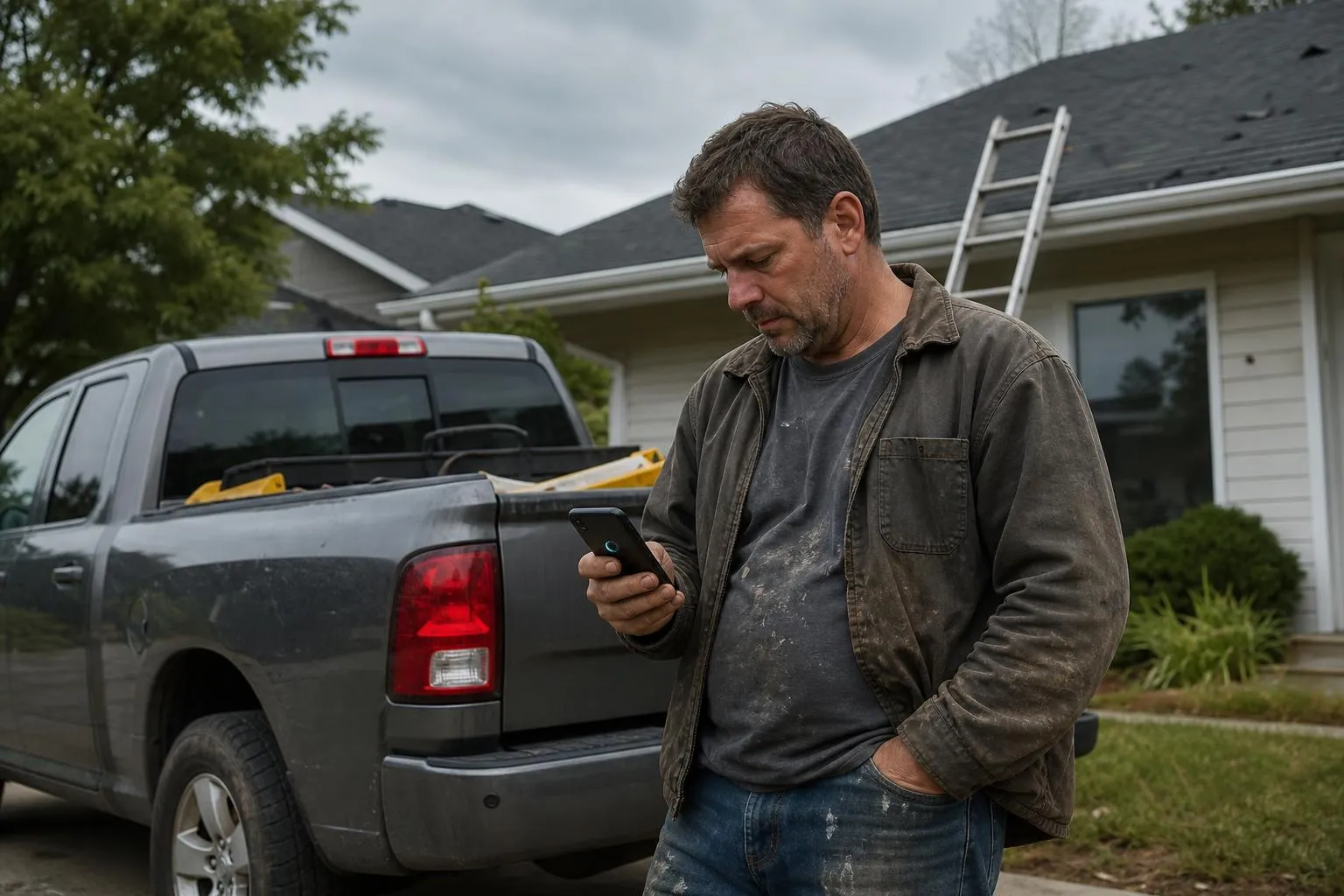
The neighbor opens a page built before the last two hailstorms. Job photos from a truck you traded in. A footer that still says 2017. No reviews above the fold. Nothing says bad roofer, but nothing confirms the guy Walt just vouched for either. Doubt creeps in wearing its mildest, most lethal disguise: “Is this still the same company? Let me see who else comes up.”
Through no fault of your workmanship, pricing, or reputation, you’re back in an open bidding war against every roofer in town, a fight the worse roofer with the sharper website often wins. That’s the trust tax: the slice of earned referrals an outdated site skims off before they reach your phone.
Why this is the costliest traffic you can lose
Run the numbers on cost per lead and a lost referral is a disaster. Referrals are free, paid for with years of doing the job right. They’re your best jobs too: referred homeowners haggle less and refer onward, so losing one loses the branch, not the leaf. And they leak invisibly: the neighbor never calls, Walt never finds out, the deal dies silently in a browser tab.
Relying on referrals alone
- Free jobs, already paid for by years of clean work.
- Referred homeowners take your bid without shopping two more.
- Every satisfied roof compounds into more calls at zero ad spend.
Relying on referrals alone
- Every referral passes through your website before it becomes a call.
- The leak is invisible: the neighbor never calls, Walt never finds out.
- One aging site taxes your strongest channel at its most valuable moment.
The verdict lands before she reads a word
A referred homeowner grants a little more patience than a stranger, and she is likely standing in her own yard, phone in hand, looking up at the missing shingles. Google’s 2016 research found that 53% of mobile visits are abandoned when a page takes longer than 3 seconds to load, and Portent’s 2022 analysis found that a page that loads in 1 second converts about 3 times better than one that loads in 5. A roofing site with oversized project photos stalls there. After a storm, dozens of neighbors are searching at once, and she calls whichever roofer’s number is on the first screen.
An old site fails her twice at once: slow enough to lose her before anything renders and clumsy to use one-handed in the yard. She showed up ready to call. The site never gave her the chance.
What a referred homeowner needs to see
The encouraging part: a referred homeowner already wants the recommendation confirmed. The site just has to hand her the proof.
Signs of life. Current job photos, recent reviews, a date somewhere that isn’t years old. The question was never “is this roofer any good.” Walt settled that. It’s “are they still around.”
A face and a name. She was referred to a person, not a stock photo of a generic gray roof. A real picture of you or your crew ties her neighbor’s story to the page.
Proof in her language. Stars, review count, license number, insurance, GAF certification, years on local roofs. Ten seconds of skimmable reassurance.
An effortless next step. A tap-to-call button and a short damage estimate form. She arrived ready to act; the site must not stand in her way.
Notice what’s missing: cleverness. A referral page doesn’t persuade. It confirms, fast, on a phone, without friction.
Do the math on your own leak
Leaked referrals never show up in your books, only as a feeling: word of mouth seems slower lately while reviews stay great. If the whole funnel feels slow, start with why a roofing website gets clicks but no jobs. Then run the same count on your own shop.
Stop taxing the reputation you already built
You spent years earning the kind of name that gets volunteered over a fence line. Every year the site sits untouched, the tax climbs, and it keeps collecting from jobs you already won.
A roofing site that backs Walt up puts your license number, insurance and manufacturer certifications near the top, shows roofs finished after the last storm, and gives a homeowner a call button plus a short damage form she can fill in from the yard. We build it in 7 days, ahead of storm season if you start now. Watch the free video walkthrough and picture Walt’s neighbor checking it in her driveway. After a storm, new photos or service areas go live within 24 hours.
If the 2016 site still ranks for roof repair searches in your county, our website redesign and migration service maps every old page to a new one, so storm-season searchers who find the old address still land on you.
Frequently asked questions
How can I tell referred homeowners are checking the site and leaving?
Ask every caller who referred them and log it for a month, then compare after the fix. A 17% leak only shows up once somebody counts.
What does a roofing website that confirms referrals cost?
Pay once for the build. The Standard website is $2399£1,899; the Growth website is $7500£5,900 and adds lead routing so storm inquiries reach the right estimator, a page per service such as replacement and storm repair, and GA4 with call tracking wired in. There are no contracts, and you own everything.
My work holds up on the roof. Isn’t that what counts?
It counts after the contract. Before it, a homeowner with a stained ceiling is judging a company she can’t see. License, insurance, manufacturer certifications and a few finished roofs on the page give her what she needs to let you on her roof.
Can the site be live before the next storm season?
Yes. It takes 7 days from kickoff to launch, done for you. After launch, new storm photos or updated service areas go live within 24 hours.
Next in this series: Does your roofing website turn visitors into booked inspections? The conversion rate question
Your move
Reading this does not book a job.
The owners who pull ahead are the ones who change one thing this week. If you want that one thing to be a website that sells and ads that put it in front of the right people, we build and run both for you.
Straight answer on whether we can help, usually the same day.