The Trust Tax: How an Outdated Delivery Website Kills Referrals You Already Earned
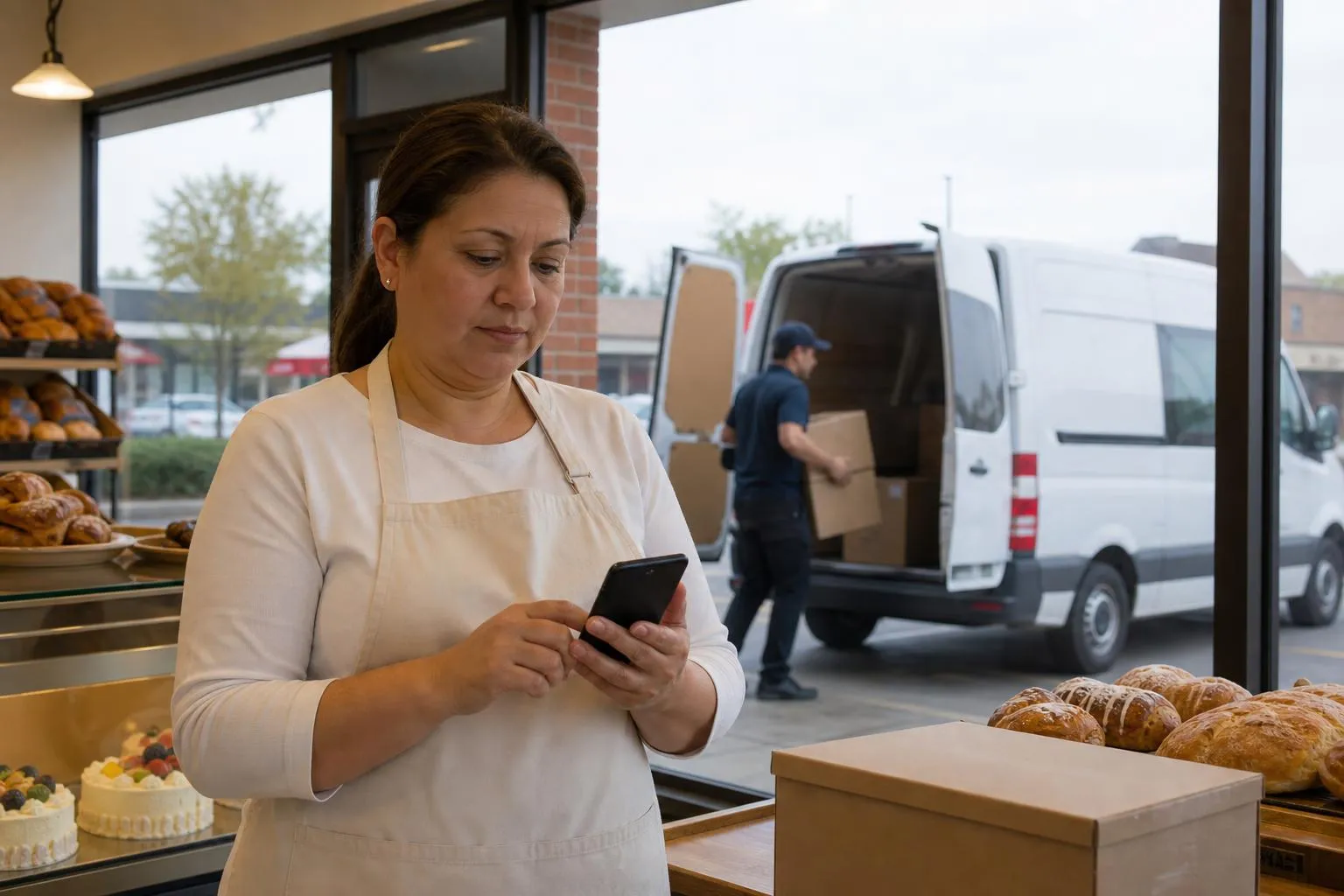
Your best salesperson is a coffee roaster named Priya who signed with you eighteen months ago after her old courier lost three shipments in a week. You never dropped one order. She has mentioned your name to half the food vendors in her building since.
Last month she mentioned you to a woman who just opened a florist two doors down and needs same-day delivery for wedding orders. The florist said “send me the link” and that afternoon did what every referred business owner now does before signing anything.
She opened it on her phone.
Your name, typed into a search bar. And whatever loaded in the next few seconds went head-to-head with everything Priya had told her about you.
A referral doesn’t sign the contract anymore. It opens a tab.
Delivery owners love referrals because the merchant arrives half-convinced already. That is only half true now. A referral today is a warm lead with a verification step: before signing a service agreement, the merchant confirms the recommendation matches what she finds online. Not out of distrust, checking takes about eight seconds and every buyer does it, whether she’s picking a caterer or a courier. BrightLocal found 88% of people trust online reviews as much as a friend’s word, so your site carries nearly the weight of Priya’s endorsement.
Mechanically, your website gets a vote on every contract you’re referred. All of them pass through it. A stale site votes against you before the merchant ever picks up the phone.
The florist opens a page built for a fleet you sold two trucks ago. A service area map that still lists a zip code you dropped last year. No client logos, no reviews, no fleet count anywhere. Nothing screams unreliable, but nothing confirms the operation Priya vouched for either. Doubt creeps in quietly: “Are they even still doing wedding-day runs? Let me see who else covers this zone.”
Through no failure of your drivers, your pricing, or your reliability, you’re suddenly back in an open bid against every last-mile operator in the metro, a contest the smaller company with the sharper site often wins. That’s the trust tax: the share of earned referrals a dated site skims off before they ever reach your inbox.
Why this is the most expensive lead you can lose
By cost-per-contract math, a lost referral is a disaster. Referred merchants are free, paid for by months of on-time drop-offs. They’re your best accounts too: referred clients negotiate less and refer onward, so losing one loses the whole chain, not just the deal. And the leak is invisible. The florist never emails, Priya never finds out, the entire contract dies silently in a browser tab.
Running on referrals alone
- Free leads. Months of clean delivery windows already paid for them.
- Referred merchants negotiate less and trust your quoted rates.
- Every satisfied client compounds into more contracts with zero ad spend.
Running on referrals alone
- Every referral now passes through your website before it becomes a signed contract.
- Leaks are invisible: the merchant never calls and your champion never knows.
- One aging site taxes your strongest channel at the exact moment it matters most.
The vote happens faster than you think
A referred visitor grants you a little more patience than a cold prospect, and she’s almost certainly checking from her phone in a stockroom or a car: most local B2B searches for service providers now start on mobile. Google found 53% of mobile visits abandon a page that takes over 3 seconds to load, and Portent measured conversions dropping 4.4% for every extra second in the first five. The average page needs 8.6 seconds on mobile. A neglected delivery site needs longer.
| Load time | Chance the visitor bounces (Google) |
|---|---|
| 1 to 3 seconds | +32% |
| 1 to 5 seconds | +90% |
| 1 to 6 seconds | +106% |
| 1 to 10 seconds | +123% |
A stale site fails both ways at once: too slow to load before she gives up and clumsy to navigate on the phone in her hand. She came in ready to request a quote. The site never gave her the chance.
What a referred merchant needs to see
Here’s the encouraging part: a referred visitor wants the recommendation confirmed. Your site just has to hand her the proof.
Signs of an active fleet. Current driver and van photos, a route map that matches your real coverage, this year visible somewhere. The question isn’t “are they reliable.” Priya settled that. It’s “are they still running the same operation she described?”
A rate she can estimate. Even a ballpark per-zone or per-package range. Quote-on-request reads as expensive to someone comparing three vendors in one sitting.
Proof in her language. Insurance certificate, fleet size, years in business, client logos she might recognize, real delivery volume. Ten seconds of skimmable reassurance.
An effortless next step. A visible quote-request form or a tap-to-call number. She arrived ready to move; the site must not slow her down.
Notice what’s missing: cleverness. A referral site doesn’t need to persuade. It needs to confirm, fast, on a phone, without friction.
Count your own trust tax
Leaked referrals never show up on a spreadsheet, only as a feeling: “word of mouth seems slower this quarter” while your reviews stay strong. If the whole pipeline feels sluggish, start with why a delivery website gets visitors but no signed contracts. Then run Marcus’s numbers against your own.
Stop taxing the reputation you already earned
You spent months building the kind of reliability that makes merchants like Priya volunteer your name to the vendor down the hall. Every year the site ages, the tax goes up, and it collects from contracts you already won.
We build delivery websites that do the confirming for you: current, fast, stacked with proof, one tap from a quote request, done start to finish in 7 days. Watch the free video walkthrough and picture that florist landing on that page instead. Once live, staying current isn’t your job either, changes go live within 24 hours, and our ongoing growth services keep the proof fresh.
Frequently asked questions
How do I know if my outdated website is costing me referrals?
The tell: happy merchants, steady reviews, but referral inquiries feel slower than they used to. Ask every new signup who sent them and log it for a month, then compare after the site is fixed. Marcus’s 25% leak only showed up once he counted.
How much does a website that confirms referrals cost?
$2399£1,899 one-time for the Standard build, or $7500£5,900 for the bigger Elite system with an account portal and driver-applicant pipeline. Pricing is published on the page, there are no contracts, changes go live within 24 hours, and you own everything.
Do I really need a new website if my service speaks for itself?
On the road it does. Online, the website speaks for you, and 88% of people weigh its reviews about as heavily as a colleague’s word. Every referral crosses that page before it becomes a signed contract, it’s the last step of your reputation.
How fast can the leak be fixed?
Seven days from kickoff to launch, done for you start to finish. You’re handing off a project, not taking one on. The next referred merchant should land on a page that confirms every word Priya said.
Next in this series: Your delivery website could be turning the same visitors into twice as many signed contracts
Your move
Reading this does not book a job.
The owners who pull ahead are the ones who change one thing this week. If you want that one thing to be a website that sells and ads that put it in front of the right people, we build and run both for you.
Straight answer on whether we can help, usually the same day.