How to Advertise a Roofing Business on Facebook
Facebook is the second-best paid channel for roofers after Google Local Service Ads. It is the best channel for filling the top of the funnel cheaply, generating brand awareness in a service area, and retargeting people who already drove past a yard sign. The targeting matters more than the creative, and the offer matters more than both. Here is what works.
Audience targeting that actually pulls leads
Facebook’s homeowner targeting is imperfect (the explicit “Homeowner” interest got rolled into broader categories), so most roofing advertisers stack signals:
- Geographic: target specific zip codes, not city-wide. Pick the three to five neighborhoods you already canvass.
- Age: 35-65. Younger renters do not need roofers. Older retirees are usually past major reroof decisions.
- Income: where available, $75k+. Homes that can afford a $15k reroof.
- Behavior signals: “Likely to move,” “Home improvement,” “Mortgage holders.”
Run two campaigns side by side: one tightly geo-targeted at your top three neighborhoods for direct conversion, one broader for brand reach in the wider service area. Compare cost-per-lead after 14 days and scale the winner.
There is a trap in over-stacking, though. Meta’s delivery system needs audience volume to optimize, and three rural zips filtered by age and income can shrink the pool to 15,000-20,000 people. At that size, CPMs spike and the algorithm never finds its footing. The practical rule: keep each ad set’s audience above roughly 100,000 people, and when you have to choose, widen the geography before you loosen the age band. A 40-year-old homeowner two towns over is a better prospect than a 24-year-old renter on the right street.
Creative and offers that convert
Roofing on Facebook converts on three offers. The right one depends on the week:
| Offer | Cost per lead | Lead intent | When to run |
|---|---|---|---|
| Free roof inspection | $20-$50 | Low to medium | Always-on default |
| Free estimate | $30-$70 | Medium to high | When crews need booked work, not inspections |
| Storm damage check | $15-$30 | High in affected zips | 48 hours to 3 weeks after a storm |
Creative that works:
- 15-second drone walk-around video of a finished roof
- Before/after sliders of tear-off + new shingles
- Time-lapse install (works well, easy to film)
- Customer talking-head testimonials, 30 seconds, shot vertically
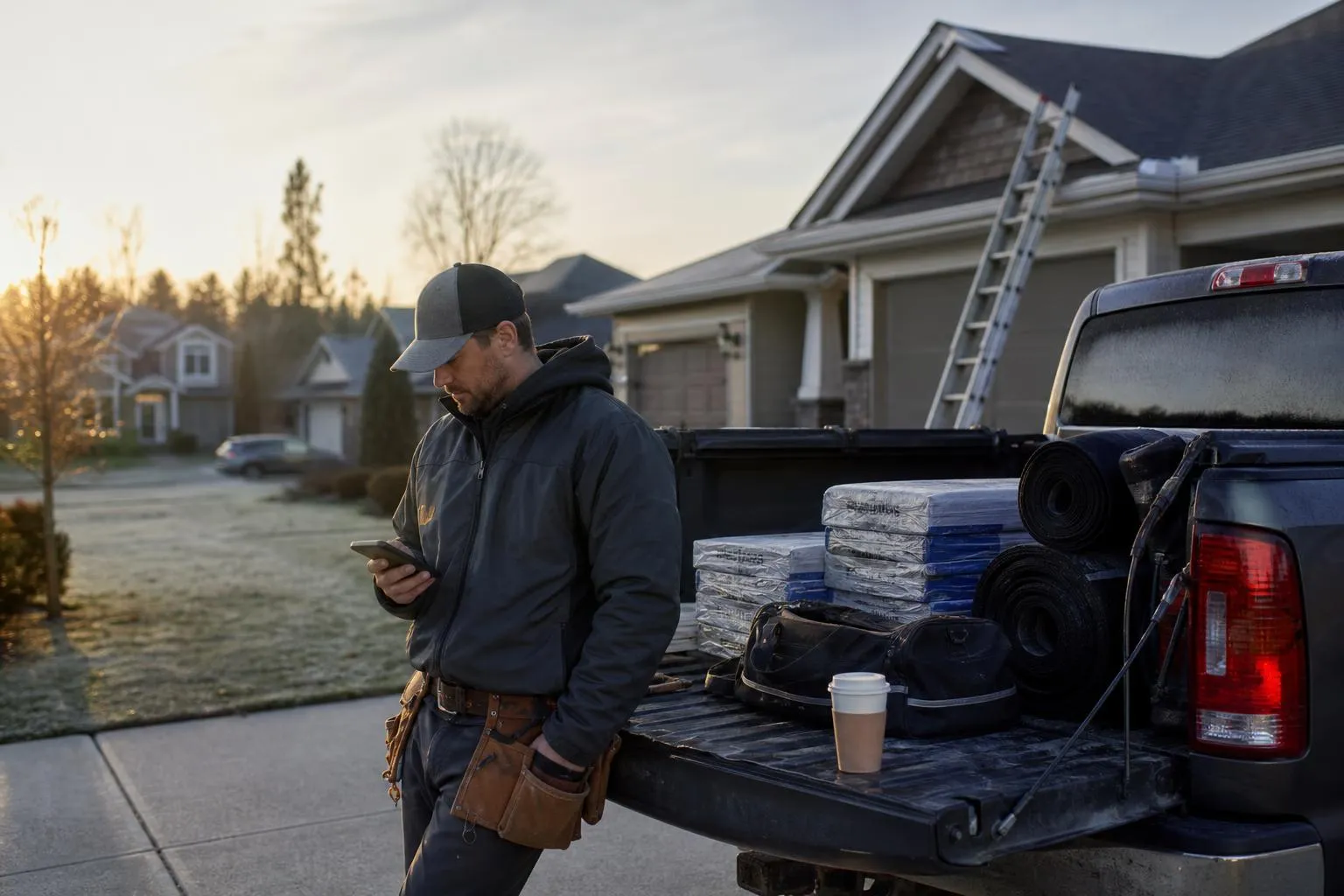
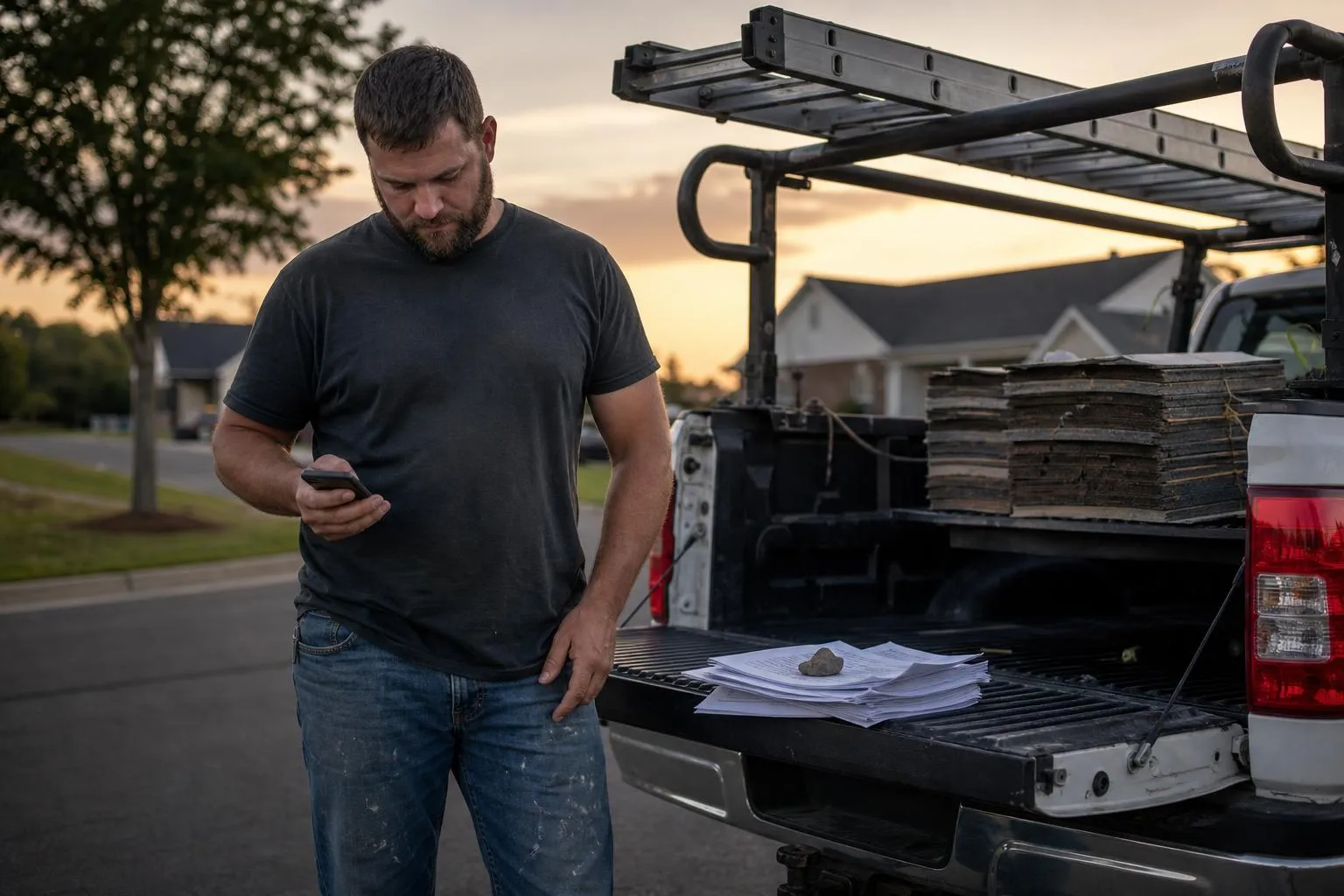
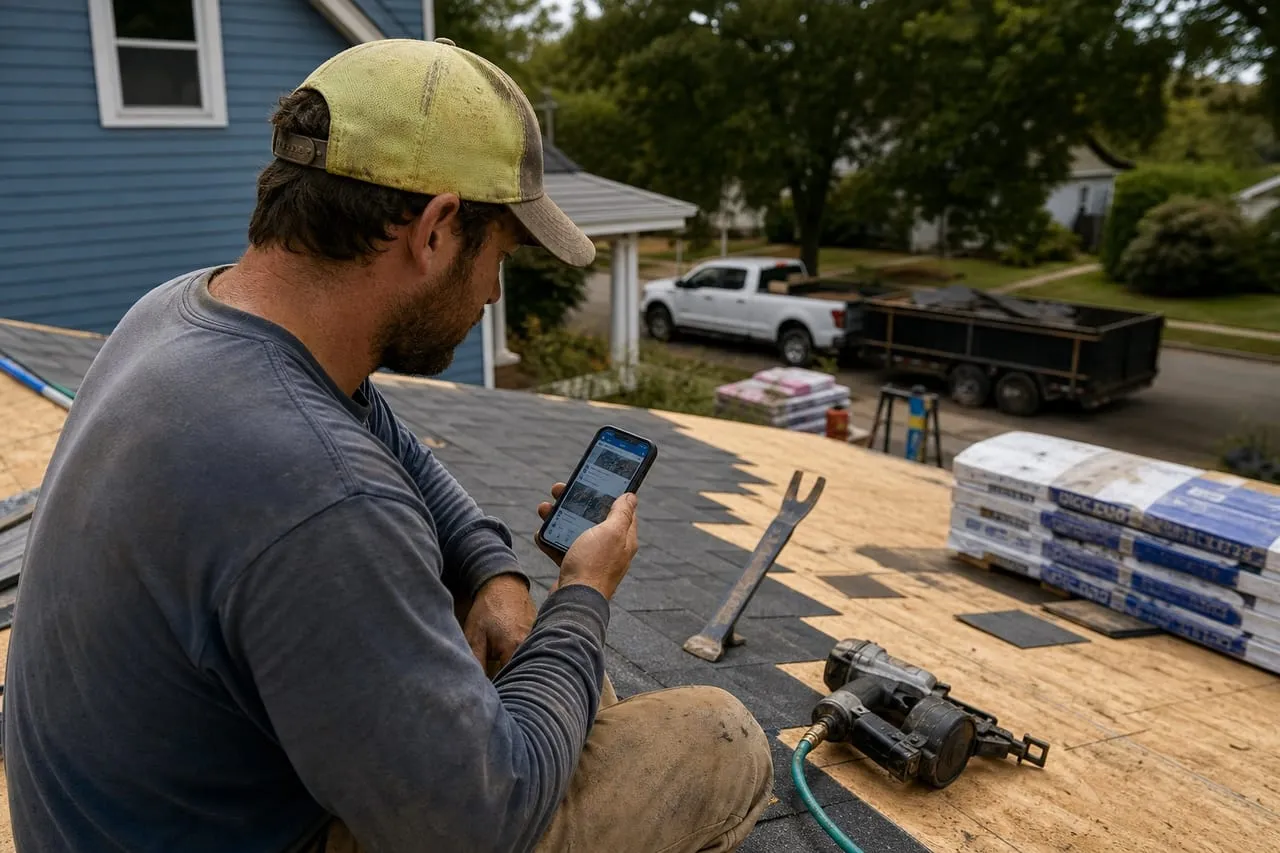
Skip stock photos. They underperform raw jobsite footage by 3-5x. The crew on the roof in branded shirts is your best ad. See how to promote on Instagram for the same approach in a different feed.
The reason raw footage wins is not aesthetics. Homeowners scroll past anything that pattern-matches to a national ad, partly because polish reads as expensive. A shaky phone clip of your crew tearing off shingles three streets away reads as local, real, and affordable, and the algorithm rewards whatever stops thumbs. One practical habit solves the creative pipeline forever: shoot ten clips at one jobsite per month (tear-off, dump trailer filling up, the magnet sweep, the homeowner saying thanks) and you have thirty days of ads for zero production budget.
Lead-gen forms vs. landing pages
Facebook gives you two ways to capture leads:
- Instant Forms (Lead Ads): form fills inside Facebook. Cheaper leads ($15-$40), higher volume, lower quality. Use for volume markets.
- Landing page conversion: traffic goes to your website’s quote form. More expensive leads ($35-$80), higher intent, better closing rate. Use when phone team capacity is the bottleneck.
Instant Forms: pros
- Lowest cost per lead and highest volume
- No website required; fields pre-fill from the user’s profile
- Sync to a CRM via Zapier in real time
Instant Forms: cons
- Close rates run 8-15% versus 20-35% from landing pages
- Pre-filled fields invite submissions people barely remember making
- No pixel-rich site visit, so retargeting pools grow slower
Here is the math most roofers miss: the cost per closed job is nearly identical either way. A $25 instant-form lead closing at 10% costs about $250 per job; a $60 landing-page lead closing at 25% costs about $240. What differs is the workload between those numbers. The instant-form route means ten calls, eight of which go nowhere, for every job. If you are the one making those calls from a roof at lunch, the “cheaper” leads are costing you selling time. Choose by your real constraint: thin budget, take forms; thin phone capacity, take the landing page.
Most roofers run Instant Forms in year one and migrate half the budget to landing-page campaigns by year two. For the landing page itself, see how to make a website.
Retargeting and the lead-recapture funnel
The highest-ROI Facebook spend is retargeting. People who saw your yard sign, drove past your wrapped truck, or visited your website but did not call are 4-7x more likely to convert. (Those offline touchpoints come from the local engine described in how to promote roofing locally.)
Set up these custom audiences:
- Website visitors past 180 days
- People who engaged with your Page or watched 75% of a video
- Customer list upload (past customers’ emails) for referral asks
- Lookalike audiences off your customer list, 1% and 3%
A 20% retargeting share of your Facebook budget typically pulls 30-40% of your conversions. Cheap, easy, almost everyone forgets to set it up.
Retargeting earns its outsized share because of how roofing decisions actually happen. A replacement is a $10k-$15k purchase with a 60-90 day decision window, and most homeowners collect three bids. The contractor who stays visible across those weeks becomes the default choice when the spouse finally signs off. Cold ads have to win attention; retargeting just has to keep it, which is why the same creative costs half as much per result in front of a warm audience.
The follow-up math nobody budgets for
Facebook’s dirty secret in the trades is that the platform usually is not the weak link; the callback is. Owners budget $2,000 for ads and zero minutes for answering them, then conclude “Facebook leads are junk.” The leads were fine. They were just called six hours too late, after the homeowner had already talked to whoever answered first.
Wire the fix before the first campaign: route Instant Form submissions to an SMS on your phone via Zapier or your CRM, and treat the five-minute callback as a job-site rule, the same as tarping the landscaping. Combine Facebook with the Google flow in how to advertise on Google and you cover the high-intent and brand sides of the funnel.
Run your own Facebook and Instagram ads, or hand them off?
Standing up a lead campaign and a retargeting audience is learnable, and a disciplined owner who calls leads back in five minutes will beat a lazy agency outright. What is not free is the grind that keeps it working: fresh creative every month, audiences kept above 100k, and a callback system that never sleeps. We wrote an honest breakdown of when that maintenance load justifies handing off: 6 signs it’s time to hand off your Facebook and Instagram ads. If three of them describe your month, the fee likely pays for itself. When you want it handled, request a free proposal.
Frequently asked questions
How much should I spend per month?
Start at $1,500-$3,000 in month one to gather data. Scale to $5k-$15k once you know cost per lead. Cap year-one Facebook spend at 25-30% of total marketing budget.
Should I boost posts or run ads?
Always Ads Manager, never Boost Post. Boost has 60% of the targeting options and 30% of the optimization. The cost difference shows up immediately.
What’s the difference between a Page and a business account?
Page is the public profile of your business. Business Manager (now Meta Business Suite) is the account holding the Page, ad accounts, pixels, and team access. Set up Business Manager day one. Full setup in how to run Facebook for roofing business.
Why are my leads junk?
Three usual reasons: too-broad geography, too-low age cap, or an offer that attracts tire-kickers (“Win a free roof” pulls garbage). Tighten zips, raise age floor to 35, and use “Free Estimate” not “Free Roof.”
How fast do I get leads?
24-72 hours after launch. Allow 7-14 days of optimization before judging cost per lead.
Your move
Reading this does not book a job.
The owners who pull ahead are the ones who change one thing this week. If you want that one thing to be a website that sells and ads that put it in front of the right people, we build and run both for you.
Straight answer on whether we can help, usually the same day.