Best Way to Start and Get Into the Roofing Business
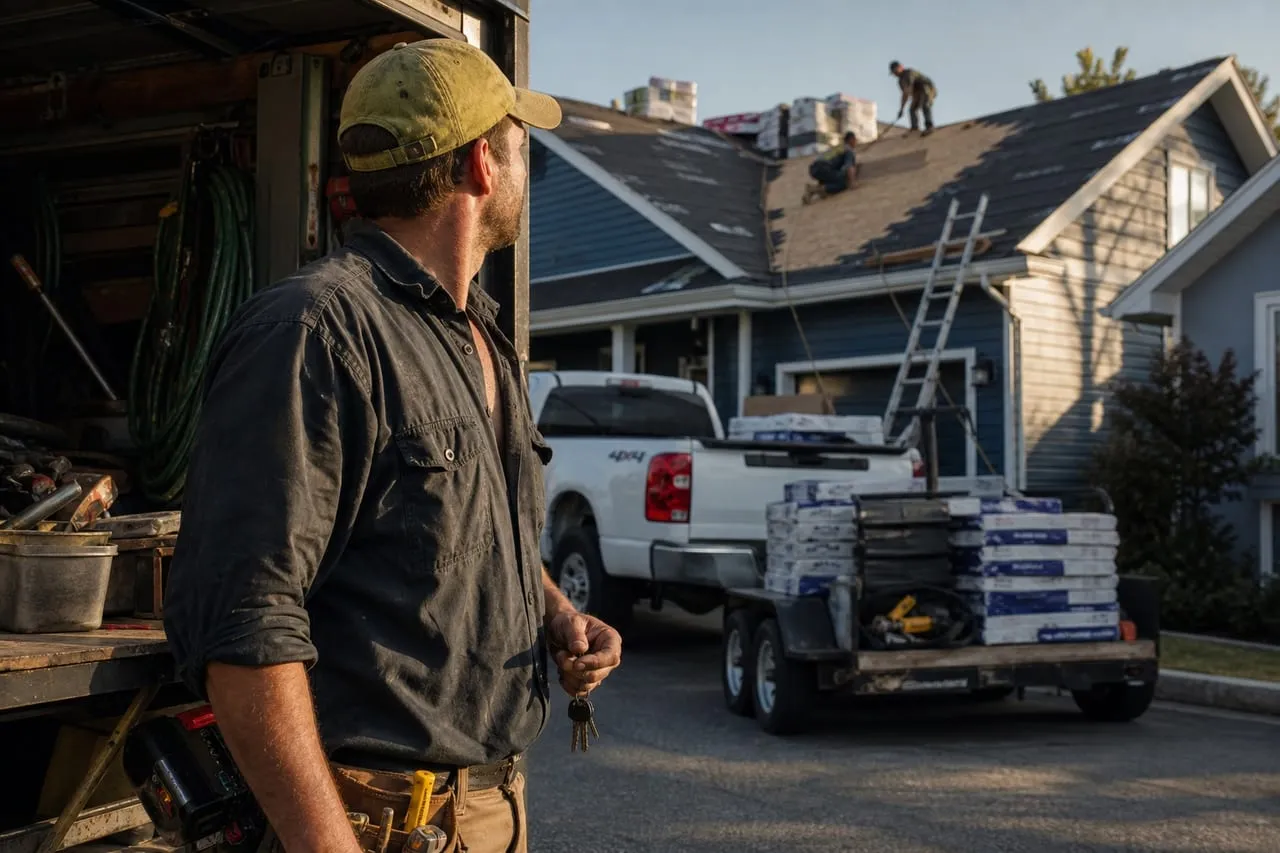
Roofing is one of the few trades where you can go from zero to a full crew booked two months out inside a single season. The work itself is teachable. The bottleneck is paperwork, money handling, and your ability to sell on a homeowner’s front lawn. Here is the sequence that actually gets you operating.
Get legal before you spend on tools
Skip this and one storm chase complaint sinks the business. Form an LLC in your state, get an EIN from the IRS, register a DBA if you want to trade under a brand name, and then pull your state contractor license. Some states (Florida, California, Nevada) require a separate roofing classification. Others (Texas) leave it to local municipalities. Add a license bond if required, then bind two policies: general liability (minimum $1M per occurrence) and workers compensation. WC is non-negotiable the moment you put anyone on a roof, including yourself in most states.
The order is not a preference, it is forced. License boards want to see insurance certificates, insurers want a registered entity before they bind, and supplier credit departments want all of the above. The license is also the long pole: two weeks in a city-permit state, up to four months in California or Florida. File it first and run everything else in parallel while the board processes paperwork, because every week you wait to apply is a week added to the end of the whole project.
Specifics that trip new owners up:
- A C corp or sole proprietor structure makes WC and liability harder. LLC taxed as S corp is the common pick once revenue clears $80k/year.
- Insurance restoration jobs require accreditation. Some carriers want a Haag-certified inspector on file.
- Read how do I set up and register a roofing business for the state-by-state version.
Open supplier accounts and buy the working kit
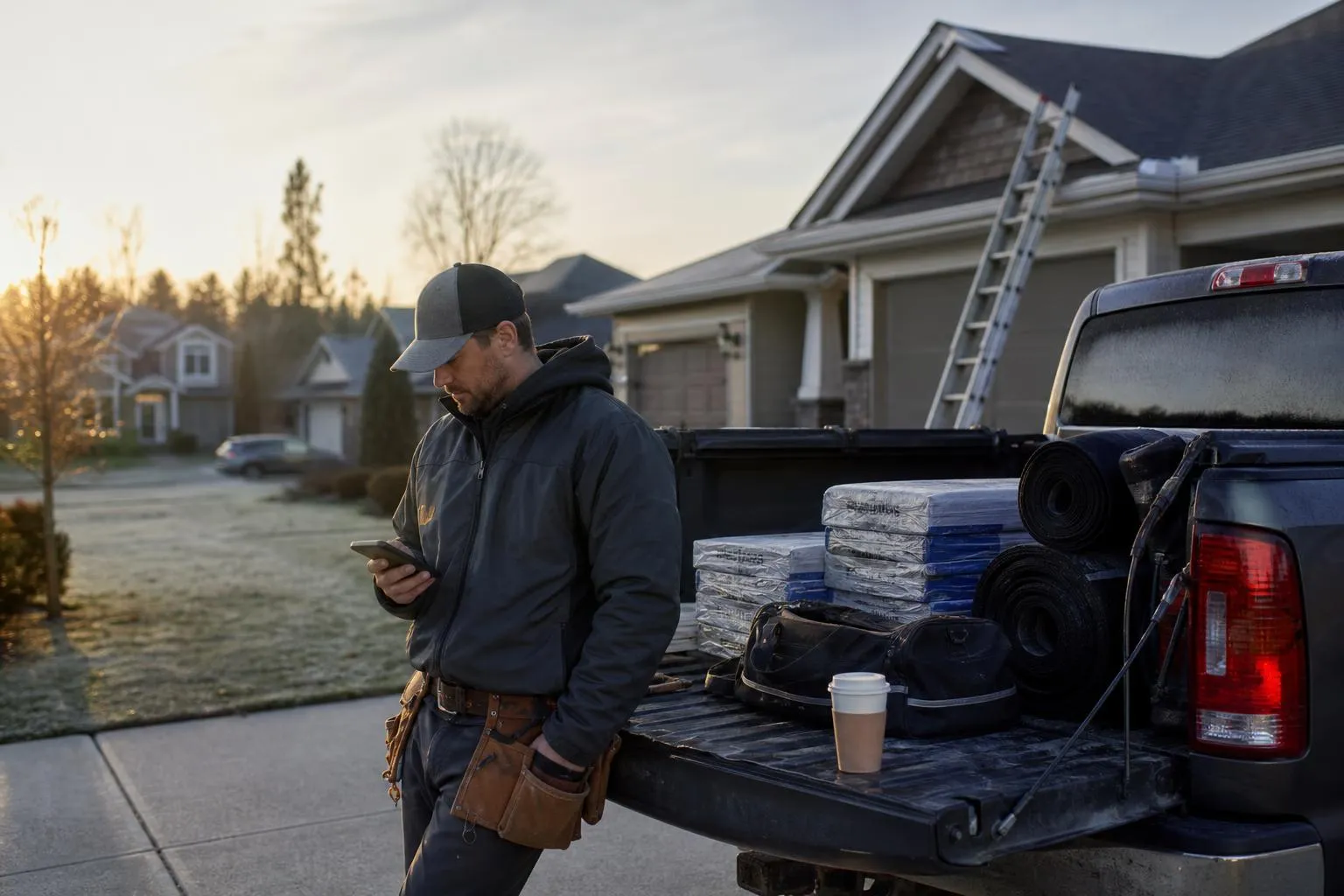
Walk into your local ABC Supply or Beacon Building Products with your license and insurance certs. Apply for a 30-day net account. They will deliver shingles and underlayment to the jobsite, which means you do not stock materials. What you do buy upfront: a 3/4-ton truck or work van, a 12-foot dump trailer, two 32-foot Werner extension ladders, harnesses with roof anchors, tear-off forks, two Bostitch or Hitachi coil roofing nailers, a framing nailer, a Rolair or RIDGID 4-gallon compressor, tarps, hard hats, and a chalk line.
Understand what that net account actually is: the financing arm of your business. Roofing is one of the few trades where the supplier drops $4,000 of material at the roofline the morning of the install and does not want payment for 30 days. Collect a deposit at contract signing and the homeowner is funding the job before the shingle truck arrives. Run that timing correctly and a roofing company is cash-positive from the first job, which is why undercapitalized roofers survive where undercapitalized remodelers fold.
Total damage for a starter kit runs $10k-$25k depending on truck condition. Full breakdown lives in buying equipment and supplies for your roofing business.
Book the first job, then scale leads
Your first paying job covers cashflow until net-30 supplier terms kick in. Most owners get it from a friend, a neighbor, or a Facebook post. Treat that job as the start of the flywheel, not a one-off favor: it produces your first before-and-after photos, your first review, and your first yard sign on a visible lawn. After it, a handful of channels carry small roofers, and they behave very differently:
| Channel | Cash cost | First lead | What to know |
|---|---|---|---|
| Door-to-door after a storm | Door hangers, about $0.30 each | 24-72 hours | The volume play in hail markets; be on the streets within 48 hours |
| Google Business Profile + reviews | $0 | 2-6 weeks | Compounds for years; carries retail roofers once 20+ reviews land |
| Yard signs at every jobsite | $8-$15 per sign | 1-2 weeks | One sign produces 1-3 calls while the job is visible |
| Local Service Ads | Pay per lead | Days | Converts at 25-40% because the homeowner calls you |
| Insurance restoration pipeline | Accreditation + time | 18-36 months | The long game; adjuster relationships compound like reviews do |
The pattern in that table is the whole marketing strategy: free channels are slow and compounding, paid channels are fast and rented. Run the fast ones (canvassing, yard signs) for cash this season while the slow ones (reviews, adjuster relationships) build the business you will own next season. Add Google Local Service Ads once your insurance and license are verified. Full channel breakdown is in how to advertise your roofing business.
Sub crew first, or your own brand from day one
There is a second on-ramp that the licensing brochures never mention: running an install-only crew as a subcontractor for an established roofer at $80-$150 per square, before you ever sell a job under your own name. It is a genuine decision, not a consolation prize.
Subbing first: pros
- Cash flows from week one with zero marketing spend
- You learn production speed and quality standards on someone else’s leads
- Your license, supplier history, and savings build while someone else sells
Subbing first: cons
- The roofer above you keeps the sales margin, which is most of the margin
- One customer controls your entire revenue and can cut you off overnight
- The longer you sub, the harder the jump to charging retail prices
The decision rule: sub for one season if you have crew skills but have never sold anything, and use that season to get licensed and bank reviews from weekend side jobs. Skip straight to your own jobs if you can sell, because selling is the rarer skill and the one the margin actually pays.
Price tight, deliver clean, ask for the review
Bid by the square (100 sq ft of roof). In most markets, a tear-off and replace with architectural shingles runs $400-$650 per square installed. Build in a decking allowance ($60-$90 per sheet replaced) and a clear change-order policy. On delivery, finish what you bid, clean every nail with a magnet sweep, then text the homeowner a review link the same evening. The first 25 reviews compound everything else.
That decking allowance is not fine print, it is the clause that saves you. Nobody knows how much rot hides under the shingles until tear-off morning, and the roofer who eats $900 of plywood on a fixed bid taught himself a lesson the contract should have handled. The same logic applies to a written change-order policy: scope creep on a roof is measured in full sheets and surprise second layers, not minutes, so the contract has to price it before the crew finds it.
Once the jobs stack and you are deciding what the business can actually pay you, the tier-by-tier numbers are in how much profit a roofing business can make.
Frequently asked questions
How much money do I need to start?
$10k-$50k. The low end is a used truck, basic kit, and one round of marketing. See how much you need to start a roofing business for the line items.
Do I need experience swinging hammers?
It helps but is not required. What matters more is being able to manage a foreman who knows the trade and being able to sell. The owners doing $300k/month rarely touch a roof.
How fast can I be making money?
Four to twelve weeks once license, insurance, and supplier accounts are in place. The license is usually the slowest step.
Should I start with insurance restoration?
Only if you live in a hail or hurricane belt and are willing to learn the adjuster game. Otherwise start with retail reroofs and add restoration in year two.
What is the single biggest mistake new owners make?
Underbidding. They forget overhead, fuel, dump fees, and warranty callbacks, then run out of cash at six months. Bid like a business, not a side hustle.
Your move
Reading this does not book a job.
The owners who pull ahead are the ones who change one thing this week. If you want that one thing to be a website that sells and ads that put it in front of the right people, we build and run both for you.
Straight answer on whether we can help, usually the same day.