How Much Profit Can a Roofing Business Make
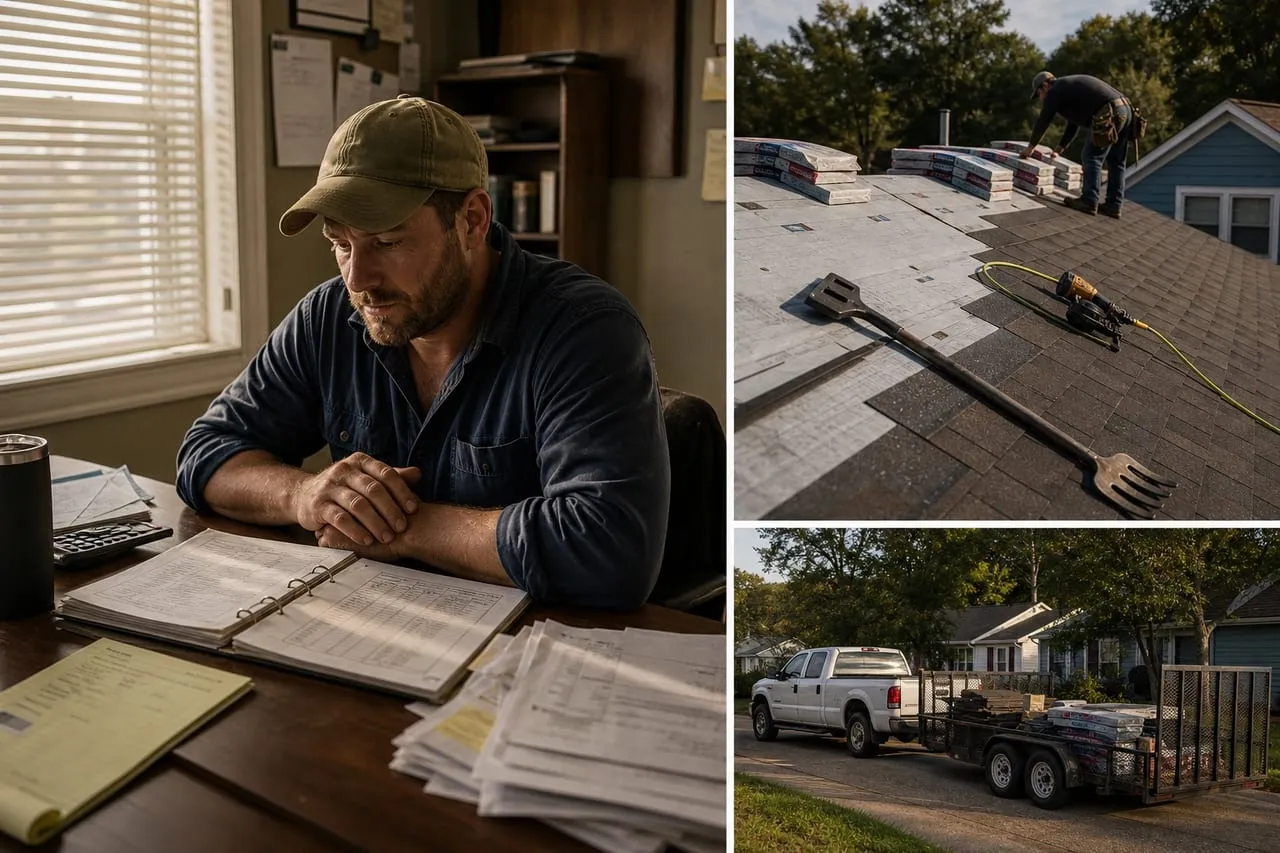
Roofing has one of the better profit profiles in the trades because the average ticket is high ($8k-$25k for a residential reroof), materials are predictable, and a tight crew can finish a job in one to two days. The catch is overhead grows fast once you add staff, vehicles, and ad spend. Here are the realistic ranges by company size.
Single crew, owner-operated
One foreman, two roofers, and the owner selling and running the operation. Typical numbers:
- Revenue: $30,000-$80,000/month at full pace
- Material and direct labor: 55-65% of revenue
- Overhead (truck, insurance, ads, phone, office): $4,000-$8,000/month
- Net profit to owner: $8,000-$22,000/month
A single crew can produce 4-12 reroofs per month depending on pitch, weather, and material complexity. Margins compress in slow months (winter in cold states, deep summer in storm-light years). The owner here is doing every estimate, ordering every load, collecting every check, and stepping on roofs when crews are short.
That lumpiness is the thing first-year owners misread. They extrapolate a $19k June into a $230k year, hire against it, and then meet November. Build the personal budget on the eight-month version of the business and bank the difference, because the crews still want winter paychecks and the insurance installments do not pause for weather.
This is the realistic stop for most one-owner shops. To break past it, see how to grow a roofing business.
Two to three crews with a sales process
The jump to 2-3 crews requires a foreman per crew, a production manager (often the original foreman promoted), and a dedicated sales rep or two. The owner stops being the bottleneck and starts being the operator.
- Revenue: $120,000-$300,000/month
- Material and direct labor: 55-65% of revenue
- Overhead: $15,000-$35,000/month (including office, software, two trucks, two trailers)
- Net profit: $25,000-$60,000/month
Hiring is the bottleneck here. Find the right foreman and the margin shows up. Skip the foreman and you lose the same hours managing crews instead of selling. Pricing discipline matters more at this stage because one $5k underbid eats a week of net profit. The pricing model in setting best prices and billing is what most shops settle into.
The foreman is the first hire that changes the math, and it is worth saying why. Every hour the owner spends sequencing tear-offs and chasing material deliveries is an hour not spent on a homeowner’s lawn closing a $15,000 contract. A foreman costs $60k-$80k plus workers comp; an owner who gets 25 extra selling hours a week out of that trade closes 3-5 additional jobs a month. No other hire, not an office admin, not a marketer, buys back hours that convert to revenue at that rate.
Established company with insurance pipeline
A roofer running 4+ crews, an estimator team, and a dedicated insurance restoration arm can do $400k-$1.5M/month in a storm-active region. Numbers:
- Revenue: $400,000-$1,500,000/month
- Direct costs: 55-65%
- Overhead: $50,000-$200,000/month (full office, marketing department, multiple production managers)
- Net profit: $80,000-$300,000/month
Insurance restoration is the lever. Adjuster relationships, supplements, and code-upgrade scope additions add 10-15 points to the margin on storm jobs. The catch: insurance pipelines take 18-36 months to build, require accreditation, and demand strict process compliance to avoid legal trouble.
For the lead engine that supports this stage, see how to advertise on Google and how to promote roofing locally.
The Three Tiers on One Table
| Single crew | 2-3 crews | Established + insurance arm | |
|---|---|---|---|
| Revenue / month | $30k-$80k | $120k-$300k | $400k-$1.5M |
| Materials + direct labor | 55-65% | 55-65% | 55-65% |
| Overhead / month | $4k-$8k | $15k-$35k | $50k-$200k |
| Net to owner / month | $8k-$22k | $25k-$60k | $80k-$300k |
| The bottleneck | Owner’s hours | Hiring foremen | Process and compliance |
Read the middle row again: direct costs sit at 55-65% at every size. Roofing does not get cheaper per square as you grow, because growth means adding identical crews with identical material lists, not spreading a factory across more units. What scale actually buys is volume and a different job for the owner: at one crew you sell, at three crews you hire, at six crews you run systems. Owners who expect margin expansion from scale quit at crew two; owners who expect a job change keep going.
What actually moves the margin
Three levers separate $200k/year owners from $1M/year owners:
- Closing rate: a 25% closer doing 80 estimates a month is doing the same revenue as a 50% closer at 40 estimates. Train sales like a discipline.
- Job cost discipline: every square should have a labor budget. Pay piece rate when possible.
- Collections speed: every day a check sits in someone’s drawer is a day you are floating their roof. Run mobile payments.
The piece-rate point deserves the full argument, because pay structure is the biggest job-cost decision a roofing owner makes:
Piece rate (pay per square): pros
- Labor cost per job is locked at bid time, so the bid margin survives contact with reality
- Production speed manages itself; good crews finish in days, not weeks
- Top installers out-earn hourly rates and stay with you
Piece rate: cons
- Speed incentives fight quality; without inspections, flashing and cleanup get rushed
- Redo work starts arguments about who eats the squares
- In slow weeks, piece-rate crews drift to whichever roofer has work today
The pattern most established shops land on: piece rate plus a written quality checklist, with the final 10% of crew pay released after the foreman’s inspection and the magnet sweep. That keeps the speed incentive and buys back the quality control. Hourly pay survives mainly in repair-heavy shops where jobs are too varied to price per square.
Frequently asked questions
What is a realistic first-year profit?
$50k-$150k take-home for a working owner who lands the first job inside 60 days. Less if you stall on licensing or insurance.
Why is the margin range so wide?
Closing rate, ad efficiency, and storm exposure. A roofer in a hail belt with a tight ad funnel does double the revenue of the same operator in a quiet market.
Is insurance restoration more profitable than retail?
Per job yes, by 5-15 margin points. Per year, only if you can sustain a steady flow of storm work. Most successful shops blend both.
Can a solo owner clear $500k/year in profit?
Not without crews. The math caps a single-crew operation around $200k-$250k take-home. Past that you need a foreman.
How long until I can pay myself a salary?
Most owners pay themselves a small draw from month one ($3k-$5k) and bump it to $8k-$15k by month six. The temptation to leave everything in the business is real but burns out fast.
Your move
Reading this does not book a job.
The owners who pull ahead are the ones who change one thing this week. If you want that one thing to be a website that sells and ads that put it in front of the right people, we build and run both for you.
Straight answer on whether we can help, usually the same day.