How to advertise a roofing business on Google
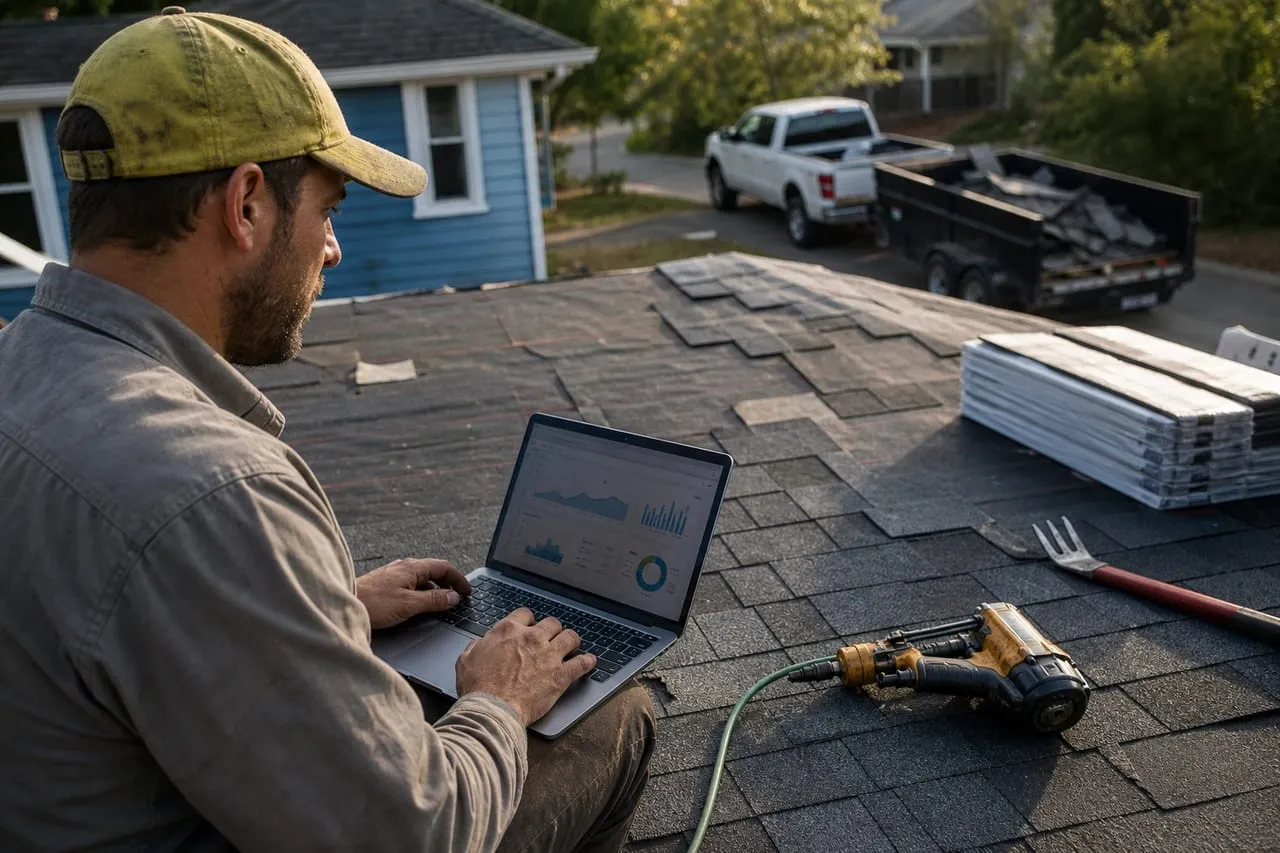
Roofing leads are some of the most expensive on Google. In LocaliQ’s 2025 search ad benchmarks for home services, roofing and gutters had a median click of $10.70 and a median cost per lead of $228.15, the highest cost per lead of the 16 trades in the report. That is why so many owners who “try Google” burn a month’s budget, get a few tire-kickers, and decide the channel does not work for roofers. Usually they started in the wrong product.
Local Services Ads bill per lead instead of per click, so you stop paying for the clicks that never call. Placement is not only about money either: Google says bids can move an ad higher, and that responsiveness and reviews still matter. A solo roofer who answers every call and keeps fresh reviews coming can hold his own against a bigger shop that lets calls ring out. That makes it the rare paid channel where being small is not a handicap, and it sits above the map pack in front of homeowners searching for a roofer near them. Here is the priority stack, in the order to switch it on.
This page helps you decide whether Google is worth the money and where to start. Once you have decided, how to run Google Ads for a roofing business covers what a well-run account looks like.
Local Services Ads first, always
Local Services Ads (LSAs) sit above the regular search ads and the local map pack. They show your business name, star rating, the badge Google adds once your checks clear, and a tap-to-call button. You are charged for each valid lead, not each click. Google does not publish a price per lead: you set a weekly budget and a bidding mode, and what a lead costs moves with your market, your bid and the job.
What Google checks before the ad runs, all of it paperwork only the owner can supply:
- An active state contractor license, where your state requires one
- Active general liability insurance
- A background check on the business owner
- A defined service area and list of services
Reviews are not on that list, but they feed your placement, so start asking every customer before you apply. Approval commonly takes a few weeks.
The pay-per-lead model changes who carries the risk. On search ads, you pay for every click whether or not the visitor ever calls. On LSAs, Google filters out spam and duplicate contacts, does not charge for leads it judges invalid or low quality, and credits a charged lead automatically if it later decides the lead was poor. If a lead was junk, say so in the feedback survey for that lead.
That is the lever to understand before you set a budget. Bids can move you up the page, but the cheapest gains are operational: more recent reviews and a faster answer on the phone. A bigger budget only pays if someone answers the extra leads.
| Google product | You pay for | What it costs | When to add |
|---|---|---|---|
| Local Services Ads | Each valid lead | No published rate; moves with your bid, market and job type | First, once license, insurance and background check clear |
| Search ads | Each click | Median roofing and gutters click $10.70, lead $228.15 (LocaliQ, 2025) | After LSA volume caps out |
| Performance Max | Blended, Google decides where | Varies | Year three or later, once search signs jobs and you have a strong photo and video library |
| YouTube remarketing | Views and impressions | Varies | Once the site has steady traffic |
What a good roofing search account looks like
After LSAs, search ads catch what LSAs never serve: specific high-ticket jobs, active leaks and storm surges. The searches worth paying for name a job and a place, like “roof replacement [city]”, “roof leak repair” or “storm damage roof”.
Good looks like this: searches from job seekers, DIY questions, supply-store shoppers and calculator browsers are kept out, and someone reads the actual search terms every week. Every click lands on a page for that job and that city, with the phone number in view. Calls count as leads, not just form fills. The detail behind each of those lives in how to run Google Ads.
Why it is high-stakes: at a median $228.15 per search lead in the LocaliQ data, a leak is never small. A junk search that should have been blocked, a default setting that shows your ads two counties over, or a landing page that loses half its callers all hide inside the account, and nothing announces them. The phone just rings less than it should, and you blame the market.
The landing page matters as much as the ad, and how to make a website covers what it needs.
YouTube remarketing and Performance Max
YouTube ads aimed at strangers rarely pay for a roofer, because nobody watching a video was looking for one. Shown only to people who already visited your site, a short video of your crew at work keeps your name in front of a homeowner who is still comparing quotes, which is the one job video does well here.
Performance Max can also work for roofers with a deep library of photos, video and copy, but Google decides where that money goes, and without firm guardrails it drifts into junk placements and your own brand searches. Most one-crew operations should leave both alone until LSAs and search are already signing jobs at a cost they know.
What to run at each stage
| Stage | Products running | What has to be true first |
|---|---|---|
| Solo crew, year one | LSAs only | License, insurance and background check cleared, and someone answering every call |
| Two crews, year two | LSAs + search | You know what a signed LSA job costs, and each main job and city has its own page |
| Three+ crews, year three+ | LSAs + search + Performance Max + YouTube remarketing | Search signs jobs at a cost you know, and the site has steady traffic |
The stage table hides a rule worth making explicit: scale a product only after you know its cost per signed job, not its cost per lead. A $250 lead that signs one job in three beats a cheap lead that never signs, and the only way to see that is tracking leads through to contracts in a CRM or even a spreadsheet. Owners who skip this step tend to end up funding the channel that flatters the lead count.
Combine this with the broader channel mix in how to advertise your roofing business and the Facebook flow in how to advertise on Facebook.
Should you run your own Google Ads, or hand it off?
The LSA side genuinely rewards doing it yourself, because the work that moves it is answering the phone and earning reviews, and no management fee can do either for you. The search account is where it gets expensive fast, since at roofing lead prices every week spent learning the platform costs real money. We put together an honest read on when that tuition stops being worth paying: 7 signs your roofing business needs a Google Ads agency. If several land, the fee is likely cheaper than the leak. When you want it handled, see how we run Google and Meta ads for roofers.
Where these numbers come from
- Search costs: LocaliQ, 2025 search ad benchmarks for home services, April 2024 to March 2025 campaigns. Roofing and gutters: median click $10.70, median cost per lead $228.15 (the highest of the 16 trades listed), median conversion rate 3.70%. Your market can sit well above or below it.
- How LSA leads are charged: Google, how leads work: charges per valid lead, automatic credits, and the 20-second rule for missed calls.
- How LSA placement works: Google, how bidding works for Local Services Ads: bids can move an ad higher, and responsiveness and reviews still matter.
The worked example is illustrative arithmetic, not a client result: the $65 lead, the close rates and the $11,000 ticket are assumptions to replace with your own numbers.
Frequently asked questions
Are LSAs worth it for a brand new roofer?
Usually, once your license, insurance and background check clear and the first reviews are on the profile. The badge Google adds after those checks is a trust signal a new business cannot buy anywhere else.
Why is my search CPC so high?
Partly because roofing is a pricey category: in LocaliQ’s 2025 benchmarks the median roofing and gutters click was $10.70, and the median lead cost $228.15, the highest of the 16 home-service trades. The click price is mostly the market. What you control is how many of those clicks turn into calls: the searches you pay for, the page they land on, and how fast you answer.
Should I use Google Display ads?
Not to find new customers. Display ads reach people who are reading or browsing, not looking for a roofer. At most they work as a reminder to people who already visited your site, and only after LSAs and search are paying.
What conversion rate should I expect on a landing page?
LocaliQ’s 2025 benchmarks put the median for roofing and gutters search ads at 3.70%, roughly one lead for every 27 clicks. Treat it as the number to beat, not a target: a fast page that matches the search and puts the phone number in view is what moves it.
How long until Google Ads pays back?
LSAs can pay back quickly, because you only pay for leads. Search takes longer: the account needs real calls and signed jobs behind it before you can judge it, so give it a couple of months before deciding whether it works.
Your move
Reading this does not book a job.
The owners who pull ahead are the ones who change one thing this week. If you want that one thing to be a website that sells and ads that put it in front of the right people, we build and run both for you.
Straight answer on whether we can help, usually the same day.