How to Make a Website for a Roofing Business
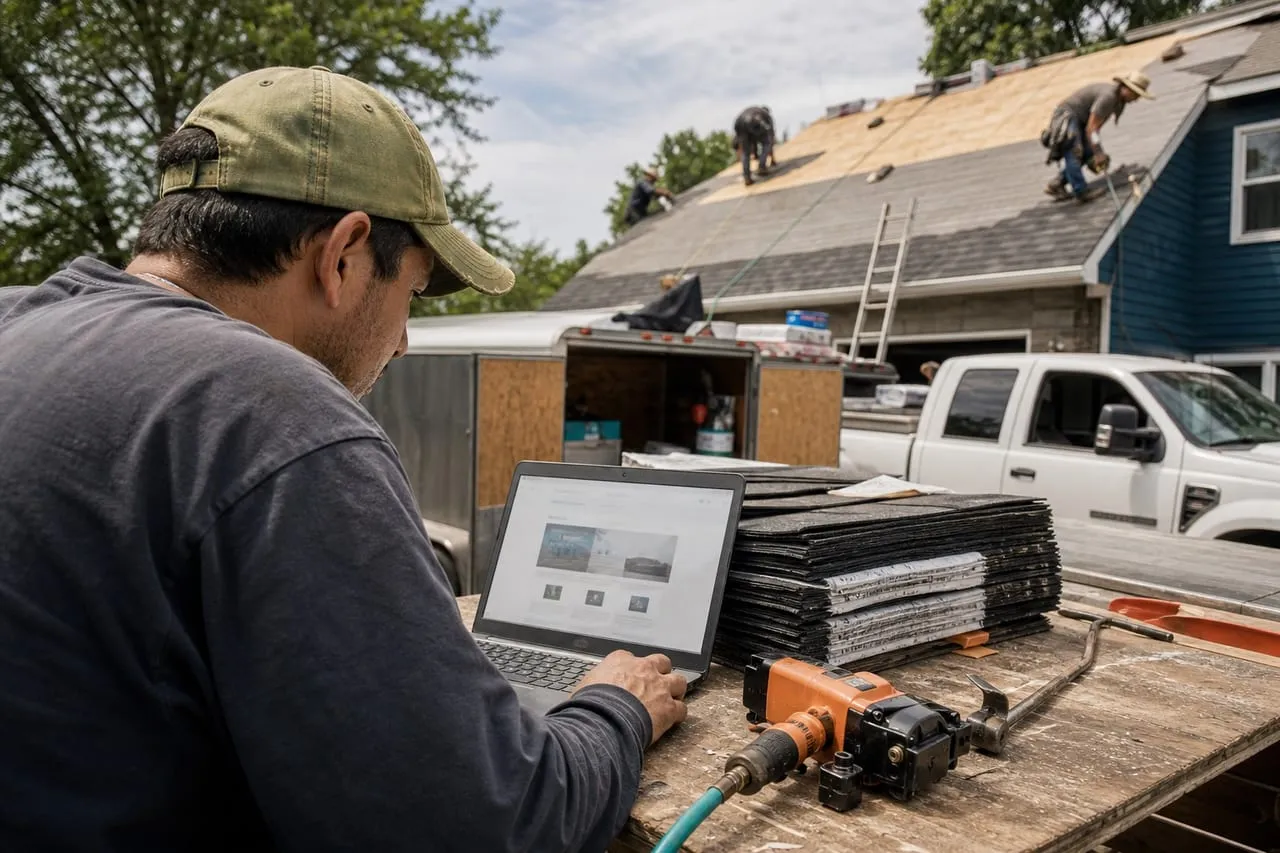
A roofing website does two jobs and nothing else: rank in local search for “roofer near me” plus your city, and convert that traffic into a phone call or quote request. Everything else (animations, testimonial sliders, founder bios) is decoration that costs page speed and conversion rate. Here is the spec for a site that pulls leads.
One framing before the spec: for a local trade, the website rarely wins the click on its own. The Google Business Profile ranks in the map pack, and the site is where the homeowner lands to decide whether to call. Build the site as the closing argument for the profile, not as a standalone billboard, and every decision below gets easier.
Pages that have to exist
A six-to-ten page site beats a single-page site for SEO every time. Build these:
- Home: hero with phone number, services overview, three review snippets, service area, photo gallery, quote form.
- Services: one page per service. Asphalt shingle reroof, metal roofing, flat roof (TPO/EPDM), roof repair, gutter install, storm damage restoration.
- Service area pages: one page per major city or zip you cover. Google ranks these for “roofer + city” searches.
- Gallery: real before/after photos of actual jobs with addresses removed. Drone shots beat ground shots.
- Reviews: embed Google reviews live so the count updates automatically.
- About: short, with team photo and license number.
- Contact: address, phone, hours, embedded Google Map of your service area, quote form.
The reason this structure wins is mechanical, not mystical: Google needs a dedicated page to rank for each search, and “roof repair Plano” and “metal roofing Plano” are different searches. A one-pager forces every query through a single URL and loses to competitors who built the specific page. The trap on service-area pages is duplication: copy the same 400 words and swap the city name, and Google filters them out. Write three sentences of real local detail per city (the dominant housing stock and its age, the last big hail date, the permit office quirk) and the pages stop being clones and start ranking. For deciding which cities to build pages for, see identifying ideal locations.
Conversion elements that move the needle
A roofing site lives or dies by three things:
- Click-to-call button in the top right corner on every page. Mobile users tap it 3-5x more than they fill a form.
- Quote-request form under 6 fields: name, address, phone, email, roof type, “what’s going on.” Longer forms cut conversions in half.
- Google Business Profile embed showing your live star rating and recent reviews. Trust accelerator.
Add a sticky bottom bar on mobile with “Call Now” and “Get Free Estimate” buttons. Add a phone number in the hero. Add a phone number in the footer. The phone number should never be more than one scroll away.
The phone-first bias is specific to this trade. A meaningful share of roofing searches happen with water coming through a ceiling or the morning after a storm, and that person is not filling out a form and waiting for a reply, they are calling the first number they can tap. Bury the number behind a contact page and the urgent caller, who is also the easiest close in the business, dials the competitor whose number was in the header. Use real photos for the same reason: homeowners notice stock-photo crews with clean hands and rented hard hats, and what that says about you is the opposite of what the reviews say.
Tech stack and tools
You have three realistic paths:
| Path | Cost | Time to live | SEO control | Pick it when |
|---|---|---|---|---|
| DIY builder (Wix, Squarespace, Carrd) | $15-$30/month | A weekend | Limited | You need something online this week |
| WordPress | $50-$200 DIY, $1,500-$5,000 hired | 2-6 weeks | Full | You want to own the asset; most roofers settle here |
| Done-for-you (/get-website/) | From $499 | Days | Handled for you | You want a ready-to-rank site without touching code |
For SEO, install Yoast or Rank Math on WordPress, add structured data (LocalBusiness schema), get Google Search Console verified, and submit a sitemap. Page speed matters: a roofing site should load in under 2.5 seconds on mobile.
What a Lead Is Worth
Owners overthink the build cost because they never price the other side of the equation. Run it once and the website budget stops feeling like an expense.
The discipline this math buys you: track where calls come from. Ask every caller, log it in the CRM or the notebook, and you will know within 90 days whether the site, the signs, or the profile is earning, and where the next dollar goes.
Content that ranks and converts
Beyond the core pages, publish blog content that answers questions homeowners ask before calling:
- “How much does a new roof cost in [city]?”
- “Signs your roof needs replacing”
- “How to file a storm damage insurance claim”
- “How long does an asphalt shingle roof last?”
Two-thousand-word answers, real photos, and a quote form at the bottom. Each post can rank for 5-20 long-tail searches and pull leads for years. The cost question converts best of the four, because the homeowner researching prices is late in the decision, not early; answer it with honest ranges and you are the only roofer in the room while they decide. One real post a month beats ten thin ones, and none of it matters until the core pages and the profile are done. Pair the site with the lead funnel in how to advertise on Google and the canvassing approach in how to promote roofing locally.
Building the site is step one. Should you do the SEO yourself?
Getting the site live is the easy half. Making it rank for “roofer near me” and a page per city you cover is slow, compounding work: schema, page speed under 2.5 seconds, internal links, and a Google Business Profile that feeds the map pack. We wrote an honest guide on when that work is worth paying a professional for and when a new roofer should just wait and bank reviews first: when to hire an SEO agency (and when to wait). Do the free NAP and profile work yourself regardless. When you want the ranking handled, request a free proposal.
Frequently asked questions
How much should the site cost?
DIY: $30/month. Freelancer: $1,500-$5,000. Done-for-you: $499-$2,500. Pick based on whether you want to learn or want speed.
Do I need a blog?
For SEO yes. For conversions only after you have 20+ blog posts ranking. Most one-crew roofers skip the blog until year two and grow on Google Business Profile alone.
Should I include pricing?
A range yes (“most reroofs in our area run $8,000-$25,000 depending on size, pitch, and material”). A fixed per-square price no, because every job varies.
What hosts should I use for WordPress?
SiteGround, Kinsta, or Cloudways. Avoid GoDaddy hosting and Bluegrass-tier shared hosts. Page speed is a ranking factor.
Do I need an SSL certificate?
Yes, and it is free. Most hosts include Let’s Encrypt automatically. Google will not rank a site without HTTPS.
Your move
Reading this does not book a job.
The owners who pull ahead are the ones who change one thing this week. If you want that one thing to be a website that sells and ads that put it in front of the right people, we build and run both for you.
Straight answer on whether we can help, usually the same day.