Your Painting Website Looks Sharp on a Monitor. Your Best Bids Are Being Judged on a Phone in a Driveway
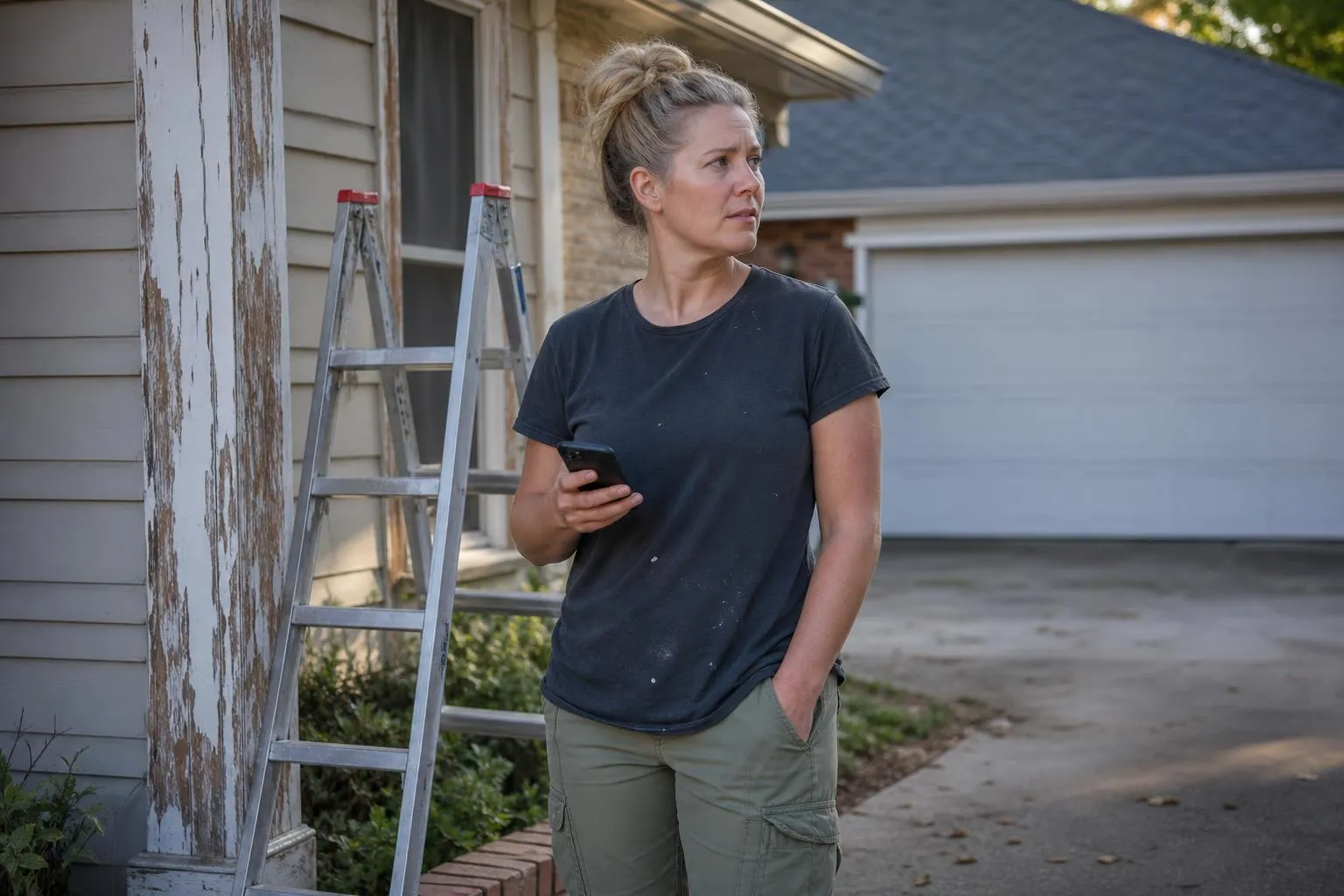
Wednesday, 4:15 p.m. A homeowner is standing beside three parked cars in her driveway, looking up at peeling trim she’s been putting off for two years. She just hung up with a painter who quoted $9,800 and sounded rushed. Before she calls back, she wants to see who else is out there.
She opens her phone right there in the driveway. This is exactly the moment your website has to earn: a homeowner mid-decision, phone in hand, thumb doing the deciding.
Here’s what happens on searches like hers, over and over. She taps a result. The page crawls in. What she gets is a shrunk-down desktop layout: paragraph text too small to read at arm’s length, a menu that won’t tap open, a portfolio slider stuck mid-transition. She hunts for the phone number and finds it embedded in a logo image, unclickable.
Back button. Next name on the list. Some other painter gets the callback.
You’ve never once seen the site your customer sees
Here’s why this failure hides so well: you and the homeowner comparing bids have never looked at the same website.
You saw it on a wide desktop monitor, probably the day your web guy sent the preview link. It looked legitimate. It still does, on that screen.
She’s on a phone, standing in a driveway or sitting in a parked car between estimates, thumb-scrolling three contractor sites in twenty minutes. The research behind that moment is unforgiving.
| Mobile reality | The number |
|---|---|
| Visitors gone if the page takes over 3 seconds to load | 53% (Google) |
| Conversion lost per extra second of load time | about 4.4% (Portent) |
| Rise in bounce probability from a 1-second load to 10 | 123% (Google) |
| Average mobile page load time | 8.6 seconds |
The average page takes 8.6 seconds; her patience is gone by 3. Most painting company sites fall on the wrong side of that math, which is why page speed gets its own deep dive later in this series.
So you keep seeing a fine-looking site and a calendar with fewer bids than you’d like, and never draw the line between the two. There’s no notification when a homeowner bails mid-load. It just happens, quietly, dozens of times a month, on a version of your site you’ve genuinely never opened.
The bigger the bid, the less patience she has for a bad page
For a small touch-up job, a clunky mobile site costs you a little friction. For a full exterior repaint, it costs you the entire bid.
Your highest-value leads (two-story exteriors, whole-house interiors, cabinet refinishing packages running $6,000 to $18,000) are being researched on a phone while three quotes sit open in three tabs. These homeowners are not loyal to whoever answers first, they’re loyal to whoever’s page loads fastest and looks most credible in the next ninety seconds. The person wanting one bedroom repainted might forgive a slow site. The one weighing an $11,000 exterior job, with two competing bids already in hand, will not.
The math works against you exactly where it hurts most: the bigger the job, the more bids get compared, and the faster a bad mobile experience knocks you out. Even crews that broke into Google’s local top three still lose the tap when the page behind the ranking chokes.
What a bid-ready mobile painting site actually does
A mobile-first painting site isn’t your desktop layout squeezed narrower. It’s built for someone standing in a driveway comparing three estimates on one screen:
- Loads in a couple of seconds on cellular, in a driveway, not just on your office Wi-Fi.
- A tappable call button in the first screen. Her house, your number, one tap between them.
- Before/after photos up top, because a painting company that can’t show its work in the first five seconds has already lost the comparison.
- Text you can read at arm’s length, buttons a thumb can’t miss.
- Nothing standing between her and the estimate request. Sliders and autoplay galleries slow down the one action that pays your crew, and they quietly erode your conversion rate.
None of it is complicated. It’s simply what a website looks like when it’s built around the person holding the phone instead of the person who approved the mockup.
Can you just patch the site you already have?
Reasonable question. Here’s the honest trade-off.
Patching the old site for mobile
- Cheapest fix up front: a responsive theme swap often runs a few hundred dollars.
- You keep the portfolio and copy you already approved.
- No full rebuild project, back live in days.
Patching the old site for mobile
- The 8-second load usually survives the patch, since the real cause (heavy sliders, unoptimized photos, bloated builders) rides along untouched.
- Tap targets and buried phone numbers rarely get rethought, the page just gets narrower.
- The invisible cost keeps piling up: at 53% abandonment, a patched-but-slow site still loses the exact bids you need most.
A patch reads fine in a screenshot. Nobody comparing three painters in a driveway is grading you on a screenshot.
The test you can’t unsee once you’ve run it
Earlier in this series we made the case that your website isn’t broken, it’s just not doing its job. Mobile is where that claim stops being abstract. The referrals in your calendar happened despite this version of your site. The bids it lost you never even heard about.
Built for the customer holding three quotes at once
We build painting company websites mobile-first: the homeowner comparing bids in her driveway is the design brief, and the desktop version is the adaptation, not the other way around. Click-to-call sits in the first screen, the page loads in about a second on cellular, and before/afters, service area, and reviews sit right up top.
Watch the free video walkthrough of a live site on an actual phone, next to yours. The gap explains itself in about two minutes. And once mobile stops leaking bids, every marketing dollar you spend compounds instead of vanishing; that’s the job of our ongoing growth services.
Frequently asked questions
What does a mobile-first painting website cost?
Our Standard build is $2399£1,899 one-time, and the Growth package is $7500£5,900 one-time, with pricing published on the get-website page. No contracts, you own everything, the site goes live within 7 days, and changes land within 24 hours.
Isn’t a responsive theme already mobile-friendly?
Not the same thing. Responsive means the layout reflows to fit the screen; mobile-first means the phone experience was the actual design brief. A responsive patch on a heavy site still loads in 7 to 9 seconds and still buries the call button.
How many of my leads are actually on a phone when they find me?
For local painting searches, the large majority, typically 75 to 90%. Check the device breakdown in your analytics; estimate-intent pages skew heavily mobile.
Will fixing mobile actually improve my Google ranking?
Yes. Google uses the mobile version of your site as the primary version for ranking, not the desktop one. Speed and usability feed the same local rankings that decide who shows up for “painter near me” while she’s standing in that driveway.
Next in this series: The trust tax: how an outdated website kills the referrals you already earned
Your move
Reading this does not book a job.
The owners who pull ahead are the ones who change one thing this week. If you want that one thing to be a website that sells and ads that put it in front of the right people, we build and run both for you.
Straight answer on whether we can help, usually the same day.