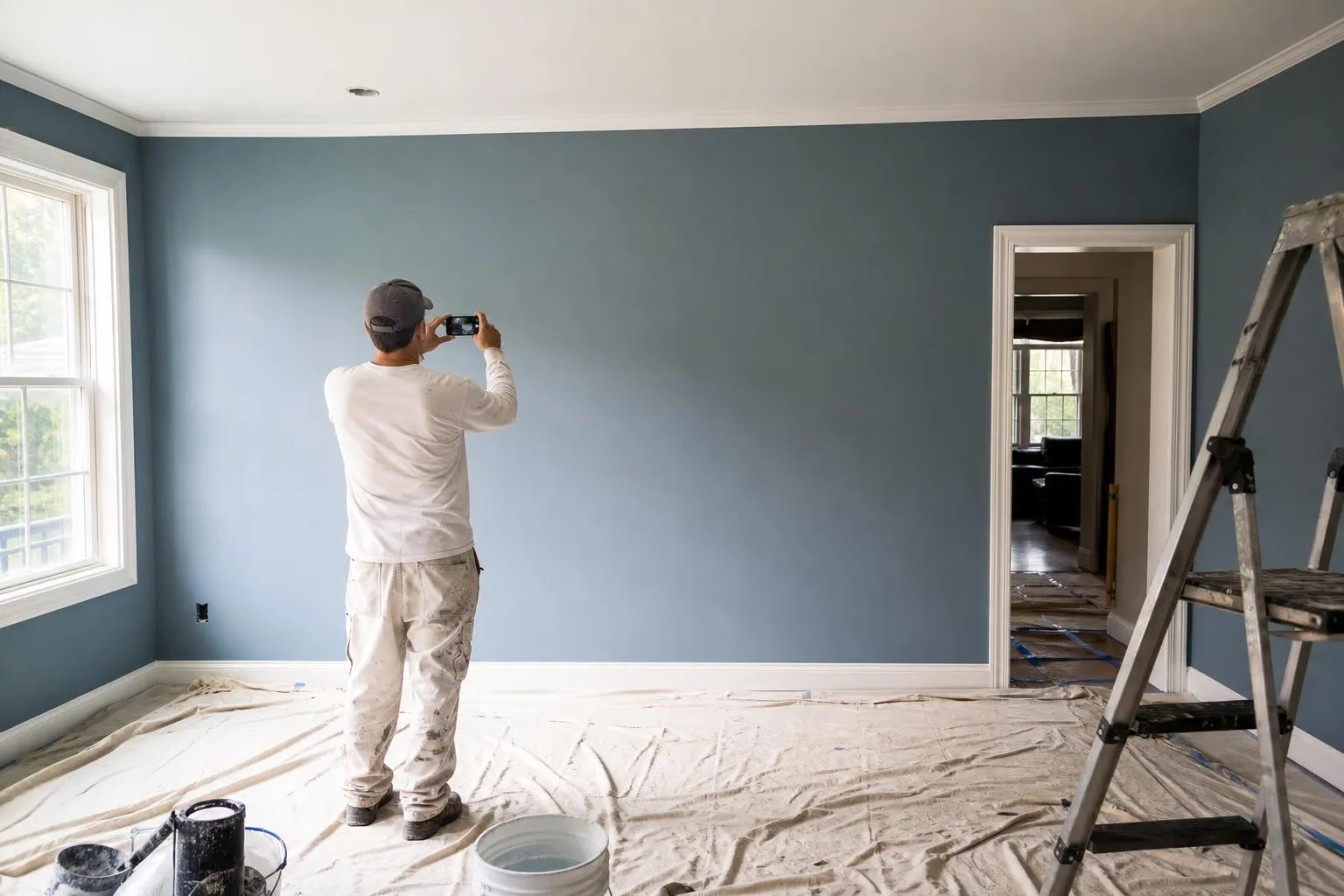
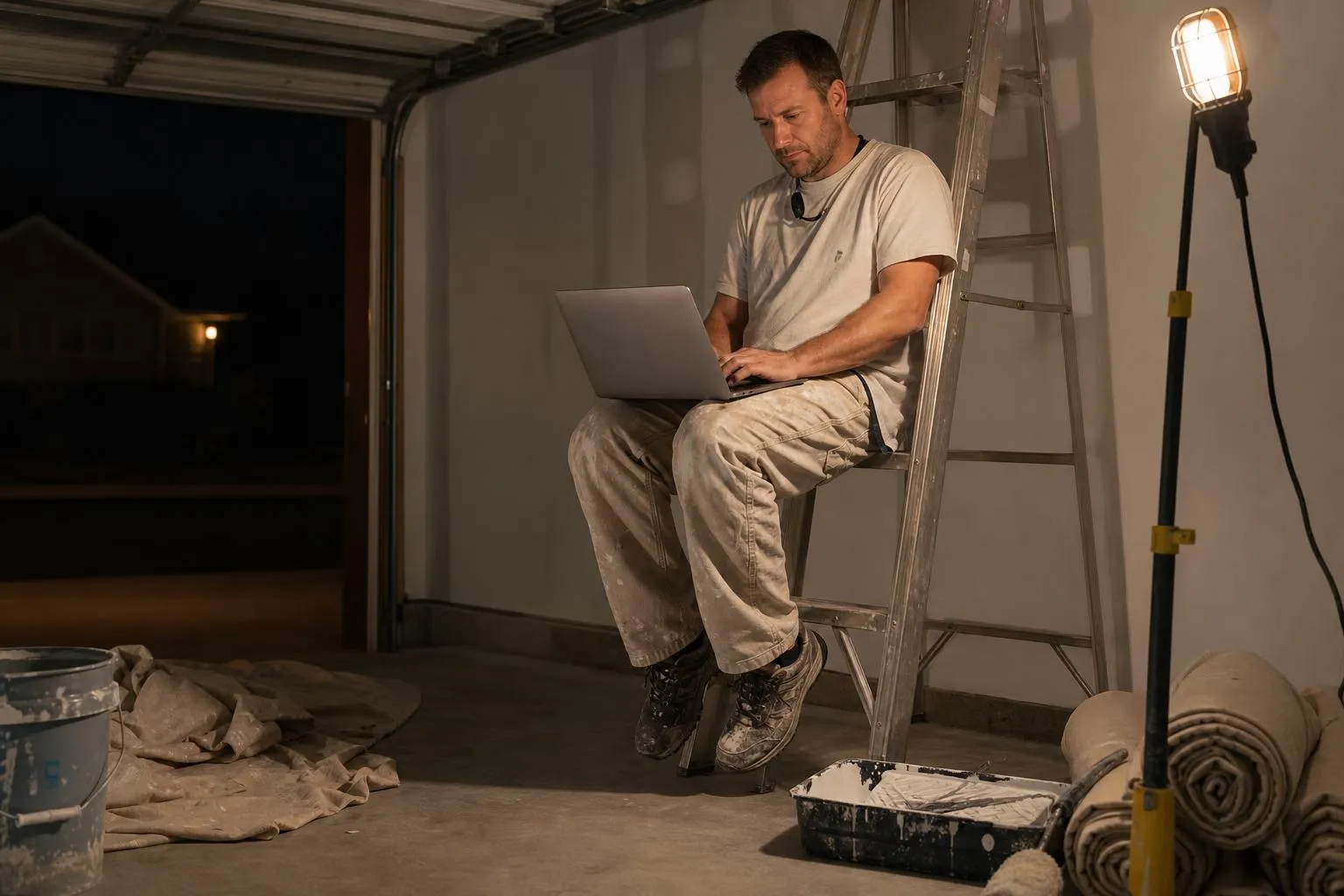
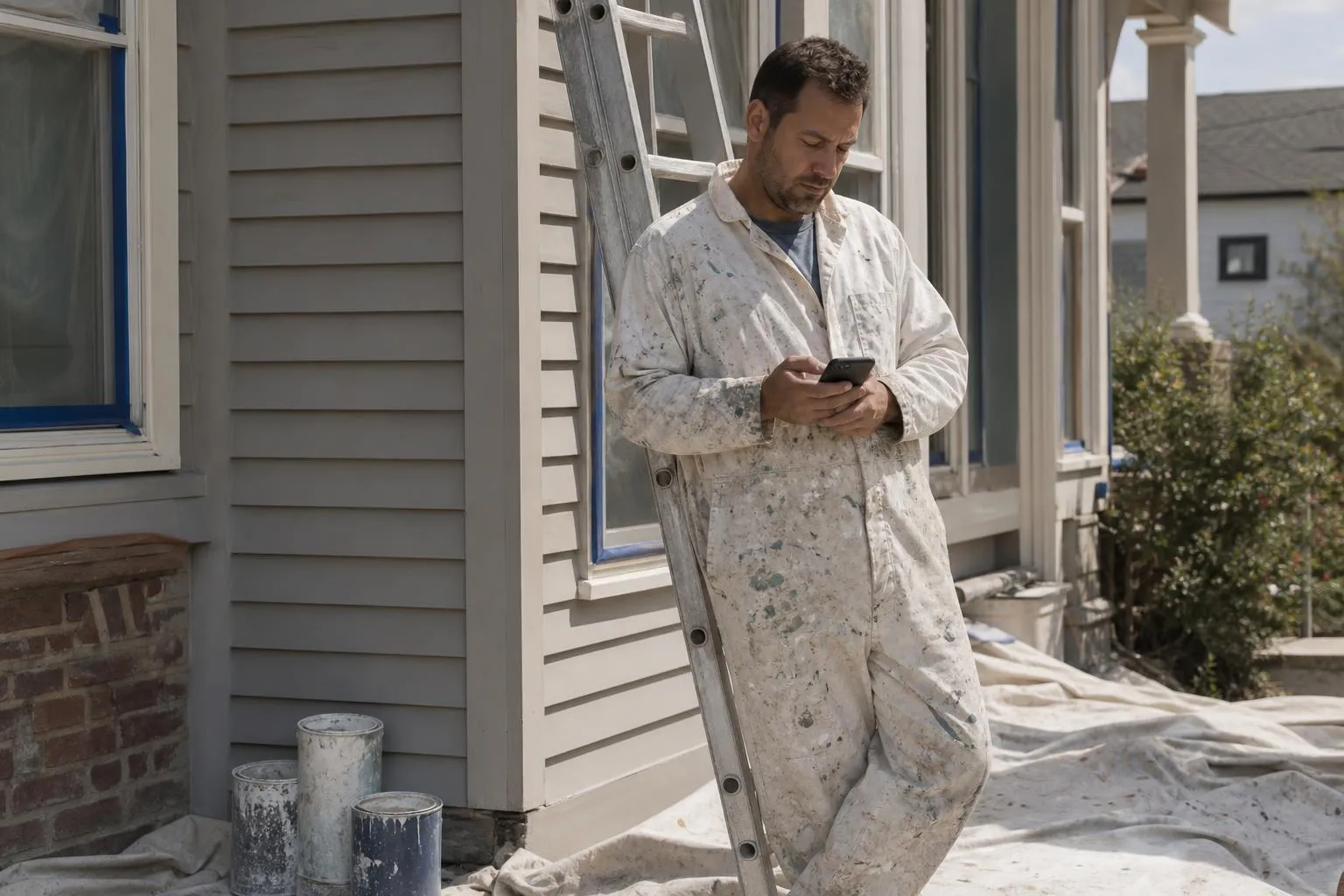
Your Painting Website Isn't Ugly. It's Just Invisible: 7 Signs It's Quietly Costing You Jobs
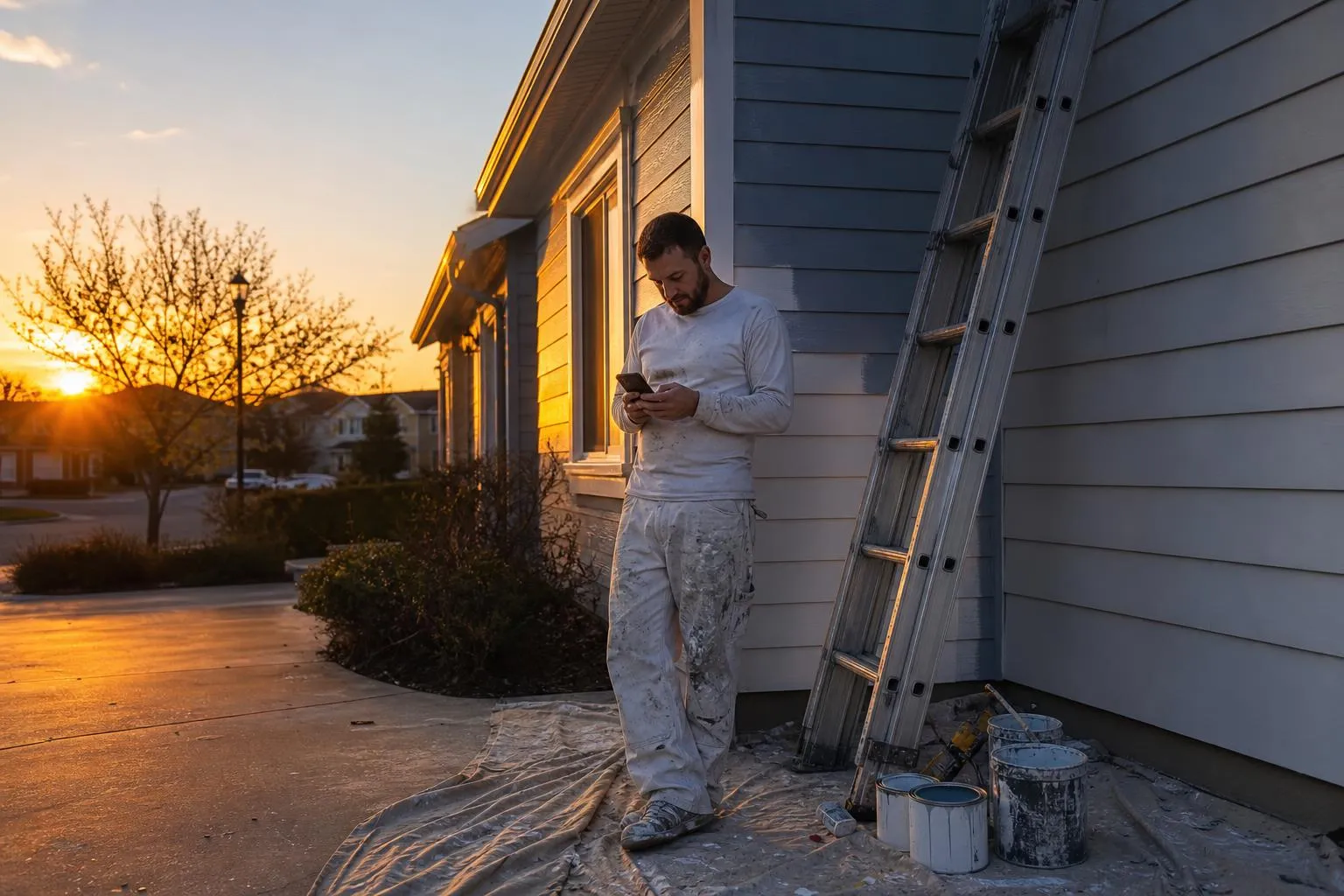
Think of a salesman who works every hour of daylight, never takes a day off, and greets every single homeowner who’s ever curious about your company. Now imagine he hasn’t closed a deal in months. You’d have pulled him off the floor a long time ago.
That salesman is your website. It never clocks out, it’s very often the first impression a homeowner forms of your crew, and if you’re honest, you probably can’t name the last bid it actually produced. Nothing about it screams broken. It loads. Your number’s on there. That’s exactly the problem: a website that fails silently never forces you to fix it. Here are seven signs yours might be one of them.
You can’t trace a single bid back to the site
Sign 1: you can’t remember the last website lead you bid. Not a homeowner who already knew your crew from the neighborhood. A stranger who found you through search and reached out cold. If that list is empty for the last 30 days, your website isn’t selling. It’s just sitting there.
Sign 2: you don’t actually send anyone to it. When someone at a hardware store asks who painted your last house, do you say “check us out online,” or do you text over three photos because deep down you know the site won’t seal the deal? If you’re steering people around your own homepage, that’s your answer.
Every job traces back to word of mouth
Sign 3: your whole pipeline is referrals and repeat customers. That’s the best kind of reputation to have, and it should stay your backbone. But if it’s 100% of the business, growth only moves as fast as neighbors talk. A working website is the second engine, pulling in the homeowner who’s never met anyone on your crew. Getting clients for a painting business covers the fuller strategy, but search is the channel that runs while you’re on a scaffold.
Getting a quote takes more than five seconds
Sign 4: a visitor can’t get a ballpark quote or call you in five seconds. Load your site the way a homeowner would and time it. If the phone number isn’t a single tap, if the estimate form has ten fields before it lets someone submit, every extra step is a place for traffic to bail.
The average visitor gives a site about 8.6 seconds before deciding. Someone comparing three painters from their couch on a Sunday night isn’t going to hunt for a contact page; they’re tapping whichever site is easiest.
The portfolio is stale and there’s nothing proving the work
Sign 5: nothing on the site has changed since it launched. Check the footer for the year. Look at the project photos, are they from a house that’s been repainted twice since? A frozen site tells a homeowner one of two things: this crew is too busy to care about their own front door, or maybe they’ve closed up shop. Neither wins a bid.
Sign 6: there’s no proof anyone actually hired you. Homeowners can’t judge a cut line or a primer coat from a photo, so they judge what they can see: reviews, real before/afters, your license and insurance badge. Roughly nine in ten people trust online reviews as much as a friend’s word, so the painter showing 50 real reviews and an actual portfolio beats the one running stock photography of a roller on a wall, which quietly says there’s nothing real to show.
You’ve only ever tested it on a laptop
Sign 7: your customers meet your site on a phone, usually while sitting on three other estimates. Most searches for a painter now happen on mobile. If you’ve only ever pulled up the desktop version at the office, you and your customers are looking at completely different websites, and theirs decides whether you get the callback. Worth its own read: how mobile customers browse painting websites.
Phones are also where slow, photo-heavy painting sites get punished the hardest. The numbers are blunt:
| Page load time | What it does to your visitors |
|---|---|
| Over 3 seconds | 53% of mobile visitors abandon the page (Google) |
| Each extra second from 0 to 5 | Conversions drop about 4.4% per second (Portent) |
| 1 second slips to 5 seconds | Bounce probability rises 90% (Google) |
| 1 second slips to 10 seconds | Bounce probability rises 123% (Google) |
If your gallery needs 7 seconds to load a dozen full-size before/after shots, most homeowners never see the proof that would’ve won the bid. How a slow painting website loses jobs breaks down where those seconds disappear.
What a website that wins bids actually does
None of this means the site needs to look fancier. Looks aren’t the job. A painting website that works does three things without compromise: it shows up when homeowners search locally (worth fighting for the Google top 3 map results), it convinces a visitor in seconds you’re the trustworthy option over a franchise, and it makes requesting a quote effortless. That’s the entire spec. Everything past that, animated banners, stock photos, paragraphs about “quality craftsmanship,” is noise.
So, patch what exists or rebuild?
Patching the old site
- Cheap this month: a tappable number and current photos can go up this week
- Your domain and whatever ranking history it has stays intact
- No rebuild eating into your busiest bidding season
Patching the old site
- An outdated theme has a hard ceiling on speed no matter how much you trim
- The mobile layout is locked into the template, and mobile is where the bids are
- Every edit still has to go through whoever originally built it, on their schedule
- You’re still paying to maintain an asset that’s never won you a bid
The difference between a flyer and a real sales channel is invisible from the outside, which is exactly why good painting companies sit on quiet websites for years. It only shows up in one place: how many bid requests actually land. If two or more of these signs sounded familiar, take ten minutes and watch the free video walkthrough of a live painting site built to convert: instant ballpark quotes, click-to-call everywhere, built to outrank the franchises for “painter” plus your city, live in 7 days, and fully owned by you. Pricing is right on the page, no proposal dance. Once bids are flowing, ongoing growth services can push the volume further.
Frequently asked questions
How do I know if my website is actually costing me jobs?
Count strangers, not visits. If nobody in the last 30 days found you through search and requested a bid, the site isn’t producing. Track your inbound calls and form submissions for two weeks and you’ll have a real answer.
Can’t I just keep running on referrals?
Referrals should stay your foundation, but they cap growth to the pace word of mouth spreads. Even referred homeowners check your site before calling, and a stale-looking one quietly loses some of them anyway.
How much does a painting website that actually gets jobs cost?
Our Standard build is $2399£1,899 one-time, and the Growth package is $7500£5,900 one-time, with pricing published openly and no proposal process. Launch takes 7 days, edits go live within 24 hours, and you own the site outright.
Should I fix my current site or replace it?
If the bones are solid, add a tappable number, a real portfolio, and reviews this week. If it fails the 3-second phone test and every change needs a developer, patching is just paying rent on a dead asset.
Next in this series: why the worse painter across town keeps winning the jobs you deserve
Your move
Reading this does not book a job.
The owners who pull ahead are the ones who change one thing this week. If you want that one thing to be a website that sells and ads that put it in front of the right people, we build and run both for you.
Straight answer on whether we can help, usually the same day.