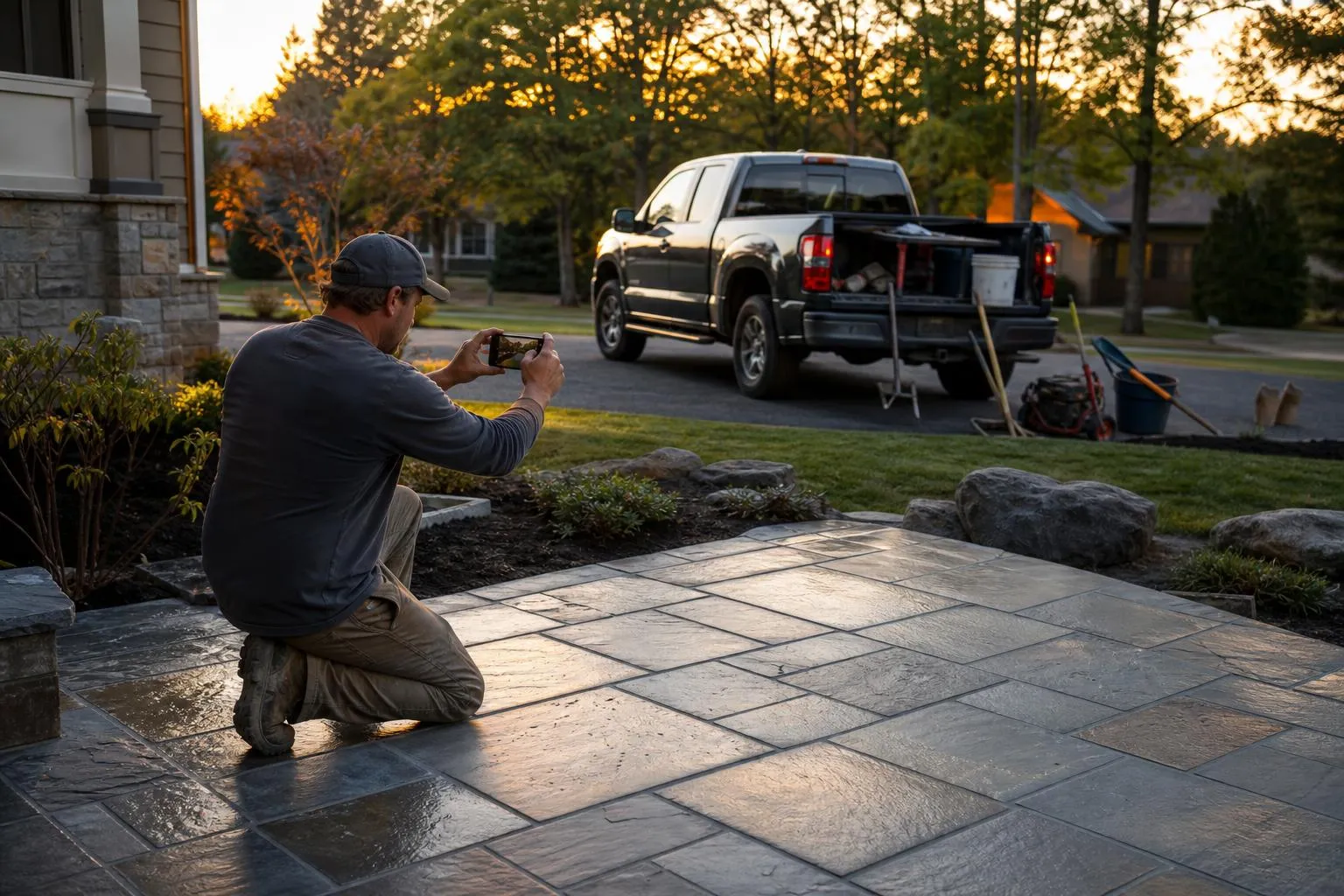
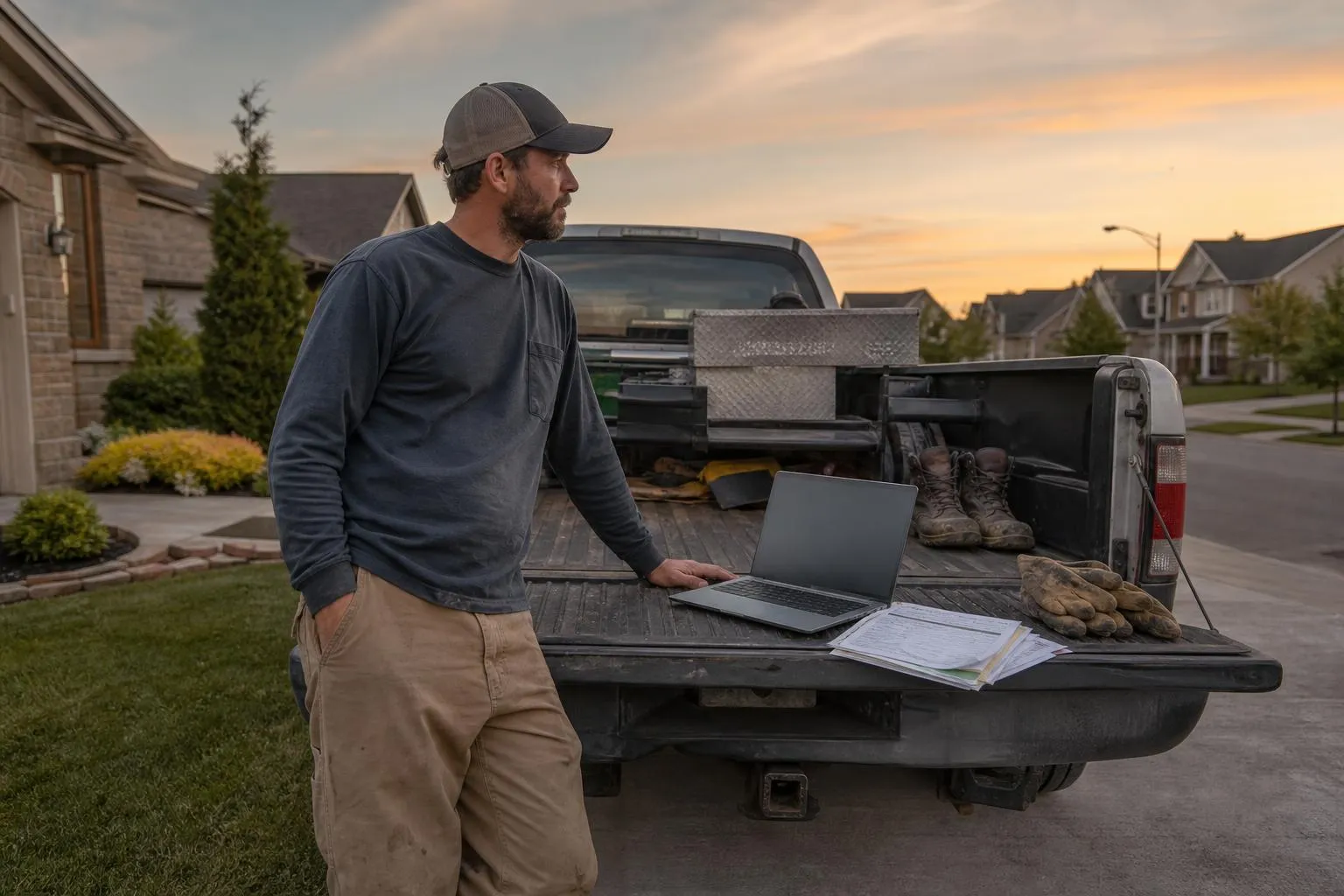
Your Landscaping Website Looks Great on a Laptop. Your Best Leads Are Standing in the Driveway on a Phone
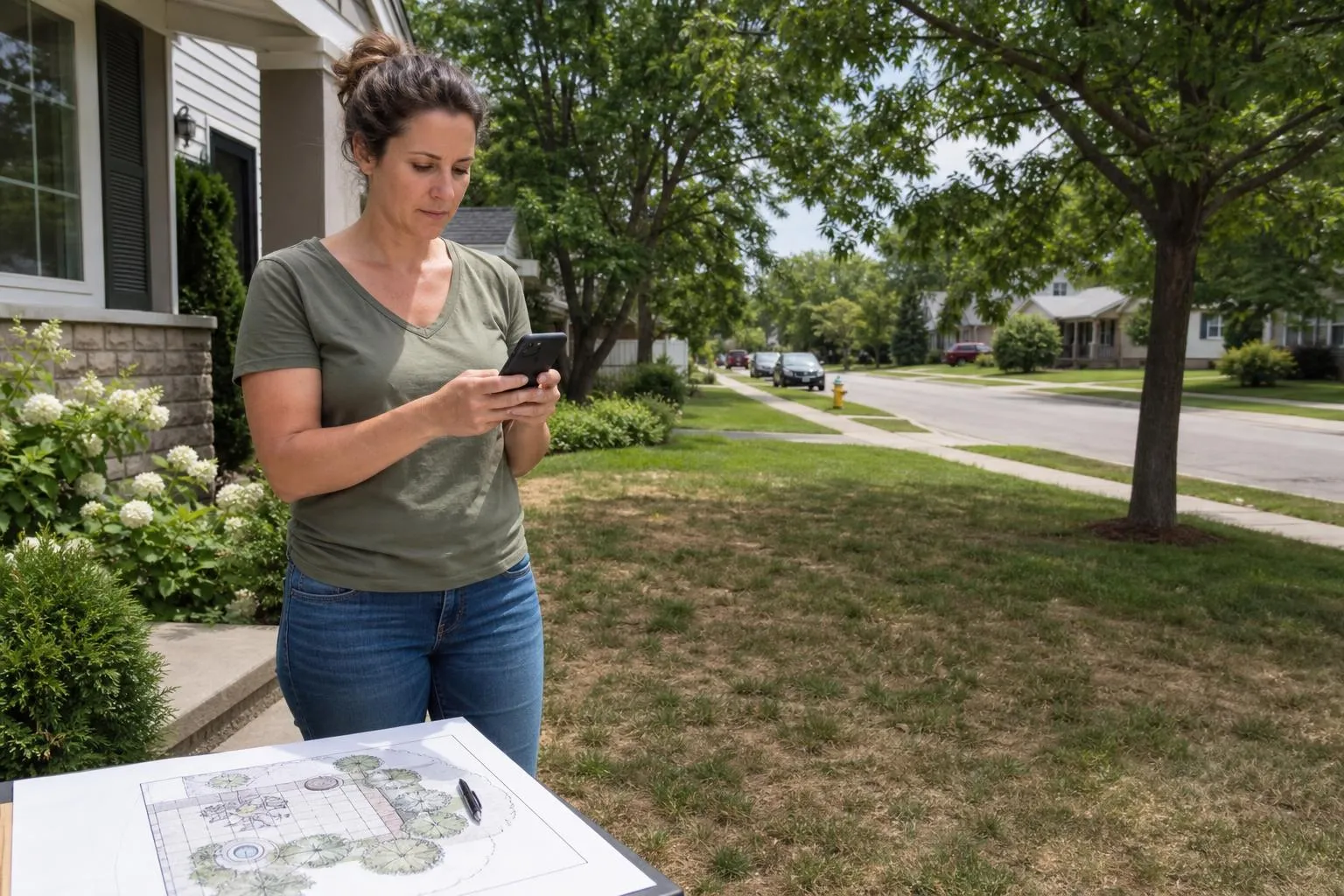
Saturday, 10 a.m. A homeowner is standing in her front yard, staring at a patchy lawn and a sketch she drew of a patio she wants by summer. Three landscaping trucks have already rolled through the neighborhood this month, dropping flyers.
She pulls out her phone right there on the driveway. This is the moment your website exists for: a homeowner with a real budget, standing on the exact ground the work will happen on, googling “landscaper near me.”
Here’s what happens on thousands of searches like hers. She taps your listing. The page limps in. What loads is a squeezed-down desktop layout: text too small to read one-handed, a nav menu that won’t unfold, a photo slider still trying to be clever on a 6-inch screen. She hunts for a phone number. It’s buried in a paragraph, not tappable.
She backs out. Taps the next name on the list. Somebody else’s truck gets the job.
The website you approved isn’t the one she’s looking at
Here’s the disconnect that keeps this invisible: you and your future customer have never seen the same website.
You looked at it on your office monitor, probably the day the designer sent the link. Wide screen, big photos, looked like a real business. It still does, on that screen.
She’s standing in her yard on a phone, comparing three bids before lunch. Not browsing casually: she’s mid-decision, thumb doing all the work. The numbers behind that moment are blunt.
| Mobile reality | The number |
|---|---|
| Visitors gone if the page takes over 3 seconds to load | 53% (Google) |
| Conversion lost per extra second of load time | about 4.4% (Portent) |
| Rise in bounce probability from a 1-second load to 10 | 123% (Google) |
| Average mobile page load time | 8.6 seconds |
Average load is 8.6 seconds. Her patience runs out at 3. Most landscaping sites sit on the losing side of that gap, which is exactly why site speed gets its own breakdown later in this series.
So you see a clean site and a phone that doesn’t ring as much as it should, and you never connect the two. There’s no alert when a homeowner gives up. The site just quietly loses her, over and over, on a version of itself you’ve never opened yourself.
The homeowners with the biggest budgets are also the least patient
For a lawn-mowing add-on, a clunky mobile site is a minor annoyance. For a design-build job, it’s the whole sale walking away.
Your highest-value leads (patio installs, drainage overhauls, full backyard redesigns running $15k to $40k) are being researched on a phone, often standing in the yard being priced. These homeowners are shopping three bids in an afternoon, and they will not fight a bad page to give you one of them. The person calling about a $60 edging touch-up might tolerate a slow site. The one budgeting a pool-adjacent patio will not; she has two other tabs open.
The frustrating math: the bigger the project, the more bids get compared, and the faster a bad mobile site drops out of the running. Even crews that cracked Google’s local top three still lose the click when the page behind that ranking stumbles.
What a phone-ready landscaping site actually looks like
A mobile-first landscaping site isn’t the desktop version shrunk down. It’s built for someone standing outside with dirt on their hands and thirty seconds to decide:
- Loads in a couple of seconds on cellular in the yard, not just on your office router.
- A tappable call button in the first screen. Her yard, your number, one tap between them.
- Before/after photos above the fold, not buried three scrolls down where nobody with a thumb ever gets.
- Text sized for a glance, buttons sized for a thumb, no pinching, no missed taps.
- Nothing decorative ahead of the quote request. Sliders and autoplay video steal time from the one action that matters and quietly tank your conversion rate.
None of that is fancy. It’s what a site looks like when it’s designed around the person standing in the yard instead of the owner sitting at a desk.
Can you just retrofit the site you already paid for?
Fair question. Here’s the honest trade.
Retrofitting the old site for mobile
- Cheapest path up front: a responsive theme swap can run a few hundred dollars.
- The design and copy you already signed off on stays mostly intact.
- No full rebuild to manage, live again within a week.
Retrofitting the old site for mobile
- The 8-second load usually survives the retrofit; the bloat causing it (page builders, oversized photos, plugin stacking) rides along.
- Tap targets and buried phone numbers rarely get rethought, the layout just gets narrower.
- The invisible cost keeps compounding: at 53% abandonment, a squeezed-but-slow site still loses the bids that matter.
A retrofit looks fine in a screenshot. Nobody standing in a yard grading your website on a screenshot.
The test that changes how you see your own site
Earlier in this series we made the blunt case that your website isn’t broken, it’s just not doing its job. Mobile is where that becomes undeniable. The referrals in your job book happened despite this version of your site. The strangers it lost never told you.
Built for the person standing in the yard
We build landscaping websites mobile-first: the homeowner comparing bids in her driveway is the design brief, and the desktop layout is just the adaptation. Click-to-call sits in the first screen, the page loads in about a second on cellular, and before/afters, service area, and reviews sit right up top where a thumb finds them.
Watch the free video walkthrough of a live site on an actual phone, side by side with yours. The gap explains itself in about two minutes. Once mobile stops leaking leads, every dollar you spend on marketing works harder; that’s what our ongoing growth services are built for.
Frequently asked questions
What does a mobile-first landscaping website cost?
Our Standard build is $2399£1,899 one-time, and the Growth package is $7500£5,900 one-time, with full pricing published on the get-website page. No contracts, you own the site, it goes live within 7 days, and changes land within 24 hours.
Isn’t a responsive theme already mobile-first?
Not quite. Responsive means the layout reflows to fit a smaller screen; mobile-first means the phone experience was the primary design target from the start. A responsive patch on a heavy site still loads in 7 to 9 seconds and still buries the call button under a menu.
How many of my leads are actually browsing on phones?
For local landscaping searches, the large majority. Open your analytics device report: quote-intent pages routinely run 75 to 90% mobile.
Does fixing mobile actually help my Google ranking?
Yes. Google indexes and ranks the mobile version of your site first, not the desktop one. Speed and usability feed directly into the same local rankings that decide who shows up when someone searches “landscaper near me” standing in their own yard.
Next in this series: The trust tax: how an outdated website kills the referrals you already earned
Your move
Reading this does not book a job.
The owners who pull ahead are the ones who change one thing this week. If you want that one thing to be a website that sells and ads that put it in front of the right people, we build and run both for you.
Straight answer on whether we can help, usually the same day.