Why the Worse Caterer Down the Street Wins More Bookings Than You
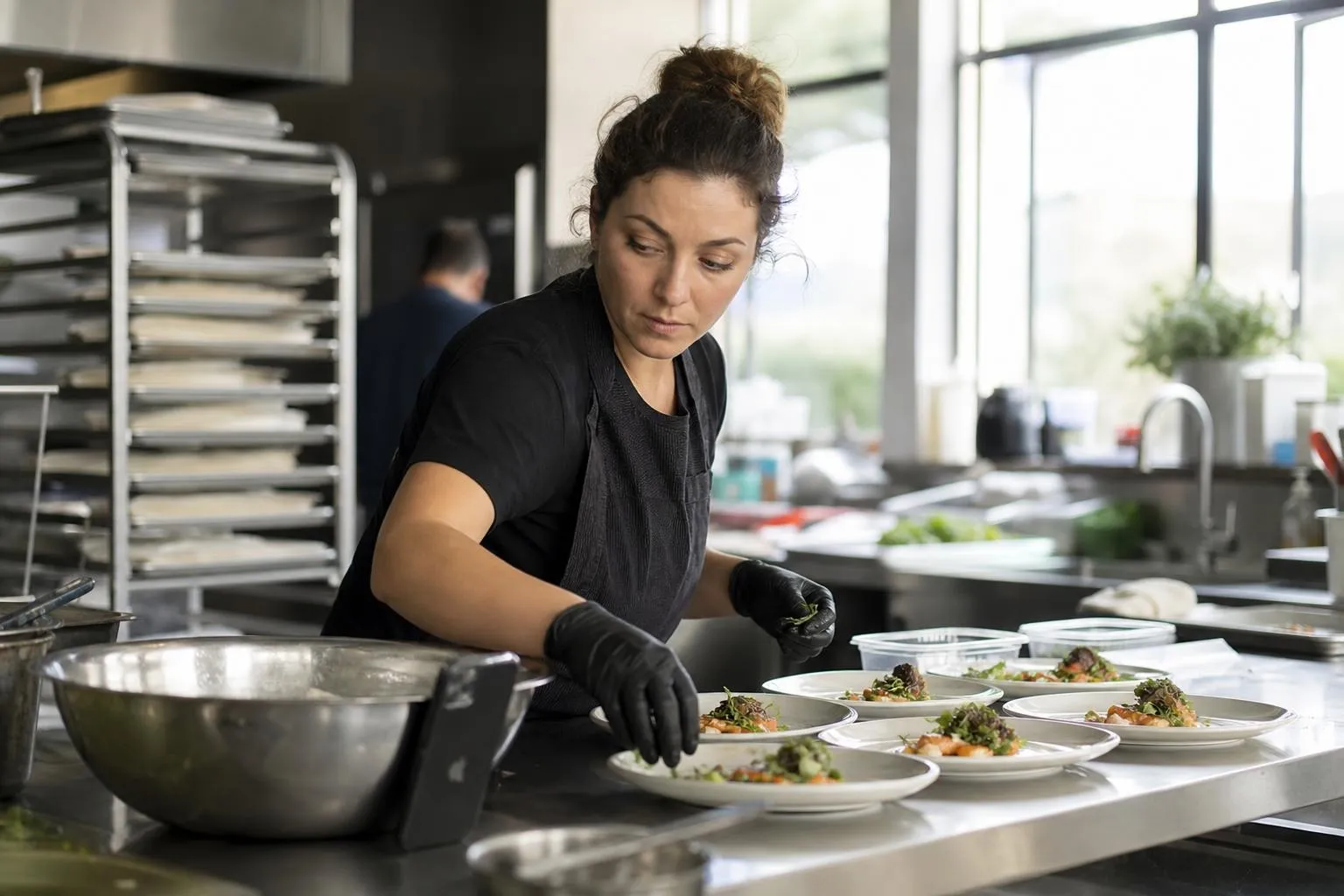
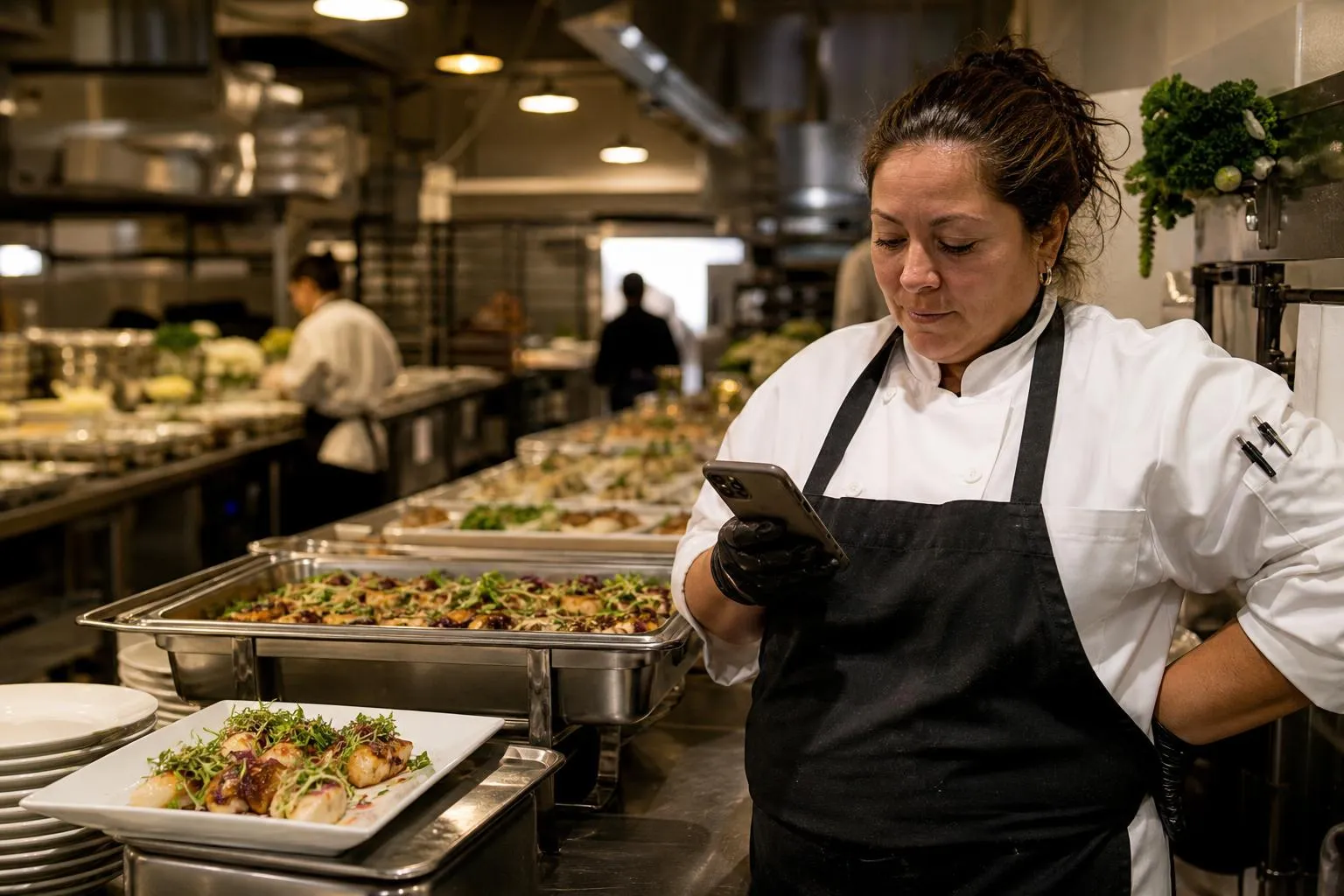
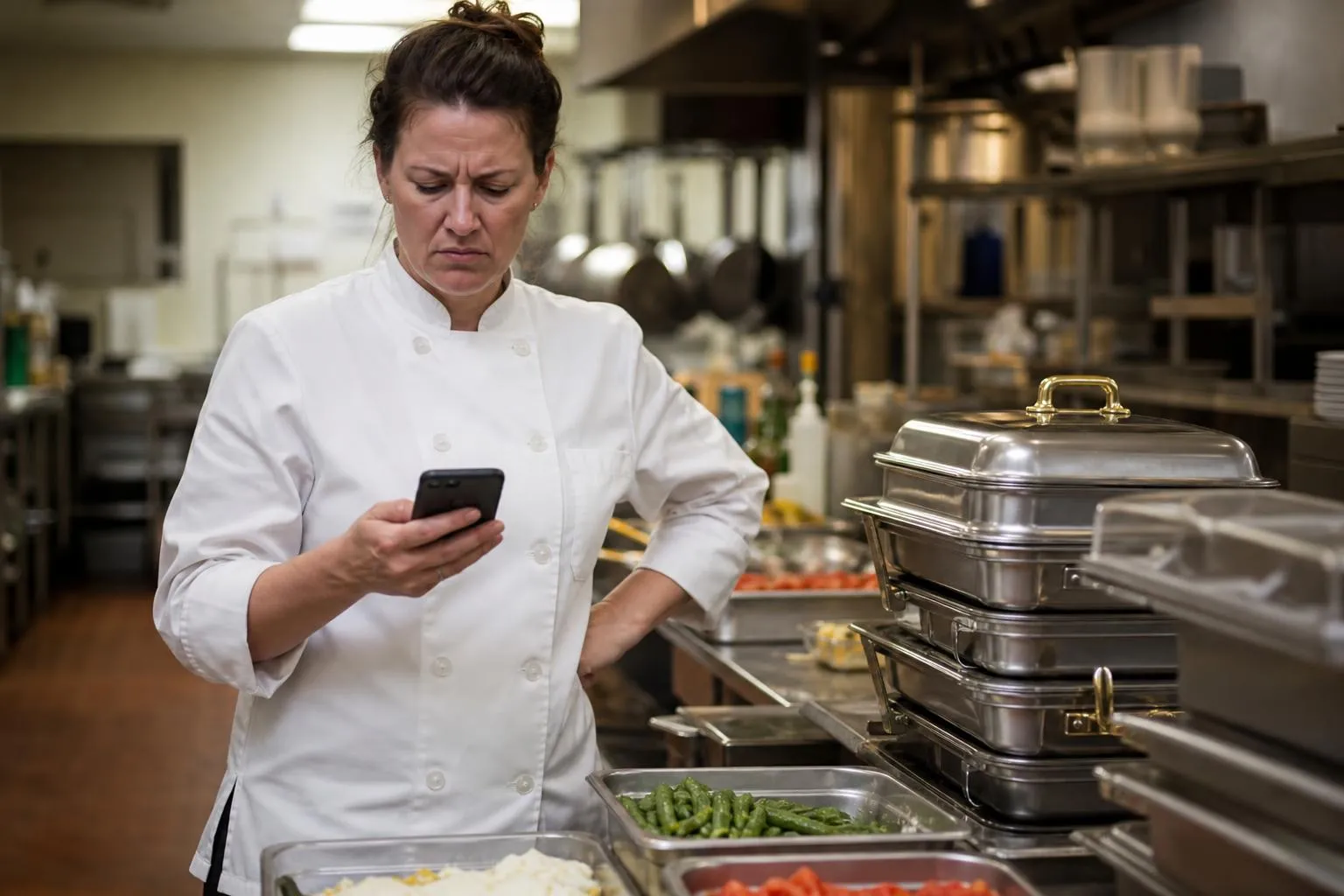
You’ve eaten her food at a mutual client’s event. Overcooked chicken, a dessert table that looked thrown together, service staff who didn’t know the timeline. You know your kitchen would have made that wedding better.
Her books are full through October anyway. She’s booking three tastings a week while you’re chasing leads that ghost after one email. This isn’t about who cooks better.
Here’s the part that stings: brides, planners, and office managers don’t hire the best kitchen. They hire whoever looks like the safest bet in the first ten seconds of scrolling. That’s a different contest than cooking, and it’s the only one a stranger can actually judge before they’ve tasted a single bite.
Nobody can taste your menu before they book
A bride planning a wedding for 120 guests, or an office manager ordering lunch for 40, cannot sample your braised short rib before signing. They will never taste 90% of what makes your kitchen better. It’s locked behind a deposit they haven’t paid yet.
So they judge on what’s visible:
- How fast your site answers “can you do my date and my budget”
- Whether the photos are real events or stock shots of a buffet nobody recognizes
- How many reviews exist, and whether they mention an actual venue
- Whether pricing is anywhere to be found, or hidden behind a “contact us”
- How easy it is to actually inquire: one form with the right fields, or an email into the void
None of that is about food. That’s the game your competitor is winning while her chicken sits under a heat lamp. Why your catering website isn’t landing bookings covered the symptoms; this is the mechanism.
The shortlist gets built without you in the room
A metro area supports dozens of caterers, but a bride or planner only opens two or three sites before picking up the phone or hitting submit. She’s doing it from her couch at 9pm, phone in hand, comparing your site to two others in the same tab-switching minute.
That comparison is mechanical, and it doesn’t care how good your food is:
| What the customer experiences | The number | Source |
|---|---|---|
| A page takes longer than 3 seconds to load | 53% of mobile visitors leave | Google mobile research |
| Every extra second of load time | Conversions drop about 4.4% | Portent |
| Load time grows from 1 to 10 seconds | Bounce probability climbs 123% | Google/SOASTA |
| Average small-business site on a phone | Loads in about 8.6 seconds | Industry benchmarks |
The average catering site loads almost three times slower than the point where half your visitors have already tapped back to search. While your competitor’s estimator is already showing a per-person price, your homepage is still loading a hero image nobody asked for. She never decides your food is worse. She just never waits to find out. Same story in how site speed quietly kills catering bookings.
The expensive part: these were supposed to be your events
This isn’t abstract. Every week, someone in your market is booking a wedding, a corporate lunch program, or a holiday party. Someone gets that contract. The only question is whose kitchen.
You’re not just losing a booking here and there. Your market’s best food option is sitting one tab over, invisible, while a weaker one collects deposits.
Closing the gap takes weeks, not a rebrand
You can’t out-review a caterer who’s had five years and a hundred weddings. But the part that costs you most, the ten-second first impression, is built from proof you already own.
Real proof. Actual event photos with real venue names, per-person pricing bands, and the reviews sitting unclaimed in the inboxes of clients who meant to write one. Most caterers hold more proof than the competitor beating them; it’s just not on the site. That’s the core of getting more clients for your catering business.
A site built to convert, not just display. Fast on a phone, an instant quote or clear pricing, one obvious next step. Not a menu PDF, a booking engine. See what that looks like in what actually moves a catering site’s conversion rate.
A clean local footprint. Your Google Business Profile, reviews, and service pages all pointing the same direction.
The real question is who builds it:
Rebuilding the site yourself
- Cheapest upfront: a DIY builder runs $20-$50 a month
- Full control over every photo, menu, and word
- Start tonight, no waiting on anyone’s calendar
Rebuilding the site yourself
- The real cost is your kitchen time: 40-60 hours learning a builder, which at a $75/hour catering rate is $3,000-$4,500 of lost prep and sales time
- DIY templates rarely nail the ten-second contest: instant pricing, fast load, mobile inquiry forms
- Wedding season arrives before the “temporary” homepage gets finished
Take back the bookings your kitchen deserves
The caterer beating you didn’t get better at cooking. She got easier to say yes to. That’s a fixable gap, and unlike her, you’ll actually deliver when the contract lands.
We build catering websites designed to win exactly this ten-second contest: instant quotes, real event galleries, pages built to rank for “wedding caterer” plus your city, live in 7 days, done for you start to finish. Watch the free video walkthrough and compare it against what your inquiries see right now.
You own everything, changes go live within 24 hours, no contracts. If you want reviews and rankings managed after launch too, that’s what our ongoing growth services handle. Stop letting a weaker kitchen win a contest you never showed up for.
Frequently asked questions
How can a worse caterer get more bookings than a better one?
Because nobody can taste your food before booking. They choose on visible signals: real photos, reviews, pricing clarity, and how fast the site answers their questions. Whoever wins those signals wins the deposit, regardless of who’s actually better in the kitchen.
Do reviews or the website matter more for bookings?
They do different jobs. Reviews and your Google profile get you onto the shortlist; the website turns that shortlist into a signed contract. Great reviews pointing at a slow site with no pricing still lose bookings, so fix whichever one is weakest first.
How fast can I close the gap?
Faster than most owners think. A focused review push shows movement in about two weeks, and a purpose-built site can launch in 7 days. Matching a competitor’s years of reviews takes longer, but the first-impression gap that decides most inquiries is fixable this month.
What does a done-for-you catering website cost?
Standard is $2399£1,899 one-time and Elite is $7500£5,900 one-time, both published on the page. No contracts, changes go live within 24 hours, launch takes 7 days, and you own everything outright.
Should I just drop my prices to compete with her?
No. She’s often not even cheaper, she just looks like the safer choice. Cutting your rate subsidizes a proof problem, not a price problem. Fix the evidence on your site and you keep your margin along with the booking.
Next in this series: If your catering business isn’t in Google’s top 3, you’re invisible
Your move
Reading this does not book a job.
The owners who pull ahead are the ones who change one thing this week. If you want that one thing to be a website that sells and ads that put it in front of the right people, we build and run both for you.
Straight answer on whether we can help, usually the same day.