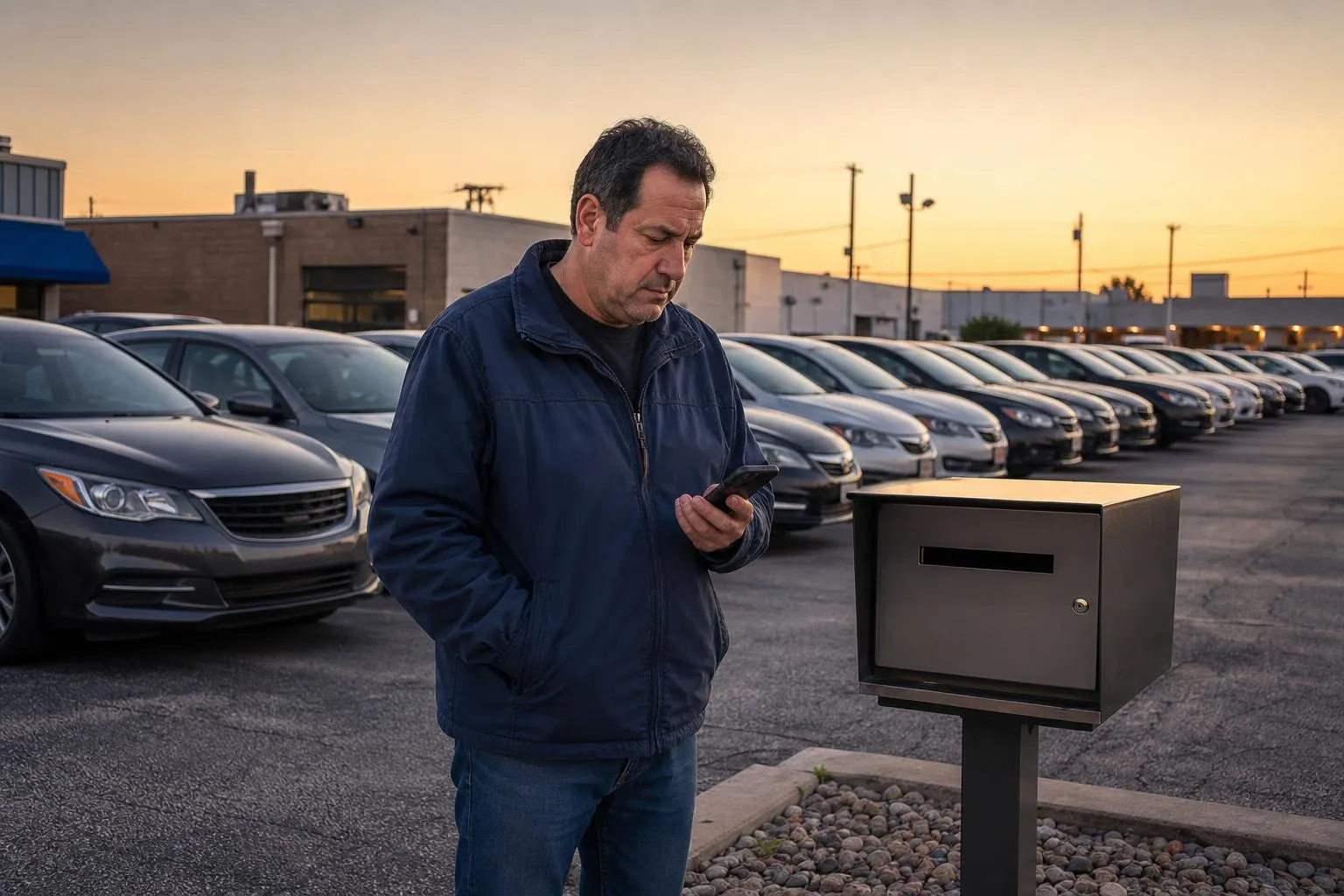
Why the Worse Car Rental Company Wins Your Bookings

Your fleet is newer, your cars are actually cleaned between rentals, and your rates undercut the operator across the airport access road. Their cars smell like the last renter’s cigarettes and their counter line moves slower than yours.
They book out for the weekend before you’re half full.
Here’s what’s actually happening: travelers don’t book the best rental company. They book whichever one looks like the easiest, most certain option in the two minutes they spend comparing on a phone in an airport terminal. That’s a different contest, and it’s the only one a renter with a flight boarding in twenty minutes can actually judge.
The renter can’t see your fleet from a search result
Someone landing at 9pm on a Friday cannot tell from a Google result whether your sedans have 20,000 miles or 90,000, whether you actually detail between rentals, or whether your insurance upsell is fair. That’s invisible until they’re standing at your counter, and by then they’ve often already booked somewhere else.
So they judge on what’s visible before they ever touch a car:
- Whether your site showed live availability instantly or made them wait
- How many reviews you have, and whether the newest one is from this month
- Whether the price shown up front matches what they’ll actually pay
- Real fleet and lot photos versus stock images
- Whether booking took one tap or a form that reset when their signal dropped
None of that measures your actual fleet. That’s the game the older, cheaper-looking operator is winning: not the cars, the booking experience. Why your rental website isn’t getting you bookings named the symptoms; this is what’s underneath them.
The comparison happens in the rideshare line
A traveler landing at a mid-size airport has four or five realistic rental options nearby. Here’s the actual process: phone out before baggage claim, search “car rental” plus the airport code, open two or three results, scan availability and price for ten seconds each, tap book on one. That whole decision closes faster than the walk from the gate to baggage claim.
You’re in that race whether your booking engine is ready or not:
| What the renter experiences | The number | Source |
|---|---|---|
| A page takes longer than 3 seconds to load | 53% of mobile visitors leave | Google mobile research |
| Every extra second of load time | Conversions drop about 4.4% | Portent |
| Load time grows from 1 to 10 seconds | Bounce probability climbs 123% | Google/SOASTA |
| Average small-business site on a phone | Loads in about 8.6 seconds | Industry benchmarks |
The typical independent rental site loads nearly three times slower than the point where half the visitors have already quit. If a competitor’s availability calendar loads in 2 seconds and lets them book with a deposit right there, while yours is still spinning, the traveler doesn’t compare your fleet age against theirs. They already confirmed the other booking. That’s how a slow site quietly loses you weekend bookings before your counter staff even clocks in.
These were bookings that should have been yours
Every traveler landing in your market this weekend needs a car from somebody. The only question is whose availability calendar they tapped first.
You’re not just losing a rental. Your market is losing its newest fleet and its fairest pricing, because that fleet never shows up in the two minutes a traveler spends comparing.
The gap closes before your next peak season
You can’t out-history a decade of someone else’s review count overnight. But the piece costing you the most direct bookings, the two-minute comparison, closes fast, because you already own the raw material.
Real proof. Your actual fleet photos, honest pricing with no counter surprises, and the reviews sitting unclaimed in renters who meant to leave one. You likely have more proof of a better experience than the competitor beating you; it’s just not displayed. Putting it to work is the core of getting bookings for a car rental business.
A site built to book, not just inform. Fast on a phone, real-time availability, deposit capture, ID and license upload built in. What a converting rental site looks like comes down to one rule: every screen either builds confidence or completes the booking.
A local presence that’s actually current. Your Google Business Profile, airport and city pages, and reviews all feeding the same funnel instead of sitting on three neglected accounts.
The real question is who builds it:
Rebuilding the site yourself
- Cheapest out of pocket: DIY builders run $20-$50 a month
- You control every rate, photo, and policy update
- No waiting on a vendor; start tonight
Rebuilding the site yourself
- The real cost is your time: 40-60 hours learning a builder and wiring a booking engine, worth more than one missed weekend’s bookings
- Generic templates rarely handle live availability and deposit capture cleanly
- Half-built booking flows tend to stay broken right through peak season
Win back the bookings that should already be yours
The competitor outbooking you didn’t get a better fleet. It got easier to book in the two minutes a traveler spends comparing at the gate. That’s fixable, and unlike them, you’ll actually have the newer cars to back it up once travelers start booking direct.
We build rental company websites designed to win exactly that two-minute contest: real-time availability, click-to-book with deposit, pages built to rank for “car rental” plus your airport or city, live in 7 days, done for you start to finish. See one running before spending anything: watch the free video walkthrough and compare it to what renters see on your site today.
You own everything, changes go live within 24 hours, no contracts. If you want reviews, rankings, and updates handled after launch too, that’s what our ongoing growth services are for. Stop paying OTA commission on bookings you could have taken direct.
Frequently asked questions
How does an older fleet outbook a newer one?
Because renters can’t inspect fleet condition before booking; the cars are invisible until pickup. They choose on visible signals: search rank, live availability, price clarity, review recency. Whoever wins those signals gets the booking, regardless of what’s actually parked on the lot.
Do reviews or the booking site matter more?
Different jobs. Reviews and your Google profile get you into the traveler’s shortlist; the booking site turns that shortlist into a confirmed reservation. Strong reviews pointing at a site with no instant booking still lose the renter to whoever books faster.
How fast can I close the gap?
Faster than most operators expect. A focused review push shows movement in about two weeks, and a purpose-built booking site can be live in 7 days. Outranking a decade of someone else’s reviews takes longer, but the two-minute comparison deciding most weekend bookings is fixable this month.
What does a done-for-you rental website cost?
$2399£1,899 for a standard build, $7500£5,900 for the elite version with more locations and deeper SEO, both published with no quote dance. No contracts, changes go live within 24 hours, launch takes 7 days.
Should I just drop my rates to compete?
No. Many operators winning the booking race charge similar rates; they’re winning on booking ease, not price. Cutting rates further just subsidizes a website problem that a faster booking flow actually fixes.
Next in this series: If your car rental company isn’t in Google’s top 3, you don’t exist
Your move
Reading this does not book a job.
The owners who pull ahead are the ones who change one thing this week. If you want that one thing to be a website that sells and ads that put it in front of the right people, we build and run both for you.
Straight answer on whether we can help, usually the same day.