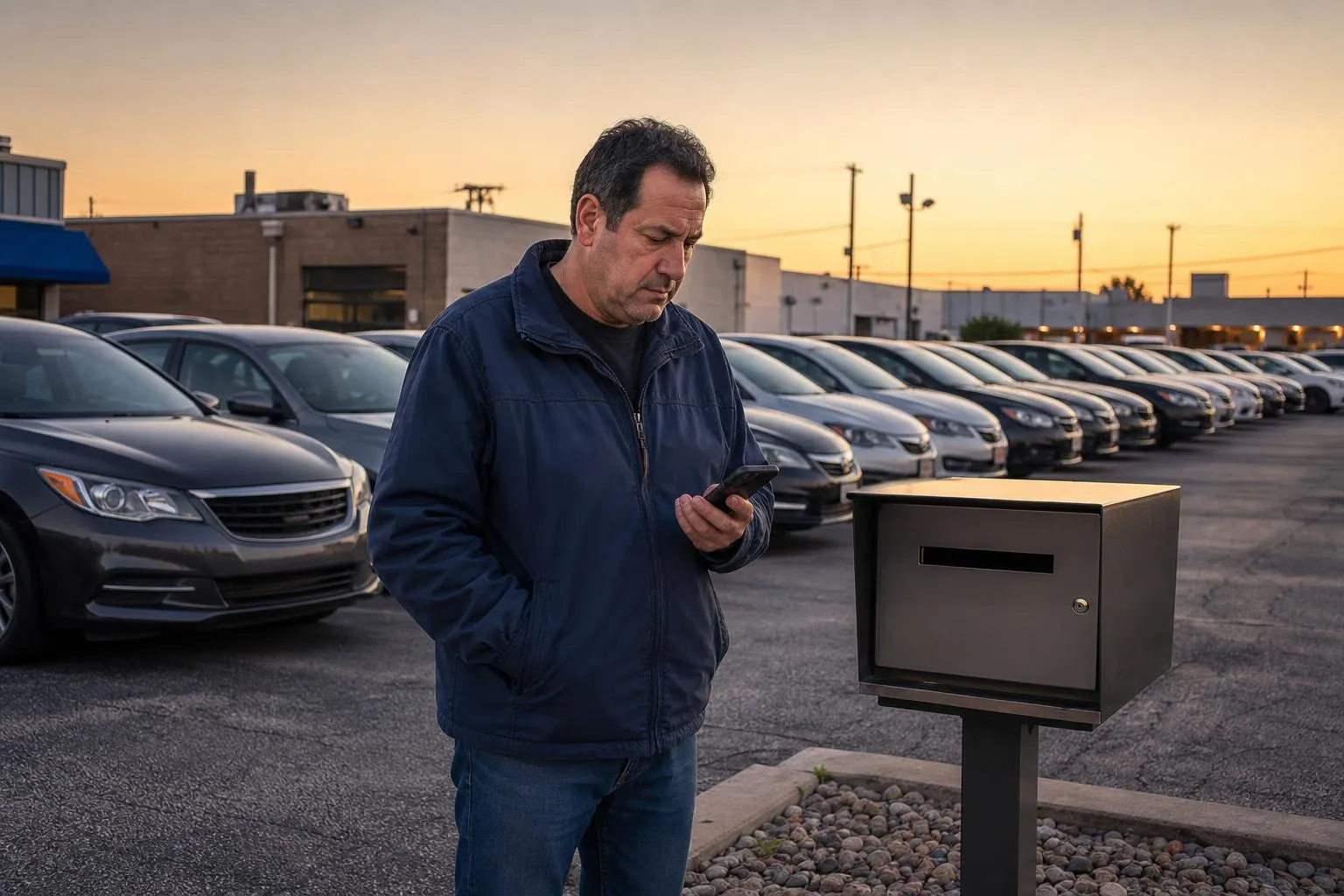
Your Car Rental Website Isn't Broken. It's Just Not Booking: 7 Signs It's Quietly Costing You Bookings

Say you hired a booking agent who worked every hour of every day, never went home, never asked for a raise. Reasonable question: how many direct reservations has that agent actually closed on their own this month, without a phone call to bail it out?
That agent is your website. It’s open at 2am when a delayed flight lands and someone needs a car by morning, and if you’re honest, you can’t say when it last booked a reservation without you stepping in. Nothing looks obviously wrong. The fleet is listed. A number’s on there somewhere. That’s the trap: a rental site that quietly underperforms never forces you to notice. Here are seven signs yours already is.
You can’t name a direct booking from this month
Sign 1: no direct reservation comes to mind from the last 30 days. Not one routed through Kayak or Expedia after they took their cut. A renter who searched, landed on your own site, and booked straight with you. If that column is empty, your website isn’t booking cars, it’s just describing them.
Sign 2: your front desk quietly steers people elsewhere. When a walk-in asks how to reserve ahead of time next visit, does your staff say “book on our site,” or do they hand over a business card because deep down everyone knows the site’s booking flow is clunky? If your own counter avoids the site, renters will too.
The OTAs are eating your margin
Sign 3: most of your bookings still come through Kayak, Expedia, or a booking aggregator. Those channels bring volume, but every booking they hand you already had 15-25% shaved off for the privilege, and the renter never even sees your brand. A working site of your own is the cheaper channel, the one where the full rate stays yours. Getting customers for a car rental business covers the full mix, but direct bookings are the only ones that don’t cost you a cut.
A renter can’t book you in five seconds
Sign 4: someone landing at midnight can’t check availability and book in a few taps. Pull up your own site the way a traveler standing at baggage claim would. Time the trip from landing on the page to a confirmed reservation. If availability doesn’t show live, if the deposit form has nine fields, if there’s no way to upload a license on a phone, that renter books with whoever makes it easy.
The average visitor gives your page about 8.6 seconds before deciding whether to stay. Someone comparing four rental sites from an airport bench doesn’t wait for yours to catch up.
The site looks frozen and proves nothing
Sign 5: the fleet photos and rates on the homepage don’t match what’s actually parked on the lot. A renter who books a compact and gets handed something smaller doesn’t come back, and a stale site reads as either careless or dishonest before they’ve even walked up to the counter.
Sign 6: there’s no proof anywhere that renters can lean on. They can’t inspect the car from a listing photo, so they judge what they can see: reviews, real fleet photos, clear pricing with no surprise fees buried at checkout. Roughly 88% of people trust online reviews as much as a friend’s recommendation, so the operator showing 70 real Google reviews wins the booking over the one showing stock photos of a generic sedan, which signals the opposite: nothing here is verified.
You’ve never booked your own site the way a renter does
Sign 7: your renters meet your site on a phone, usually from an airport or a train platform. Most late-arrival rental searches happen on mobile, often with a flight delay in the background. If you’ve only ever checked the site on an office desktop, you and your renters are looking at two different products, and theirs decides who gets the reservation. That gap deserves its own read: how mobile renters actually use car rental websites.
Mobile is also where a slow build costs you the most. The numbers hold no ambiguity:
| Page load time | What it does to your visitors |
|---|---|
| Over 3 seconds | 53% of mobile visitors abandon the page (Google) |
| Each extra second from 0 to 5 | Conversions drop about 4.4% per second (Portent) |
| 1 second slips to 5 seconds | Bounce probability rises 90% (Google) |
| 1 second slips to 10 seconds | Bounce probability rises 123% (Google) |
If your booking page takes 7 seconds to load on airport Wi-Fi, most renters comparing tabs never make it to your rates. How a slow car rental website loses bookings breaks down exactly where those seconds disappear.
What a rental site that actually books does
None of this is an argument for flashier fleet photos. Flashy isn’t the job. A working rental site does three things without exception: it ranks when local renters search (the fight for the Google top 3 map results), it shows real live availability fast enough to beat the OTA tab already open next to it, and it makes finishing a booking the easiest action on the page. That’s the whole spec. Slideshow hero banners and paragraphs about “your journey starts here” are decoration.
So, patch the current booking flow or replace it?
Patching the current site
- Cheap this month: live availability and a tappable number can go live within days
- You keep your URL and whatever search ranking it has already earned
- No rebuild disrupting the booking flow during peak travel season
Patching the current site
- An old booking widget caps your speed no matter how much you trim around it
- The mobile checkout is fixed in place, and that’s where nearly every last-minute booking starts
- Every change still runs through whoever built the original site, on their timeline
- You keep paying hosting fees on an asset that keeps sending renters to the OTA instead
The gap between a fleet catalog and a real booking engine doesn’t show up from the outside, which is why plenty of solid operators sit on a quiet site for years without noticing. It shows up in one place: how many renters book direct before ever touching an OTA app. If two or more of these signs sounded familiar, take ten minutes and watch the free video walkthrough of a live rental site built to convert: live availability, deposit and license upload on every page, done for you start to finish, live in 7 days, and you own it outright. Pricing is posted, no contracts required. Once direct bookings pick up, ongoing growth services can push the volume further.
Frequently asked questions
How do I know if my rental website is actually costing me bookings?
Count direct reservations, not page views. If you can’t name one renter in the last 30 days who booked straight through your site without an OTA in between, the site isn’t producing. Track it for two weeks and the pattern becomes clear.
Can’t I just keep relying on Kayak and Expedia?
OTAs bring volume, but every booking they send you already has 15-25% shaved off, and the renter never learns your brand. A working site of your own is the only channel where you keep the full rate.
How much does a rental website that actually books cost?
The Standard build is $2399£1,899 one-time, and the Elite package is $7500£5,900 one-time, pricing posted openly with no contracts. Launch takes 7 days, and you own everything outright.
Should I fix my current site or replace it?
If the booking widget is solid and the bones are decent, add live availability and real reviews this week. If it fails the 3-second phone test and every reservation still needs a phone call to confirm, patching is paying rent on a dead asset.
Next in this series: why the worse car rental company across town keeps winning the bookings you deserve
Your move
Reading this does not book a job.
The owners who pull ahead are the ones who change one thing this week. If you want that one thing to be a website that sells and ads that put it in front of the right people, we build and run both for you.
Straight answer on whether we can help, usually the same day.