When and How to Hire and Train Staff for Roofing
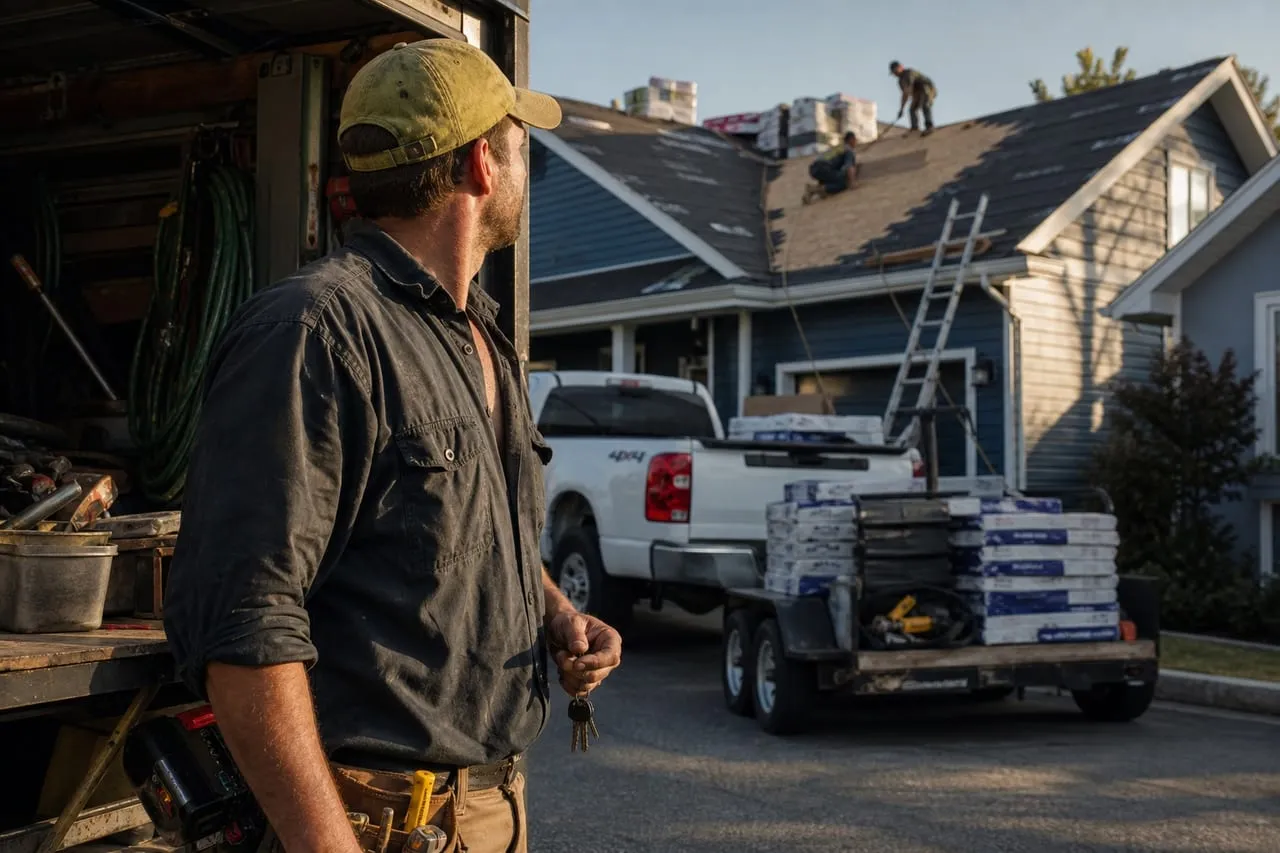
The first hire in a roofing business decides whether the owner stays trapped on the roof or starts running a real company. Most owners hire too late, hire the wrong person, or hire helpers instead of a foreman and stay stuck. Here is the playbook for when, who, where, and how to hire.
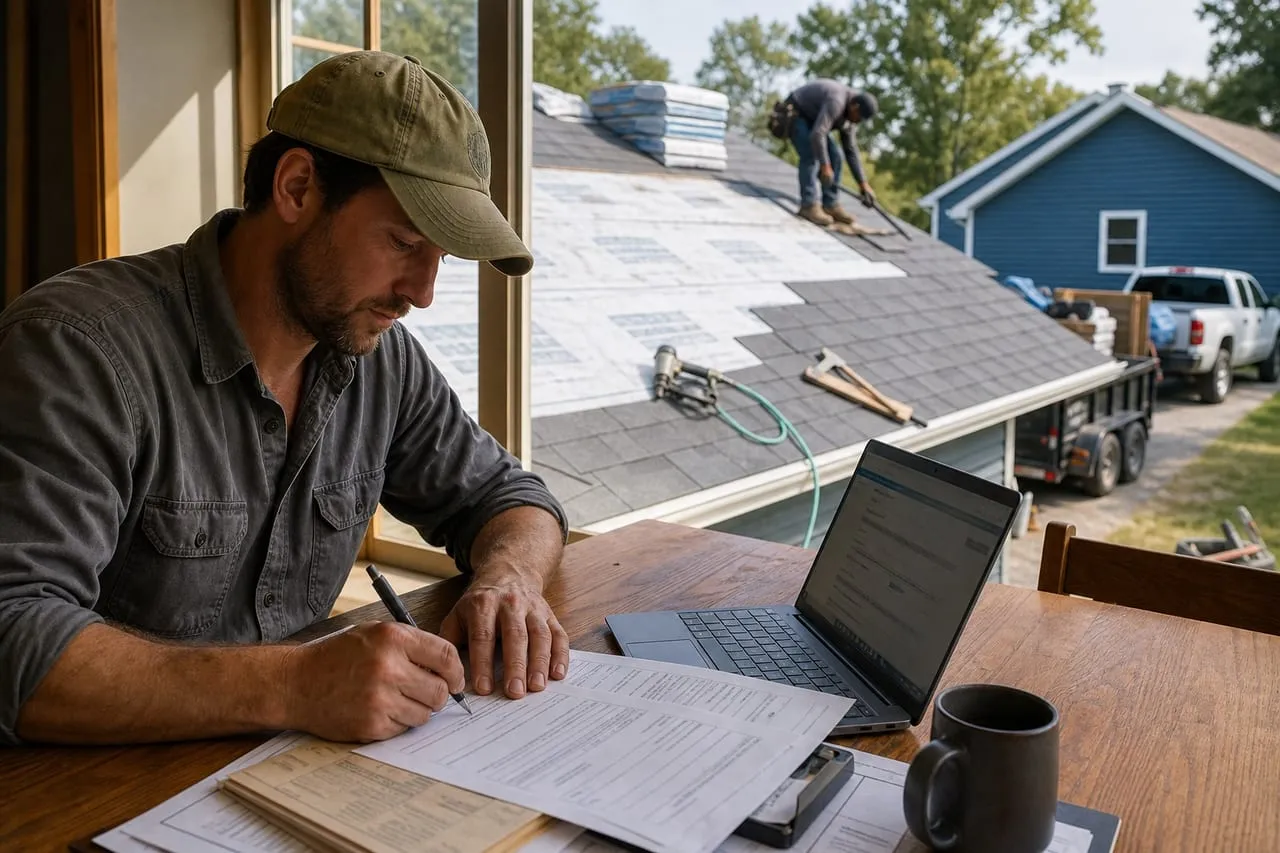
The pattern behind late hires is that payroll is visible and lost revenue is not. The Friday wage bill stares at you from the bank app; the three estimates you never ran because you were nailing ridge cap appear in no report anywhere. By the time the signals below show up regularly, most owners have already been losing more than a foreman costs for months, which is why the playbook treats hiring as a math problem instead of a courage problem.
When to hire
Three signals that mean it is time:
- You are turning down work because you can’t be in two places.
- You are spending 60%+ of your week on roofs instead of selling and quoting.
- You lost a $5k-$10k week of revenue because you were physically tied up.
If any one of those is happening regularly, the hire is overdue. Most owners hesitate because the labor cost feels scary, but the math is straightforward: a foreman who frees up 25 hours/week of the owner’s time produces 2-4 additional jobs per month, which returns 3-5x the hire’s fully loaded cost in revenue. See how to grow a roofing business for the broader growth model.
Wrong reasons to hire: ego, looking bigger than you are, or trying to look established for sales presentations. The hire has to pay for itself in revenue, not vibes.
Who to hire first: the foreman
The first hire is always a foreman, not a helper. A foreman is a working crew leader who can run the roof without the owner present.
What to look for:
- 5+ years on roofs (asphalt shingle minimum, ideally metal and flat too)
- Has run a crew before, even informally as the “go-to guy” on someone else’s payroll
- Speaks the language of the homeowner, not only the crew
- Carries their own basic tool kit
- Reliable transportation
- Clean enough background to be added to your insurance certificate
Skip the candidate who is technically excellent but cannot manage a homeowner walkthrough. The customer-facing piece is non-negotiable.
After the foreman, the second hire is typically a 1-2 person crew under them (laborers at $18-$25/hour or piece rate). The third hire is a production manager or office admin once you have 2+ crews.
The reason helper-first fails is worth spelling out, because it feels safer and costs less per hour. A helper makes the owner a faster roofer; a foreman makes the owner unnecessary on the roof. Those sound similar and compound in opposite directions. The helper adds maybe 30% to daily production while keeping the only person who can sell pinned to a job site. The foreman creates a second production unit and releases the owner’s hours into estimates, supplier relationships, and the lead engine in how to get clients and customers. One buys speed; the other buys scale.
Crew on payroll or sub crews?
After the foreman, the next capacity decision is whether the crew under them is W-2 or subcontracted. Profitable roofers run both models; the trade-offs are concrete:
In-house W-2 crew: pros
- Full schedule control: your jobs run when you committed them
- Training compounds: quality rises and callbacks fall year over year
- Clean fit for insurance-program accreditation and GC prequalification, which ask for your WC certificate and your roster
In-house W-2 crew: cons
- Workers comp at $20-$50 per $100 of payroll lands on every Friday check
- Payroll continues through rain weeks and a slow February
- Recruiting, retention, and HR become permanent owner workload
Sub crews invert the list: you pay per square only when producing and carry no WC premium for them, but you inherit their schedule, their quality habits, and a misclassification exposure if the “sub” works only for you, on your calendar, with your materials. Many shops blend the models: a core W-2 crew for retail jobs and a vetted sub crew for storm overflow.
Where to find people
The reliable channels for roofing hires:
- Trade word of mouth: ask suppliers (ABC Supply, Beacon) for foreman names. They know who’s working and who’s available.
- Indeed and ZipRecruiter: post a clear job description with pay range. Roofing job posts get 50-200 applications.
- Facebook job groups: city-specific roofing and construction groups often work better than Indeed in tight labor markets.
- Competitor poaching: aggressive but standard. A foreman unhappy at a big roofer often welcomes a serious conversation.
- Existing crew referrals: pay a $500-$1,000 referral bonus to current crew for any hire that stays 90 days.
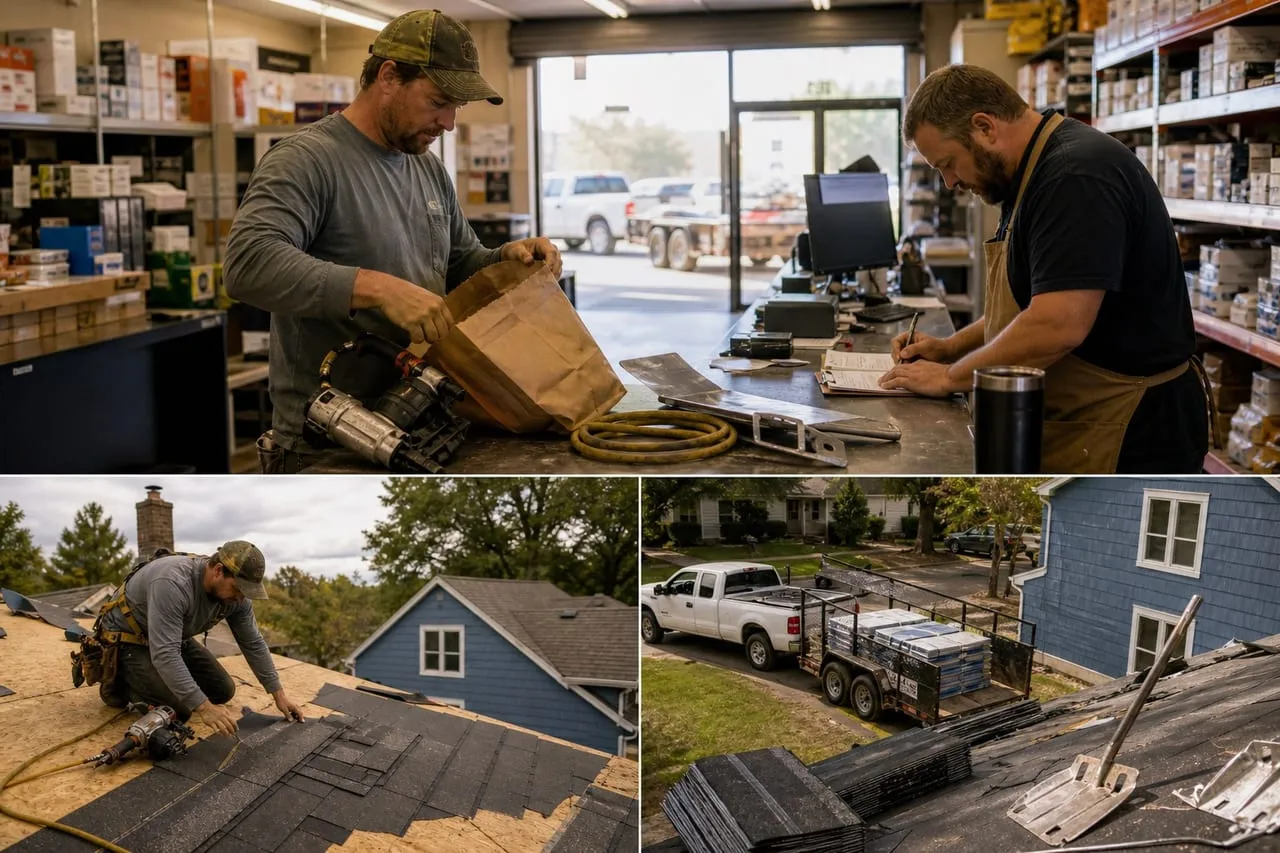
The supplier counter deserves its place at the top of that list, because it is a live map of the local labor market. The counter staff at ABC Supply and Beacon see every crew in the county weekly: who is suddenly buying double (busy and hiring), whose account went quiet (crew coming available), and which respected foreman is grumbling about his employer. A coffee and a direct question get more candid answers than any job board. And when you do post on the boards, include the pay range; in roofing’s labor market, posts without numbers get treated as spam by the exact people you want.
For estimators and salespeople, look at insurance restoration shops where commissioned reps are common.
Pay structure and workers comp
Pay structures that work for roofing:
| Role | Cash pay | Real annual cost with WC + payroll taxes |
|---|---|---|
| Foreman | $30-$45/hr + production bonus, or $70k-$95k salary + profit share | $100k-$160k |
| Laborer / helper | $18-$25/hr or $20-$35/square piece rate | $50k-$85k |
| Estimator / salesperson | $40k-$60k base + 5-8% of closed revenue | $80k-$150k with commission |
| Production manager | $65k-$110k salary | $80k-$135k |
One more lever sits under those rates: the experience modifier. Every WC policy carries a mod that starts near 1.0 for a new business and moves with your claims history. A single serious fall claim can push it to 1.3 or higher and hold it there for three years, a 30% surcharge on every payroll dollar you spend while it lasts. That is why harness enforcement and documented safety meetings are a pricing strategy, not paperwork: the cheapest premium is a clean loss run.
Pay everyone on payroll. The temptation to call crew “subcontractors” and pay 1099 is real, but the IRS and most state labor departments treat roofing crews as employees by default, and a single audit can sink the business.
Training and onboarding
A foreman comes in trained on the craft. What they need from you:
- Your bid template and how to read it
- Your safety standards (harness use, ladder placement, OSHA basics)
- Your quality control checklist
- Your customer communication standards
- Your supplier accounts and how to place an order
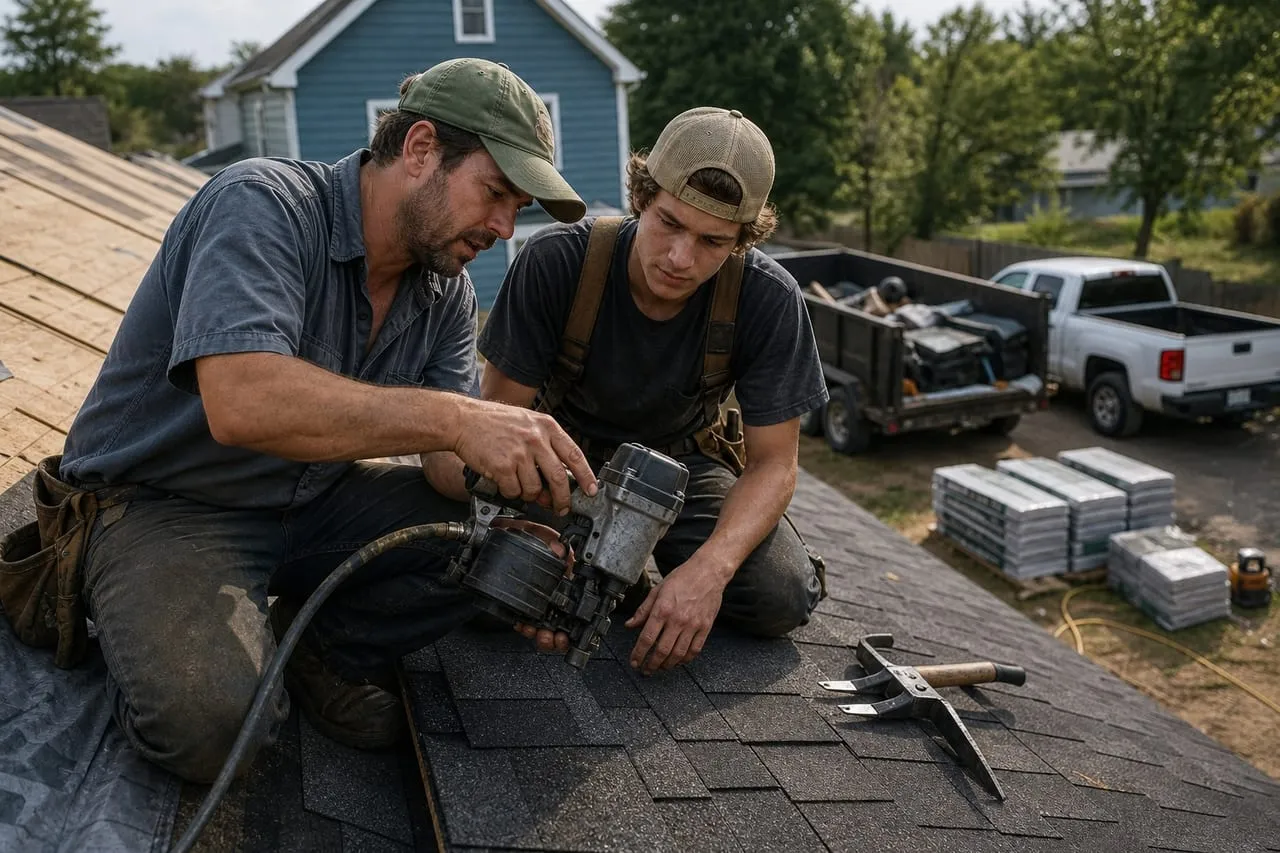
Two weeks of running jobs alongside the owner usually gets a new foreman fully autonomous. After that, the owner steps back to estimates and sales while the foreman runs the work. Pair this with the operational rhythm in how to successfully run a roofing business.
Frequently asked questions
Should my first hire be a salesperson or a foreman?
A foreman. Sales without production capacity just creates a backlog. Production capacity with the owner selling still gets jobs done.
Can I 1099 my crew?
Legally risky. In most states, a roofing crew that works only for you, uses your tools, and follows your schedule is an employee under labor law. The IRS Form SS-8 test rarely sides with a 1099 designation.
What if I can’t afford a foreman yet?
Then you can’t afford to grow yet. Hold for 90 more days at solo pace and bank cash. The foreman hire only works with 60-90 days of payroll reserve in the bank.
How do I keep a good foreman?
Pay fair, share profit, and give them ownership of crew decisions. The number-one reason foremen leave is being micromanaged. Number two is slow pay.
Do I need an HR system?
Once you have 3+ employees, yes. Gusto, Rippling, or QuickBooks Payroll run $40-$100/month and handle payroll, WC reporting, and tax withholdings.