How to Successfully Run a Roofing Business
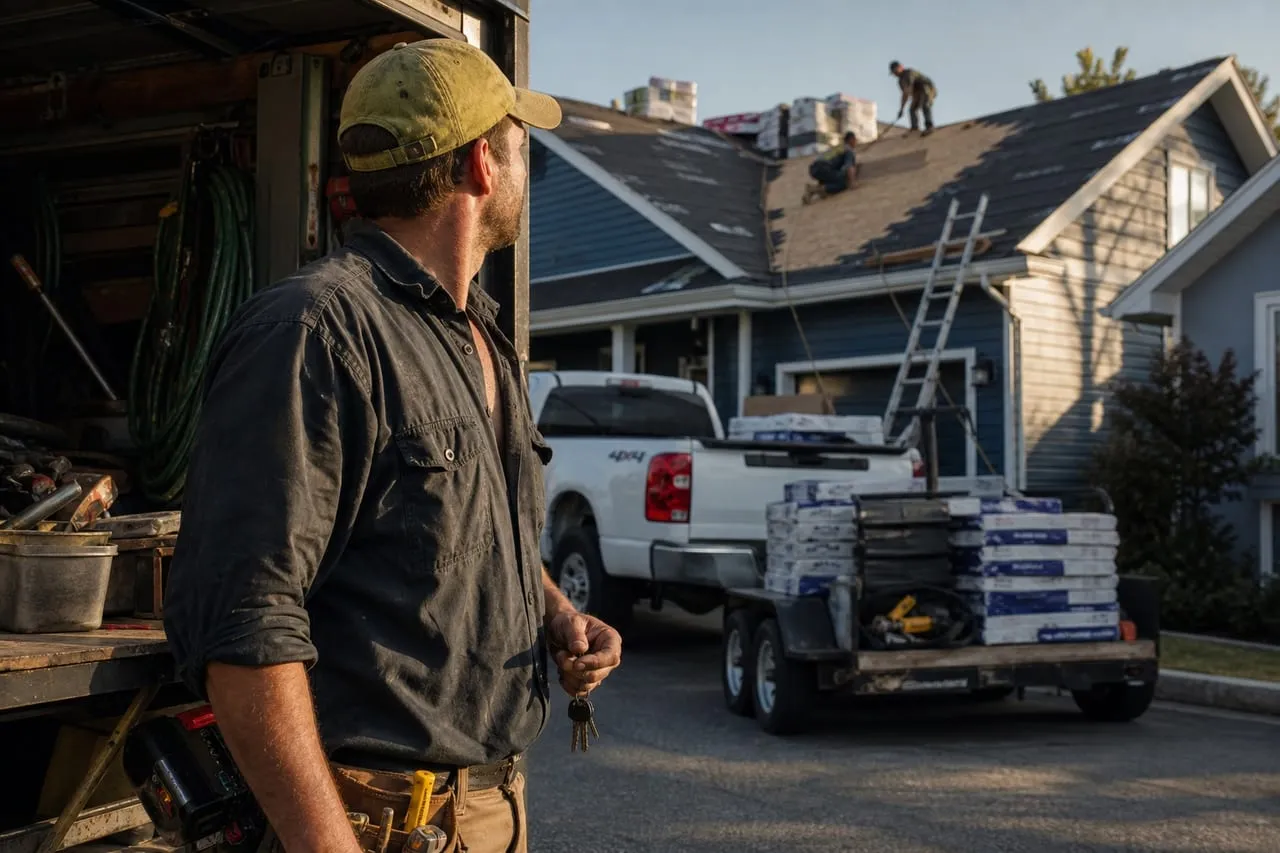
A roofing business that survives past year three is not just one that wins jobs. It is one that runs predictably: materials show up the morning of the install, crews start at 7 AM, the homeowner gets a magnet sweep at the end, and the final invoice goes out before the truck leaves the driveway. Operational discipline is what separates the $80k/year owner from the $400k/year owner. Here is the rhythm.
What separates the $80k owner from the $400k owner is rarely roofing skill. It is that the second one built a machine that produces the same Tuesday every week. Predictability compounds quietly: crews that start on time finish on schedule, jobs that finish on schedule release the owner to sell Saturday estimates, and customers who watched a tight operation leave the reviews that feed next month’s calendar. Chaos taxes every job twice, once in overtime and once in the review that never got requested.
The weekly operations cadence
A working roofer’s week, regardless of crew count:
| Day | Focus | Non-negotiable output |
|---|---|---|
| Monday morning | Schedule + materials | Week confirmed with every crew, material orders placed, permits pulled |
| Tuesday-Friday | Production | Owner or production manager checks each site mid-day |
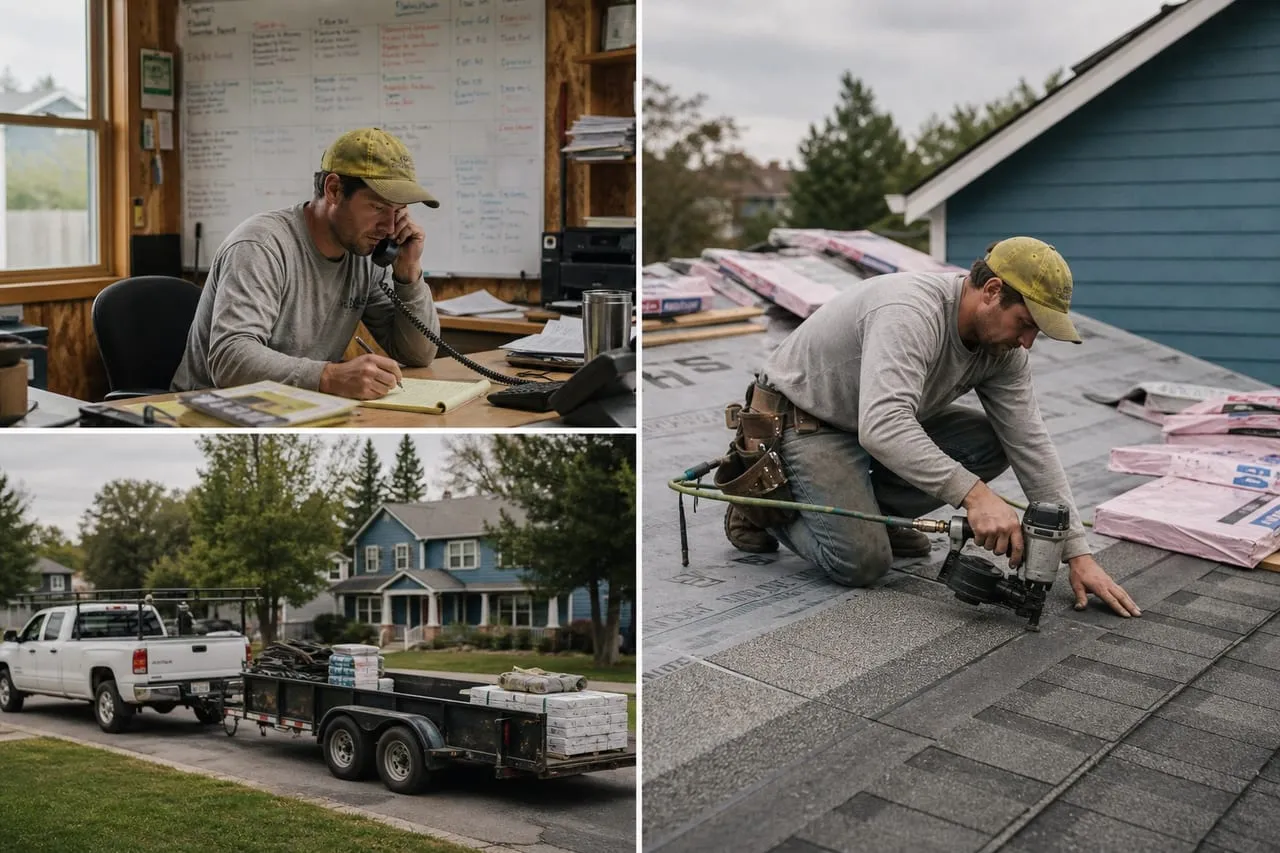
| Every day, 4 PM | Foreman call | Tomorrow’s start time, material status, change orders surfaced |
| Friday afternoon | Money | Invoices out for the week’s completions, review requests texted |
| Saturday morning | Sales | Estimates and homeowner walkthroughs (most customers prefer Saturday) |
| Sunday | Reset | Paperwork catch-up, next week’s supplier orders, schedule review |
Skipping the daily 4 PM check is the most common operational failure. Without it, problems on site spiral into next-morning chaos. The call costs five minutes per crew, and what it catches is always the same short list: a short delivery that needs a will-call run tonight, weather moving tomorrow’s start, and a decking surprise that needs a change order signed today, while the homeowner is home and reachable, instead of negotiated at 7 AM with a crew already on the clock.
Supplier and material coordination
A roofer who can’t get materials delivered on time is a roofer who pays overtime to crews waiting in driveways.
Working rules:
- Order materials 2-3 business days before the install date.
- Confirm delivery window the day before.
- Have the foreman onsite when materials arrive (sign the bill of lading, count squares, note any damage).
- Build a 5% material overage into every order. Better to return a bundle than to halt a crew waiting for one ridge cap.
- Keep a relationship with two suppliers in case one runs out of color matches mid-job.
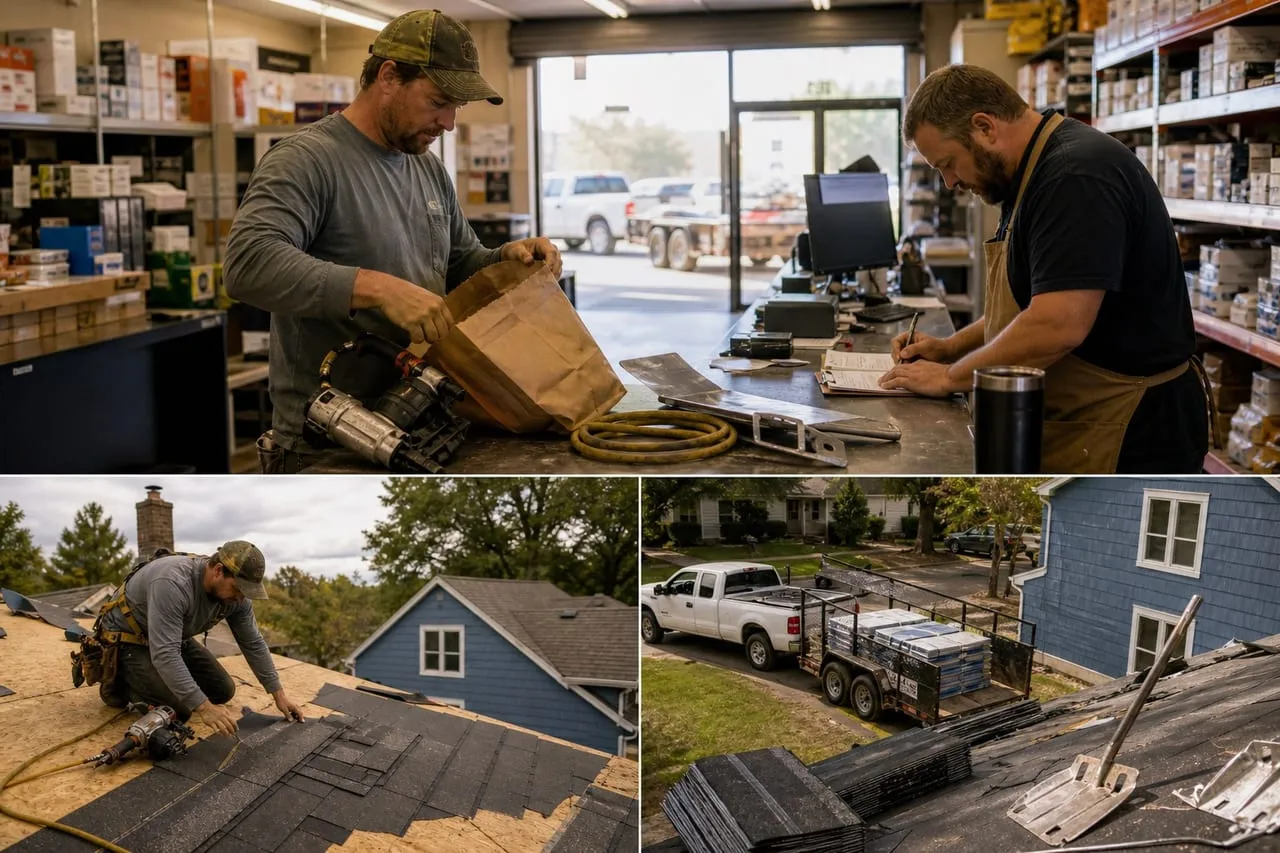
ABC Supply, Beacon Building Products, and SRS Distribution all offer same-day or next-day delivery in most metros. Net-30 terms apply once your credit is established. See buying equipment and supplies for the supplier setup.
New owners arriving from other trades keep asking where the warehouse is. There is not one, and that is a structural advantage of roofing: shingles are heavy, bulky, sold in color-matched lots, and the supplier’s boom truck delivers them to the rooftop the morning of the install. Stocking material would only convert working cash into pallets fading behind the shop. The flip side is real, though: with no buffer stock you are operationally dependent on delivery precision, which is exactly why rules 1-3 above exist and why the foreman signs the bill of lading personally.
Quality control and customer experience
The biggest source of warranty callbacks is rushed finish work. Inspect every job at three points:
- Mid-tear-off: check decking, mark any rotten sheets for replacement, photograph for the customer.
- Pre-shingle: underlayment, ice and water shield in valleys and eaves, drip edge.
- Final walk: nail-pop check, flashing seal, ridge cap alignment, gutter cleanout, magnet sweep.
Then the customer-facing close:
- Walk the property with the homeowner. Show the finished work, point out anything they should know.
- Hand over the warranty paperwork and an invoice on a clipboard.
- Collect payment (or balance if partial deposit was taken).
- Text the Google review link within the hour, while they’re still standing in the yard happy.
A callback is more expensive than it looks. The direct cost is a half-day of crew time, but the scheduling cost is worse: rework arrives unscheduled, weeks later, and gets wedged into a calendar that was already full, which makes the next job late too. The reputational math is the worst of it, because the callback customer is the one customer who will never leave the five-star review the whole lead engine depends on. That is why the 5% callback ceiling sits in the health metrics, and why the three-point inspection above is cheaper than any amount of warranty goodwill.
A clean job + same-day review request is the foundation of the lead engine in how to get clients for a roofing business.
Insurance restoration runs on different rails
Insurance work behaves like a separate business inside your business, with its own paperwork and its own cash rhythm. Getting onto carrier preferred-contractor lists requires accreditation: current liability and workers comp certificates, photo documentation standards, and scopes written against the carrier’s Xactimate line items rather than your own bid template. Supplements, the legitimate items the original adjuster scope missed such as drip edge, steep-slope charges, or code-required ice and water shield, are where restoration margin actually lives, and they have to be filed promptly while the claim file is open.
The cash rhythm is the part that surprises operators coming from retail reroofs. Insurance pays in stages: an actual-cash-value check up front, with the recoverable depreciation released only after completion paperwork is submitted. The money is good, but it is slow and procedural, and it punishes loose bookkeeping.
Financial discipline
Roofing has high revenue swings and high overhead. Cashflow kills more roofing companies than bad work does.
Non-negotiables:
- Deposit on every job: 25-33% upfront, balance on completion. No exceptions for friends.
- Net-30 supplier terms: pay on day 28, not day 1. Float matters.
- Weekly P&L review: Friday afternoon. Look at gross margin per job. Anything under 35% gross gets reviewed.
- Separate operating and tax accounts: move 25-30% of every payment to tax + reserve.
- Working credit line: $25k-$100k. Use it for material runs during slow weeks, never for owner draws.
- No checks over $500 paid in cash to crew: everything on payroll for WC and IRS reasons.
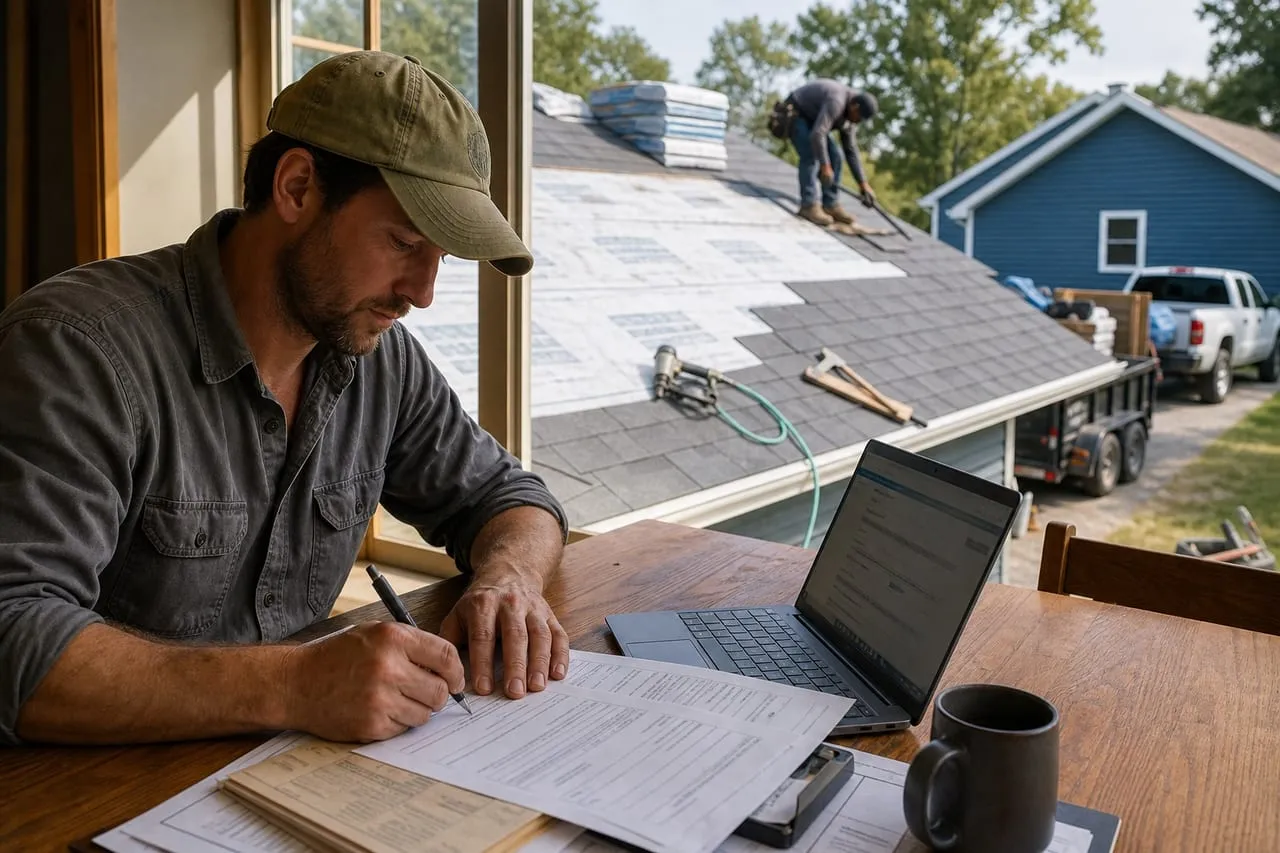
The 35% gross floor in the weekly review is not a greed number; it is the lowest margin at which a job still pays its share of the truck, the insurance, the callback reserve, and a slow February. Margins rarely die at the bid. They erode mid-job, one verbal “while you’re up there” at a time, which is why the Friday review compares final job cost against the original estimate line by line. Two jobs in a row under 35% is not noise; it is either a pricing problem or a foreman approving free work. See setting best prices and billing for the pricing discipline this depends on.
Growth without breaking what works
Scaling from one crew to three breaks the owner-only model. The hires that hold the operation together:
- Foreman per crew
- Production manager once you have 2+ crews
- Office/admin for invoicing and scheduling at $40k-$60k/year
- Sales rep separate from the owner at the 3-crew stage
The sequence is worth anchoring to revenue reality. A single well-run crew supports $100k-$300k a year in owner earnings; a two-to-three-crew operation runs $120k-$300k a month in revenue, but only if the cadence above survives the owner’s absence, which is precisely what the foreman, production manager, and admin hires are buying. The danger zone is crew two: revenue roughly doubles while overhead arrives a full salary at a time, and the owner is suddenly managing managers with systems built for one truck. Add the second crew only when the first one runs a full week without the owner touching it.
See how to grow a roofing business for the full hiring sequence.
Frequently asked questions
What’s the single biggest operational mistake?
Skipping the deposit. Owners take the job without it, then float materials and labor for weeks, then chase the homeowner for the final check. Cash dies.
Do I need a CRM?
Once you cross 10-15 active jobs/month, yes. JobNimbus, Roofr, or AccuLynx at $40-$200/user/month. Before that, a spreadsheet and Google Calendar work fine.
How do I handle a callback or warranty claim?
Same day. A foreman or the owner shows up within 24 hours of the call, fixes the issue, photographs the repair, and texts the customer. Speed defines reputation.
What about insurance claim work specifically?
Document obsessively: photos of every shingle inspected, scope documents that match Xactimate line items, supplements written within 5 business days. Insurance work is paperwork-heavy and one missed deadline can void a claim.
How do I know if I’m running a good operation?
Three numbers: gross margin per job above 35%, callback rate under 5%, and crew start time before 7:15 AM on weekdays. If all three hold for 90 days, the operation is solid.