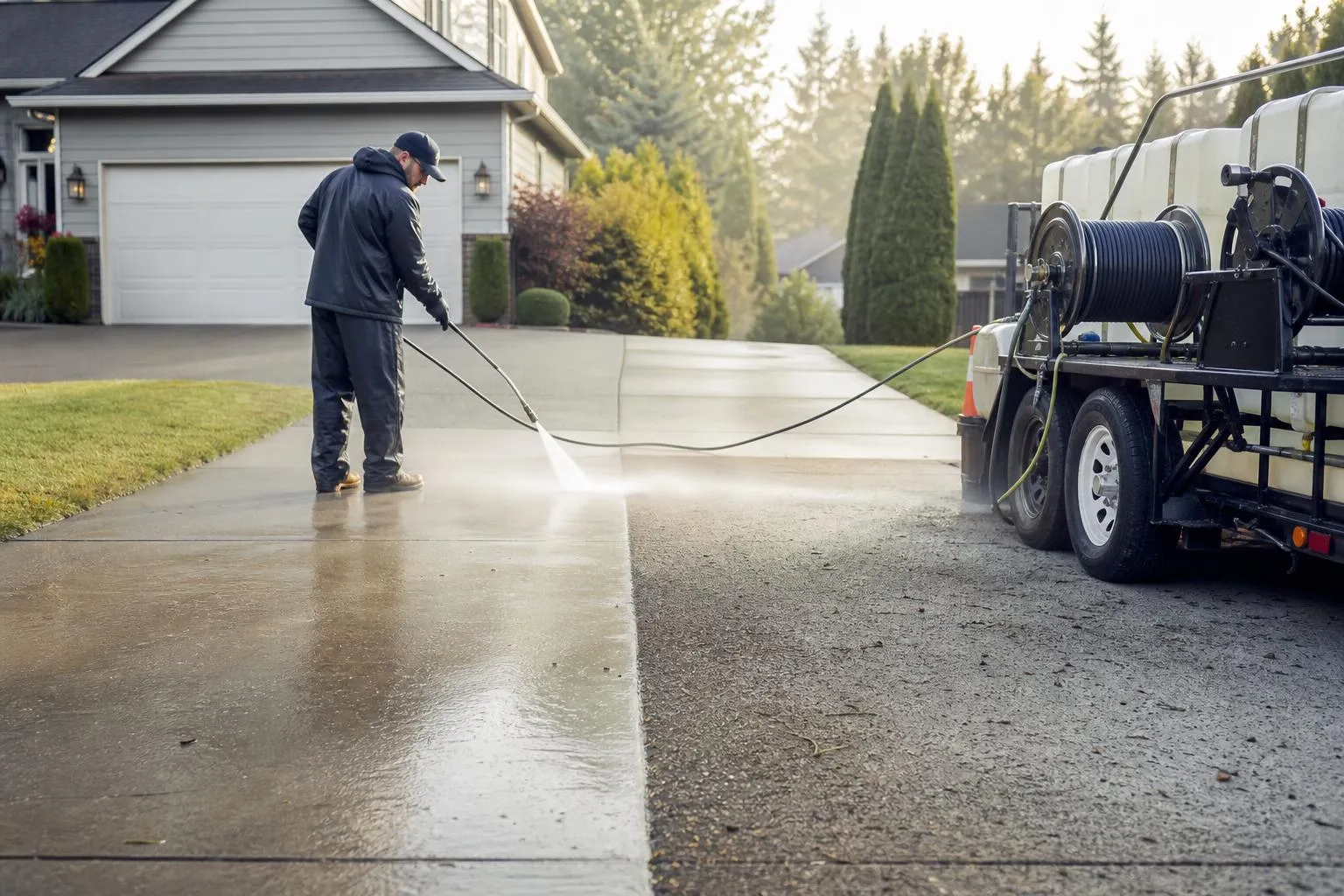
Pressure Washing Website Conversion Rate: Same Visitors, Way More Jobs Booked
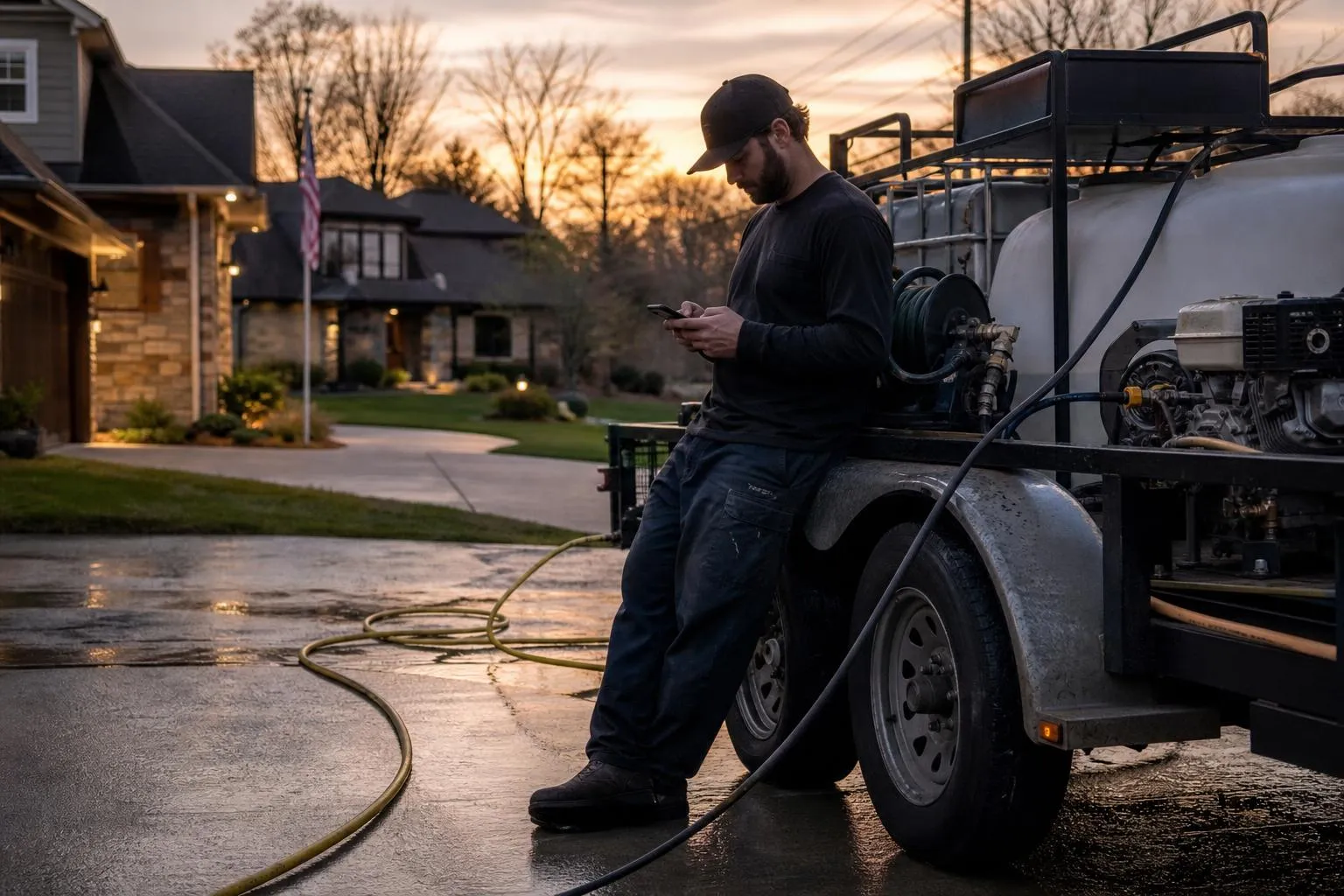
Say forty homeowners in your area looked up your website last month staring at a green, grimy driveway, and thirty-seven of them clicked away without ever reaching out.
You’d want to know exactly what went wrong. No photos of a finished job? A page that hung while they stood in the driveway squinting at their phone in the sun? Here’s the uncomfortable part: some version of that happens every month at nearly every pressure washing site out there, and it never leaves a trace. A visitor who bails doesn’t send you an angry text. There’s no missed job on the calendar, no bounced email. The only record is a number almost no owner has ever pulled up: conversion rate, the share of visitors who turn into a call, a form, or a booked date.
That number is quietly deciding whether your site is filling your spring calendar or handing the job to the guy with the $200 rig and a Facebook post.
The math pressure washers never bother to run
Say 280 people visit your site in a month, which busy spring seasons hand plenty of owners without much effort: Google Business Profile clicks, “pressure washing near me” searches, neighbors checking your work before they book. What happens after they land comes down to one number.
| Conversion rate | Leads from 280 visitors | Booked jobs (1 in 3) | Revenue at $340 avg job |
|---|---|---|---|
| 2% (aging brochure site) | 6 | 2 | $680 |
| 4% (decent modern site) | 11 | 4 | $1,360 |
| 8% (conversion-built site) | 22 | 7 | $2,380 |
No extra visitor shows up anywhere in that table. No new ad spend, no extra flyers on doors. The same crowd, converted instead of lost.
Why the leak never shows up in the trailer
Here’s what makes conversion so easy to miss: it produces no symptom at all. A blown pump announces itself instantly. A dead spring shows up in the bank account. But a website converting at 2% instead of 8% just quietly runs, the phone rings occasionally, a few jobs trickle in, and nothing reveals what the same 280 visitors would have produced through a page built to convert. That’s a different problem than a site nobody finds, which we covered in why your pressure washing website isn’t getting you jobs. A 2% site produces just enough activity to seem fine.
So most owners reach for the obvious lever: more Google Ads, another round of yard signs, a harder push at the map pack. The cheaper fix is usually right in front of them: the homeowners are already visiting. The page just isn’t converting them.
Where the extra jobs actually come from
A high-converting pressure washing site isn’t a fancier logo. It’s five mechanical decisions, each one recovering visitors the old site was losing.
Before/afters do the selling. Right at the top of the page, not buried three scrolls down, the roof or driveway transformation doing more convincing than any paragraph of copy ever could. Brochure sites lead with a stock photo of a pressure washer instead of proof.
The call is the interface. Tap-to-call in the first screen and repeated as the page scrolls, with a quote form as backup for people who’d rather not talk. Most of this traffic is on a phone standing in their own driveway, so every screen should be able to start the call.
An instant ballpark quote. A quick square-footage or linear-foot calculator that spits out a range in seconds beats “call for pricing” every time, because it answers the question before a lowballer on Marketplace can undercut you.
Proof before the pitch. Reviews, years in business, insurance, real local photos, shown immediately instead of buried on an About page. Homeowners comparing three quotes in an afternoon aren’t reading your story. They’re scanning for a reason to trust you faster than the next tab open.
Speed. A gallery of stunning transformations that takes six seconds to load converts nobody, because the visitor is gone by second three. Google’s own research found that 53% of mobile visitors abandon a page that takes longer than 3 seconds. That deserves its own article, and it’s next in this series.
Stack all five and 2% becomes 8%, sometimes more. Not a bigger audience, just fewer of the same people walking away.
Why patching the old site won’t get you there
Could the old site inch toward these numbers with a few tweaks? To a point.
Patching the old site
- Cheap up front: a click-to-call button and a photo carousel cost a few hundred dollars.
- No rebuild project, no new domain, nothing new to relearn.
- Small real wins exist: moving your best roof transformation to the top can nudge 2% toward 2.5%.
Patching the old site
- The old foundation caps the ceiling: a heavy desktop-first template stays slow on the phones homeowners are actually holding.
- Every fix means another email to a freelancer and another week’s wait, billed hourly.
- A year of patches can run $1,400 and still leave you stuck under 3%, because conversion is structural, not decorative.
Bolting a quote form onto a slow, cluttered template is soft-washing over algae that’s already eaten the siding. It looks like progress. It isn’t. Conversion gets decided in the architecture on day one, not stapled on afterward.
See what your traffic is actually worth
You can’t know what your visitors are worth until they hit a page built to convert them, but you can see the architecture without spending anything yet. The free video walkthrough tours a real pressure washing site so you can compare it against yours, section by section: where the before/afters sit, where the quote tool lives, what proof looks like above the fold.
If it makes the case, the rebuild is done for you start to finish: $2399£1,899 one-time for Standard, $7500£5,900 for Growth, prices published on the page, no contracts, live in 7 days, edits live within 24 hours, and you own everything. Once the site converts, whatever else you spend later, whether ads or growth services, builds on top of an 8% machine instead of a 2% leak.
Frequently asked questions
What is a good conversion rate for a pressure washing website?
Aging brochure sites usually land at 1-3%. A decent modern site reaches 4-5%, and conversion-built pressure washing sites are engineered toward an 8%+ benchmark, the difference between 6 and 22 leads on identical traffic.
Can I fix conversion without rebuilding the site?
You can buy small gains with a click-to-call button, better photos, and visible reviews. But a slow, desktop-era template caps how far those tweaks reach, which is why patched sites rarely clear 3%. Conversion comes from the architecture, not the add-ons.
How much does a conversion-built pressure washing website cost?
$2399£1,899 one-time for the Standard build or $7500£5,900 for Growth, both prices published openly. No contracts, launch in 7 days, edits live within 24 hours, and you own everything. One booked HOA contract pays for it many times over.
Should I fix conversion before spending more on ads?
Yes. Doubling traffic into a 2% site adds 6 leads; lifting the same 280 visitors to 8% adds 16 with zero new ad spend. Fix the leak first, and every ad dollar you spend afterward does roughly four times the work.
Next in this series: Every extra second your website takes to load is costing you jobs
Your move
Reading this does not book a job.
The owners who pull ahead are the ones who change one thing this week. If you want that one thing to be a website that sells and ads that put it in front of the right people, we build and run both for you.
Straight answer on whether we can help, usually the same day.