How to successfully run a pressure washing business

Starting a pressure washing business is easy; the machine works the first day. Running one that still pays you three years later is a different skill, and it has almost nothing to do with cleaning. It is about how tightly you pack a route, whether your revenue is recurring or scrambled together each week, how few times you drive back to redo a job, and whether the money is in your account the day you finish. The best operators are not the best washers. They are the best schedulers and collectors. Here is how they run it.
Pack the route or you are paying yourself to drive
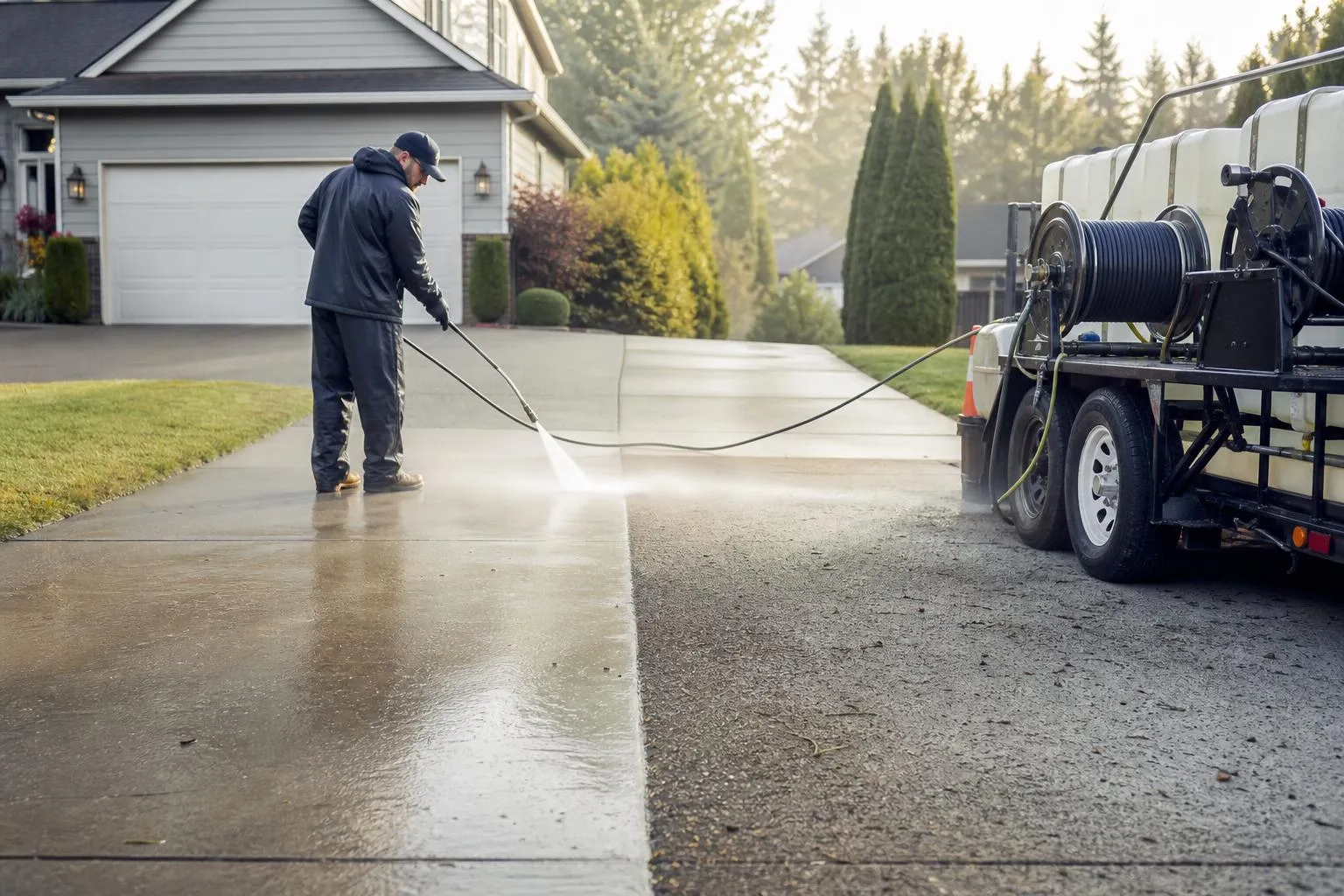
The hidden cost in this business is not chemicals; it is windshield time. A job you do not get paid for, driving 45 minutes across town between two customers, is pure loss, and it is the difference between a good day and a mediocre one. Successful operators book by geography, not by whoever called first. They cluster this week’s jobs into the same few neighborhoods and, when a lead comes from across the metro, either schedule it for the day they will already be near there or price in the drive.
The math is stark. Cut average drive time between jobs from 90 minutes to 30 and you free up roughly two hours a day, which is one more paid job, five days a week. At a $200 ticket that is $50,000 a year of revenue you unlocked by scheduling smarter, with zero new marketing. Where to concentrate that route is covered in identifying ideal locations.
Turn one-time jobs into recurring revenue
Residential washing is naturally feast-or-famine: a home needs it once a year, so you are perpetually refilling the top of the funnel. The antidote is recurring work. HOAs need entrance monuments, sidewalks, and common areas cleaned quarterly. Property managers need storefronts and dumpster pads on a schedule. Restaurants need their drive-through and patio degreased monthly. These pay less per visit than a big residential job, but they land on the calendar automatically and cluster into dense routes.
Chase a handful of these contracts and you build a revenue floor you can staff and plan against, instead of waking up Monday wondering where the week’s work is. Growing this base is the core of growing a pressure washing business, and winning the first commercial accounts is in getting clients and customers.
| Work type | Frequency | Trade-off |
|---|---|---|
| Residential driveway / house | ~Once a year per home | High ticket, constant lead-chasing |
| HOA common areas / entrances | Quarterly | Steady, route-dense, contract-based |
| Commercial storefront / sidewalk | Monthly or quarterly | Predictable, lower per-visit price |
| Restaurant drive-through / patio | Monthly | Recurring, needs degreasing skill + reclaim |
| Fleet / dumpster pads | Weekly to monthly | Very dense, may require water reclamation |
Systematize the work so you are not the bottleneck
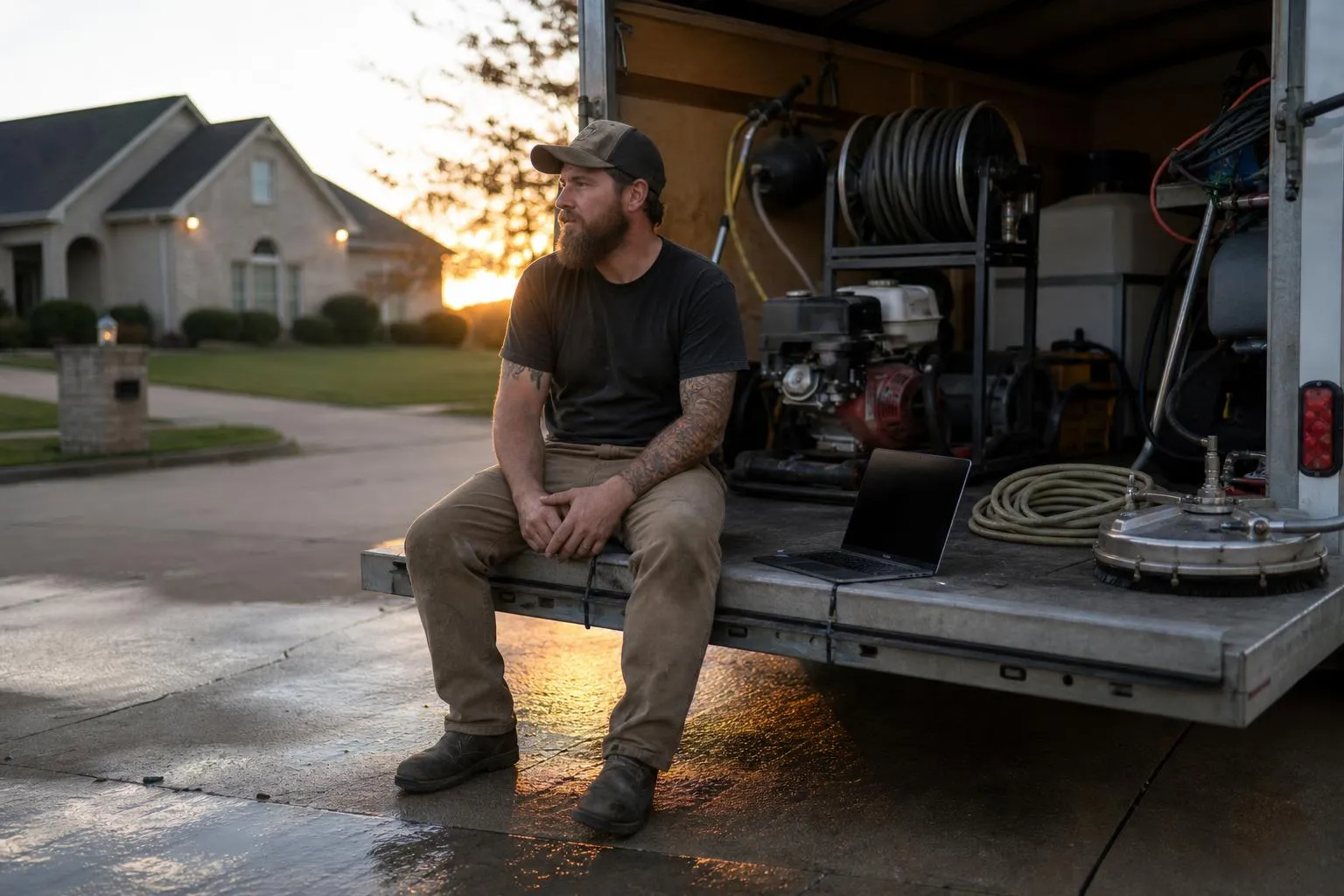
The moment you want a second crew or a day off, loose habits become expensive. Run the business on simple field-service software (Jobber and Housecall Pro are the standards for this trade) that handles scheduling, automated reminders, quoting, invoicing, and card payment in one place. It cuts no-shows with text reminders, gets quotes out same-day, and lets a customer pay from the invoice link.
Build a repeatable process for every job: pre-wet and tarp landscaping, confirm the chemical mix for the surface, do the work, then walk the customer around the finished result before you pack up. Consistency is what lets you hire without your reviews collapsing, which is the subject of hiring and training staff.
Field-service software vs a notebook and texts
- Automated reminders cut no-shows, and every prevented no-show is a saved half-day of lost route time.
- Same-day quotes from the app close more jobs than a quote you email that evening or the next morning.
- Card and tap-to-pay on the invoice gets you paid on completion instead of chasing checks.
Field-service software vs a notebook and texts
- It costs roughly $50 to $200 a month depending on tier and crew size.
- There is a real learning curve, and setup eats a weekend before it saves you time.
- Processing fees run about 2.9% per card charge, a line you must price into the job.
For a solo operator with a light schedule a notebook survives a while, but the day you add a second job on the same afternoon or a helper, software pays for itself in one prevented no-show.
Kill comebacks and collect on the spot
Two operational habits protect your money more than any marketing. First, kill comebacks. A comeback, driving back to redo a streaky driveway or a spot you missed, costs you the fuel and the hours and it happened on a job you already got paid for, so it comes straight out of profit. A 30-second walkthrough with the customer at the end, before you leave, catches the missed spot while you are still set up and turns a would-be complaint into a compliment.
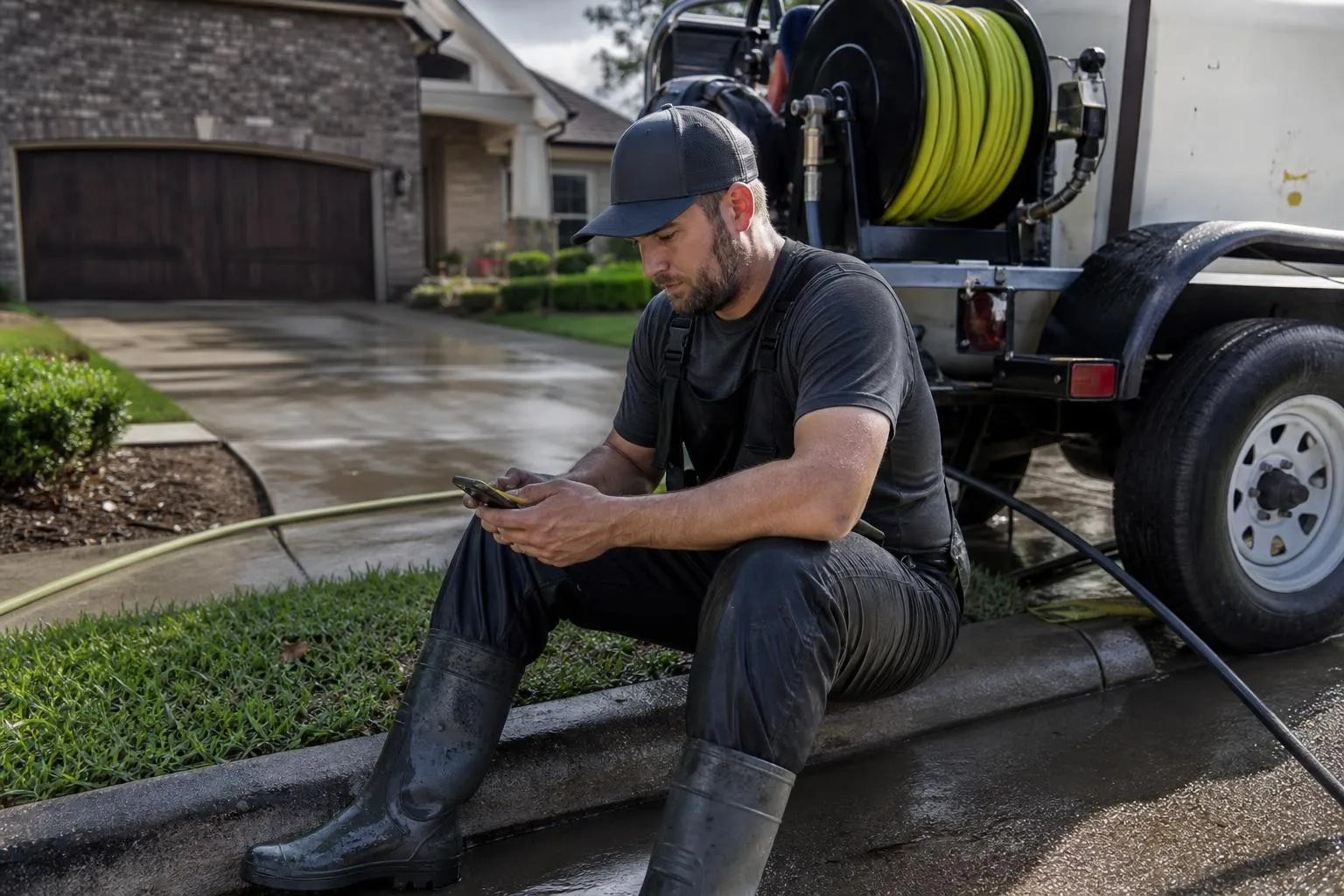
Second, get paid on completion. Residential customers should pay the day you finish, by card, tap-to-pay, or a texted invoice link, not on a mailed check or net-30 terms. Solo operators do not go broke from low prices nearly as often as from money that is owed but not collected. Reserve net terms for established commercial accounts, and even then invoice the moment the job is done. The full billing method is in setting prices and billing.
Getting found is the part that decides everything
Even a perfectly run operation stalls if the pipeline dries up. Two free moves to keep it full: keep your Google Business Profile active with fresh before/after photos and reply to every review, and text a review link to every happy customer the day you finish, because a steady stream of recent reviews is what makes the phone keep ringing.
The high-stakes part is the website and ad engine that feed the schedule you have worked so hard to run well. A good site loads in under three seconds on a phone, ranks locally, and turns searching homeowners into booked jobs; the gap between one that converts and one that just looks fine is invisible until you compare lead numbers, and a poorly run ad account quietly trains the platforms to send worse traffic. That is the work we do. To have the site built to convert instead of guessed at, get a free video walkthrough. For managed Google Ads, Facebook, and SEO, see our services. If you are still shaping the business behind the operation, start at expntl.com.
Frequently asked questions
What actually makes a pressure washing business profitable long-term?
Route density, recurring contracts, and collecting on completion, far more than the price you charge. Packing jobs by geography turns saved drive time into extra paid work, recurring HOA and commercial contracts smooth out the feast-or-famine calendar, and taking payment on site keeps cash in your account. The washing is the easy part; the operations are what pay you in year three.
How do I stop wasting so much time driving between jobs?
Book by zip code instead of by the earliest open slot. Cluster each week into two or three neighborhoods and offer callers a day when you will already be in their area. Cutting average drive time from 90 to 30 minutes between jobs typically frees up two hours a day, which is a full extra job, worth around $50,000 a year to a solo operator.
Should I take on commercial contracts even though they pay less per job?
Usually yes. A recurring quarterly or monthly contract is worth more than its per-visit price suggests because it is booked automatically, clusters into dense routes, and stabilizes revenue you can plan and staff against. A base of commercial and HOA work carrying the slow months is what lets a business survive a soft residential season.
What software should I use to run the day-to-day?
Jobber and Housecall Pro are the two standards for this trade. Both handle scheduling, automated text reminders that cut no-shows, same-day quoting, invoicing, and card payment in one place, for roughly $50 to $200 a month. The reminders and on-site payment usually pay for the subscription by preventing a single no-show or uncollected job.
How do I avoid going back to redo jobs?
Do a 30-second walkthrough with the customer at the end of every job, before you pack the truck. Walking the finished result together catches any missed spot while you are still set up, so you fix it in two minutes instead of driving back another day. A comeback burns fuel and hours on a job you were already paid for, so preventing it protects pure profit.
Your move
Reading this does not book a job.
The owners who pull ahead are the ones who change one thing this week. If you want that one thing to be a website that sells and ads that put it in front of the right people, we build and run both for you.
Straight answer on whether we can help, usually the same day.