Best way to start and get into pressure washing business
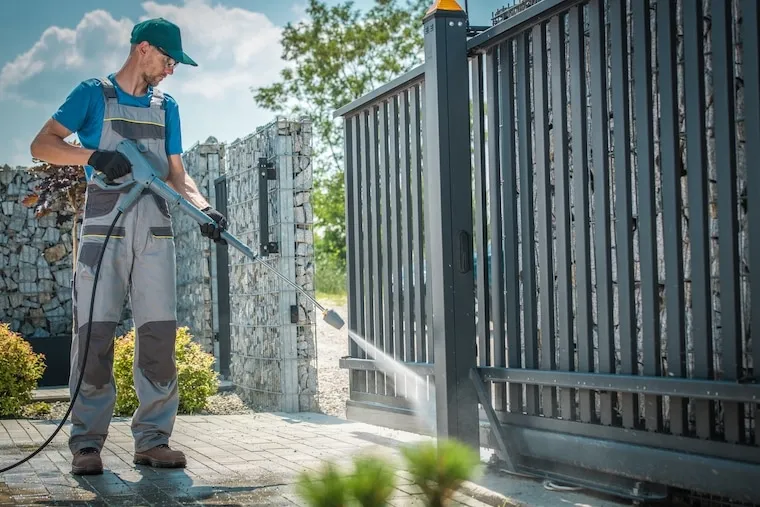
The best way to get into pressure washing is not to finance the biggest trailer rig on the market and hope the phone rings. It is to buy one good machine, pick one service you can sell tomorrow, and knock out 15 driveways in your own zip code before you spend another dollar. The operators who fail almost always failed the same way: they bought $12,000 of equipment for a business that had not yet proven it could book $12,000 of work.
Pick the one service you will sell first
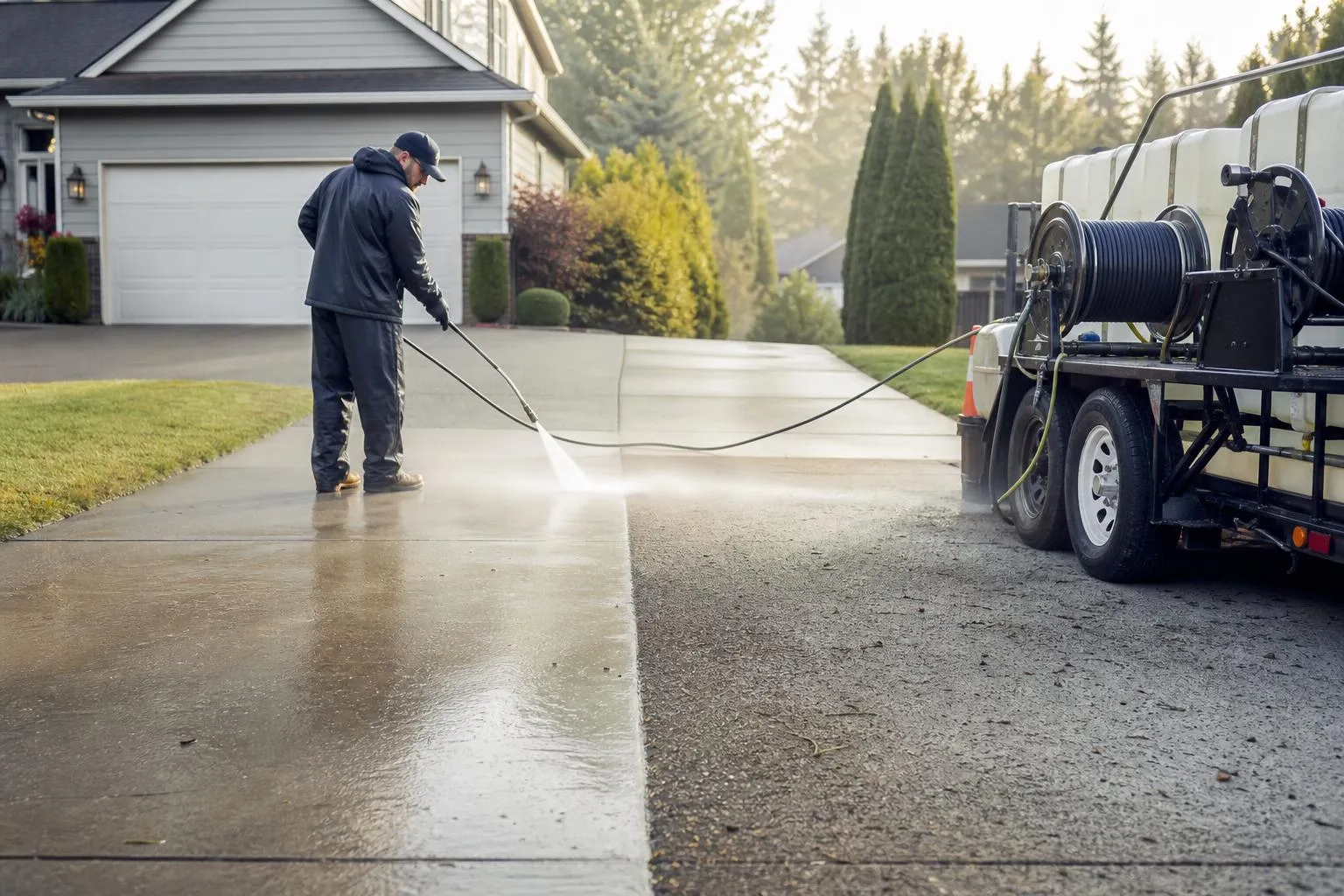
Do not launch as a “we clean anything” company. Pick one offer you can quote over the phone and deliver with one machine. The two best entry points are concrete flatwork (driveways, sidewalks, patios) and soft-wash house washing (siding, one-story eaves, fences). Flatwork is the easier sell and the faster cash: a surface cleaner turns a driveway that takes two hours with a wand into a 30-minute job. House washing is the better business, because it is soft-wash chemistry, not brute pressure, which means lower equipment demand and a higher ticket per stop.
Commercial work (fleet washing, dumpster pads, storefront sidewalks) pays on net-30 or net-60 and requires a certificate of insurance before you touch the lot, so it is a year-two move, not a launch. Start residential, get paid the same day, and let the reviews stack. The full launch order is laid out in the step-by-step startup guide.
Buy one machine, not a fleet
A 4 GPM, 4,000 PSI belt-drive cold-water unit is the workhorse that covers 90% of residential jobs. Flow (GPM) is what cleans fast; pressure (PSI) is what cleans deep. Beginners obsess over PSI and under-buy GPM, then wonder why a driveway takes all afternoon. Pair the machine with a stainless surface cleaner (a Whisper Wash Classic or a BE unit), 200 feet of hose on a reel, and a basic 12V soft-wash setup, and you can service almost any home.
Skip the trailer at first. Run everything out of a pickup bed or an enclosed van you already own. A full skid-mounted trailer rig with a buffer tank and reels is a $10k to $18k purchase that makes sense the month you are turning work away, not the week you open. The tool-by-tool list is in buying equipment and supplies.
| Setup | Machine | Realistic all-in cost | Who it fits |
|---|---|---|---|
| Homeowner starter | 2.5 GPM electric or box-store gas | $400 to $900 | Testing the water, side hustle weekends |
| Pro entry (recommended) | 4 GPM belt-drive + surface cleaner + soft-wash | $3,000 to $6,000 | Full-time launch, residential |
| Trailer rig | 5.5 to 8 GPM skid, buffer tank, reels | $10,000 to $18,000 | Year two, crews, commercial |
Price the job, not the hour
Homeowners do not buy hours; they buy a clean driveway. Quote flat, and estimate that flat number off square footage. Concrete flatwork runs $0.10 to $0.20 per square foot, so a 600-square-foot driveway is a $90 to $120 job you finish in under an hour. House washing is best sold as a flat package: $250 to $450 for a typical single-story, $400 to $700 for a two-story, priced by footprint and stories, not by the clock.
Set a minimum. A $99 to $149 service minimum keeps a 400-square-foot patio from becoming a break-even drive across town. The full method, including how to bundle house-plus-driveway, is in setting prices and billing.
Build density before you build a fleet
The unglamorous truth of this business is that your enemy is drive time, not competition. Every mile between jobs is unpaid, unloading and setting up burns 15 minutes a stop, and a day of scattered jobs across the metro can leave you billing four hours out of eight. The operators who make real money run tight: they saturate one or two zip codes, then let neighbors watch the truck work.
That is why the free marketing matters more than paid ads early. Every job is a yard sign, a door hanger on the six closest houses, and a review request texted before you pull away. The tactics that build a route are in how to promote your business locally and how to get clients and customers.
Saturate one neighborhood vs chase the whole metro
- Jobs cluster, so you bill six stops a day instead of four and your fuel line drops.
- Neighbors see the truck and the results, and referral rate on a tight route runs 20% to 30%.
- One yard sign and six door hangers per job compound fast when the houses are next to each other.
Saturate one neighborhood vs chase the whole metro
- A single zip can cap out; you eventually need three or four to keep a crew fed.
- One unhappy customer talks to the exact neighbors you are trying to win.
- Wealthier far-flung suburbs sometimes pay more per job than your dense home zip.
The rule is simple: saturate until a zip is repeatedly booked, then expand to the next adjacent one. Never scatter for the sake of a slightly bigger ticket.
Getting found is the part that decides everything
You can own the best machine on the street and still stall if the phone does not ring. Two pieces are free and worth doing this week; the rest is high-stakes work where doing it badly costs more than not doing it at all.
The free pieces, now: claim and fully fill out your Google Business Profile, load it with real before/after photos of your jobs, and text every happy customer a review link before you leave the driveway. Your first 25 reviews pull more first-time callers than any ad. The checklist is in how to advertise on Google.
Now the part that pays for a pro. A pressure washing website is not a brochure; it loads in under three seconds on a phone, ranks for “pressure washing near me,” puts a click-to-call button and real before/after shots above the fold, and turns a homeowner scrolling at 9pm into a booked quote. The gap between a site that converts and a pretty one that does nothing is invisible until you compare the numbers. That is the work we do. To have the site handled instead of guessed at, get a free video walkthrough. For Google Ads, local SEO, and paid social, see our services. If you have the idea but not the plan, start at expntl.com.
Frequently asked questions
What is the cheapest way to start a pressure washing business?
You can technically start with a $400 to $900 box-store gas washer and clean driveways on weekends. But the honest floor for a business that does not embarrass you on siding is a 4 GPM belt-drive machine, a surface cleaner, and a small soft-wash kit, run out of a truck you already own, for about $3,000 to $6,000. Buy the machine first and the trailer last.
Should I start with residential or commercial work?
Start residential. Homeowners pay the same day, the jobs are smaller and forgiving, and every driveway becomes a yard sign and a review. Commercial work pays more per contract but bills on net-30 or net-60, demands a certificate of insurance up front, and expects you to already have a track record, so it is a year-two expansion, not a launch.
How do I get my first customers with no reviews?
Door hangers on the six houses nearest every job, a yard sign at the job itself, and one killer before/after post in local Facebook groups. Offer your first five customers a discount in exchange for an honest review and permission to photograph the results. Five reviews and a photo folder are enough to start winning on Google.
How much can I realistically make in the first year?
A solo operator running a tight route and pricing correctly commonly clears $50k to $90k in gross revenue in year one, with a big chunk of that dropping to profit because the equipment cost was low. What separates the numbers is route density and review count, not who owns the fanciest rig. The full breakdown is in how much profit a pressure washing business makes.
Do I need a license to start?
Most places require a basic local business license and general liability insurance before you take money, and some cities regulate wastewater runoff. It is cheaper and faster than new owners fear. The full setup is in how to set up and register your business.
Your move
Reading this does not book a job.
The owners who pull ahead are the ones who change one thing this week. If you want that one thing to be a website that sells and ads that put it in front of the right people, we build and run both for you.
Straight answer on whether we can help, usually the same day.