Setting best prices and billing for a pressure washing business
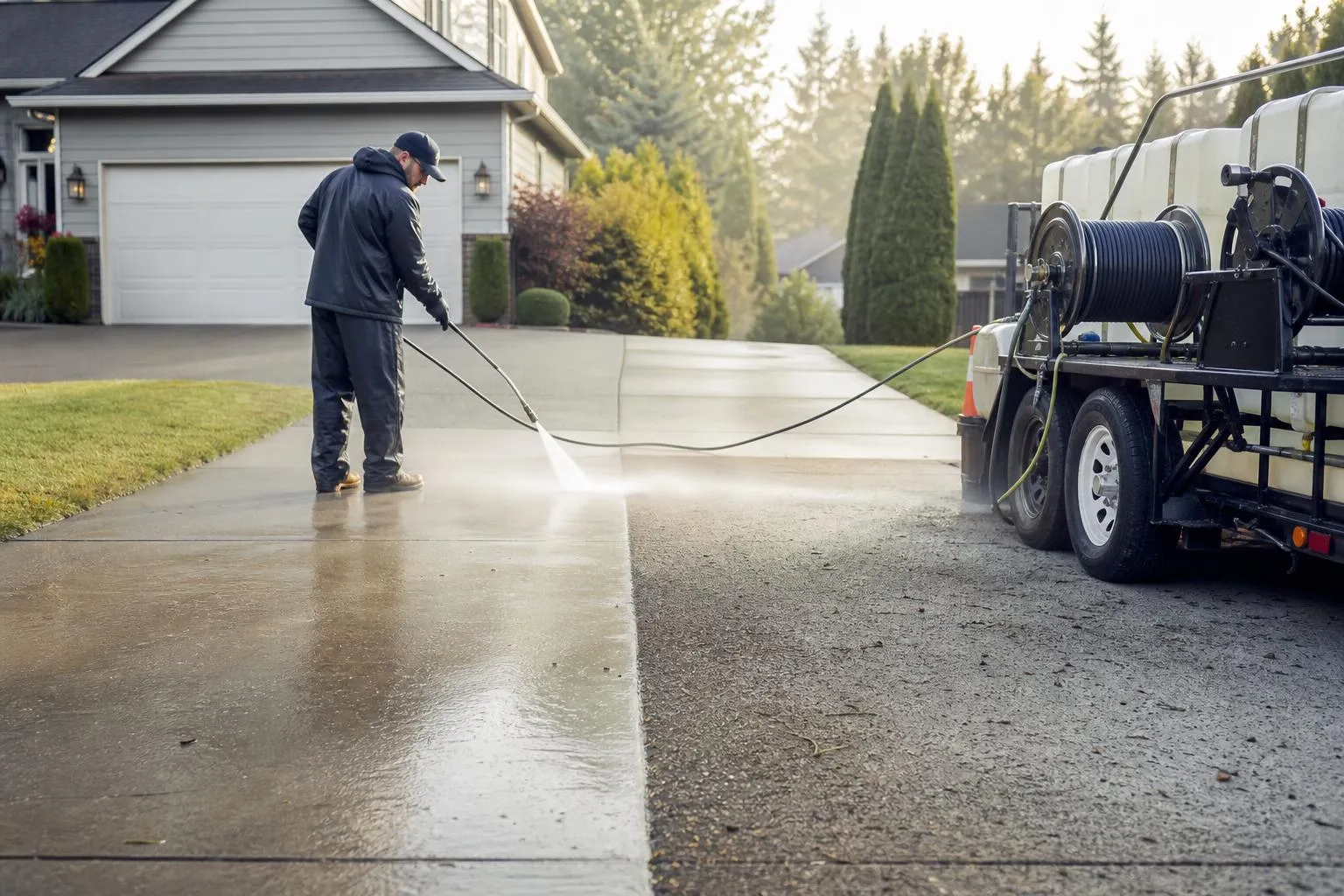
Stop pricing pressure washing by the square foot. The square foot is an output; your real cost is time, and two jobs at the same square footage can take twenty minutes or two hours depending on grime, access, and surface. The operators who make money price to an hourly production target, then translate it into whatever unit the customer wants to hear. Here is how to build a rate that survives a slow morning and a bad driveway, and a billing setup that gets you paid before you pull off the curb.
Price backward from an hourly target
Pick the number your day has to make, then reverse into a rate. If your rig, insurance, chemicals, fuel, and your own pay require $120 an hour to be worth leaving the driveway, every quote is just that target divided by how fast you work the surface. A surface cleaner that does 1,000 square feet of concrete in 20 minutes is producing 3,000 square feet an hour; to hit $120 you need roughly $0.04 to hit break-even and $0.12 to $0.20 to actually profit after wear, tips, and drive time.
This is why per-square-foot menus mislead beginners. The foot is not the cost. A pristine three-year-old driveway and a decade of algae at the same square footage produce wildly different times, so the same price makes one job great and the other a loss. Anchor on the hour, and the square-foot rate becomes a translation you adjust up for condition, access, and prep, never a fixed sticker. Owners still validating whether the whole model pays should pair this with how much profit a pressure washing business can make.
Know the going rates before you name yours
You still need to know the market so you are not the cheapest or the delusional-highest bidder. These are typical US retail ranges in 2026. Use them as guardrails, then price to your production speed and local competition, not to undercut.
| Service | Typical range | Priced by |
|---|---|---|
| Concrete driveway | $0.12-$0.25 / sq ft, $100-$250 min | Square foot, condition-adjusted |
| House soft wash (1-story) | $300-$450 | Flat, by linear feet + stories |
| House soft wash (2-story) | $450-$700 | Flat, height premium |
| Roof soft wash | $0.30-$0.75 / sq ft, $450 min | Square foot + pitch + access |
| Deck or fence | $1.00-$3.00 / sq ft | Square foot, wood is slow |
| Commercial flatwork | $0.08-$0.15 / sq ft | Volume, bid per site |
| Gutter brightening (exterior) | $1-$2 / linear ft | Add-on to house wash |
Set a hard minimum: no residential job leaves under $150 to $200, because a $90 driveway still costs you the same drive, setup, chemicals, and teardown as a $400 one. The minimum protects your worst-case hour.
Quote a range on the phone, a firm price on-site
Never give a single flat number over the phone for anything you have not seen. Give a range (“house washes in your neighborhood typically run $350 to $550”) to qualify the caller and filter the tire-kickers, then confirm the firm price on-site or from a satellite measurement. The 3,000-square-foot driveway the customer described as “normal-sized” is how phone-quoters lose a whole morning’s margin.
For flatwork you can measure it fast from Google Earth Pro’s measure tool before you even arrive, which lets you send a firm written quote the same day. For house and roof washes, one look at the north side and the access decides the number. Tiered packages (a basic driveway-only, a mid house-plus-drive, a full exterior with gutters and windows) work well because they anchor the customer to the middle option and make upsells feel like their idea, not your pitch.
Get paid on completion, and never chase net-30 residential
Residential pressure washing is a cash-on-completion business. You are on-site, the result is visible, and the customer is happiest the moment the driveway is wet and bright, so that is when you collect. Take card in the field through Jobber, Housecall Pro, or a Stripe/Square reader; email the invoice with a pay link before you coil the hose. Waiting to mail a paper invoice is how a $400 job turns into three follow-up texts and a 45-day wait.
Commercial is the one place net-30 is normal, because property managers pay on their cycle. Price those jobs knowing the money is a month out, and get a signed work order with the scope and rate before you start. For every job type, the single best defense against a payment fight is documentation: a dated before photo, the written scope the customer agreed to, and an after photo. That trio ends almost every dispute before it reaches a chargeback.
Charge for seasonality without discounting your winter
Demand peaks in spring and early summer, and the instinct is to slash prices in the cold months to fill the calendar. Resist it. Discounting your off-season trains customers to wait for the sale and destroys your average ticket. Instead, hold your rate and sell the winter services that still make sense: gutter cleaning, commercial flatwork that runs year-round in warm states, and pre-booked spring slots at this year’s price. Raise your peak-season rate 10% to 15% instead of cutting the off-season, because summer is when you turn away work, and the price should reflect it.
Raise peak-season rates
- Captures maximum dollars in the weeks you are booked solid and turning jobs away.
- Protects your brand as a premium operator instead of a discounter.
- Naturally shifts price-sensitive customers into your slower weeks, smoothing the calendar.
Raise peak-season rates
- A few price-shoppers walk to a cheaper competitor during the busy season.
- Requires the confidence and reviews to justify sitting above the low bidder.
- You must actively track competitor rates so the premium stays credible, not fantasy.
Getting found is what lets you hold your price
The operator who can charge $150 an hour is usually the one who shows up first when a homeowner searches, with reviews and photos that make the price feel safe. Two free moves this week: text every satisfied customer a Google review link before you leave the driveway (your first 25 reviews out-sell any ad), and post every dramatic before-and-after to your Business Profile so the results justify the rate.
The higher-stakes work is a website that ranks for your towns and converts a price-shopper into a booked job with a gallery and instant quote form, so you are not competing on price against a cheaper name they found first. To have that handled, get a free video walkthrough of your website. For Google Ads and local SEO built to bring in higher-ticket jobs, see our services. If you are still assembling the numbers behind the business, start at expntl.com.
Frequently asked questions
How much should I charge for pressure washing?
Price to an hourly production target of $100 to $150, then translate it into the customer’s preferred unit. Concrete flatwork lands around $0.12 to $0.25 a square foot with a $150 to $200 minimum, single-story house washes run $300 to $450, and roofs run $0.30 to $0.75 a square foot. The rate follows how fast you work the surface, not a fixed sticker.
Should I charge by the square foot or a flat rate?
Charge flatwork by the square foot (adjusted for condition) and charge house and roof washes as flat prices set by size, stories, and access. Under it all, price to your hourly target so a filthy driveway and a clean one at the same footage do not earn you wildly different rates for the same time. The unit is just how you present the number.
How do I avoid underpricing a job I can’t see?
Give a range on the phone to qualify the caller, then confirm a firm price on-site or from a satellite measurement in Google Earth Pro. A single flat phone quote is how you commit to a 3,000-square-foot driveway the customer called “normal.” Measuring before you arrive lets you send an accurate written quote the same day.
When should I collect payment?
Collect residential work on completion with a card reader or a Stripe/Square pay link through software like Jobber, while the customer is happiest and the result is visible. Reserve net-30 for commercial clients who pay on a cycle, and always get a signed scope with a dated before photo. That documentation is your best defense against a “still looks dirty” chargeback.
Should I discount in the slow season?
Hold your rate and instead raise peak-season pricing 10% to 15%, because summer is when you turn work away. Discounting the off-season trains customers to wait for the sale and drops your average ticket. Fill winter with services that run year-round, gutters and commercial flatwork, and with spring slots pre-booked at the current price.
Your move
Reading this does not book a job.
The owners who pull ahead are the ones who change one thing this week. If you want that one thing to be a website that sells and ads that put it in front of the right people, we build and run both for you.
Straight answer on whether we can help, usually the same day.