How to run Facebook for a pressure washing business
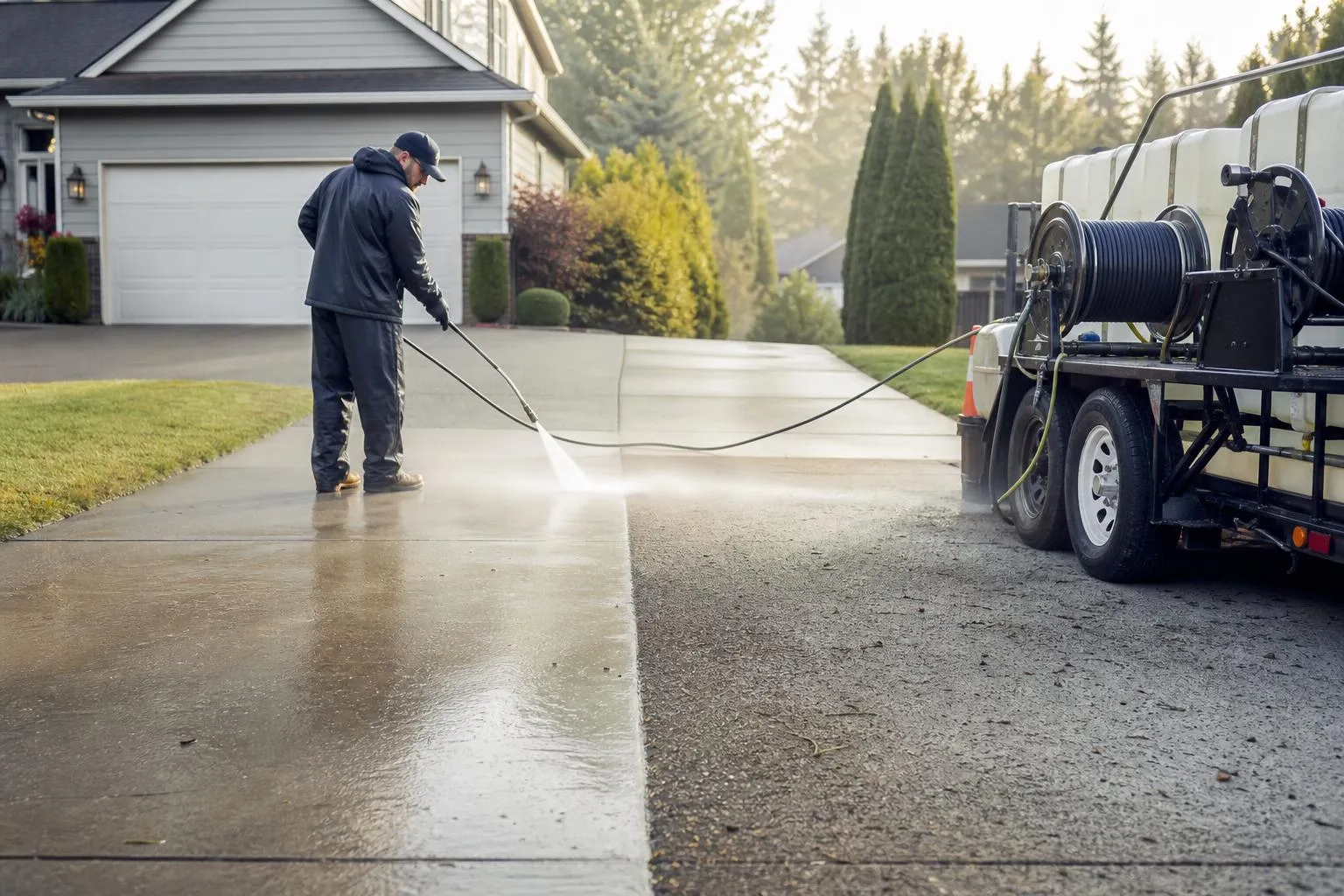
Facebook does not reward you for posting every day. It rewards you for posting things people stop scrolling for, and for a washing business that means the before/after slider and the 20-second reel of a black driveway turning gray. The owners who win on this platform treat it as two separate machines: a content page that builds a warm audience, and a lead-form ad that buys cold ones for the price of a coffee. Run both, answer the DMs fast, and Facebook becomes the cheapest booking channel you have.
Set the page up so it books, not just looks
Create an actual Facebook Business Page, not a personal profile with a logo, because a profile cannot run ads, cannot show a Book Now button, and violates Facebook’s terms the day you use it commercially. Fill the whole thing: a “Book Now” or “Send Message” call-to-action button, service area cities listed, hours, a real phone number, and a cover image that is a before/after, not a stock photo of a machine. Add your services (driveway washing, house soft wash, roof soft wash, fleet) as actual service entries so they surface in search.
The one setting most owners skip is turning on Messenger’s automated greeting and away message. When a lead messages at 9pm, an instant “Thanks! We usually reply within a few minutes during the day. What’s the address and what needs cleaning?” holds them while you sleep. If the page is part of a wider web presence you are still building, point it at the same brand you use in your logo and colors and your website.
Post the transformation, not the tips
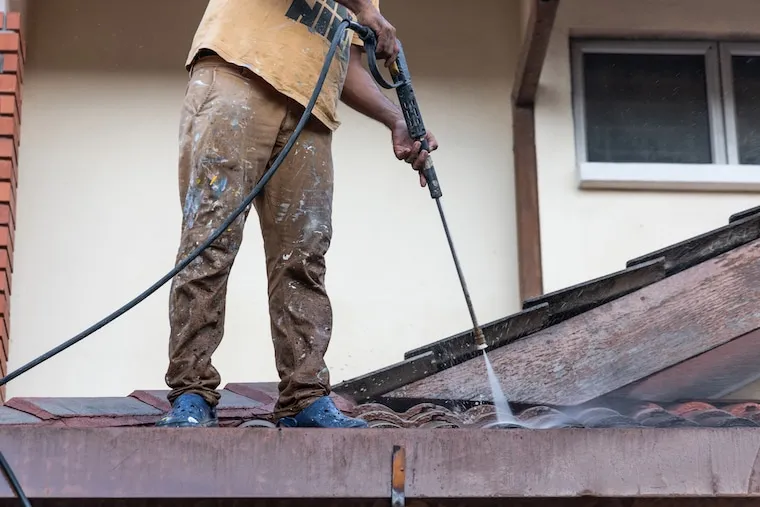
People do not follow a washing company to learn. They follow because the reveal is satisfying. Your content calendar is almost entirely proof of work: the split-screen before/after, the slow pan of a striped-and-then-clean roof, the pressure hitting a green sidewalk. Four to five posts a week is plenty. Daily posting to an audience that is not there yet just trains the algorithm that your posts get ignored.
Reels are the reach cheat code right now because Facebook is pushing short video hard to compete with TikTok. A 15 to 30 second reel of a satisfying clean, shot vertical on your phone, routinely out-reaches a photo 5 or 10 to 1 with zero ad spend. Caption it with the neighborhood name (“House wash in [suburb] this morning”) so it reads local.
| Content type | How often | Why it works |
|---|---|---|
| Before/after split image | 2 to 3x per week | Highest save + share rate; the core asset |
| Vertical reel of a clean in progress | 1 to 2x per week | Biggest organic reach; algorithm favors it |
| Customer review screenshot | 1x per week | Social proof; converts lurkers to DMs |
| Neighborhood group post (“cleaning on [street] this week”) | as you route | Books the two houses on either side |
| Seasonal reminder (gutter/roof before winter) | 1x per month | Creates demand in the slow months |
Let neighborhood groups do the reach for free
Your own page’s organic reach is dismal, usually 5 to 10 percent of followers. Local groups are the opposite. A “just finished this driveway on Maple St, before/after below, DM me if your street needs it” post in a 12,000-member neighborhood group can pull ten inquiries and cost nothing. Join 5 to 8 of the buy/sell, “what’s happening in [town],” and homeowner groups around your route.
Read each group’s rules first, because many ban overt selling and will remove you. The post that survives is a genuine result with a soft offer, not a price list. When a homeowner posts “anyone recommend a pressure washer?” a same-day reply with one photo and no hard sell wins more work than any ad. This is the same local-first muscle covered in promoting locally.
Buy cold leads with a $10-a-day lead form
Organic builds a warm audience over months. Lead-form ads book jobs this week. Set up a Facebook Lead Ad (the form opens inside Facebook, so the prospect never leaves and conversion is high), target a 10-mile radius around your service area, ages 30 to 65+, homeowners, and run your single best before/after as the creative. Start at $10 to $20 a day. In most suburban markets that returns driveway and house-wash leads at $8 to $25 each.
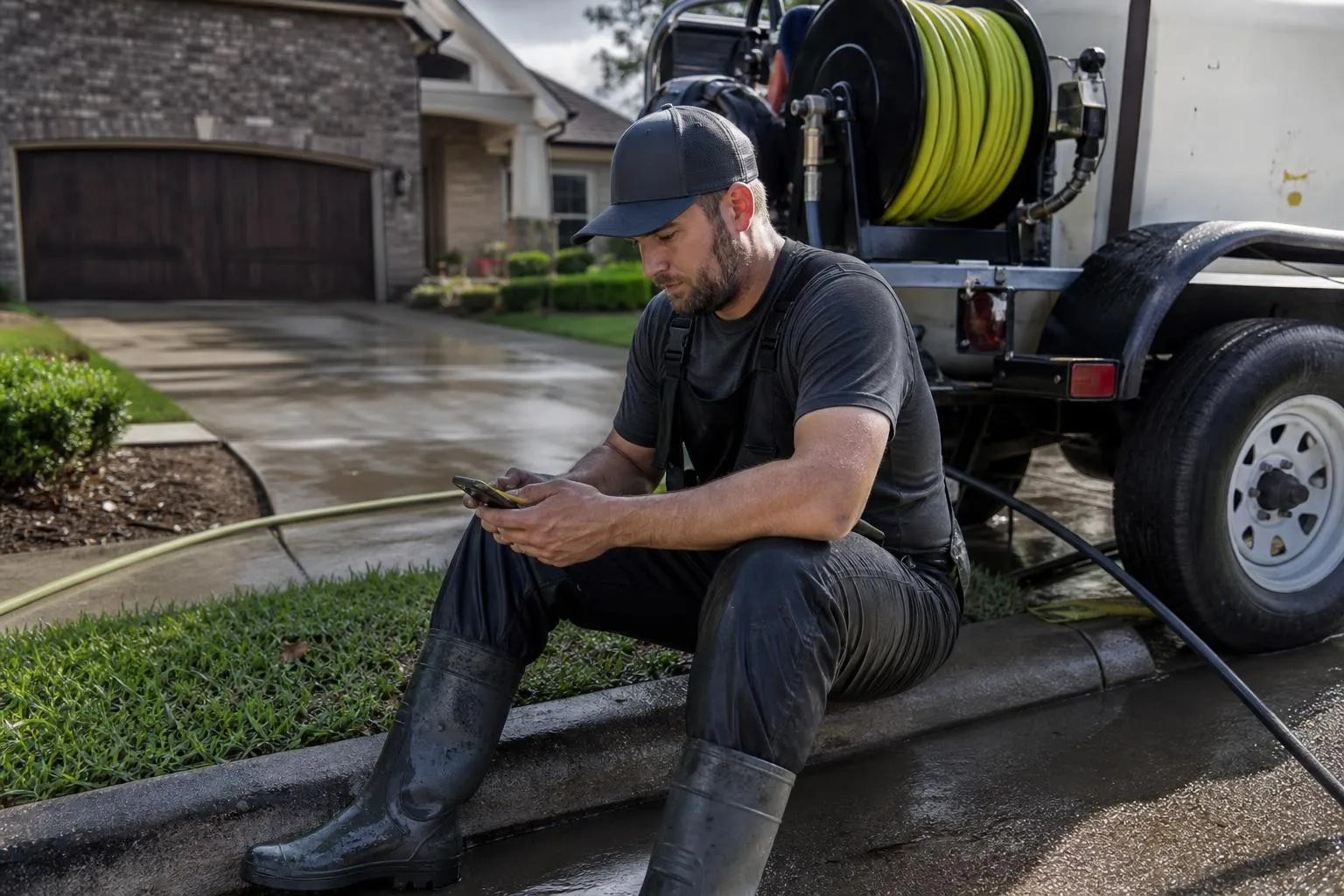
The number that decides whether this pays is not cost per lead, it is speed to first reply. A lead that gets a text back in under five minutes books at roughly triple the rate of one answered an hour later, because they messaged three companies and the first human to respond usually wins. Turn on notifications and treat a new lead like a ringing phone.
Lead-form ads vs organic content
- Lead ads book jobs in days, not months, so cash comes in while you are still building.
- You control volume: turn spend up in spring, down when the schedule is full.
- Precise radius targeting means every dollar hits homeowners in your actual route.
Lead-form ads vs organic content
- The leads stop the day you stop paying; there is no compounding audience.
- Lead quality is lower than a referral, so more calls end in “just getting a price.”
- A slow reply wastes the spend entirely, since cold leads go cold in minutes.
The honest answer is you run both. Organic lowers your cost per booked job over time by warming the audience the ads later retarget; ads keep the calendar full while that audience grows.
Getting found is the part that decides everything
Two things you can do this week for free: turn on the Messenger auto-reply so no after-hours lead goes cold, and post one honest before/after into three local groups you have permission to post in. Those two moves alone will book work before you spend a dollar.
Where it gets high-stakes is the ad account and the site the ads point to. A lead campaign with the wrong objective, no negative audiences, and a slow-loading landing page quietly trains Facebook to send you worse leads every week, and you cannot see it happening until the cost per booked job doubles. That is the work we do. To have the site and booking flow built to convert instead of guessed at, get a free video walkthrough. For managed Facebook and Google campaigns, see our social media advertising service. If you have the business idea but not the plan behind it, start at expntl.com. When you are ready to add paid search alongside this, running Google Ads captures the people already searching for you.
Should you run Facebook and Instagram ads yourself, or hand them off?
Shooting before/after content, posting into neighborhood groups, and replying inside five minutes are all free and genuinely yours to run. The paid campaign underneath is where it gets technical: the objective, the audiences, the retargeting, and the tracking that keeps Facebook from feeding you worse leads every week. We wrote an honest breakdown of when to keep the ads in-house and when handing off pays for itself: signs it’s time to hand off your Facebook and Instagram ads. If a couple of them fit, you are past the boost button. When you want it handled, request a free proposal.
Frequently asked questions
Do I need a business page or can I just use my personal profile?
You need a Business Page. A personal profile cannot run ads, cannot show a Book Now button, and using one commercially breaks Facebook’s terms, which risks losing the account you built. Setup takes ten minutes and unlocks Messenger automation, Insights, and the whole ad system.
How often should I actually post?
Four to five times a week, weighted toward before/after images and short reels. Daily posting to a small audience just teaches the algorithm your posts get ignored. One genuinely satisfying reel a week does more than seven forgettable graphics.
How much should I spend on Facebook ads to start?
Start at $10 to $20 a day on a Leads or Messages campaign targeting a 10-mile radius. That is enough to learn your cost per lead, which in most suburban markets lands at $8 to $25 for driveway and house-wash work. Scale up only once your reply speed is fast enough to close them.
What do I say when someone messages me for a price?
Answer in minutes, ask for the address and what needs cleaning, and give a range fast rather than making them wait for a site visit. Speed beats polish here: the first company to reply with a human answer books the job far more often than the one with the prettier quote sent an hour later.
Should I run Facebook or Google Ads first?
Facebook is cheaper per lead and better for creating demand with before/after proof; Google captures people already searching “pressure washing near me” with higher intent. If cash is tight, start with Facebook’s low daily budget, then layer in Google Ads once you have steady booking.
Your move
Reading this does not book a job.
The owners who pull ahead are the ones who change one thing this week. If you want that one thing to be a website that sells and ads that put it in front of the right people, we build and run both for you.
Straight answer on whether we can help, usually the same day.