How to grow a pressure washing business
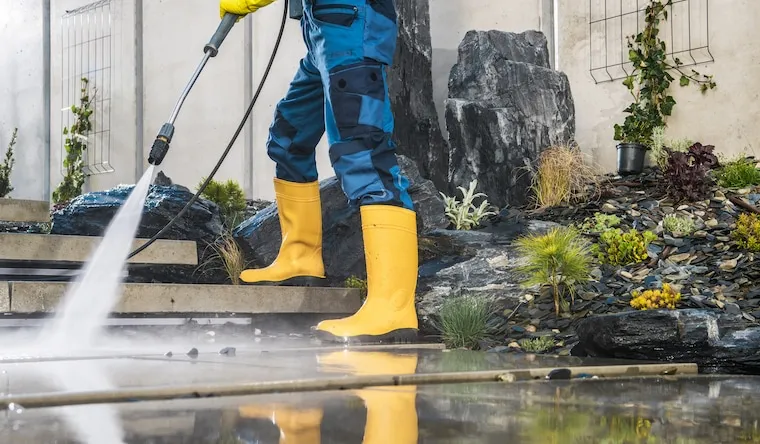
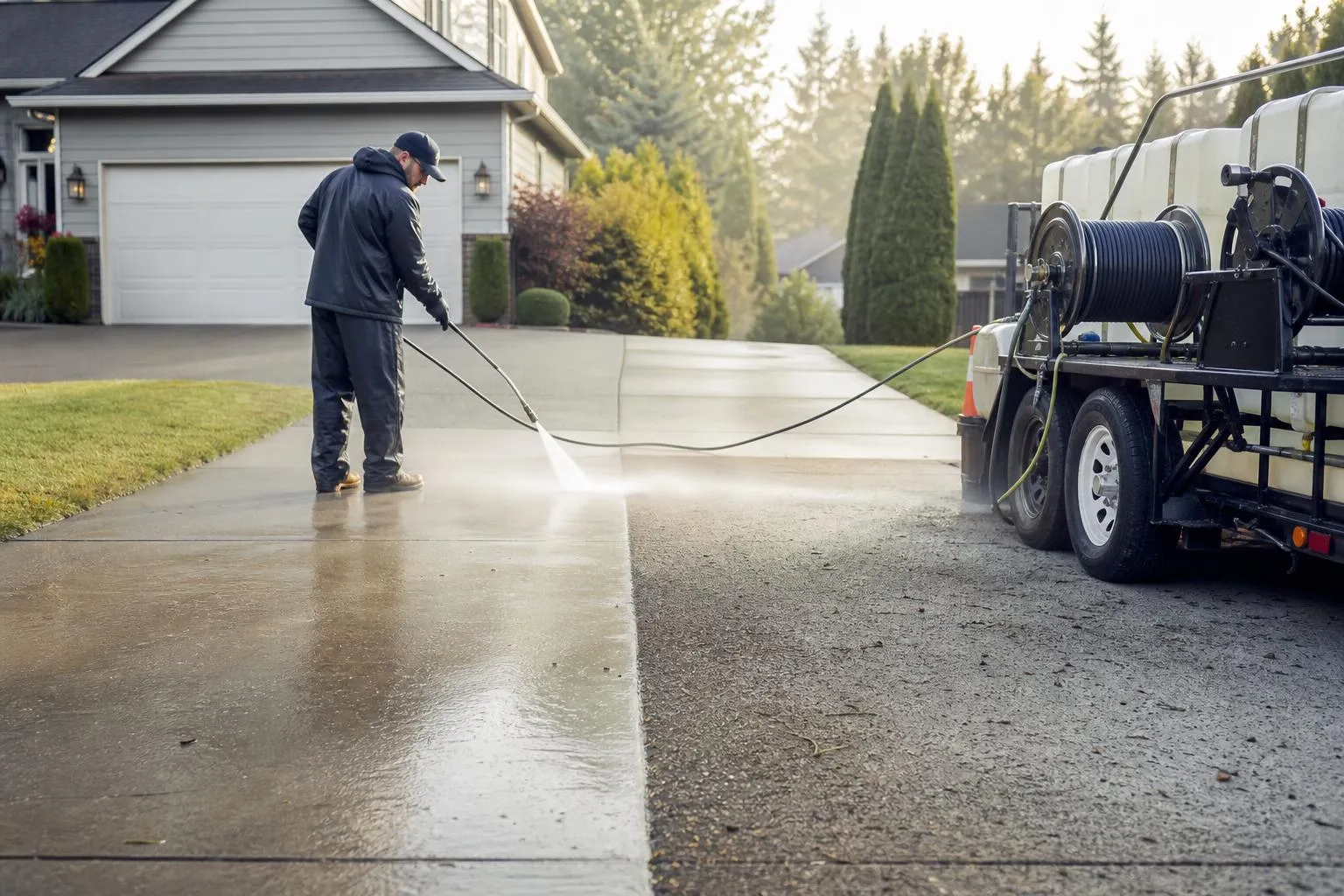
Growing a pressure washing business is not about washing more driveways. Most operators who “grow” just work more hours for the same money and burn out by year three. Real growth is getting paid more per job, adding services where the chemistry does the labor, locking in revenue that shows up whether or not you market, and only then putting a second truck on the road once a system can keep it full. Here’s the order that actually compounds.
Grow the ticket before you grow the calendar
The laziest, most profitable growth is selling more to the customer already standing in front of you. You drove there, set up the rig, and pulled water; the marginal cost of adding the walkway, the patio, the gutters, and a house soft wash is mostly just time on site. So stop quoting single services. Quote packages. “House wash + driveway + front walk” as a bundle turns a $200 driveway into a $450 to $550 visit for maybe one extra hour of work.
Raise prices too. New operators chronically underprice out of fear, then wonder why growth feels like drowning. If you’re booked two weeks out, you’re too cheap; raise rates 10% to 15% and lose the bottom of your customers on purpose. The full method is in setting the best prices and billing, and a fuller playbook for the whole climb is in the ultimate guide to running the business.
Add soft washing, where the margin lives
Straight pressure washing is muscle: you’re paid for hours behind a wand on concrete. Soft washing is chemistry: a low-pressure sprayer plus a sodium-hypochlorite mix dissolves algae and mildew off siding, roofs, and fences, and the solution does the killing while you move on. You charge for the transformed surface, not the sweat, and margins run higher because labor per job drops.
It also opens surfaces you should never blast with high pressure. You never pressure wash a shingle roof, but you can soft wash it, and roof cleaning commands premium prices ($0.30 to $0.60 a square foot) because few operators do it and homeowners fear the alternative of a full roof replacement. Adding soft-wash capability means a modest equipment upgrade: a 12V pump, a dedicated tank, and proper training on mix ratios and plant protection.
Lock in recurring revenue so winter doesn’t hurt
The thing that separates a real business from a busy operator is revenue that arrives without a fresh sale. Recurring commercial and HOA contracts do that. A property management company with 30 rentals, an HOA that needs common areas cleaned twice a year, a restaurant group with monthly patio and dumpster-pad cleaning, a fleet yard that wants trucks washed on a schedule: these book themselves once you’re in, and they carry you through the winter weeks when residential dries up.
Chase them deliberately. Commercial buyers sign on liability and appearance, so lead with those and offer a flat monthly or quarterly rate they can budget. Finding these accounts is a client-acquisition discipline; keeping the revenue predictable is what makes the rest of growth safe to attempt.
| Growth lever | What it moves | Effort to add | Payoff speed |
|---|---|---|---|
| Bundle services per visit | Average ticket | Low (just quote it) | Immediate |
| Raise prices 10-15% | Margin per job | Low | Immediate |
| Add soft washing (roofs, siding) | New high-margin line | Medium (gear + training) | Weeks |
| Recurring commercial/HOA | Predictable revenue | Medium (outreach) | Weeks to months |
| Second truck + crew | Total capacity | High (hire + systems) | Months |
Systematize before you scale, or the wheels come off
You cannot grow past yourself on memory and a notepad. Before a second truck, put in scheduling and invoicing software built for home-service (Jobber, Housecall Pro, or Service Autopilot) so quotes, jobs, routes, invoices, and review requests run without you touching every one. Standardize how a job is done, so a tech produces the same clean driveway you would. Document your pricing so anyone can quote consistently.
This is the unglamorous work that decides whether growth is freedom or chaos. The operator with tight systems adds a crew and gains time; the one without adds a crew and gains a full-time babysitting job. Software and process are the difference.
Stay solo and optimize
- You keep 100% of the margin; no wages, no crew comp, no truck payment.
- Quality is fully in your hands, protecting your reviews and referral engine.
- Low stress and low risk; a slow month costs you time, not payroll you still owe.
Stay solo and optimize
- A hard ceiling around $150k to $250k a year; there are only so many hours.
- No coverage: injury, illness, or a vacation means zero revenue that week.
- The business can’t be sold for much, because it’s really just your labor.
The honest rule: optimize solo until you’re consistently turning away work at good prices, then hire a helper before a second truck, then a second truck once the first crew is reliably full.
Getting found is the part that decides everything
Two growth moves are free and belong on your calendar today. Start quoting bundles instead of single services on every estimate, and offer one soft-wash add-on per job so your average ticket climbs on its own. Those alone can lift a solo operator’s revenue by a third without a single new customer.
But growth eventually runs on lead flow, and that’s where doing it badly costs more than skipping it. A site that ranks and converts feeds a second truck; a slow or thin one starves it, and untracked ads waste the budget that was supposed to fund expansion. That’s the work we do. To get the site that keeps a growing operation booked, get a free video walkthrough. For Google Ads, SEO, and paid social run properly, see our services. If you’re building toward a multi-truck operation and want the plan behind it, start at expntl.com.
Frequently asked questions
What’s the single fastest way to grow revenue?
Raise your average ticket by bundling and by raising prices. Quoting “house + driveway + gutters” instead of one service turns a $200 stop into $450-plus for about one extra hour, and if you’re booked two weeks out you’re underpriced and can raise rates 10% to 15% immediately. Both add money this week without a single new customer or a dollar of marketing.
Is soft washing worth adding?
Yes, for most operators it’s the best margin move available. A low-pressure setup and the right chemistry let you clean siding and roofs safely, and roof cleaning alone commands $0.30 to $0.60 a square foot because few competitors offer it. The gear upgrade is modest, and the attach rate is high because customers can see the dirty siding right above the driveway you just cleaned.
When should I hire my first employee?
When you’re consistently turning away work at healthy prices, not before. Hire a helper first to boost the capacity of your existing truck, then consider a second truck once that crew is reliably full. Hiring into lumpy or thin demand means paying wages and workers comp while the schedule has gaps, which drains the profit your solo work already earns.
How do I make income less seasonal?
Recurring commercial and HOA contracts. A handful of accounts that need scheduled cleaning, property managers, HOAs, restaurant groups, fleet yards, book themselves on a monthly or quarterly cadence and keep revenue flowing through the winter weeks when residential demand dries up. Predictable recurring revenue is also what makes it safe to take on the fixed costs of a second truck.
Do I need software to grow?
Once you pass roughly $100k or add a helper, yes. Home-service platforms like Jobber, Housecall Pro, or Service Autopilot handle quoting, scheduling, routing, invoicing, and review requests so the business runs on a system instead of your memory. Without it, a second truck adds chaos instead of capacity, because you become the bottleneck for every quote and every schedule change.
Your move
Reading this does not book a job.
The owners who pull ahead are the ones who change one thing this week. If you want that one thing to be a website that sells and ads that put it in front of the right people, we build and run both for you.
Straight answer on whether we can help, usually the same day.