Your Website Isn't Broken. It's Just Not Doing Its Job: 7 Signs It's Quietly Costing You Plumbing Jobs
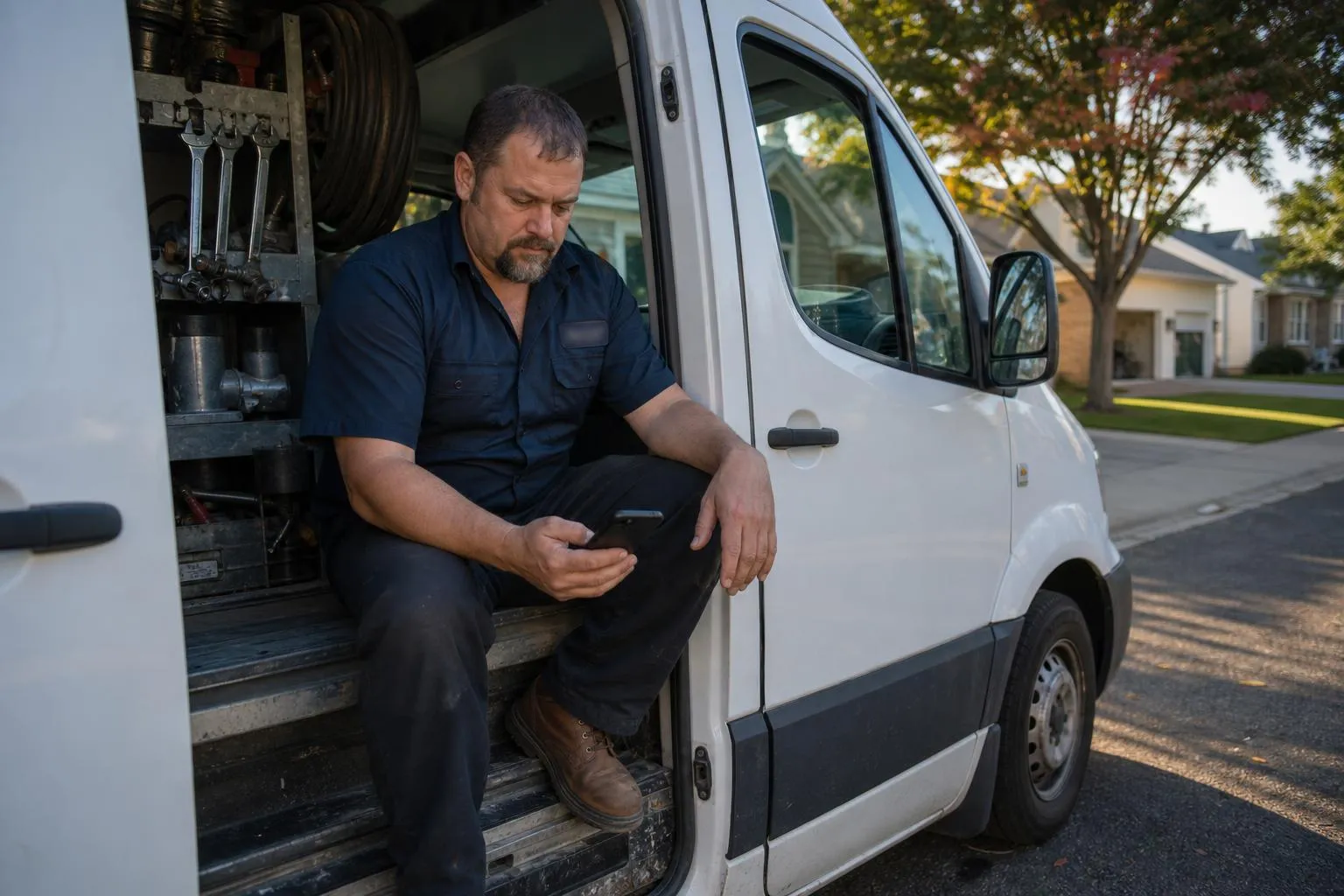
Imagine you hired a tech who shows up every single day. Never sick, never late, works nights, weekends, Christmas morning. One problem: in three years, he’s never booked a single job.
You’d have let him go a long time ago.
That tech is your website. It’s on the clock 24/7, it’s the first thing most customers see of your business, and if you’re honest, you can’t point to the last job it brought in. Nothing is technically broken. It loads. The number is on there somewhere. That’s exactly why it’s easy to ignore: a website that fails quietly never forces you to deal with it. Here are the seven signs.
You can’t point to a single website lead
Sign 1: you can’t remember your last website lead. Not a referral who happened to visit the site. A stranger who found you online and called. If you can’t name one from the last month, your website isn’t a lead source. It’s a business card that costs you hosting fees.
Sign 2: you don’t actually send people to it. When someone asks about your work, do you say “check out my website,” or do you text them photos because deep down you know the site doesn’t close the sale? If you’re routing people around your own website, you already know it’s hurting you.
Referrals are doing all the work
Sign 3: every job comes from referrals or repeat customers. Referrals are the best compliment in the trade, and they should stay your backbone. But if they’re 100% of your work, you only grow as fast as word of mouth travels. A working website is the second engine: it turns strangers into booked calls. Getting customers for a plumbing business covers the full menu, but search is the only channel working around the clock.
Calling you takes more than five seconds
Sign 4: a visitor can’t call you in five seconds. Pull up your site the way a customer would and time the trip from landing to dialing. If the number isn’t tappable, if it hides in a footer, if there’s a contact form with nine fields, every extra step is a fork in the road, and half the traffic takes the exit.
The average visitor gives you about 8.6 seconds. A homeowner standing in two inches of water doesn’t scroll; they tap the first number that looks safe.
The site is frozen and there’s no proof on it
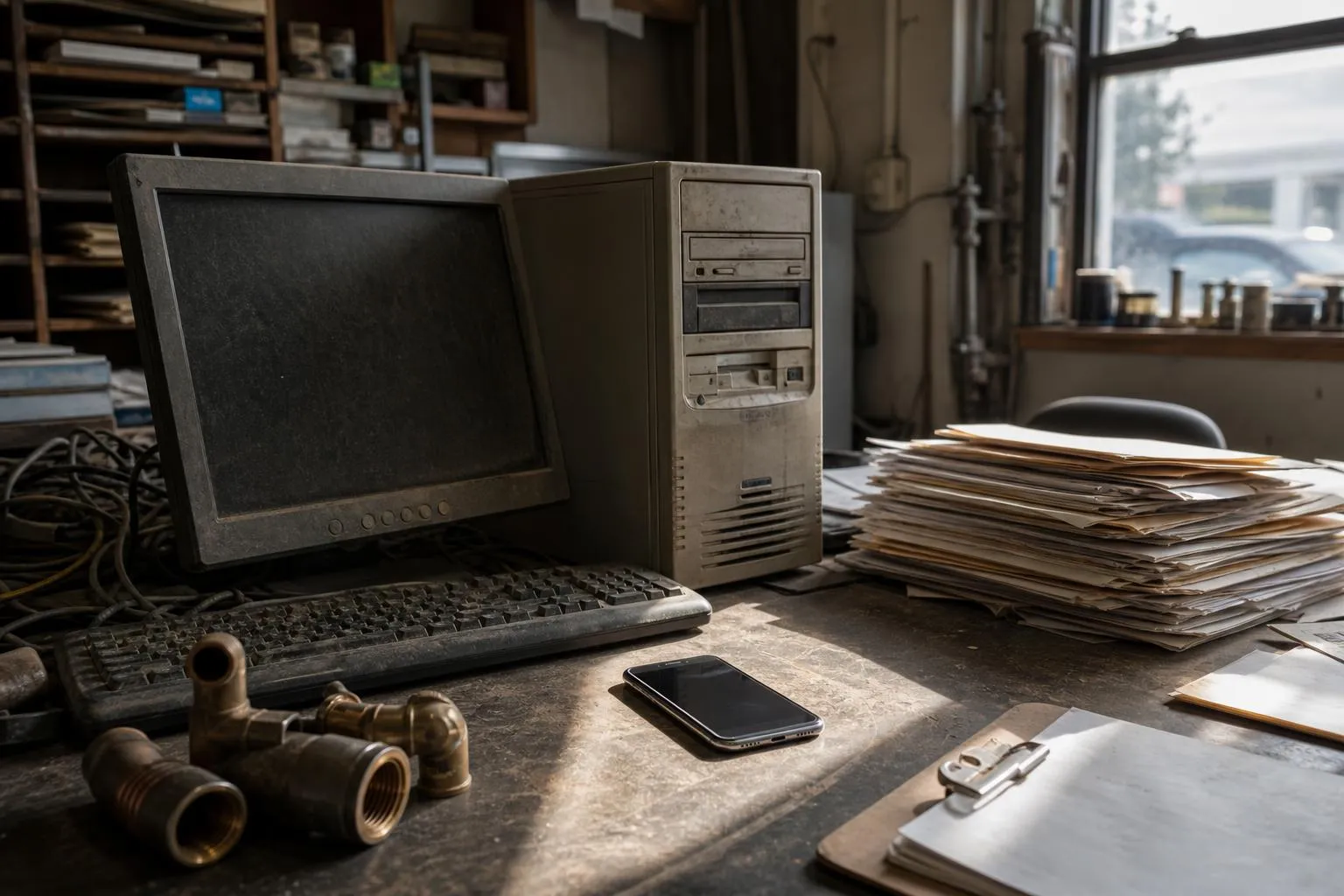
Sign 5: nothing has changed since launch day. Scroll to the bottom. Does the copyright year match this year? Are the photos from the era of your first van? A frozen website tells visitors one of two things: this business is too busy to care, or it might not be around anymore. Neither gets you the call.
Sign 6: there’s no proof on it. Customers can’t judge a solder joint or the slope of a drain line, so they judge what they can see: reviews, photos of real jobs, your license number, your face. Roughly 88% of people trust online reviews as much as a personal recommendation, so the plumber showing 40 real reviews beats the one showing a stock model with a wrench, which proves the opposite: there’s nothing real to show.
You’ve only ever seen it on your office computer
Sign 7: your customers meet your website on a phone, usually at a bad moment. About 90% of plumbing searches happen on a mobile device. If you’ve only ever checked the desktop version, you and your customers are looking at two different websites, and theirs decides whether you get the job. That one is worth its own article: how mobile customers use plumbing websites.
Phones are also where slow sites get exposed. The research is blunt:
| Page load time | What it does to your visitors |
|---|---|
| Over 3 seconds | 53% of mobile visitors abandon the page (Google) |
| Each extra second from 0 to 5 | Conversions drop about 4.4% per second (Portent) |
| 1 second slips to 5 seconds | Bounce probability rises 90% (Google) |
| 1 second slips to 10 seconds | Bounce probability rises 123% (Google) |
If your homepage needs 7 seconds in a driveway, most would-be callers never see it. How a slow plumbing website loses customers breaks down where the seconds go.
What a working website actually does
None of this means you need a prettier website. Pretty is not the job. A working website does three things, ruthlessly: it shows up when locals search (the fight for the Google top 3 map results), it convinces visitors in seconds that you’re the safe choice, and it makes calling you the easiest thing on the page. That’s the whole spec. Everything else, sliders, animations, paragraphs about commitment to excellence, is decoration.
So do you patch what you have or start over?
Patching the old site
- Cheap this month: a tappable number and fresh reviews can go up this week
- You keep your URL and whatever Google history it has earned
- No rebuild project during busy season
Patching the old site
- An old theme caps your speed no matter how much you trim
- The mobile layout is baked in, and that’s where 90% of customers are
- Every edit still goes through whoever built it, on their timeline
- You keep paying maintenance on an asset that has never booked a job
The difference between a brochure and a lead engine isn’t visible from the outside, which is why good plumbers sit on quiet websites for years. It shows up in the only place that matters: how often the phone rings. If you counted more than two signs, take ten minutes and watch the free video walkthrough of a live plumbing site built to convert: click-to-call everywhere, ranks for “emergency plumber” plus your city, done for you start to finish, live in 7 days, and you own everything. Pricing sits on the page, no contracts. Once the phone is ringing, ongoing growth services can turn the volume up further.
Frequently asked questions
How do I know if my website is actually costing me jobs?
Count strangers, not clicks. If you can’t name one person in the last 30 days who found you through search and called, the site isn’t producing. Watch your call log for two weeks and the answer gets concrete.
Can’t I just keep running on referrals?
Referrals should stay your backbone, but they cap growth at the speed of word of mouth. Even referred customers look you up before calling, and if the site looks abandoned, some quietly move on.
How much does a plumbing website that actually gets jobs cost?
Our Standard build is $2399£1,899 one-time, and the Growth package is $7500£5,900 one-time, with pricing published openly and no contracts. Launch takes 7 days, changes go live within 24 hours, and you own everything outright.
Should I fix my current site or replace it?
If the bones are good, add a tappable number, real photos, and reviews this week. If it fails the 3-second phone test and every edit needs a developer, patching is paying rent on a dead asset.
Next in this series: why the worse plumber across town keeps getting the jobs you deserve
Your move
Reading this does not book a job.
The owners who pull ahead are the ones who change one thing this week. If you want that one thing to be a website that sells and ads that put it in front of the right people, we build and run both for you.
Straight answer on whether we can help, usually the same day.