How to get clients/customers for a plumbing business
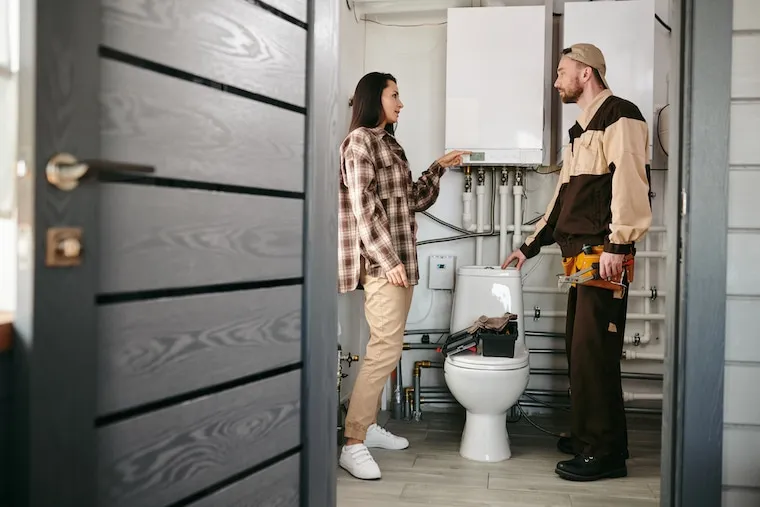
A plumbing business lives or dies by the phone ringing, and the bottleneck is almost never your wrench skills. It is whether a homeowner standing in two inches of water finds you before the next three plumbers in town, and the one who picks up live and looks trustworthy wins the ticket. Here is how to build a steady flow of clients without setting money on fire.
Fix your intake before you spend a dollar on marketing
The most expensive mistake in plumbing is the unanswered call. A homeowner watching water spread across the floor does not leave a voicemail; they dial the next name on the list. Across small contractors, roughly 20 to 40% of inbound calls go unanswered, and for plumbing that is pure lost revenue, because emergency intent converts at 50 to 70% the moment a person picks up. A caller who hears “I can be there by 4” rarely keeps shopping.
So before marketing, fix your own pipeline: a phone answered in business hours and an after-hours answering service for emergencies ($80 to $300 a month). Field software like Jobber, Housecall Pro, or ServiceTitan ($50 to $300 a month) turns booking into a system and tags every job with its source, so you learn which channels pay. For how this ties into rates, see setting prices and billing.
Engineer referrals instead of waiting for them
A plumber with a few good years behind them should pull 40 to 60% of jobs from past customers and word of mouth. These leads cost almost nothing and close at the highest rate of any channel, because trust is already established. The mistake is treating referrals as weather; you build the machine instead. Three mechanics do most of the work: a leave-behind on every job (a fridge magnet and two cards that say you also do drains, water heaters, and remodels), a follow-up text a week later that reactivates the relationship for free, and a $25 to $50 reward for sending a neighbor who books.
There is a quieter pipeline most plumbers ignore: the trades next to yours. Real estate agents, general contractors, property managers, and HVAC techs all field “do you know a good plumber?” constantly, and one reliable property manager with 40 units can out-earn any ad campaign. Build three or four of those and answer their calls first.
That raises the decision every plumber faces: chase strangers, or mine the customers you already have.
Mine existing customers first
- Referral and repeat leads close at 50 to 70%, double the rate of cold paid traffic.
- Acquisition cost is near zero: a text, a magnet, $40 off a future job.
- A reactivation text to 100 past customers routinely surfaces 5 to 10 dormant jobs.
Mine existing customers first
- A brand-new plumber has no base to mine, so it is slow for your first 6 to 12 months.
- It caps out: word of mouth alone rarely scales past a single crew.
- It depends on five-star work, so one bad job poisons the network that feeds you.
The decision rule is harvest before you hunt, not hunt instead of harvest: squeeze every referral and repeat job out of your base first, then buy new demand to fill the rest. See how to grow a plumbing business.
Own the “plumber near me” search
When a pipe bursts, the homeowner types “plumber near me” and calls one of the three businesses in Google’s map pack. A claimed, verified Google Business Profile with strong recent reviews can supply 30 to 50% of inbound calls once it ranks, at zero ongoing cost.
The free fundamentals are worth doing yourself. Claim and verify your profile, set “Plumber” as the primary category, and get reviews relentlessly by texting every happy customer a direct link the same day. Velocity beats raw total: fifteen reviews over three months signal a living business better than forty that landed in one suspicious week.
What good looks like beyond that is a different animal. Ranking your website for the searches competitors are buying is a moving target: the algorithm shifts, rivals optimize against you, and done wrong you lose a year to a site that never cracks page one. Defining good is easy; executing it under a sink all day is not, which is what our services handle.
What the lead channels actually cost
Load up on the cheap, high-trust channels first, then use paid traffic to fill gaps rather than as your foundation. Here is how the main channels compare.
| Channel | Typical cost per lead | Close rate | What it is good for |
|---|---|---|---|
| Referrals / repeat | Under $5 | 50-70% | Your foundation, highest trust |
| Google Business Profile | $0 ongoing once ranked | 40-60% | Emergency “near me” calls |
| Organic website / SEO | Low over time, real work upfront | 25-45% | Compounding inbound, an owned asset |
| Google Ads (paid search) | $30-$80+ | 20-40% | Instant top-of-page, fills slow days |
| Facebook / Instagram | $15-$50 | 10-25% | Water heaters, remodels, awareness |
The top two rows are where the margin lives, and they cost almost nothing once built. Paid search is powerful but unforgiving: you bid against every plumber in town for the same click, and a slow landing page burns the budget with nothing booked. The gap between a cheap lead and an expensive one is almost entirely execution. See how to advertise on Google and how to advertise on Facebook.
Your website is where paid leads are won or lost
Every channel above eventually points at your website, where a homeowner decides in about three seconds whether to trust you. This is the conversion point, and where most plumbing businesses quietly leak the leads they paid to acquire. A site that converts loads in under three seconds on a phone, puts a tap-to-call button in reach without scrolling, shows reviews and your license number near the top, and offers a dead-simple quote form. None of that is decoration; each element turns a click into a booked job.
You never see this leak, because the visitors who bounce do not call to say why, yet the difference between a 2% and a 6% conversion rate is 3x the jobs from identical spend. That is why fixing the site is not a weekend project, and why we build sites engineered for this. Get a free video walkthrough.
Frequently asked questions
How do I get my first few plumbing clients with no reviews yet?
Start with people who already trust you: friends, family, neighbors, and contacts from previous employers or supply houses. Do those first jobs visibly well, then ask each customer for a Google review and a referral the same day. Five genuine reviews plus a claimed profile is enough to start surfacing locally.
How much should I spend on marketing as a new plumber?
A common range is 5 to 10% of revenue, weighted toward the cheap, durable channels first. Spend your time, not your cash, on reviews and your Google Business Profile before you touch paid ads.
Are paid ads worth it for a plumbing business?
They can be, but only behind a properly built campaign and a fast, conversion-focused landing page. Plumbing keywords are competitive and clicks are expensive, so a sloppy setup drains the budget fast. Most plumbers get a better return having it managed than learning ad platforms between service calls.
How important are online reviews really?
They are close to everything for local conversion. A homeowner is inviting a stranger into their home, so recent, plentiful reviews are the proof that tips the decision. Ask every satisfied customer the same day and never fake them.
What is the single fastest way to get more plumbing calls this week?
Answer every call live, and claim your Google Business Profile if you have not. Answering the phone plugs the leak in demand you already generate, and the profile turns nearby searches into calls at no cost.