How to start a plumbing business Step by step
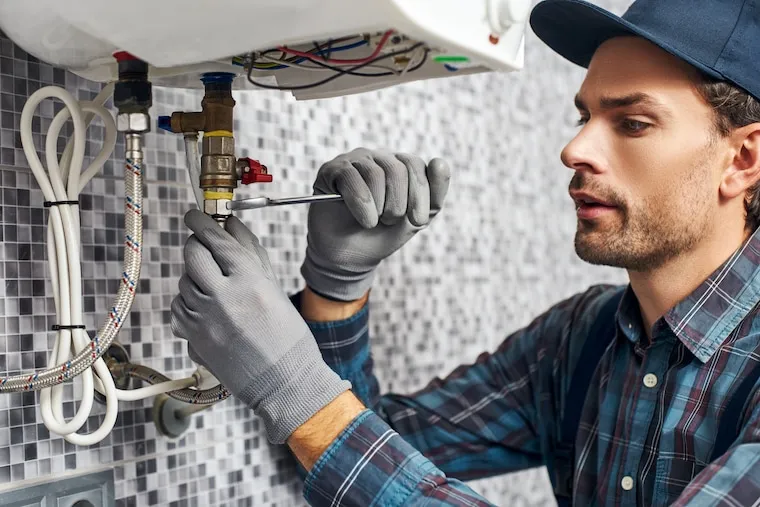
Most plumbers do not fail because they are bad at plumbing. They fail because they priced a job to lose money, took work above their license, or ran out of cash in month four while two thousand dollars of invoices sat unpaid. Starting a plumbing business is mostly a paperwork-and-pricing problem wearing a wrench. Get the boring parts right, in order, and the trade takes care of itself. Here is the step-by-step that keeps you legal, insured, and cash-positive from the very first job.
Step 1: Get licensed and pick your legal structure
Plumbing is a licensed trade almost everywhere, and the license sits on top of years of supervised hours, not a weekend course. The usual ladder runs apprentice, then journeyman (typically 4 to 5 years and 6,000 to 8,000 logged hours plus an exam), then master plumber, the level most jurisdictions require to pull permits and run a company. Before you do anything else, confirm with your state or city board exactly which license lets you operate as a business, because working or advertising above your license is the fastest way to draw a fine and lose the right to bid.
With the license path clear, choose a legal structure. Most solo plumbers register an LLC: it separates your house and savings from a business lawsuit, costs $50 to $500 to file depending on the state, and is simple to run. A sole proprietorship is cheaper and faster but leaves you personally exposed, which is a poor trade in a business where you are one burst pipe away from a five-figure claim. Once the entity exists, pull an EIN from the tax authority, register for state and local taxes, and open a business bank account on day one so personal and business money never touch. The full filing sequence is laid out in how to set up and register a plumbing business.
Step 2: Count the real startup cost
The number that sinks new plumbers is the one they never planned for: the second month, when the van is paid for but the invoices have not cleared. Budget for the launch and for a cash cushion that covers 3 to 6 months of living and operating expenses. A realistic solo launch runs $12,000 to $50,000, and the spread is almost entirely the vehicle.
| Item | Typical cost | Notes |
|---|---|---|
| Work van or truck | $5,000 to $40,000 | Used and reliable beats new and financed in year one |
| Hand and power tools | $2,000 to $8,000 | Wrenches, press tool, drain machine, inspection camera |
| License, entity, permits | $300 to $2,000 | Varies widely by state and city |
| Insurance, first year | $1,500 to $5,000 | General liability, plus workers comp once you hire |
| Surety bond | $100 to $1,000 | Required for licensing in many areas |
| Website and branding | $500 to $2,500 | Your 24/7 storefront, covered below |
| Working capital cushion | $5,000 to $15,000 | The line most people skip and most regret |
The pattern in that table is easy to miss. The tools and the truck feel like the real cost because you can touch them, but the line that actually decides survival is the working-capital cushion at the bottom. Materials get bought before customers pay, and residential invoices often sit 15 to 45 days. Underfund that line and a fully equipped van still ends up parked. For a deeper breakdown see how much you need to start, and for the gear specifics see buying equipment and supplies.
Step 3: Stock the van and choose your service area
Buy tools for the work you will actually sell in year one, not the work you hope to sell in year five. A service-and-repair plumber needs a different van than a new-construction sub. Start with the core: pipe wrenches, channel locks, a press tool such as a RIDGID ProPress, a sectional or drum drain machine like a K-400, a basic inspection camera, a wet/dry vac, and a tidy parts inventory of common fittings, valves, and supply lines so you are not driving to the supply house mid-job. A disorganized van quietly steals an hour a day, and that hour is pure margin.
Geography matters as much as gear, because plumbing is a drive-time business and every minute between jobs is unbilled. Concentrate your first jobs in a tight cluster of neighborhoods rather than chasing calls across a 40-mile spread. A crew that drives 15 minutes between stops books an extra job a day over one that drives 45, and dense, older housing stock means more failing supply lines, water heaters at end of life, and sewer trouble, which is exactly the repeat repair work that pays. Identifying ideal locations walks through picking that radius.
Buy the drain machine vs rent it
- A mid-range sectional or drum machine runs $1,200 to $3,500 once and is yours for 10-plus years.
- You can say yes to a backed-up main at 9pm instead of losing the call to whoever owns a machine.
- Drain and sewer clearing is high-margin repeat work; owning the tool means you keep all of it.
Buy the drain machine vs rent it
- That is $1,200 to $3,500 of capital locked up before you have proven the call volume.
- A rental runs $60 to $120 a day, so the machine has to clear 20 to 40 jobs just to break even.
- Owned gear still costs you storage, maintenance, and the cable replacements every machine eats.
The decision rule is buy what you use weekly, rent what you use monthly: if drain calls are already landing two or three times a week, own the machine; if a sewer job shows up once a month, rent until it does not.
Step 4: Price for profit, not to win the bid
Here is where most new plumbers bleed. They hear a competitor quoted $150 for a job and match it, with no idea what that number has to cover. Your price is not a market guess. It is built up from your own fully loaded cost per billable hour: your pay, plus the van, fuel, insurance, tools, phone, software, and the plain fact that a working plumber bills maybe 1,000 to 1,300 hours a year, not 2,080, because driving, quoting, and invoicing are not billable. Add it up and a one-person shop often needs an effective rate of $90 to $200 per billable hour just to clear a real wage and keep the lights on.
Most established shops charge a flat dispatch or diagnostic fee of $50 to $150 and quote flat rates per job rather than open-ended hourly, because customers prefer a known number and you stop losing money on jobs that run long. Build a simple price book for your 20 most common jobs and stop quoting from your gut. Setting prices and billing covers the flat-rate model, and how much profit a plumbing business can make shows where the margins actually sit.
Step 5: Get found online without doing it yourself badly
A licensed, insured, fairly priced plumber with no phone ringing is a hobby. Start with the moves that are genuinely free and genuinely effective. Claim and verify your Google Business Profile, fill it out completely with categories and job photos, and ask every satisfied customer for a review the day the job closes. Reviews and the local map pack drive a large share of “plumber near me” calls at zero ongoing cost. Do that this week regardless of anything else.
Beyond the free basics, your website and your paid acquisition are where it gets high-stakes, and where doing it badly costs more than not doing it at all. A site that books jobs loads in under three seconds, makes the phone number tap-to-call on mobile, ranks for your town, and turns visitors into booked calls instead of just looking tidy. That conversion gap is the whole game. Getting there takes site architecture, speed, copy, and conversion design, which is why we do it for you rather than hand you a checklist. If you want a site engineered to book jobs, see get a plumbing website. Get a free video walkthrough.
The same logic applies to paid acquisition. Google Ads, Facebook, and local service ads can fill a calendar fast or quietly burn $2,000 a month on clicks that never call, depending entirely on how the campaigns, targeting, and landing pages are built. It is easy to lose money and hard to know why. If you want lead generation handled by people who do it every day, that is what our services exist for. And if you have an idea bigger than a plumbing van and need a plan to test it, start at expntl.com.
Step 6: Hire to keep up, not to look big
Resist adding a second master plumber too early. The first hire for most shops, somewhere around 30 to 40 jobs a month, is an apprentice who rides along (cheaper labor, plus you are training your future journeyman) or part-time office help to answer the phone you keep missing on jobs. A missed call is a lost job, and a plumber under a sink cannot answer it. Run the math before you commit: a $20-an-hour helper costs you roughly $40,000 a year fully burdened with payroll taxes and workers comp, so they need to free up or finish enough billable work to clear that plus a margin. When and how to hire and train staff covers the sequence, and how to grow a plumbing business covers what comes after the first hire.
Frequently asked questions
How much does it cost to start a plumbing business?
Plan on $12,000 to $50,000 for a solo launch, with the work van as the biggest variable at $5,000 to $40,000. The line most people forget is a working-capital cushion of $5,000 to $15,000 to cover the months before invoices clear. See the full breakdown in how much you need to start.
Do I need a license to start a plumbing business?
Almost certainly, yes. Most jurisdictions require a master plumber license to pull permits and operate a company, which sits on top of journeyman hours and an exam. Confirm the exact requirement with your state or local board before you advertise or take work, because operating above your license carries real penalties.
What insurance does a plumbing business need?
At minimum, general liability before your first job, because plumbing causes water damage and a single claim can run $20,000 to $100,000. Add workers compensation the moment you hire anyone, and carry a surety bond if your license requires it. Skipping coverage to save a few hundred dollars exposes your personal assets and can void the customer’s own insurance.
How do I price plumbing jobs so I actually make money?
Build your price up from your fully loaded cost per billable hour, not from what a competitor charges, and remember you only bill around 1,000 to 1,300 hours a year. Most shops use a flat dispatch fee plus flat per-job rates and target a 30 to 50 percent gross margin on labor. The flat-rate model is covered in setting prices and billing.
What is the fastest free way to get my first customers?
Claim and verify your Google Business Profile, complete it fully, and ask every happy customer for a review the day the job closes. The local map pack and review count drive a large share of inbound calls at no ongoing cost, and it compounds over time. For everything beyond the free basics, see how to get clients for a plumbing business.
Your move
Reading this does not book a job.
The owners who pull ahead are the ones who change one thing this week. If you want that one thing to be a website that sells and ads that put it in front of the right people, we build and run both for you.
Straight answer on whether we can help, usually the same day.