Start pest control with no money and for free
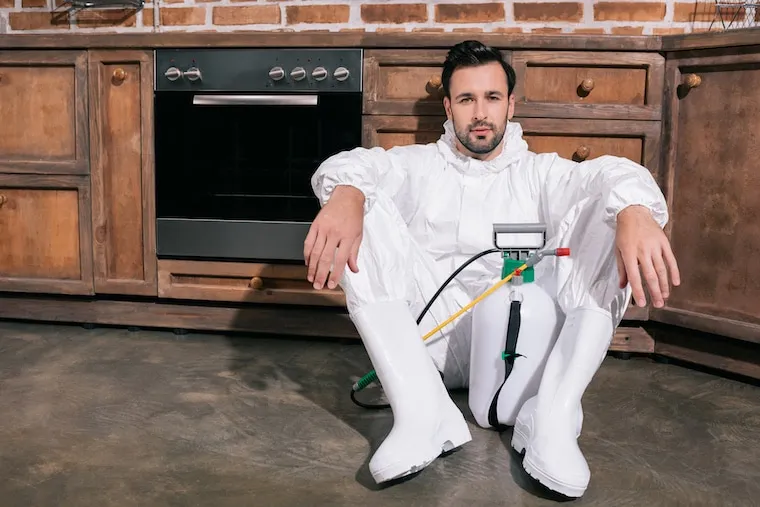
You cannot start a pest control company for literally zero dollars, because spraying pesticides for hire without a license is illegal in every state. But you can start for almost nothing. The real floor is the cost of getting licensed, roughly $75 to $200, and after that the business funds itself if you sell the accounts before you buy the gear. The trick is not finding free money. It is reversing the order: presell the route, collect the first payments, then spend.
Get licensed, because there is no legal free version
There is no way around this one, and it is the reason “free” has a floor. Every state requires a licensed applicator to treat pests for hire, and most require the business itself to hold a structural pest control license or registration. You will typically pass a state exam (study the category-specific manual and the core exam, often through your state Department of Agriculture), and the exam plus registration usually runs $75 to $200. Many states let you work as a registered technician under a certified applicator, which can get you legal and earning faster while you finish your own certification.
Do not skip it to save the fee. This is the one cost that is genuinely non-negotiable, and the consequences of ignoring it dwarf anything else in this article. The full paperwork walkthrough, EIN, entity, and insurance, is in how to set up and register a pest control.
Presell the route before you spend a dime on chemicals
Here is the move that makes “no money” actually work: sell the accounts first. Once you are licensed, spend a week door-knocking a dense, owner-occupied neighborhood (pick it the way an operator would, using the guide to ideal locations). Your pitch is simple: recurring quarterly pest control, first service at $99 to $150, then $45 a month, free re-treats, sign today. Close 10 to 15 of these on card-on-file autopay and schedule the initials for the following week.
Now you have committed revenue before you have spent on inventory. The first month’s initials and monthly charges, easily $1,000 to $2,000 from a dozen accounts, become the money that buys your chemicals and gear. This is the entire “start with no money” strategy in one sentence: let the customers fund the fit-out. It works in pest control specifically because your cost of goods is tiny, so the gap between the sale and the supplies is small enough to bridge with a single week’s closes.
Buy the smallest kit that can legally do the work
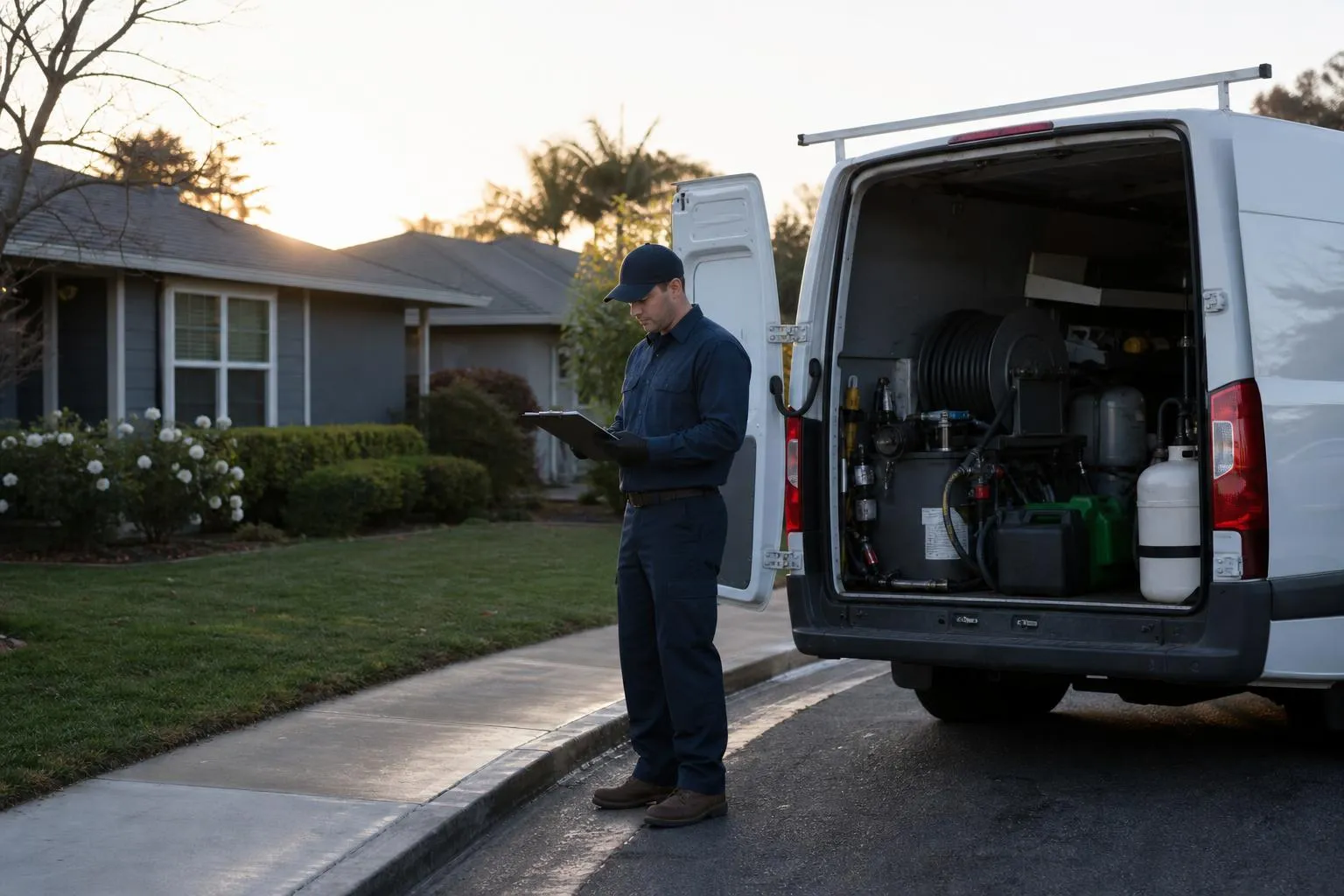
Ignore the truck, the trailer, the wrap, and the fancy power sprayer for now. A one-person residential general-pest launch needs shockingly little to do professional-grade work:
| Item | Bootstrap option | Rough cost |
|---|---|---|
| Vehicle | Your existing car or truck | $0 |
| Application | 4-gallon backpack sprayer (Chapin, Solo) | $80-$140 |
| Duster + granule spreader | Hand duster + handheld spreader | $40-$90 |
| Starter chemical (general pest) | Bifenthrin concentrate + bait + dust | $150-$300 |
| Safety / PPE | Gloves, eye protection, boots | $50-$100 |
| Software | GorillaDesk or FieldWork (free/low tier to start) | $0-$50/mo |
| Marketing | Google Business Profile + door hangers | ~$0-$60 |
That is a working pest control operation for well under $700, and if you preselled the route, the customers cover most of it. A gallon of concentrate makes dozens of gallons of finished spray, which is why chemical cost per stop is a few dollars. You add the wrapped truck, the power rig, and the second sprayer out of profit, not out of a loan. The full lean gear list is in buying equipment and supplies.
Market for free, because paid ads are the one thing you skip
With no budget, your marketing is sweat, not spend. Four channels cost nothing but time and outwork a small ad budget early:
- Google Business Profile: free and the highest-ROI move you can make. Verify it, list your service cities and license number, add real photos, and it puts you in the map pack for “pest control near me.”
- Reviews: text every finished customer a review link before you leave; twenty reviews in a ZIP rank you above competitors with a bigger ad budget.
- Door-to-door and door hangers: the same knocking that presold your route keeps filling it for free.
- Neighborhood apps: Nextdoor and local Facebook groups turn one happy customer into a thread of neighbors asking for your number.
Paid Google and Facebook ads work, but they are the one thing you postpone with no money, because they eat cash before they return it. Build the free base first; the paid playbook is in how to promote pest control locally for when you have profit to reinvest.
Bootstrap solo vs take a loan to launch big
- Zero debt means every dollar of early revenue is yours to reinvest, and one slow month cannot bankrupt you.
- Presold accounts prove demand before you risk capital, so you never buy a truck for a route that does not exist.
- Running lean forces the sales-first habit that actually grows a pest control company: accounts, not assets.
Bootstrap solo vs take a loan to launch big
- A loan-funded launch can put a wrapped truck and paid ads live on day one, filling routes faster than knocking alone.
- Financing lets you hire a second tech early, so you can take commercial and volume work a solo operator has to turn down.
- Starting bigger builds brand presence quickly, which matters in a market crowded with national players.
For someone with no money, bootstrapping is not a compromise, it is the correct play, because the debt-free operator who preselled a route is the one still standing in month six. Take the loan later, from a position of proven demand, not hope.
Getting found is the part that decides everything
The free base above is where a no-money operator should start, and two moves are non-negotiable: a fully built Google Business Profile and a review link texted to every customer, because the map pack decides who gets the “near me” call. That costs nothing but an evening. The client-getting playbook is in how to get clients and customers for a pest control.
Once you have profit to reinvest, the highest-leverage upgrade is a website and paid search that convert searching homeowners into booked plans. A pest control site has to load fast on a phone, show reviews and a click-to-call above the fold, and rank for your city. That is the work we do. To have it handled instead of hacked together, get a free video walkthrough. For Google Ads, Local Services Ads, and SEO when you are ready to spend, see our services. If you have the hustle but not the plan, start at expntl.com.
Frequently asked questions
Can I really start a pest control business for free?
Not literally free, but close. The one unavoidable cost is the license and exam, about $75 to $200, because treating pests for hire without it is illegal everywhere. After that you can start with your own car and an $80 backpack sprayer, and if you presell the route, your first customers cover the chemicals and gear.
What is the single biggest startup cost I cannot avoid?
The state applicator license and exam, plus basic liability insurance once you are operating. Everything else, truck, office, wrap, power sprayer, is optional and can be added out of profit later. Skipping the license to save money is the one shortcut that can end the business before it starts; the details are in how to set up and register a pest control.
How do I get customers with no marketing budget?
Door-knock a dense, owner-occupied neighborhood and close recurring accounts on autopay, then compound it with a free Google Business Profile, texted review links, and Nextdoor. Door-to-door is how the big national brands were built, and it costs nothing but evenings. Paid ads come later, once you have profit to reinvest.
Do I need a truck to start?
No. A one-person general-pest route runs fine out of your existing car with a backpack sprayer, a duster, and a jug of concentrate. Chemicals for a starter route cost under $300 because a gallon of concentrate makes dozens of gallons of spray. Buy the wrapped truck out of profit once the route is full, not before.
How fast can a no-money launch make money?
Faster than most trades, because the cost of goods is tiny. If you presell 10 to 15 accounts before buying supplies, the first month’s initials and monthly charges (often $1,000 to $2,000) exceed your entire startup spend, so a licensed solo operator can be cash-flow positive in the first service week.
Your move
Reading this does not book a job.
The owners who pull ahead are the ones who change one thing this week. If you want that one thing to be a website that sells and ads that put it in front of the right people, we build and run both for you.
Straight answer on whether we can help, usually the same day.