How to get clients and customers for a pest control business
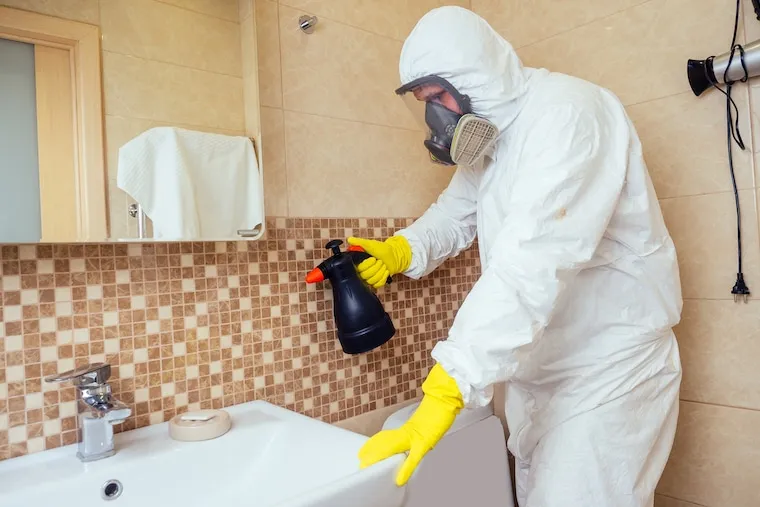
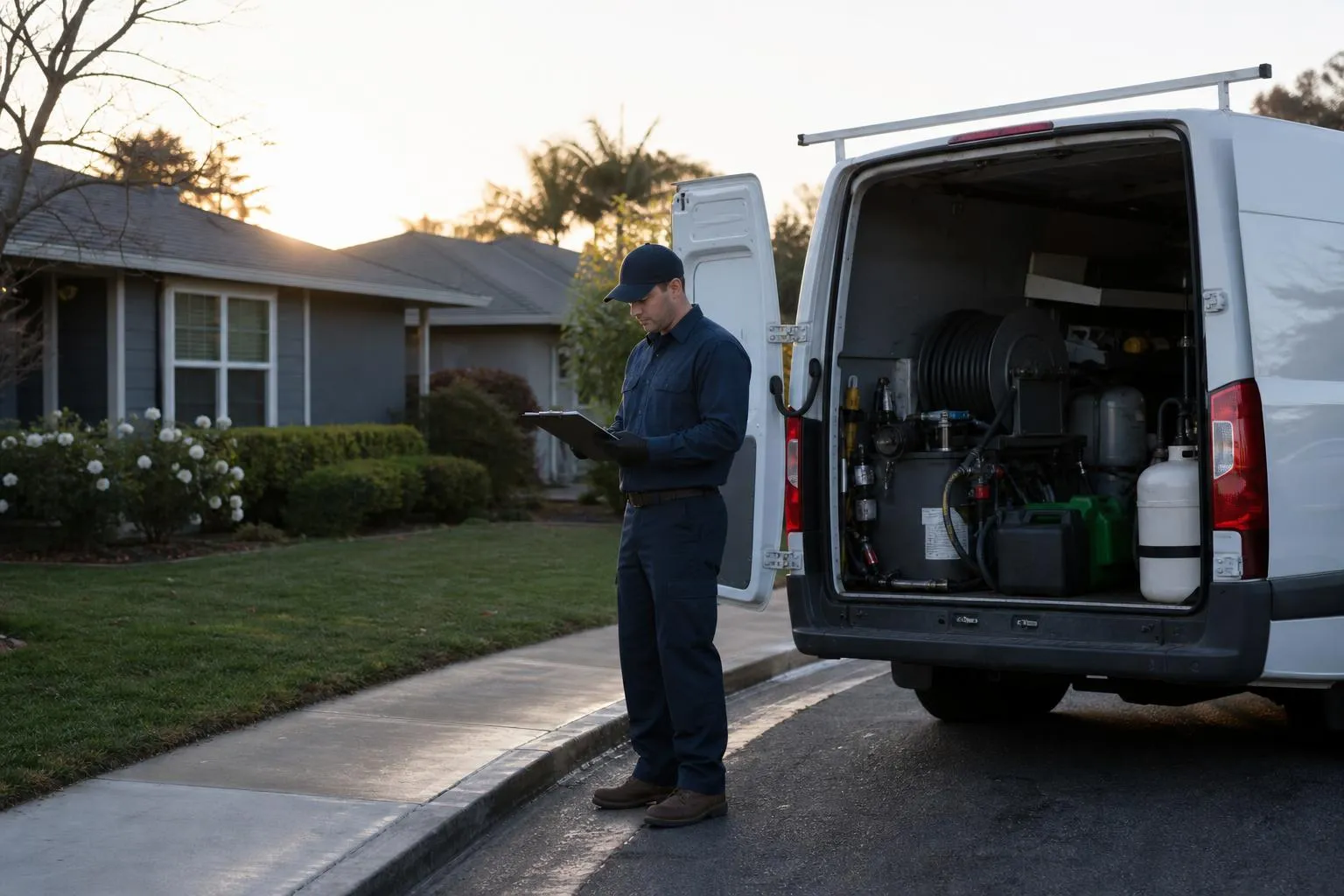
Getting your first pest control customers is not a marketing problem, it is a hustle problem. The owner with 200 accounts got there on ads and reputation, but the owner with zero gets to fifty by knocking on doors, texting review links, and turning every single job into two more. The advice to “optimize your website and post quality content” is not wrong, it is just far too slow when you have a truck payment due and empty routes. Here is how customers actually show up in the early months.
Knock the street you are already on
The cheapest customer in pest control is the one who lives next to a job you are already doing. Servicing a second house on the same street adds almost no drive time, which makes that neighbor more profitable than a lead across town, and it is the reason door-to-door still works in this trade when it has died in most others. Proximity plus visible proof is a combination no digital ad can match.
Make it a habit, not an event: when a tech finishes a treatment, they knock the three houses on each side. The line writes itself: “We’re treating your neighbor for ants today, want us to do a free inspection while we’re already here?” That is a warm, in-person ask backed by social proof, and it closes at rates a cold click never will. Choose which streets to saturate deliberately using identifying the ideal locations, and the whole channel-mix picture is in how to advertise your pest control business.
Here is how the realistic first-customer tactics stack up when your budget is close to zero and you need jobs on the board this month.
| Early tactic | Upfront cost | Speed to first job | Close rate |
|---|---|---|---|
| Door-knock around existing jobs | Your time | Same day | 5-10% |
| Same-day review requests | Free | Compounds over weeks | Lifts every channel |
| Referral offer (free service credit) | One visit per referral | 1-2 weeks | 50-60% |
| Yard signs on treated lawns | $10-$20 a sign | Passive, slow | Low but free |
| Real-estate / property-manager intros | Your time | Weeks, but recurring | High, recurring accounts |
Turn every finished job into a review the same day
Before a stranger lets you walk through their home with chemicals, they check your reviews. Star rating and review count are the trust test you have to pass, and the single best moment to earn one is the minute you finish a job, when the customer is standing in a bug-free kitchen feeling relieved. Wait a week and that feeling, and the review, is gone.
So build a same-day habit: the tech, before pulling out of the driveway, texts the customer a direct Google review link with one plain line asking for a quick review. Do not send them to your homepage, send the link that opens the review box. Twenty or thirty real five-star reviews will pull more first-time callers than any content you could publish, and it feeds your Google map-pack ranking at the same time. The wider local reputation play is in how to promote pest control locally.
Build the referral loop with a real incentive
Referrals are the highest-closing, cheapest leads in pest control, because a neighbor’s recommendation pre-sells the trust you would otherwise spend money building. But “we appreciate referrals” produces almost none. A referral engine needs a concrete, worth-it reward and a moment where you actually ask.
Make the offer specific: a free service (roughly a $100 to $150 value) for every customer who refers a neighbor onto a plan, given to both the referrer and the new customer. Then ask at the right time, right after a great service or when a customer compliments the work, and hand them something physical, a couple of referral cards, so it is easy to pass along. One happy customer reliably becomes one or two more this way, at the cost of a single visit instead of $25 to $40 a lead in paid channels. Fold this into your pricing so the free-service math still leaves margin, using setting your prices and billing.
Land recurring accounts through local partnerships
A single homeowner ant call is one job. A property manager with 40 units, a real-estate agent who needs pre-sale inspections on every listing, or an HOA that wants common areas treated quarterly is a recurring account that fills routes for years. One good B2B relationship can be worth ten one-off residential calls, and it comes with built-in density because the units cluster.
Go where these relationships live. Introduce yourself to property management companies, offer real-estate agents fast turnaround on the wood-destroying-organism inspections they need to close deals, and talk to restaurant and apartment managers who are legally required to keep pests out. These accounts are less glamorous than a slick ad campaign, but they are the backbone of a stable book, and they scale as you grow, a theme continued in how to grow a pest control business.
Choose your first-customer engine: knock streets or land accounts
With limited hours in the early days, you cannot do everything at once, so most owners lead with one of two engines. They suit different temperaments and markets.
Door-knocking residential
- Nearly free: costs your time, not per-lead fees, so the marginal customer is cheap.
- Builds route density fast, which compounds your margins street by street.
- Immediate: you can book jobs this afternoon without waiting on anyone.
Door-knocking residential
- It does not scale past your own hours, and it is physically grinding.
- Many suburbs require a solicitation permit, and no-knock rules bring fine risk.
- Residential customers churn more than commercial accounts and cancel plans faster.
Knock residential streets when you need cash flow this week and have density to build on. Chase commercial and real-estate partnerships when you want stable recurring accounts and can afford the longer sales cycle. Established operators run both, front-loading whichever the season favors.
Getting found is the part that decides everything
Two moves are free and pay off immediately: text a direct Google review link to every customer the day you finish, and knock the neighbors on every street you already service. Those two habits build the trust and density that make every later ad dollar cheaper.
Here is the part that decides whether all that hustle converts: where a prospect lands when they finally look you up. A neighbor hears about you and searches your name, and if they hit a slow page with no reviews and a buried phone number, the referral you earned for free leaks away. The gap between a site that turns lookups into booked calls and one that just sits there is invisible until you compare the numbers, and it quietly wastes the hardest work you do. That is the work we handle. To have the site built to convert instead of guessed at, get a free video walkthrough. For ads and SEO once you are ready to scale past hustle, see our ads and SEO services. If you have the idea but not the plan yet, start at expntl.com.
Should you chase new customers yourself, or hand it off?
In the first quarter this is almost entirely a DIY game, and it should be, because hustle and same-day reviews beat any budget a new operator can afford. The question changes once the doors you can personally knock cap your growth and you are ready to buy leads instead of earn them one porch at a time. We wrote an honest look at that turning point: is a marketing agency worth it for a small business. Keep knocking until the math flips. When you want the growth handled, request a free proposal.
Frequently asked questions
How do I get my very first pest control customers?
Start with hustle, not ads: knock the doors around any job you land, tell neighbors you are already treating their street, and offer a free inspection on the spot. Then text every customer a same-day Google review link and offer a free service for referrals. In the first quarter, door-knocking and reputation will out-produce any ad budget a new operator can realistically afford.
How many reviews do I need before customers trust me?
Aim to get past 20 to 30 real reviews as fast as you can, because that is roughly where a Google Business Profile starts converting first-time callers who are nervous about letting a stranger into their home. The fastest route there is texting a direct review link the moment you finish each job, while the relief of a solved bug problem is fresh.
Should I offer discounts to attract new customers?
Offer a modest new-customer intro on the first quarterly visit, not a rock-bottom one-time price. Deep discounting attracts bargain hunters who never take a plan, leave the worst reviews, and vanish at renewal, and it can anchor your whole market low for years. Lead customers toward the recurring plan and compete on trust and responsiveness instead of price.
How do I get commercial pest control accounts?
Go straight to the people who are legally or contractually required to keep pests out: property managers, restaurant and apartment operators, HOAs, and real-estate agents who need wood-destroying-organism inspections to close sales. These are recurring accounts, so one good relationship can be worth ten one-off residential calls, and the units usually cluster, which builds your route density at the same time.
How long does it take to build a steady customer base?
Expect a few grinding months before it feels stable. Door-knocking and referrals produce customers immediately, but the compounding effects, enough reviews to rank in the map pack, a referral loop that feeds itself, and dense routes, usually take a quarter or two to click into place. Once they do, growth stops depending on how many doors you personally knock.
Your move
Reading this does not book a job.
The owners who pull ahead are the ones who change one thing this week. If you want that one thing to be a website that sells and ads that put it in front of the right people, we build and run both for you.
Straight answer on whether we can help, usually the same day.