Buying equipment and supplies for pest control
Most new operators buy backwards. They spend the budget on a wall of chemicals and skimp on the sprayer, the truck setup, and the PPE that keeps the state off their back. The truth of this trade is that concentrate is the cheapest thing you own: one $70 bottle of Temprid FX makes over 100 gallons of finished spray and treats dozens of houses. What actually costs money and earns money is the application gear, the specialty rigs that unlock high-ticket jobs, and the safety equipment that keeps a label violation from becoming a fine. Buy in that order.
Start with the sprayer, because it does 80% of the work
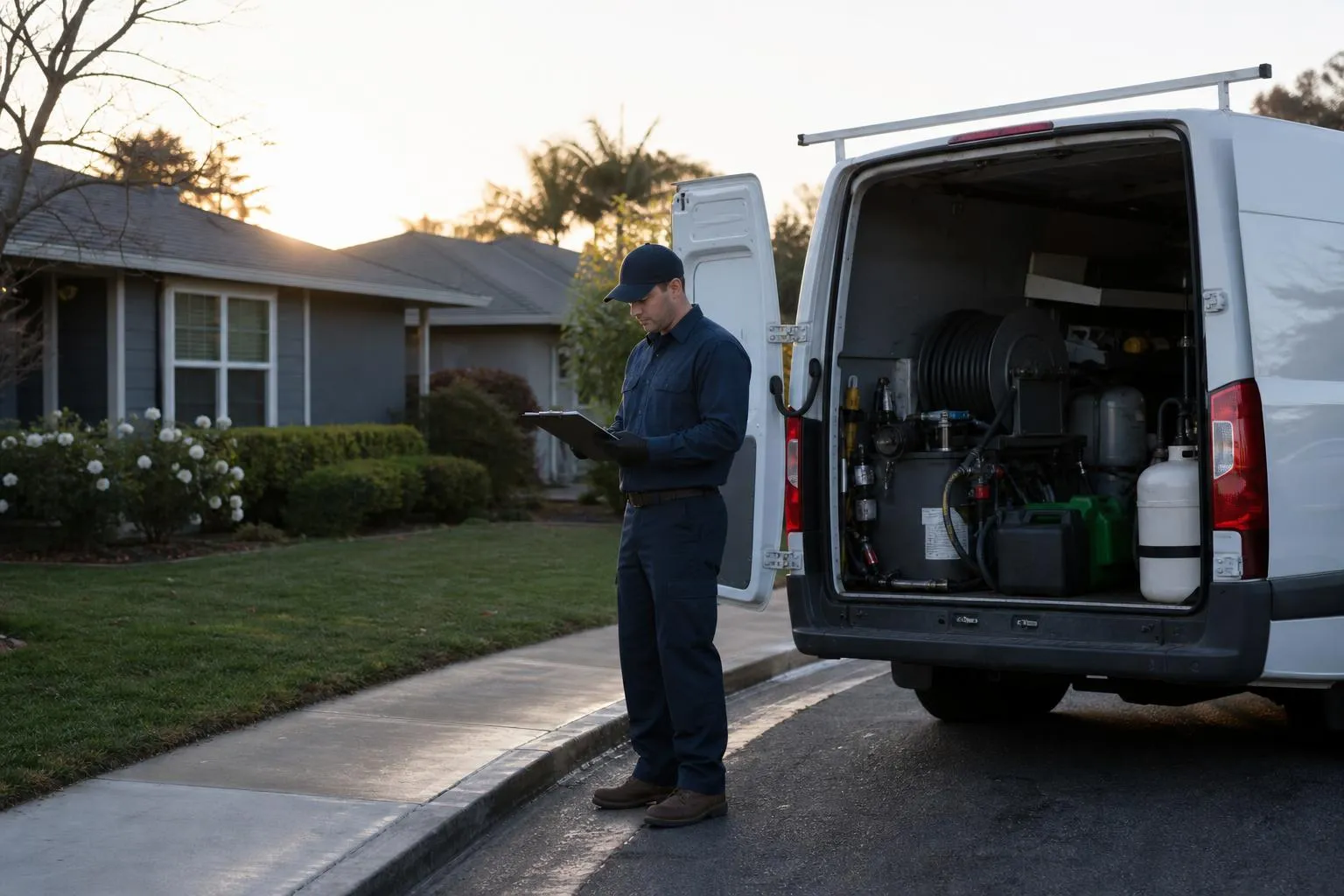
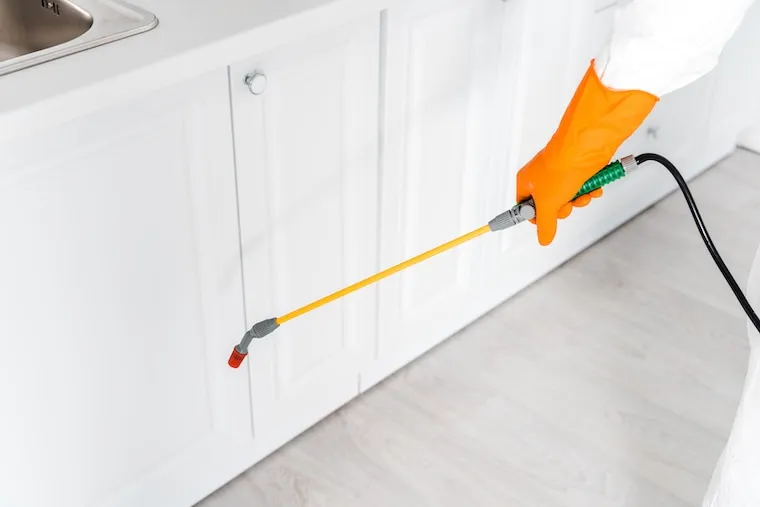
Your primary applicator is the one tool you use on nearly every stop, so buy the good one first. The B&G Extenda-Ban open-top compressed-air sprayer is the industry standard for a reason: it holds up for years, the tips do not clog, and the extension wand reaches eaves and cracks a hardware-store pump can’t. Expect $150 to $250 for a B&G, or $120 to $200 for a Chapin or Solo if you want a lighter backup unit. For lawns, perimeters, and larger accounts, add a battery or gas backpack sprayer (Field King, Solo 451) at $150 to $400.
Buy at least two application units from day one. A clogged tip or a cracked seal on your only sprayer means a canceled route and a refunded customer; a $150 backup pays for itself the first time your main unit goes down mid-morning.
The specialty rigs unlock the high-ticket work
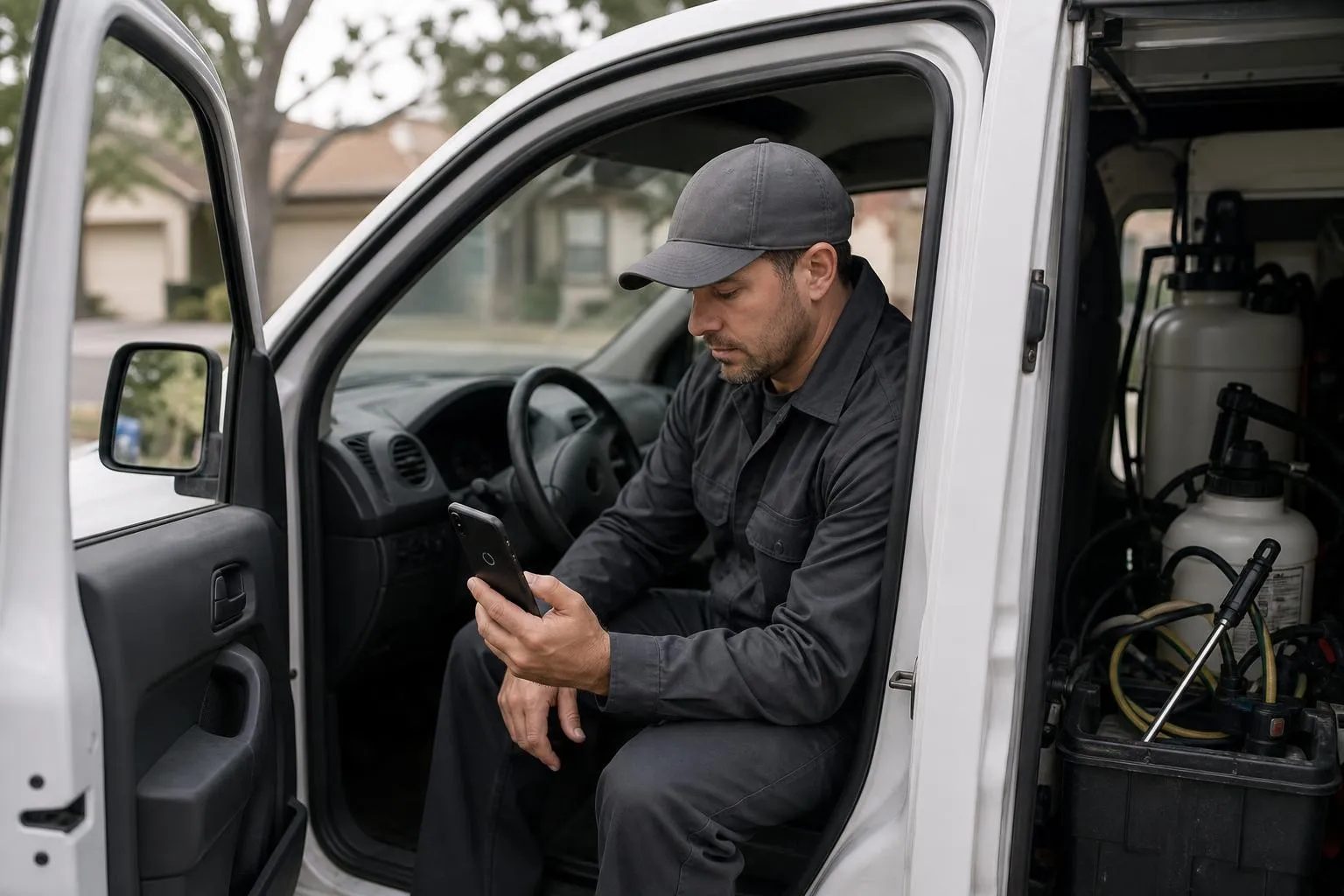
General pest is your bread and butter, but the money jumps when you can do the jobs most one-truck operators can’t. Termite and wood-destroying-organism (WDO) work is the big one: a termite job bills $1,500 to $8,000, but you need a rig to earn it, a 50-to-200-gallon skid tank, a high-pressure pump, a soil treatment rod, and a drill for slab injection, which together run $1,200 to $3,000 used. Rodent and exclusion work needs a bait gun, tamper-resistant bait stations at $6 to $12 each bought by the case, and a caulk/exclusion kit. Foggers (ULV cold foggers like the B&G Flex-A-Lite or a Curtis DynaFog) run $300 to $1,200 and earn their keep in warehouses, restaurants, and heavy roach jobs.
You do not need any of this on opening day. Add each rig when a job that requires it is in front of you and the deposit covers the tool.
Chemicals are cheap; buy from a distributor, not a hardware store
The single biggest markup mistake is buying retail product at the big-box store. Open accounts with a pest control distributor, Univar/Veseris, Target Specialty Products, or Forshaw, and buy concentrate that dilutes at a few ounces per gallon. Here is roughly what a starter chemical shelf costs and yields at professional pricing.
| Product | Role | Cost | Finished yield |
|---|---|---|---|
| Temprid FX (8 mL bottle) | Broad-spectrum residual spray | ~$70 | 100+ gallons |
| Termidor SC (20 oz) | Termite / ant non-repellent | ~$70 | ~24 gallons |
| Advion Roach Gel (4-tube box) | German roach bait | ~$45 | Dozens of accounts |
| Alpine WSG or CimeXa dust | Bed bugs / cracks & voids | ~$40 | Very high |
| Talstar P (gallon) | Bulk perimeter / lawn | ~$45 | 100+ gallons |
That entire shelf is under $300 and treats dozens of homes many times over. The lesson: your chemical cost per job is often $2 to $8. The tools and the labor are the expense, not the poison. How this feeds into pricing is covered in setting best prices and billing.
PPE and calibration are where the liability actually lives
The label is the law. The pesticide label is a federal legal document, and it dictates the exact PPE and application rate you must use, no exceptions. That means chemical-resistant gloves, safety glasses, and often a respirator with the correct cartridge for the product, plus a spill kit in the truck. Skimping here is not saving money; it is buying a fine.
Calibration matters just as much and gets ignored. If you do not know how many gallons per minute your sprayer puts out at a given pressure, you cannot prove you applied at label rate, and both over- and under-application are violations, over-application also poisons customers’ pets and stains their homes.
Buy new vs buy used equipment
- New sprayers and rigs come with warranties and known seal condition, so nothing fails mid-route in month one.
- You get current models with better tips, batteries, and pump reliability.
- No hidden chemical residue or worn internals from a previous owner’s misuse.
Buy new vs buy used equipment
- A used termite rig or truck setup can save $1,000 to $2,000 that a lean launch badly needs elsewhere.
- Sprayers are simple; a used B&G with fresh seals ($15 rebuild kit) is as good as new.
- Retiring or upgrading operators sell full kits cheap, and the truck fit-out alone is worth the trip.
The rule most owners land on: buy the sprayers and PPE new, and hunt used for the expensive, simple stuff, the truck, the skid tank, the compressor.
Getting found is the part that decides everything
The best-equipped truck in the county still sits idle if nobody calls it. A couple of pieces are free and worth doing this week; the rest is high-stakes work where doing it badly costs more than not doing it.
The free pieces, now: claim and fully complete your Google Business Profile with real photos of your rig and gear, and text every happy customer a review link before you leave. In pest control, “exterminator near me” is a near-emergency search, and the map pack with real reviews wins those calls. The local playbook is in how to promote pest control locally.
Now the high-stakes part. A pest control site is not a brochure. Good means it loads in under three seconds on a phone, ranks for “exterminator near me,” and turns a homeowner staring at a wasp nest into a booked appointment with one thumb tap. The gap between a site that converts and a pretty one that does nothing is invisible until you compare lead numbers: a site converting 2% instead of 6% loses two-thirds of its calls. Google Ads and Local Services Ads work the same way. That is the work we do. To have the site handled instead of guessed at, get a free video walkthrough. For ads, SEO, and paid social, see our services. If you have the idea but not the plan yet, start at expntl.com.
Frequently asked questions
What sprayer should I buy first?
A B&G Extenda-Ban compressed-air sprayer ($150 to $250) is the industry standard and should be your first purchase, with a Chapin or Solo backpack ($120 to $400) as a second unit. Buy two application units from day one so a clogged tip or cracked seal doesn’t cancel your route. Keep insecticide and herbicide sprayers permanently separate.
How much should I budget for chemicals to start?
Less than you think, around $250 to $500 for a full starter shelf, because professional concentrates dilute at a few ounces per gallon. One $70 bottle of Temprid FX makes 100+ gallons, so your chemical cost per job is often just $2 to $8. Buy from a distributor like Univar/Veseris or Target Specialty, never the hardware store.
Do I need a termite rig to start?
No. Start with general pest and rodent equipment, then add the termite/WDO rig ($1,200 to $3,000) when your first termite job’s deposit funds it. Termite work bills $1,500 to $8,000 per job, so the rig pays for itself on the first sale, but it should never come out of your launch budget.
What PPE is legally required?
Whatever the specific product label states, and the label is federal law. That typically means chemical-resistant gloves, safety glasses, and often a respirator with the correct cartridge, plus a truck spill kit. Applying without required PPE or at the wrong rate is a state violation that runs $1,000 to $5,000 per incident.
Should I buy new or used equipment?
Buy sprayers and PPE new for warranty and known seal condition; hunt used for the expensive, simple gear like a truck skid tank or compressor. A used B&G with a fresh $15 seal kit is as good as new. Full-kit sales from retiring operators are often the best value in the whole startup, and the equipment list ties directly into how much you need to start.
Your move
Reading this does not book a job.
The owners who pull ahead are the ones who change one thing this week. If you want that one thing to be a website that sells and ads that put it in front of the right people, we build and run both for you.
Straight answer on whether we can help, usually the same day.