Pest Control Website Conversion Rate: Same Visitors, Way More Plans Sold
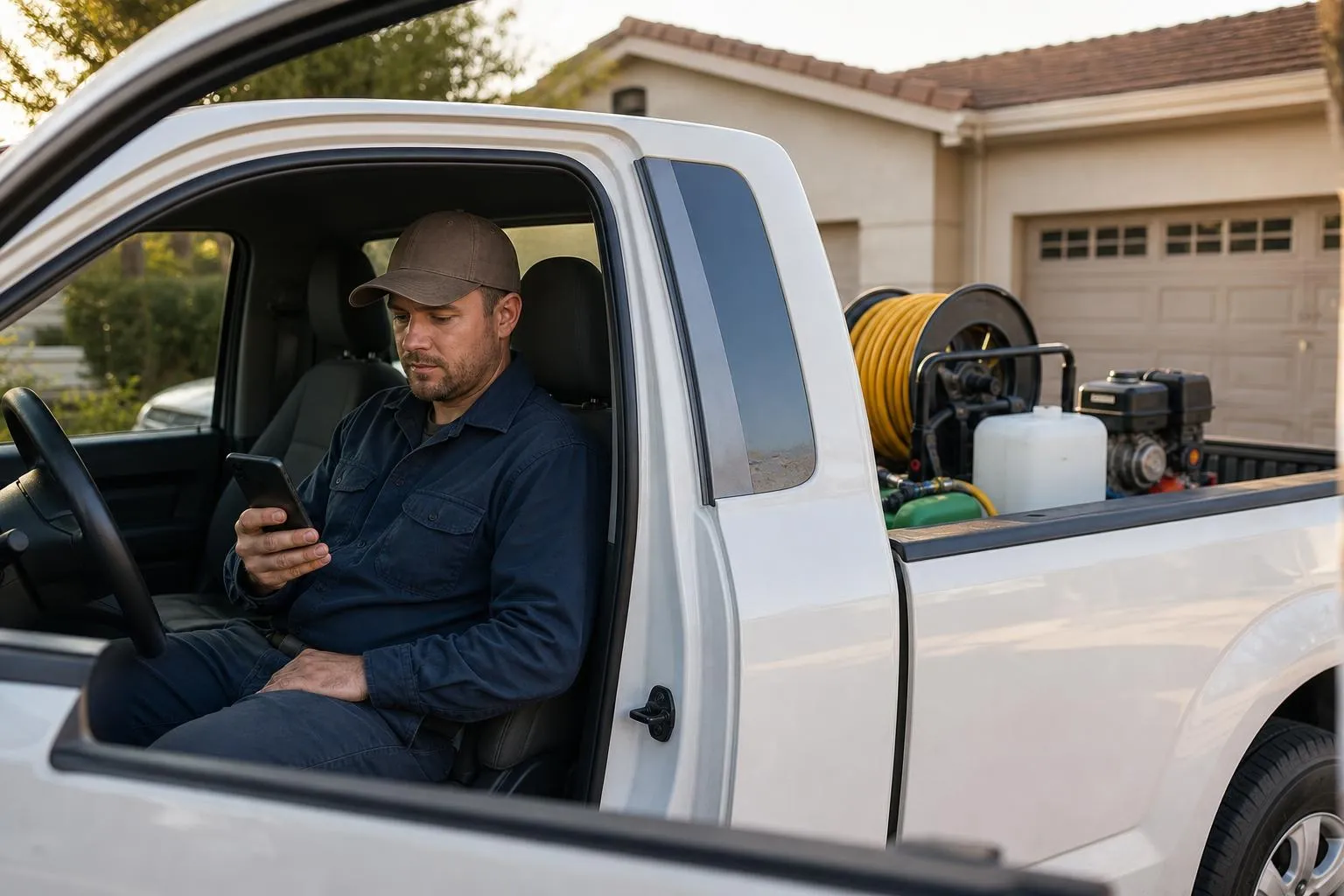
Picture forty homeowners in your territory spotting a roach or a mouse dropping last month, pulling up your website with real urgency, and thirty-seven of them closing the tab without calling.
You’d want to know exactly where it went wrong. Did the page never mention a plan, just a one-time spray? Did it take too long to load while they stood in the kitchen holding a broom? Here’s the uncomfortable part: some version of that happens every month at nearly every pest control site in the country, and none of it leaves a trace. A visitor who leaves doesn’t file a complaint. There’s no missed appointment on the books, no angry voicemail. The only record is a number almost no owner has ever pulled up: conversion rate, the share of visitors who become a call, a booking, or a plan signup.
That number is quietly deciding whether your site is building recurring revenue or leaking it to Terminix.
The math pest control owners never run
Say 320 people visit your site in a month, which many established companies see without effort: Google Business Profile clicks, “exterminator near me” searches, neighbors checking you out before they call. What happens after they land comes down to one number.
| Conversion rate | Leads from 320 visitors | Plan signups (1 in 3) | Annual value at $504/plan |
|---|---|---|---|
| 2% (aging brochure site) | 6 | 2 | $1,008 |
| 4% (decent modern site) | 13 | 4 | $2,016 |
| 8% (conversion-built site) | 26 | 9 | $4,536 |
No new visitor appears anywhere in that table. No extra ad spend, no new door-knocking route. The exact same people, converted into recurring customers instead of lost.
Why the leak never shows up on the route sheet
Here’s what makes conversion so easy to miss: it produces zero symptoms. A termite swarm announces itself. A slow month shows up in the bank account. But a website converting at 2% instead of 8% just quietly runs, the phone rings sometimes, one-off jobs still trickle in, and nothing reveals what the same 320 visitors would have produced through a page built to sell the plan. That’s different from a site nobody finds at all, which we covered in why your pest control website isn’t getting you customers. A 2% site produces just enough activity to feel like it’s working.
So the instinct is always more traffic: more Google Ads, more door hangers, a harder push against the big chains for the map pack. The cheaper fix usually sits right in front of you: the homeowners are already showing up. The page just isn’t turning them into plan customers.
Where the extra signups actually come from
A high-converting pest control site isn’t a shinier logo. It’s five mechanical decisions, each one recovering visitors the old site was losing.
The plan gets sold, not the spray. The homepage leads with “quarterly protection plan, $42/month, one visit gets you started” instead of a vague “call for a free quote.” Brochure sites sell the one-off treatment and lose the recurring revenue entirely.
The call is the interface. Tap-to-call in the first screen and repeated as the page scrolls, with online booking as the backup for people who’d rather not talk while they’re staring at a mouse trap. Most of this traffic happens on a phone standing in the exact room with the problem, so every screen should be able to start the call.
Proof before promises. Star rating, review count, licensed and insured, technician photos, shown immediately instead of buried on an About page. A homeowner who just saw a roach isn’t reading your mission statement. They’re scanning for a reason to trust you in the next ten seconds.
A real online booking path. Not just a phone number, but a form that lets someone lock in a visit at 11pm when they’re too rattled to call and too proud to leave a voicemail. Sites without that option lose every after-hours visitor who found them.
Speed. A page that takes five seconds to load converts nobody, because the visitor bails before your plan pricing even appears. Google’s own research found that 53% of mobile visitors abandon a page that takes longer than 3 seconds. That deserves its own article, and it’s next in this series.
Stack all five and 2% becomes 8%, sometimes more. Not a bigger audience, just fewer of the same people walking away without signing up.
Why patching the old site doesn’t get you there
Could the old site inch toward these numbers with a few fixes? To a degree.
Patching the old site
- Cheap up front: a click-to-call button and a reviews widget cost a few hundred dollars.
- No rebuild project, no new domain, nothing new to learn.
- Small real wins exist: adding plan pricing above the fold can nudge 2% toward 2.5%.
Patching the old site
- The old foundation caps the ceiling: a heavy desktop-first template stays slow on the phones homeowners are holding mid-panic.
- Every fix means another email to a freelancer and another week’s wait, billed hourly.
- A year of patches can run $1,500 and still leave you stuck under 3%, because conversion is structural, not decorative.
Bolting a booking button onto a slow, cluttered template is spraying the baseboards while the nest is in the wall. It looks like progress. It isn’t. Conversion gets decided in the architecture on day one, not stapled on afterward.
See what your traffic is actually worth
You can’t know what your visitors are worth until they hit a page built to sell the plan, but you can see the architecture without spending anything yet. The free video walkthrough tours a real pest control site so you can compare it against yours, section by section: where the plan pricing sits, where the booking form lives, what proof looks like above the fold.
If it makes the case, the rebuild is done for you start to finish: $2399£1,899 one-time for Standard, $7500£5,900 for Growth, prices published on the page, no contracts, live in 7 days, edits live within 24 hours, and you own everything. Once the site converts, whatever else you spend later, whether ads or growth services, builds on top of an 8% machine instead of a 2% leak.
Frequently asked questions
What is a good conversion rate for a pest control website?
Aging brochure sites usually land at 1-3%. A decent modern site reaches 4-5%, and conversion-built pest control sites are engineered toward an 8%+ benchmark, the difference between 6 and 26 leads on identical traffic.
Can I fix conversion without rebuilding the site?
You can buy small gains with a click-to-call button, plan pricing, and visible reviews. But a slow, desktop-era template caps how far those tweaks reach, which is why patched sites rarely clear 3%. Conversion comes from the architecture, not the add-ons.
How much does a conversion-built pest control website cost?
$2399£1,899 one-time for the Standard build or $7500£5,900 for Growth, both prices published openly. No contracts, launch in 7 days, edits live within 24 hours, and you own everything. A couple of new plan signups pays for it.
Should I fix conversion before spending more on ads?
Yes. Doubling traffic into a 2% site adds 6 leads; lifting the same 320 visitors to 8% adds 20 with zero new ad spend. Fix the leak first, and every ad dollar you spend afterward does roughly four times the work.
Next in this series: Every extra second your website takes to load is costing you customers
Your move
Reading this does not book a job.
The owners who pull ahead are the ones who change one thing this week. If you want that one thing to be a website that sells and ads that put it in front of the right people, we build and run both for you.
Straight answer on whether we can help, usually the same day.