How to Grow an HVAC Business
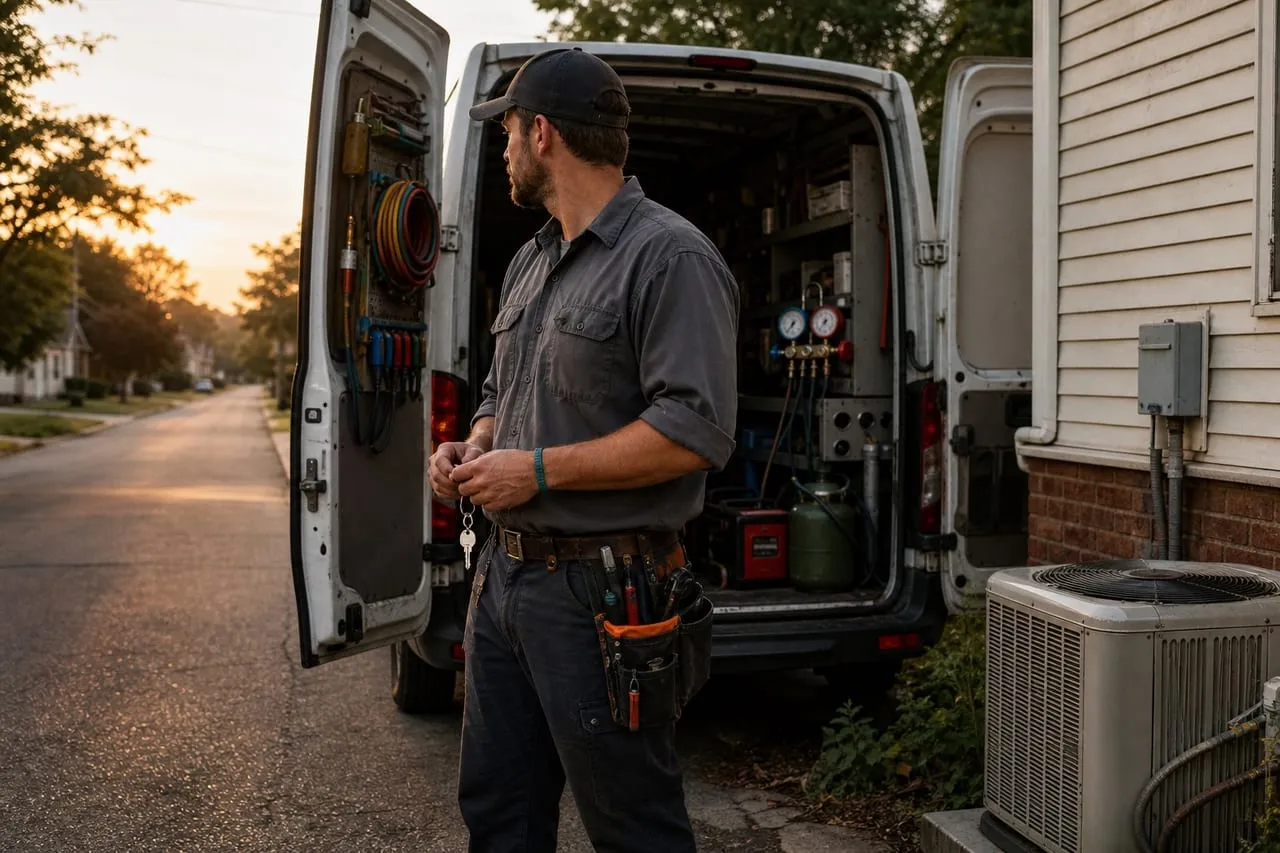
Growing an HVAC business is not about working harder. The solo tech doing 80 hours a week caps out around $200k revenue and burns out by year 4. The 2-van shop with 600 maintenance plans does $750k. The difference is structure: the maintenance-plan base, the second tech, and the systems that make replacements feel like a process, not a custom proposal.
What Each Stage Actually Pays
Most owners picture growth as a straight line: more vans, more money. It is closer to a J-curve, and knowing the shape in advance is the difference between pushing through the dip and quitting in the middle of it.
| Stage | Typical revenue | What the owner clears | The real bottleneck |
|---|---|---|---|
| Solo, service-heavy | $120k-$220k/yr | $90k-$170k/yr | Your hands and your hours |
| Solo + first tech | $300k-$500k/yr | $100k-$190k/yr | Ramp time, callbacks, your phone |
| 2 vans + CSR | $45k-$90k/mo | $14k-$28k/mo profit | Dispatch, truck stock, systems |
| 4-6 vans + ops manager | $1.5M-$3M/yr | Salary plus real distributions | Hiring pipeline and culture |
Look at the third column. Owner income barely moves between solo and solo-plus-tech, and that is not a typo. For the first two quarters the new tech eats most of what he bills: wages and burden, the van, callbacks while he learns your standards, the unbillable hours you spend riding along. Owners who expect the first hire to be a raise quit around month four, usually right before it starts paying. The hire is not a raise. It is the entry fee to the stage where a second full van runs on plan tune-ups and the margin comes back.
Build the Maintenance-Plan Base First
The maintenance plan is your moat. Until you have 200+ recurring plan members, you’re not growing, you’re just doing more service calls. Every business growth move depends on the plan base existing.
- Pitch a plan on every visit. Three tiers ($19/$29/$49 typical). Conversion target 25-40% of one-time service calls.
- Auto-charge monthly via card. Never bill annually, monthly is psychologically cheaper and retention is higher.
- Plan-member-only benefits. Priority scheduling, 15-25% off repairs, free service call (premium tier), seasonal tune-ups included.
- Two visits per plan year. Spring AC, fall furnace. Each visit is a real check, not a 10-minute drive-by. Real value = lower churn.
- Year-2 target. 250 plans = $5k+/mo of recurring revenue. Year 3 target = 600 plans = $12k+/mo.
The plan base smooths cash flow, funds slow months, and dramatically increases your eventual exit multiple. A buyer pays 4-7x EBITDA for an HVAC shop where 50%+ of revenue is from plan members and plan-tied jobs.
It is also the only structural fix for HVAC’s cash curve. Cooling work peaks June through August and heating peaks December through February, which leaves four shoulder months where undisciplined shops bleed payroll. Plans invert those months: spring and fall are exactly when the included tune-up visits get scheduled, so the trucks stay full while the phone is quiet, and every tune-up surfaces the swollen capacitor or the 15-year-old compressor that becomes next month’s replacement quote. The shoulder seasons are also when the plan pitch lands best. A homeowner who just paid for an emergency June repair is relieved; the same homeowner in April is planning.
One mechanical detail carries more weight than it looks: bill monthly even though annual billing would simplify your books. An annual plan creates a renewal event, one moment each year when the customer actively decides whether you are worth it. Monthly auto-charge never asks the question. That gap is most of the difference between the 60% renewal rates owners complain about and the 78-90% a well-run plan book actually hits.
Hire the First Service Tech
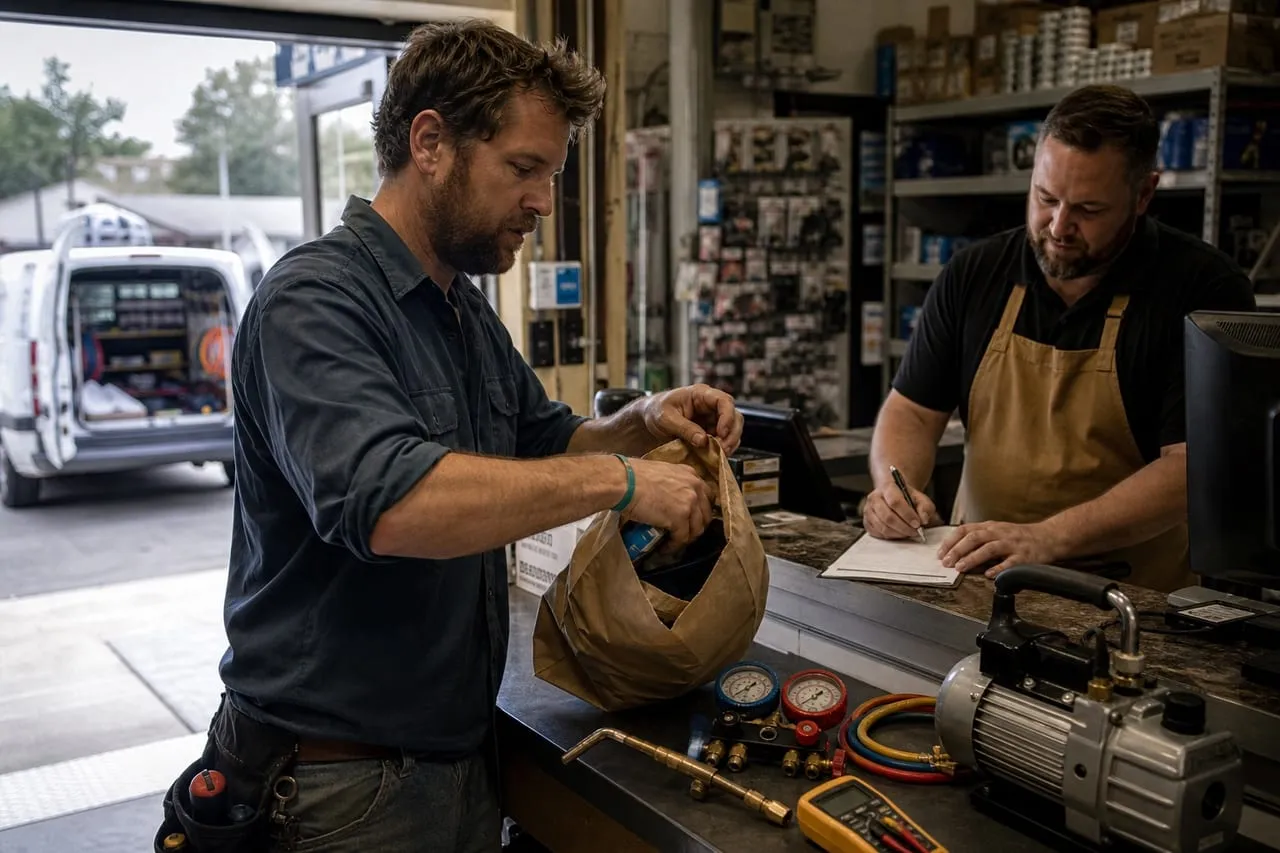
The first hire is always a service tech, never a CSR. Your bottleneck is your hands, not your phones. Solo HVAC techs hit a ceiling at 40-60 service calls/month. A second tech doubles that.
- Hire when you’re turning down 8+ calls/week in peak season. Not before. Hiring early kills cash flow.
- Pay $25-$40/hr base + spiff structure. $5 per maintenance plan sold, $50 per IAQ add-on, 3-5% commission on replacements they lead-generate.
- Find from trade schools (Lincoln Tech, ITT), ESCO Institute apprentice listings, Indeed, and Facebook trades groups. Better techs come from your existing customer base referrals.
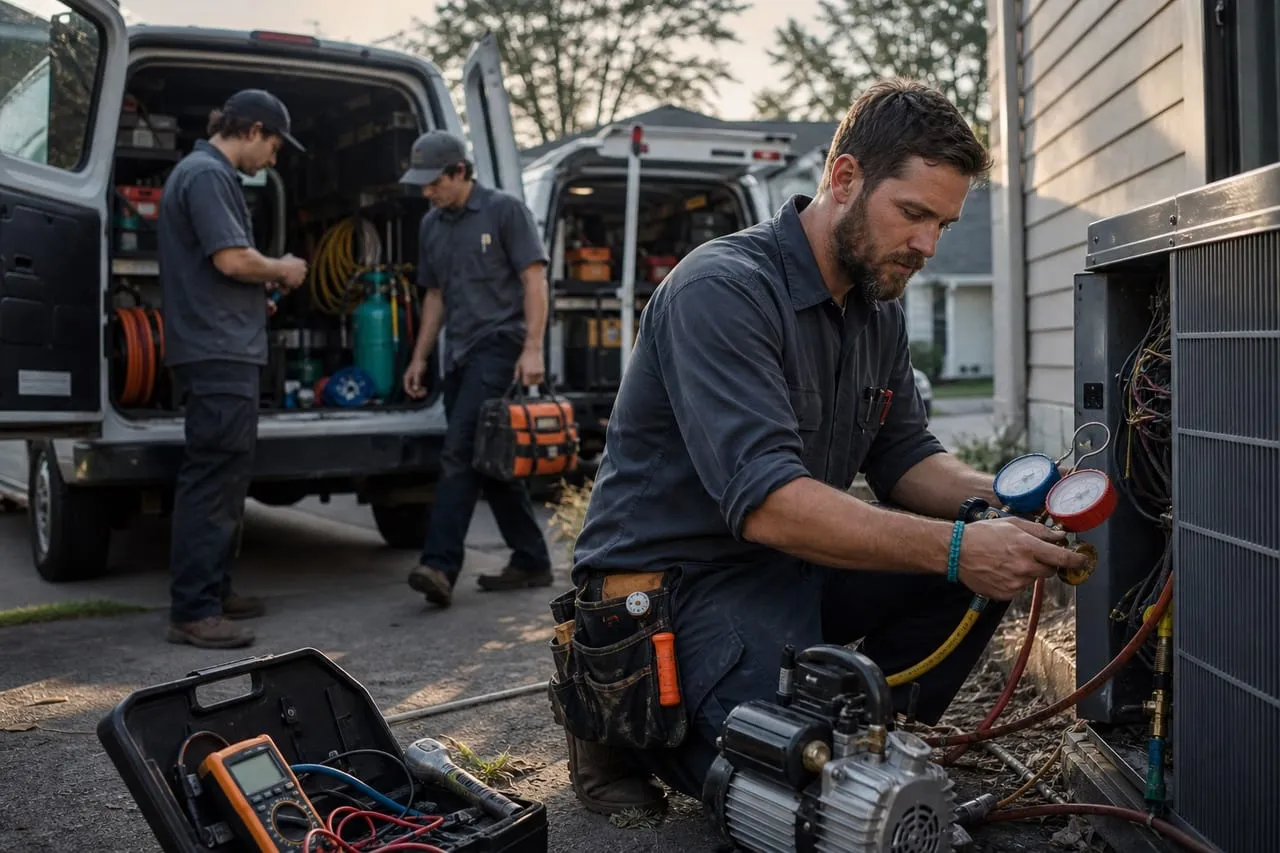
- Onboard in your truck for 3-7 days. Don’t put them in a separate van until you’ve watched them braze, diagnose, and finish a call without callback.
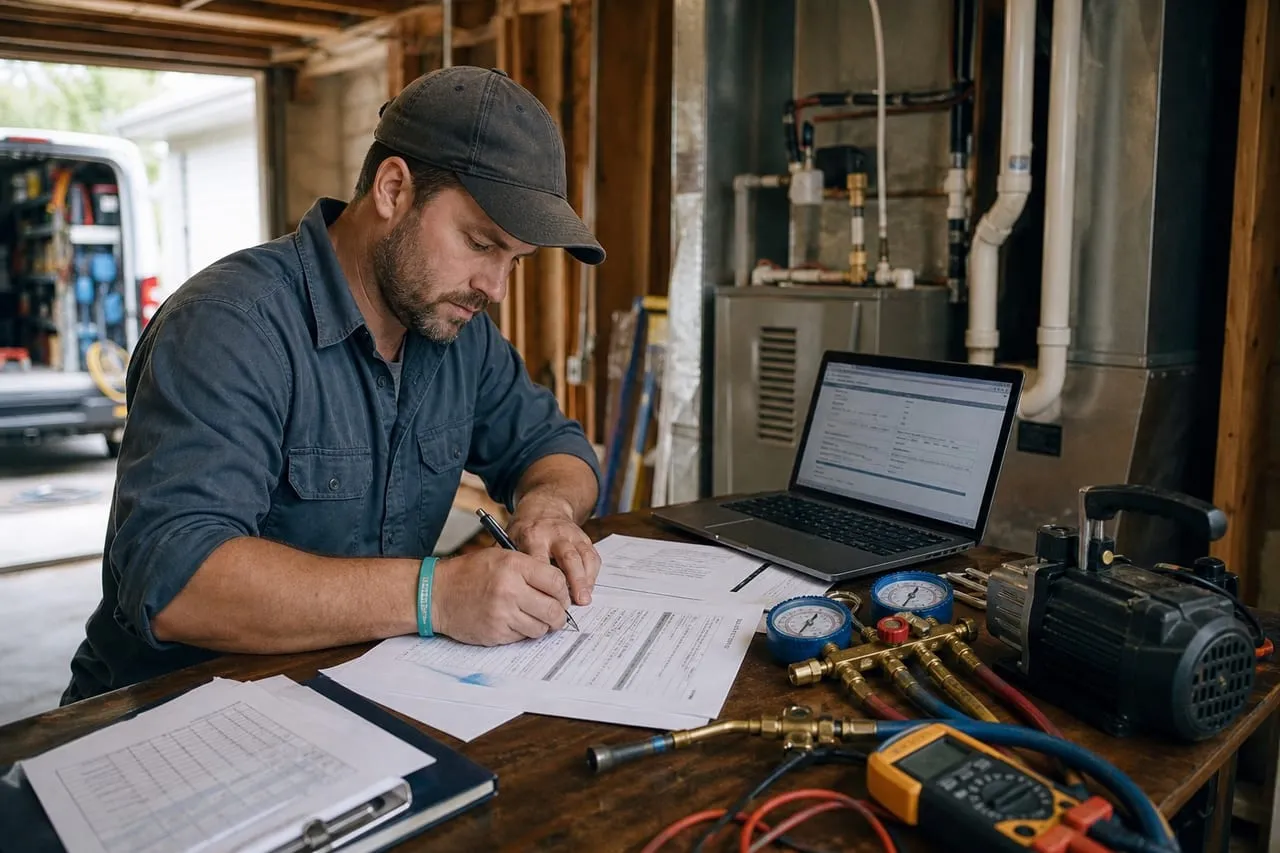
- Quality control via Housecall Pro or ServiceTitan. Every job logged with photos and customer-signed invoice. Spot-check call recordings.
See when and how to hire for the full hiring playbook.
One timing detail most owners get backwards: hire into the ramp, not into the peak. If cooling calls explode in June, the tech needs to start in March or April so the slow weeks absorb his learning curve at low stakes. A tech hired in July learns the trade on your angriest customers, and his callbacks land in exactly the weeks you have no slack to fix them.
The example is why the two hiring rules sound conservative until you live them. The 8-calls-a-week trigger exists because the math only works if demand is sustained, not a heat-wave spike. The reserve rule exists because shoulder months arrive on schedule whether or not your tech is ramped: you will fund at least one quiet quarter from savings before the plan base grows into the second truck.
Add Dispatch and Productize Replacements
Once you have 2 techs and a CSR, growth becomes about systems. The two systems that matter most are dispatch flow and replacement quoting.
- Dispatch flow. Every inbound call gets logged in software (ServiceTitan, Housecall Pro, Jobber), dispatched to the closest tech with the right truck stock, and confirmed via SMS to the customer with the tech’s name + photo + ETA.
- Replacement productization. Every replacement quoted as good/better/best, three line items, three prices. “Good” is mid-tier 14-SEER builder grade, “Better” is 16-SEER variable-speed, “Best” is 18+ SEER with extended warranty. Customers buy the middle 60% of the time. See pricing and billing.
- Service agreement renewal automation. Annual SMS + email 30 days before plan renewal. 78-90% renewal rate is achievable.
- Marketing budget hits 8-10% of revenue. At scale your LSAs, GBP, and Facebook all run with proper conversion tracking. See how to advertise.
Productizing replacements matters more than one bullet suggests, because replacements are where the margin lives. A single $9,000 changeout carries the gross profit of roughly fifteen service calls, and the good/better/best structure quietly raises the average ticket because customers anchor on the middle option instead of negotiating the bottom one. The shops that stay stuck treat every replacement as a custom proposal the owner personally writes at 9pm. The shops that scale let any tech present three pre-built options off the iPad the same afternoon the system dies, which is the moment the customer is most ready to decide.
Service Book or Builder Contracts?
Somewhere around year 2 or 3, a general contractor or home builder will offer you volume: 20 or 30 installs at a negotiated rate. It feels like the fast lane, and it is the most common fork in HVAC growth.
Builder work: pros
- Predictable install pipeline that fills shoulder seasons
- Batch efficiency: ten installs of the same floor plan, one supplier order
- Zero marketing cost per job
Builder work: cons
- Margins run 30-50% thinner than retail replacements
- Net-30 to net-60 payment while you front the equipment
- One builder slowing down can idle half your crew overnight
The honest rule: cap builder work at about a third of revenue. It buys schedule density and keeps a new tech busy, but it does not build the plan base, and the plan base is what compounds. There is an exit angle too: buyers pay premium multiples for recurring service books because plan members transfer with the sale. A builder relationship usually walks out the door with you.
By year 3-5, the owner should be out of the truck. Manage the techs, manage the books, manage the marketing. The daily and weekly systems that make stepping out possible are covered in how to successfully run an HVAC business.
Frequently asked questions
When should I add a second truck?
When you’re turning down 8+ calls a week for 3 consecutive months in peak season, and you have at least $30k of cash reserves. Adding a truck too early eats the cash you need for slow months.
How do I avoid burnout while scaling?
Three things: hire the second tech earlier than you think you need to (your bottleneck is hours, not money), block one day a week as office-only (no field), and outsource bookkeeping to a local CPA at $400-$800/mo by year 2.
Should I franchise instead?
Almost never makes financial sense for HVAC. Franchise fees of 8-12% of revenue eat the margin you’d otherwise invest in your maintenance-plan base. Build your own brand. See the step-by-step launch.
What’s the realistic growth timeline?
Year 1: solo, $120k-$220k revenue. Year 2: solo + apprentice or second tech, $300k-$500k. Year 3-4: 2-3 vans + CSR, $700k-$1.2M. Year 5+: 4-6 vans + dispatch + ops manager, $1.5M-$3M. See how to successfully run.