Your Construction Website Isn't Broken. It's Just Not Selling: 7 Signs It's Quietly Losing You Projects
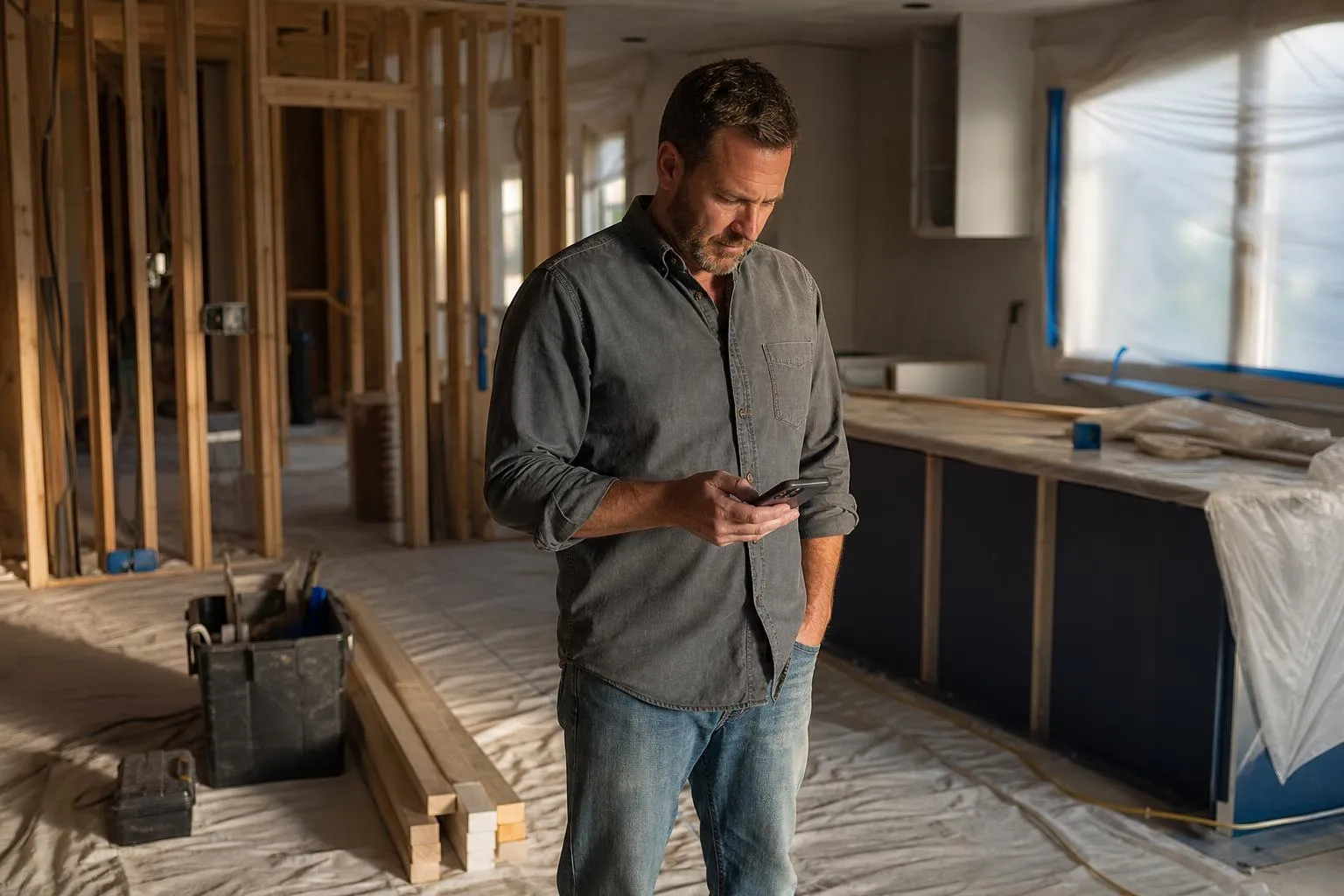
Picture hiring a salesperson who’s in the office every single day. Never calls in sick, works weekends, answers at 2am if someone’s browsing. Problem is, in eighteen months, they haven’t closed a single deal.
You’d have replaced them a long time ago.
That salesperson is your website. It’s live around the clock, it’s the first look most prospects get at your work, and if you’re honest, you can’t remember the last six-figure job it actually brought in. Nothing looks broken. It loads. Your number’s on there. That’s what makes it dangerous: a website that quietly fails to sell never forces a reckoning the way a bounced check does. Here are the seven signs yours might be one of them.
You can’t trace a single project back to the site
Sign 1: you can’t name your last website-sourced project. Not a homeowner who Googled your name after a neighbor recommended you. A cold prospect who found you in search and filled out the form. If nothing comes to mind from the last quarter, your website isn’t selling. It’s a placeholder with a hosting bill.
Sign 2: you stopped sending people there. When a prospect asks to see your work, do you say “check the website,” or do you text over a folder of phone photos because some part of you knows the site won’t close them? If you’re routing buyers around your own homepage, you already know the verdict.
Referrals and word of mouth are carrying the whole business
Sign 3: every project traces back to a referral or a past client. That reputation took years to build and it should stay your foundation. But if it’s 100% of your pipeline, your growth is capped at the speed word travels through one neighborhood. A site built to sell is the second pipeline, turning strangers researching contractors at midnight into booked consultations. Getting clients for a construction company covers the full playbook, but search is the channel that never sleeps.
A prospect can’t reach the form without giving up
Sign 4: the inquiry form takes longer to find than to fill out. Load your own site the way a prospect scrolling in bed at 11pm would. Time the trip from landing to submitting a project inquiry. If it’s buried three menus deep, if it asks for twelve fields before a phone number, every extra tap is a place someone bails and calls the next name on their list instead.
Most visitors give your homepage well under ten seconds to prove you’re worth their time. Someone shortlisting contractors for a $200k addition isn’t going to hunt for your contact page.
Nothing on the site has changed since it launched
Sign 5: the site is frozen in time. Scroll to the footer. Is the copyright year current? Are the project photos from a kitchen you finished five years and three trucks ago? A stale site tells a prospect one of two things: this contractor is too slammed to bother, or maybe they’re not taking new work at all. Neither wins the inquiry.
Sign 6: there’s no real proof anywhere on it. A prospect can’t inspect your framing or your permit history, so they judge what’s visible: license and bond numbers, real project photos with real dollar values attached, reviews, your actual face. Roughly 88% of people trust online reviews as much as a personal referral, so the contractor showing 30 documented projects with client names beats the one running a stock photo of a hard hat, which quietly signals there’s nothing real to show.
You’ve only ever looked at it on a desktop monitor
Sign 7: your prospects meet your site on a phone, usually mid-research, comparing you against two other bids. If you’ve only ever pulled it up on your office computer, you and your prospects are seeing two different websites, and theirs is the one deciding whether you get the call for the walkthrough. Worth its own read: how mobile visitors actually use a construction website.
Phones are also where a slow build gets punished hardest. The research is consistent:
| Page load time | What it does to your visitors |
|---|---|
| Over 3 seconds | 53% of mobile visitors abandon the page (Google) |
| Each extra second from 0 to 5 | Conversions drop about 4.4% per second (Portent) |
| 1 second slips to 5 seconds | Bounce probability rises 90% (Google) |
| 1 second slips to 10 seconds | Bounce probability rises 123% (Google) |
If a prospect is waiting seven seconds for your portfolio to render on a job site parking lot, they’ve likely already opened a competitor’s tab. How a slow construction website loses projects breaks down exactly where those seconds go.
What a site built to sell actually does
None of this means you need flashier design. Flashy isn’t the job. A site built to sell high-ticket projects does three things, without compromise: it ranks when locals search for a contractor (the fight for the Google top 3 map results), it proves inside seconds that you’re licensed, bonded, and legitimate, and it makes starting an inquiry the easiest step on the page. That’s the entire job description. Stock hero videos and paragraphs about your “commitment to craftsmanship” are decoration.
So do you patch the current site or start clean?
Patching the current site
- Cheapest path this month: real photos and current reviews can go up this week
- You keep your domain and whatever search history it’s earned
- No rebuild eating into your busiest bidding season
Patching the current site
- An old platform caps your speed no matter how much you compress images
- The mobile layout is locked in, and that’s where most prospects are researching
- Every change still routes through whoever built it, on their schedule
- You keep paying for hosting and maintenance on an asset that’s never closed a project
The gap between a portfolio page and a sales tool doesn’t show from the outside, which is why plenty of good contractors sit on a quiet website for years without noticing. It shows up in one place: how many qualified inquiries land in your inbox. If you counted more than two signs above, take ten minutes and watch the free video walkthrough of a live contractor site built to sell: portfolio structured project-by-project, ranks for “general contractor” plus your city, license and bond info above the fold, done for you start to finish, live in 7 days, and you own it outright. Pricing is public, no proposals required. Once inquiries start landing, ongoing growth services can widen the pipeline further.
Frequently asked questions
How do I know if my website is actually costing me projects?
Count qualified strangers, not page views. If you can’t name one prospect in the last quarter who found you through search and submitted an inquiry, the site isn’t producing. Track your inquiry form for a month and the picture gets clear fast.
Can’t I just keep growing on referrals?
Referrals should stay your foundation, but they cap growth at the pace word of mouth travels. Even referred prospects look you up before signing anything, and a stale-looking site can quietly cost you the deal at the last step.
How much does a construction website that actually sells cost?
Our Standard build is $2399£1,899 one-time, and the Elite package is $7500£5,900 one-time, both published openly with no proposals. Launch takes 7 days, revisions go live fast, and you own everything outright.
Should I fix my current site or rebuild it?
If the bones are solid, add real project photos, current reviews, and license details this week. If it fails the 3-second phone test and every change needs a developer, patching is just paying rent on an asset that isn’t working.
What should the inquiry form actually ask for?
At minimum: project type, budget range, and desired start timeframe. That last field matters most, since it separates someone ready to sign next month from someone pricing out a project for next spring.
Next in this series: why the worse contractor across town keeps winning the projects you deserve
Your move
Reading this does not book a job.
The owners who pull ahead are the ones who change one thing this week. If you want that one thing to be a website that sells and ads that put it in front of the right people, we build and run both for you.
Straight answer on whether we can help, usually the same day.