Your Construction Website Looks Fine on a Laptop. Your Best Prospects Are Vetting You From a Truck

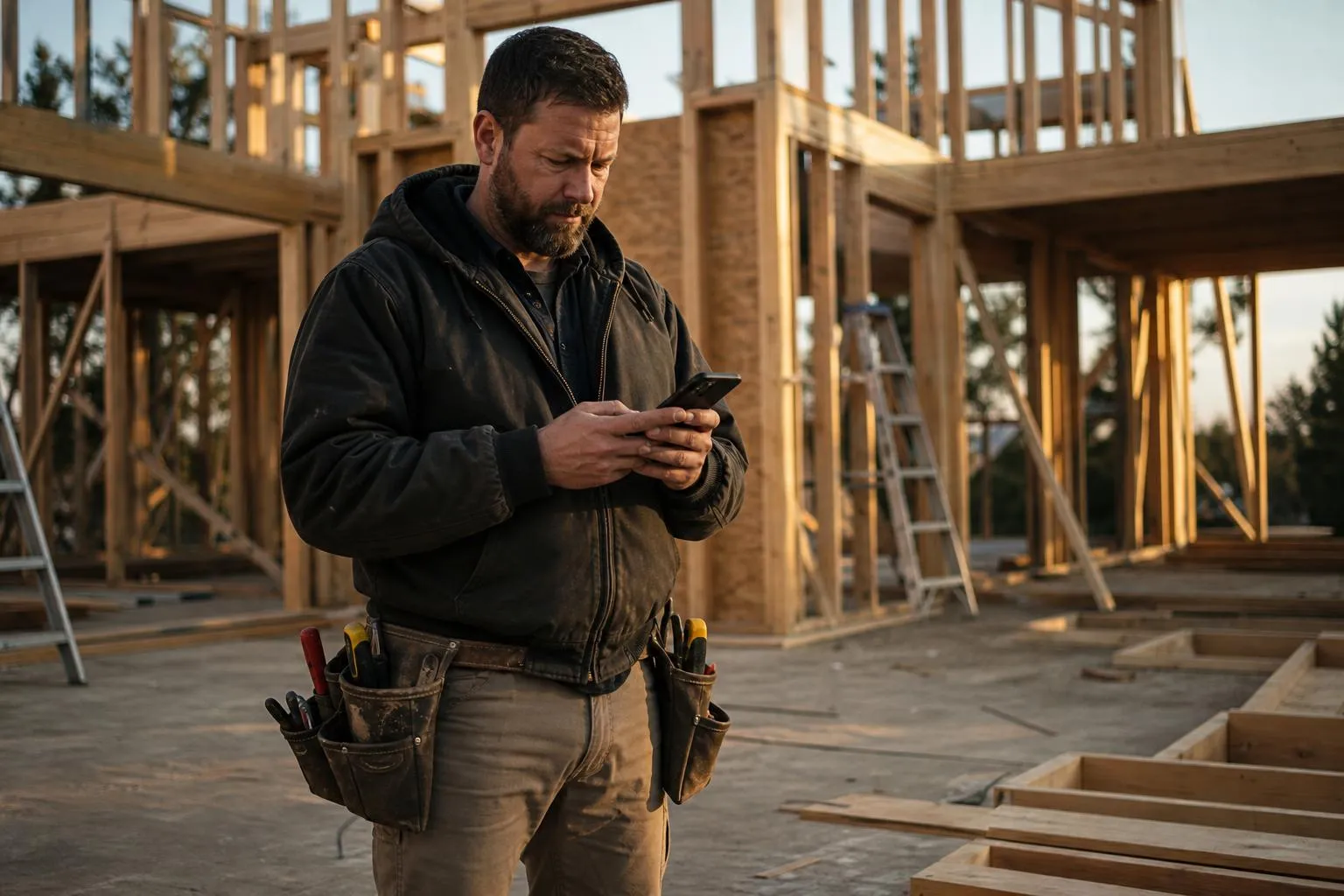
Thursday, 9:15 p.m. A couple sits in their driveway, engine off, dome light on. They just walked their kitchen for the twentieth time, tape measure in hand, and now they are doing what every serious buyer does before they call anyone: they are pulling up contractors on a phone.
Three tabs open. Three companies. Fifteen minutes to decide who gets the call tomorrow morning. This is the moment your website exists for, and it is almost never the moment the site was built around.
Here is what usually happens on that third tab. The page loads slow, the hero image is still rendering after five seconds, and when it finally settles, the layout is a shrunken version of a desktop site: text too small to read, a portfolio grid that requires pinch-zoom, and a phone number buried in a footer that will not respond to a tap.
Back button. Next tab. Somebody else’s crew breaks ground on that kitchen.
You are grading a website your buyers have never seen
Here is the disconnect: you approved this site on a monitor in your office, probably scrolling slowly, admiring the photography, in no hurry at all.
Nobody vetting a general contractor does that. They do it on a couch or in a car, on a phone, usually at night after the kids are down, comparing you against two or three other companies in the same fifteen minutes. Research on mobile behavior puts real numbers on how short that window is.
| Mobile reality | The number |
|---|---|
| Visitors gone if the page takes over 3 seconds to load | 53% (Google) |
| Conversion lost per extra second of load time | about 4.4% (Portent) |
| Rise in bounce probability from a 1-second load to 10 | 123% (Google) |
| Average mobile page load time | 8.6 seconds |
The average site takes 8.6 seconds to load; patience runs out at 3. Most contractor sites sit well past that line, which is why page speed gets its own breakdown later in this series.
So you see a polished site and a quiet phone, and you assume the market is soft or the leads are thin. There is no alert when a $200k prospect closes the tab. It happens silently, on a version of your site you have never once opened.
The vetting happens before you ever hear the phone ring
For a low-ticket business, a clumsy mobile site costs a few sales a month. For a contractor selling five- and six-figure projects, it costs the projects that would have carried the whole quarter.
The buyer comparing kitchen remodels or additions is not impulse-shopping. She is doing diligence: license, insurance, bonded status, a real portfolio, reviews with dollar figures attached. That research happens almost entirely on a phone, often outside business hours, and she will not fight a bad page to find it. If the proof is not visible in the first ten seconds of scrolling, she assumes it does not exist and moves to the next tab.
The math gets worse with the ticket size. A missed lead on a $180k addition is not a small miss, it is a missed quarter. Even contractors who rank in the local top three on Google lose the inquiry when the page behind that ranking fails the phone test.
What “built for the driveway scroll” actually means
A mobile-first contractor site is not your desktop site squeezed onto a smaller screen. It is designed for a skeptical buyer with one thumb, comparing you against two competitors in the same browsing session:
- Loads in a couple of seconds on cellular, not just on the office Wi-Fi you tested it on.
- The portfolio is the product. Real photos, before-and-afters, project scope and rough budget range, scrollable without pinching.
- Trust signals above the fold: license number, insurance, years in business, a handful of reviews that mention real dollar figures.
- An inquiry form that asks the right question: project type and rough timeline, so you can tell a spring 2027 kickoff from a tire-kicker.
- A tappable phone number and a clear next step, not buried under a slider or an autoplay video ahead of your only real call to action.
None of this is exotic design work. It is simply a site built around the buyer’s actual research habits instead of the owner’s monitor.
Should you just retrofit the site you have?
Fair question, since a full rebuild sounds like a project on top of your actual projects.
Patching the old site for mobile
- Cheapest option upfront: a responsive theme swap runs a few hundred dollars.
- Keeps the branding and copy you already paid for.
- No real rebuild timeline; can go live in a week.
Patching the old site for mobile
- The 8-second load rarely improves: the bloated portfolio images and page-builder scripts causing it usually survive the patch.
- The trust signals a $200k buyer needs (license, insurance, real project photos) still get buried below decorative content.
- You keep eating the invisible cost: at 53% abandonment, a patched-but-slow site loses high-ticket inquiries the same way the old one did.
A patch can make a site pass a quick glance. A buyer comparing three contractors before bed does not grade on a glance.
Run the test yourself
We opened this series arguing that your website is not broken, it is simply not selling. Mobile is where that argument gets concrete. The referrals in your pipeline came in despite this version of your site. The strangers researching you cold never leave a trace when they bounce.
Built for the buyer sitting in the driveway
We build contractor websites mobile-first: the skeptical buyer comparing three companies in one sitting is the design brief, and the desktop version is the adaptation. The portfolio loads fast and scrolls clean, license and insurance sit above the fold, and the inquiry form captures project type and timeline instead of just a name and email.
Watch the free video walkthrough of a live site on a phone screen, side by side with yours. The gap is obvious inside two minutes. And once mobile stops leaking qualified buyers, every dollar you spend on advertising works harder instead of funding someone else’s pipeline.
Frequently asked questions
What does a mobile-first construction website cost?
Two tiers: $2399£1,899 for a standard contractor site, $7500£5,900 for the elite build with a deeper project-page-per-job portfolio and financing integration. No hidden fees, full breakdown on the get-website page.
Is a responsive theme the same as mobile-first?
No. Responsive just reflows a desktop layout onto a smaller screen. Mobile-first means the phone experience, load speed and all, is the primary design, not an afterthought bolted on.
How many prospects are actually researching me on a phone?
For residential contractors, the majority of first-touch research happens on a phone, especially in the evening. Check your analytics device report; if you see 60 to 80% mobile on your inquiry pages, that is typical.
Will fixing mobile help my Google rankings too?
Yes. Google indexes and ranks the mobile version of your site first. Speed and usability on phones feed directly into the same local rankings that decide who shows up for “general contractor near me.”
Next in this series: The trust tax: how an outdated construction website kills the referrals you already earned
Your move
Reading this does not book a job.
The owners who pull ahead are the ones who change one thing this week. If you want that one thing to be a website that sells and ads that put it in front of the right people, we build and run both for you.
Straight answer on whether we can help, usually the same day.