Construction Website Conversion Rate: Same Visitors, Twice the Signed Projects
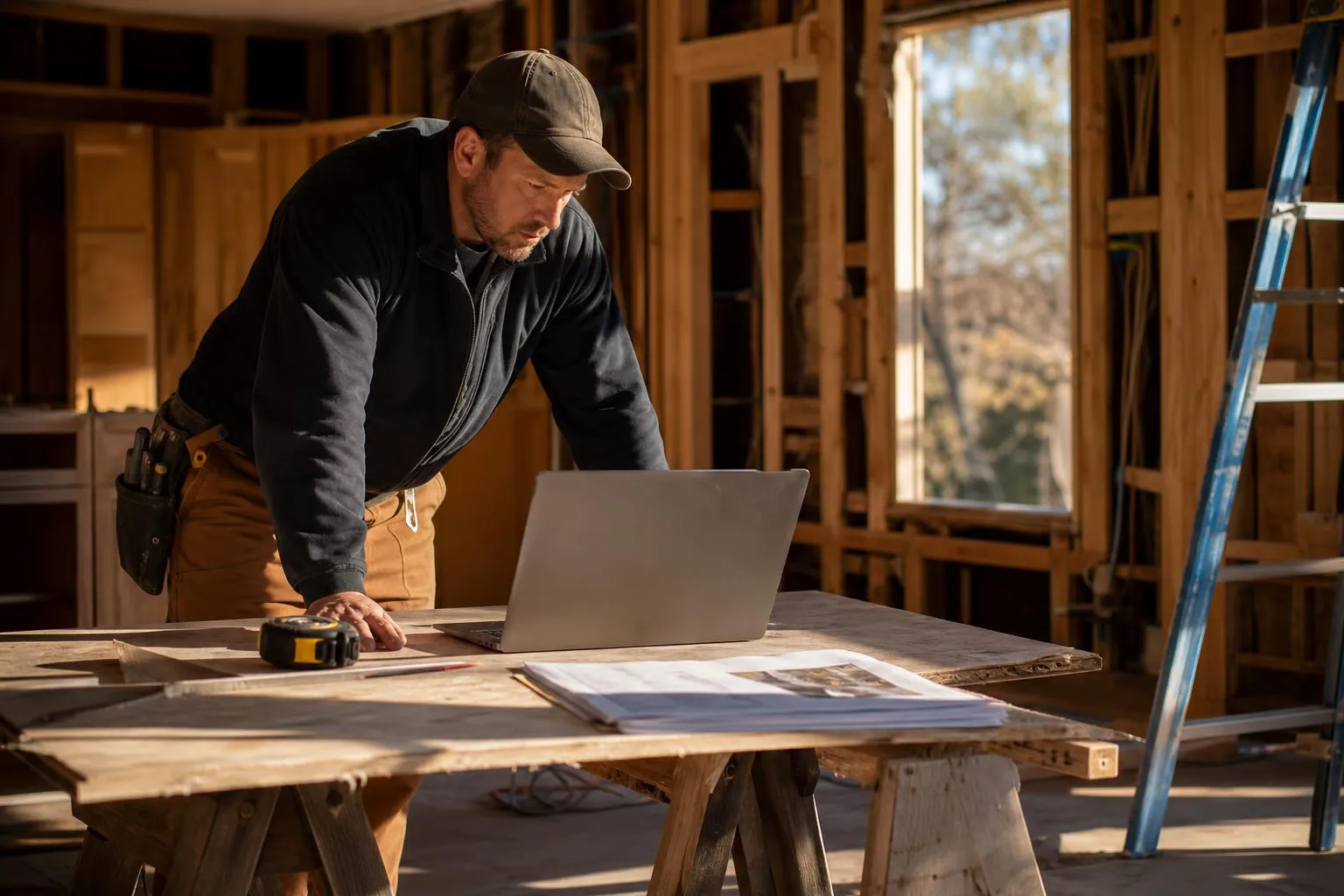
Somewhere in your service area right now, a homeowner is sitting with a $200,000 remodel budget and three browser tabs open, one for each contractor she is considering. She will pick two to call and forget the third exists by tomorrow.
Nobody tells you which tab you were. There is no rejection email, no missed-call notification, just a browser tab that closed and never came back. That silence is the entire problem with a construction website that underperforms: it fails quietly, project after project, and the only number that would tell you it is happening is one almost no contractor has ever checked.
That number is conversion rate, the share of site visitors who turn into a real inquiry, a consultation request, a signed project. It decides whether your website is winning you work or just occupying a domain name.
The math contractors almost never run
Say 200 people visit your site in a given month. For an established firm this happens without much effort: Google Business Profile clicks, service-area searches, and referrals sizing you up before they pick up the phone. What happens after they land determines everything.
| Conversion rate | Inquiries from 200 visitors | Signed projects (1 in 8) | Value at $180,000 avg project |
|---|---|---|---|
| 2% (outdated site) | 4 | 0.5 | $90,000 |
| 4% (decent modern site) | 8 | 1 | $180,000 |
| 8% (conversion-built site) | 16 | 2 | $360,000 |
No new visitor drove that difference. No additional marketing budget. Same 200 people, fewer of them lost before they filled out a form.
Why you would never catch it happening
Conversion has a strange trait: it produces no symptom you can point to.
A blown deadline shows up immediately. A subcontractor no-show gets a call within the hour. But a site converting at 2% instead of 8% just quietly underperforms month after month, with nothing visible to flag it. The occasional inquiry still comes in, the site “looks fine,” and there is no side-by-side showing what those same 200 visitors would have produced with a better build. We covered the dead-site version of this in why your construction website isn’t landing projects. A 2% site is trickier still, because it produces just enough activity to seem like it is working.
So the instinct is always more traffic: more spend, more directories, a harder push for the local map pack. The overlooked fix is cheaper: the prospects are already arriving. The site is what loses them.
Where the extra projects actually come from
A high-converting construction site is not fancier photography. It is five specific mechanics, each recovering visitors the old site was quietly losing.
One project type, one page. The kitchen-remodel page sells kitchen remodels, with one clear next step: request a consultation. Outdated sites cram every service into one generic “what we do” page, so nothing on it convinces anyone of anything.
A real portfolio, not a phone reel. Drone shots, finished interiors, honest before-and-afters, organized by project type instead of scattered across an Instagram grid nobody thinks to check. Prospects want to see the exact kind of job they are considering before they will pick up the phone.
Proof before pitch. License, insurance, bonded status, financing options, testimonials with real project values attached, visible in the first screen instead of buried on an About page. A homeowner staking $200,000 on a stranger scans for reasons to trust you before reading a single sentence of copy.
Answers to the three silent questions. Do you build what I need? Are you licensed and insured for a job this size? Can someone actually walk my site with me soon? Sites that answer all three above the fold get the inquiry. Sites that hide behind a generic contact page do not.
Speed. A page that stalls on a phone loses the homeowner before she reads your first project photo. Google’s own research found 53% of mobile visitors abandon a page that takes longer than 3 seconds to load. That topic gets its own full breakdown next in this series.
Stack all five and 2% turns into 8%, sometimes more. Not a bigger audience, just fewer of the right people walking away.
Patching the old site has a hard ceiling
Could the existing site be nudged toward these numbers without a full rebuild? To a point.
Patching the old site
- Cheap up front: an inquiry form and a testimonials widget cost a few hundred dollars to bolt on.
- No launch project, your URL and existing content stay put.
- Small real gains exist: moving licensing and insurance info above the fold can nudge 2% toward 2.5%.
Patching the old site
- The foundation caps the ceiling: a heavy, desktop-era template stays slow on the phones most prospects are browsing from.
- Every change is a developer request and a wait measured in weeks, billed hourly.
- A year of patches can run $2,500 and still leave you under 3%, because conversion is structural, not decorative.
Adding an inquiry form to a slow, cluttered site is a marble countertop on a cracked foundation. Conversion is not a finishing touch. It is the architecture, decided on day one.
See what your traffic is actually worth
You cannot know what your site’s traffic is really worth until it runs through a build made to convert it. But you can see that architecture before committing to anything. The free video walkthrough tours a real contractor site so you can compare it screen by screen against yours: where the inquiry form sits, where the portfolio sits, what one page per project type looks like.
If the gap is obvious, the rebuild is done for you start to finish: $2399£1,899 one-time for Standard, $7500£5,900 for Growth, prices published on the page, no proposals, live in 7 days, edits live within 24 hours, and you own everything. Once the site converts, every dollar spent afterward, whether ads or ongoing growth services, compounds on an 8% machine instead of leaking through a 2% one.
Frequently asked questions
What is a good conversion rate for a construction website?
Outdated sites typically sit at 1-3%. A decent modern build reaches 4-5%, and conversion-built contractor sites are engineered toward an 8%+ benchmark, the difference between 4 and 16 inquiries on identical traffic.
Can I fix conversion without rebuilding the whole site?
You can pick up small gains with a visible inquiry form, licensing proof, and better testimonial placement. But a slow, desktop-era template caps how far those tweaks can go, which is why patched sites rarely clear 3%. Conversion comes from the structure, not the accessories.
How much does a conversion-built construction website cost?
$2399£1,899 one-time for the Standard build or $7500£5,900 for Growth, both prices published openly. No proposals, launch in 7 days, edits live within 24 hours, and you own everything. One extra signed project pays for it many times over.
Should I fix conversion before spending more on ads?
Yes. Doubling traffic into a 2% site adds 4 inquiries; lifting the same 200 visitors to 8% adds 12 with zero new ad spend. Fix the leak first and every ad dollar after that works about four times harder.
Next in this series: Every extra second your construction website takes to load is costing you projects
Your move
Reading this does not book a job.
The owners who pull ahead are the ones who change one thing this week. If you want that one thing to be a website that sells and ads that put it in front of the right people, we build and run both for you.
Straight answer on whether we can help, usually the same day.