How to Promote a Roofing Business on YouTube
YouTube is the long-form layer of a roofer’s content stack. It does not pull leads in week one the way Local Service Ads do. But a single 12-minute video on “How to know if your roof needs replacing” can pull 200-2,000 views a month for years, and the viewers who watch it are 60 days from calling a roofer. Here is how to use YouTube as a slow-but-compounding lead engine.
Content that ranks and converts
YouTube rewards depth and answers. The videos that pay off for roofers all target someone already inside the hiring journey, just at different distances from the phone call:
| Video | Who is watching | When they call |
|---|---|---|
| ”How to know if your roof needs replacing” | A homeowner noticing curled shingles, granule loss, a sag | 30-90 days |
| ”What to do after a hailstorm” | A storm-hit homeowner, that same week | Days; traffic spikes after every regional storm |
| ”Cost of a new roof in [your city]“ | A budget-stage shopper with high intent | 2-8 weeks |
| ”Asphalt shingle vs metal roofing” | A material-stage researcher | 1-6 months |
| Install walkthrough, foreman narrating | A shortlist-stage verifier checking how you work | Days |
| Customer testimonial interview (3-5 min) | The same verifier, checking who you are | Days |
The hailstorm video deserves the most care, because it carries the most intent: walk the insurance claim start to finish, what to photograph, what to say to the adjuster, what a storm-chaser pitch sounds like. Aim for 8-15 minutes per video. YouTube weights watch time heavily, and shorter videos rarely build the watch-time signal needed to rank.
Make decision videos, not DIY videos
The highest-traffic roofing content on YouTube is repair tutorials, and they are a trap for a local contractor. “How to replace a pipe boot” can pull 50,000 views and produce zero customers, because the audience is national, DIY-minded, and watching specifically so they do not have to hire you. “Should you repair or replace a 15-year-old roof” might pull 800 views, but those viewers are deciders, and a meaningful share of them live within driving distance of someone. The rule before filming anything: is the searcher trying to do the work or decide about the work? Make videos only for deciders.
Decision videos earn a second time at the estimate. Send two or three of them with the appointment confirmation text: the cost video, the claims walkthrough if it is storm work, a testimonial. The homeowner meets you having already heard your answers to their hardest questions, from the same face now standing in their driveway. Pre-sold estimates are a big part of how on-site close rates reach the top of the typical 35-55% band.
Production quality and gear
Roofers do not need cinema-grade production. A practical setup:
| Item | Cost |
|---|---|
| iPhone 13 Pro or newer | Already in your pocket |
| Rode VideoMic GO II | $100 |
| DJI Mini 4 Pro drone | $400 |
| Ring light (or a bright window) | $30-$60 |
| CapCut or DaVinci Resolve for editing | Free |
| Total kit | Under $600 |
Audio matters more than video. A jobsite shot with bad audio is unusable. A simple talking-head shot with clean audio works fine.
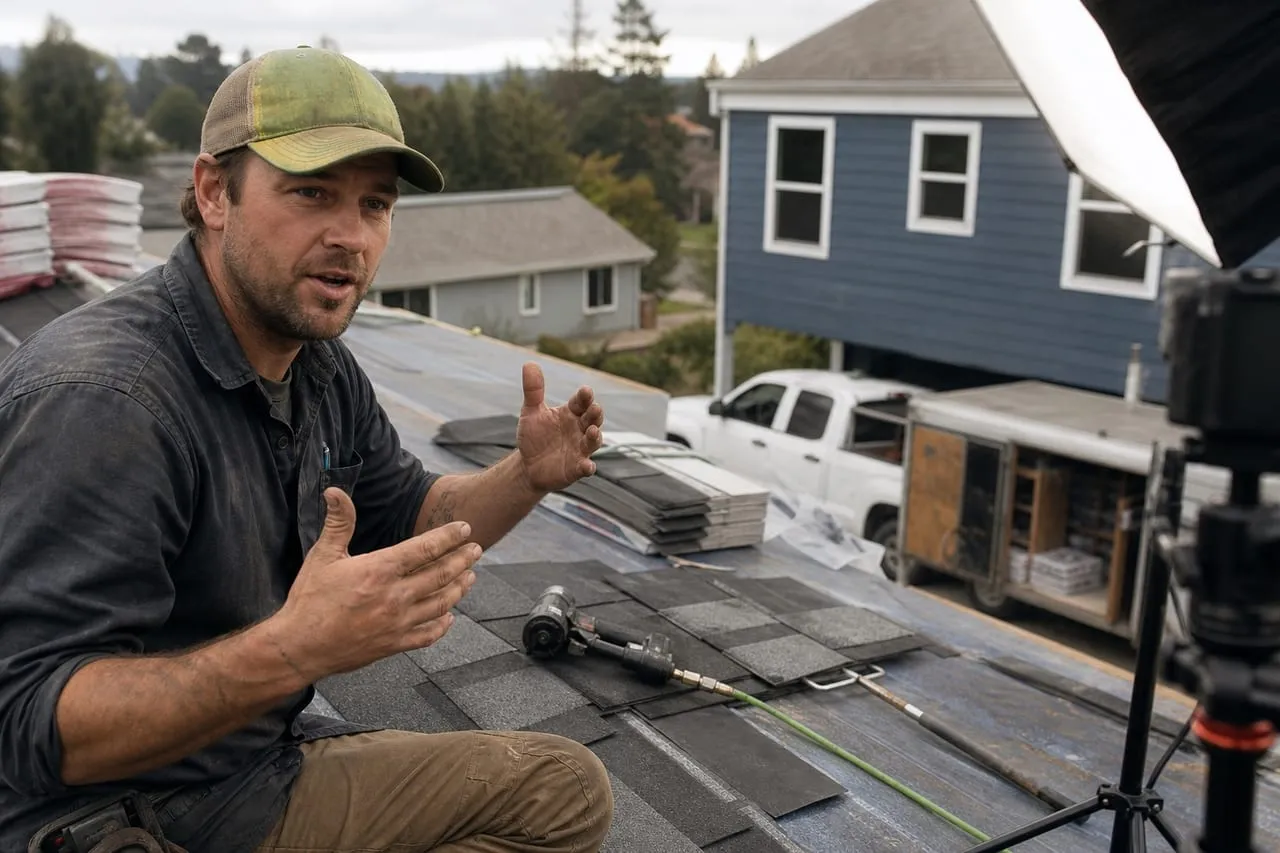
The audio rule exists because of how watch time dies: viewers forgive shaky footage instantly and never forgive straining to hear, and the moment they click away, the ranking signal goes with them. The same logic favors the foreman over a script. A foreman explaining ice-and-water shield placement while standing in the valley outranks a teleprompter read every time, because trades viewers can smell a script, and authenticity is what keeps them watching past the two-minute mark.
Thumbnails and titles
YouTube is a thumbnail-and-title business. The video matters second.
Thumbnail rules:
- Big text, 4-6 words max
- A face with a clear expression (surprised, concerned, pointing)
- High contrast colors
- Readable on a phone at thumbnail size
Title rules:
- Keyword in the first 5 words
- A reason to watch (“Avoid this $5,000 mistake”)
- Numbers and specifics where possible (“3 signs your roof is failing”)
Skip clickbait that does not match the content. Mismatched titles and content tank watch-through rates, which kills future ranking.
YouTube remarketing and ads
The most underused YouTube tactic for roofers is remarketing. Run YouTube ads only to people who already visited your website or watched a previous video. Setup:
- Audience: site visitors past 90 days + past video viewers
- Ad format: 30-second video with crew at work + customer testimonial
- Budget: $10-$30/day
- Goal: top-of-mind during the 60-90 day homeowner decision window
Cold YouTube ads (pre-roll on unrelated content) rarely work for roofers. The intent is wrong. Stick to remarketing.
The reason remarketing punches above its budget is the shape of the roofing purchase. A homeowner collects three estimates, then sits on the decision for weeks while life intervenes, and the contractor who stays helpfully visible during that limbo wins a disproportionate share of the signatures. Because the audience is only your own visitors and viewers, a few thousand people at most, $10-$30 a day buys near-total coverage of exactly the households deciding about you, which is why it pays in week one while the organic library is still warming up.
Pair the long-form on YouTube with the short-form on Instagram and TikTok (how to promote on Instagram and how to promote on TikTok), and the direct-lead engine in how to advertise on Google.
Frequently asked questions
How long until YouTube pays off?
6-18 months for organic ranking. Remarketing ads pay off in week one. Most roofers start with remarketing and build the organic library in the background.
How many videos should I publish?
One per week is enough. Quality and watch-time beat volume on YouTube.
Do I need to be on camera?
Yes, eventually. People trust faces. Start with voiceover plus drone footage if you hate the camera, then move to on-screen as you build confidence.
Should I run YouTube Shorts?
Yes, but treat them like TikTok content (see how to promote on TikTok). Shorts feed the algorithm with new viewers but rarely pull direct leads.
What is the biggest YouTube mistake roofers make?
Quitting at video 10. The algorithm rarely starts pushing a channel before video 20-30. The compounding starts after the library exists.
Your move
Reading this does not book a job.
The owners who pull ahead are the ones who change one thing this week. If you want that one thing to be a website that sells and ads that put it in front of the right people, we build and run both for you.
Straight answer on whether we can help, usually the same day.