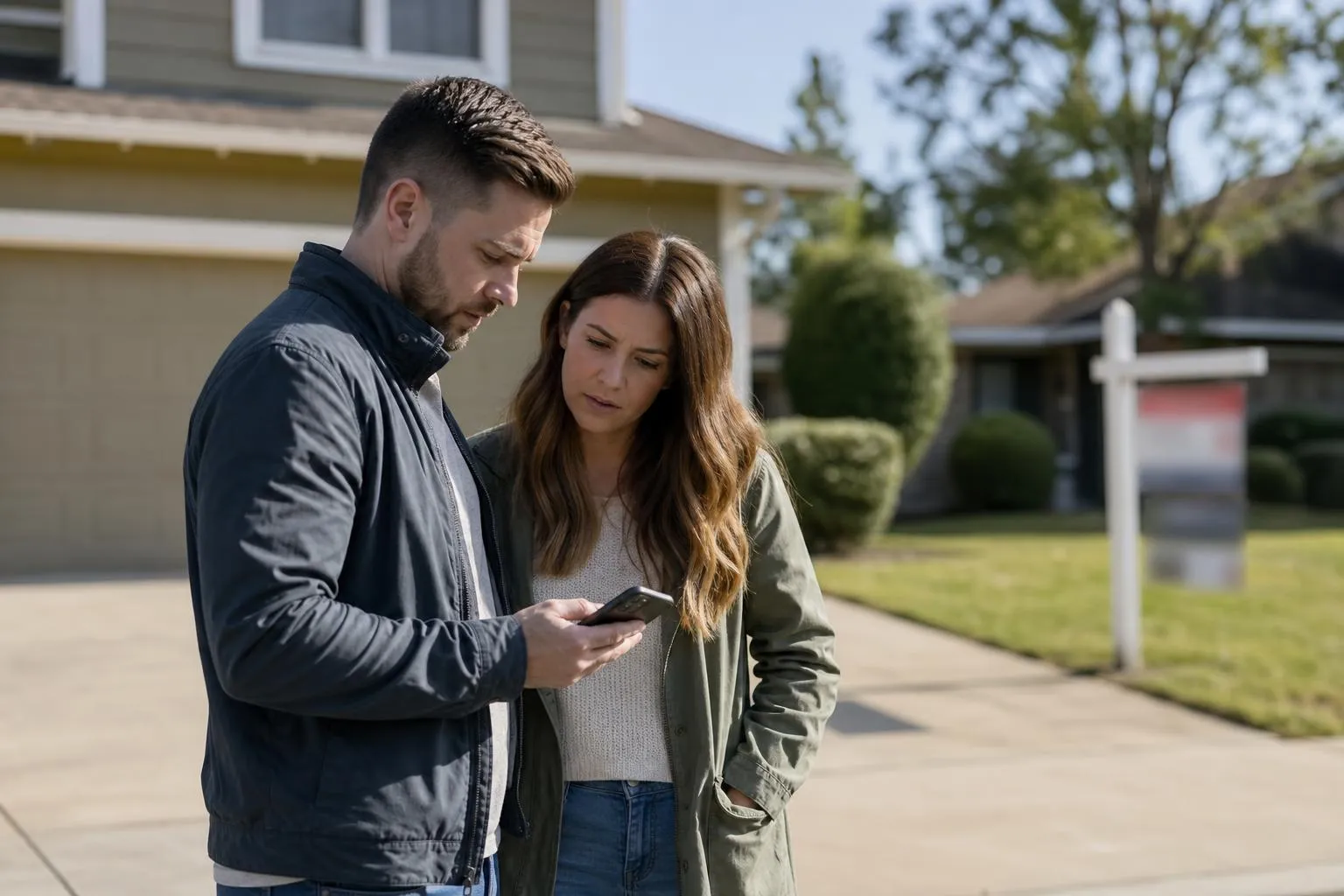
Why the worse real estate agent wins your clients online

You know the agent. He can’t tell you why one street holds value better than the one next to it, he’s never walked half the neighborhoods he lists in, and his comps are lazy. You’ve watched him lowball a seller by $30,000 out of pure unfamiliarity. You are, by any real measure, the better agent.
His name is on more yard signs than yours. His phone rings before yours does. And it isn’t because sellers can tell the difference.
Here’s the part nobody says at the brokerage meeting: sellers and buyers don’t hire the sharpest agent, they hire whoever looks like the most obvious, lowest-risk choice within the first ten seconds of searching. That’s a different contest than the one you trained for, and it’s the only one most people are actually equipped to judge.
A homeowner can’t see how good you are at this job
Someone deciding who lists their house cannot evaluate your negotiation skill, your read on pricing strategy, or whether you’ll actually fight for the extra $15,000. None of that shows up before they call. It only shows up after they’ve already picked someone.
So they pick based on what they can actually see:
- Whether your name showed up first when they searched
- How many reviews you have and how recently one was posted
- Whether your site looks current, or like a brokerage template from 2016
- Real listing photos and a real person, not a headshot from a decade ago
- Whether they can get a home value estimate or book a call in one tap
Not one of those measures how good an agent you are. It measures how easy you are to find and trust. The agent outselling you isn’t better at real estate, he’s better at being discovered. Why your real estate website isn’t getting you clients covers the symptoms; this is the mechanism underneath.
The comparison happens before you’re even in the room
An active metro market is crowded with licensed agents, which means a homeowner deciding who to call has dozens of technically-qualified options and zero patience to evaluate them properly: phone out, search “real estate agent” plus their neighborhood, open two or three sites, skim ten seconds each, call the one that felt most trustworthy. That whole process takes less time than staging one room.
You’re in that lineup whether you show up or not:
| What the homeowner experiences | The number | Source |
|---|---|---|
| A page takes longer than 3 seconds to load | 53% of mobile visitors leave | Google, 2016 |
| A page loads in 1 second instead of 5 | It converts about 3 times better | Portent, 2022 |
An agent’s page that takes more than 3 seconds on a phone loses over half its mobile visitors. If a competing agent’s site shows an instant home-value tool in two seconds while yours is still loading a slideshow of past listings, the homeowner doesn’t stop to consider your market expertise. They’ve already filled out the other form. That’s how slow load times quietly cost you sellers.
The expensive part: those were your commissions
This isn’t abstract market share. Every week someone in your farm area decides to sell, gets relocated for a job, or finally starts browsing listings seriously. Someone gets that call. The only question is whose name they already know.
You’re not just losing commission. Your sellers are losing the agent who’d actually fight for their price, because that agent never came up in the search.
The good news: this is fixable in weeks, not years
You can’t out-farm a decade of someone else’s name recognition overnight. But the part that costs you the most, the ten-second first impression, closes fast, because it’s built from proof you already own.
Real proof. Your sold history, your actual comps knowledge, client testimonials, and the reviews sitting unclaimed with sellers who loved working with you but never got asked. Most agents hold more real proof than the agent currently winning; it’s just not on display. That’s the foundation of getting clients for a real estate agency.
A site built to convert. Fast on a phone, a working home-value tool, one obvious action per page. Not a digital business card, a lead engine. What a converting real estate site looks like comes down to one rule: every element either builds trust or captures a lead.
A clean local presence. Your Google Business Profile, neighborhood pages, and reviews all reinforcing the same story.
The honest question is who does the fixing:
Rebuilding the site yourself
- Cheapest out of pocket: a DIY builder runs $20-$50 a month, plus whatever your IDX feed charges
- You control every bio, neighborhood page and listing photo
- No waiting on a vendor, so you can start before your next showing
Rebuilding the site yourself
- The real cost is your evenings: 40-60 hours of learning, worth $6,000-$9,000 if an hour of your prospecting is worth $150
- Templates rarely handle the ten-second contest: load speed, valuation tools, one-tap contact
- Half-built rebuilds tend to stay half-built once listing season hits
Take back the listings that should be yours
The agent outselling you didn’t get better at real estate. He got better at being chosen first. That’s a solvable problem, and unlike him, you’ll actually deliver once the seller picks up the phone.
We build real estate websites for the owner thinking about selling this spring: an instant home-value tool, IDX search that works on mobile, a page for each neighborhood you farm, and pages built to rank for “real estate agent” plus your city. Live in 7 days, done for you start to finish. Watch the free video walkthrough and compare it side by side with what a seller sees today.
You own everything, and most changes go live within 24 hours with no contract. Sellers compare agents’ stars on the map before they read a bio, so if you want that profile and the review requests after each closing handled, that’s Google Business Profile management. Stop letting a less-informed agent win a contest you never entered.
Frequently asked questions
How can a worse agent get more listings than a better one?
Because sellers can’t evaluate negotiating skill or market knowledge before hiring; that’s invisible until after the fact. They choose on visible evidence: search ranking, recent reviews, site speed, and instant tools like home valuations. Whoever wins those signals gets the listing appointment.
Do reviews or the website matter more?
They do different jobs. Reviews and your Google profile get you shortlisted; the website turns that shortlist into a booked consultation. Strong reviews pointing at a slow, dated site still lose listings, so fix whichever is weaker first.
How long does it take to close the gap?
Faster than most agents expect. A review push shows results in about two weeks, and a purpose-built site can be live in 7 days. Outranking a decade of someone else’s brand recognition takes longer, but the ten-second impression that decides most first calls is fixable this month.
How much does a done-for-you real estate website cost?
Both prices are one-time: $2399£1,899 for the Standard website or $7500£5,900 for the Growth website, with any IDX feed billed by its own provider. A brokerage that farms several neighborhoods, or splits buyer and seller leads across agents, usually needs the Growth website: it adds a page per neighborhood and lead routing, so a valuation request lands with the agent who covers that street. Launch is 7 days after kickoff, and the brokerage owns the site.
Should I just cut my commission to compete instead?
No. The agent winning listings right now is often charging the same rate while doing weaker work, so commission isn’t why he wins. Sellers pick whoever looks like the safest, easiest choice, and a better website fixes that without you giving away your fee.
Next in this series, on the three agents a seller sees on the map for “real estate agent near me”: If your real estate agency isn’t in Google’s top 3, you don’t exist
Your move
Reading this does not book a job.
The owners who pull ahead are the ones who change one thing this week. If you want that one thing to be a website that sells and ads that put it in front of the right people, we build and run both for you.
Straight answer on whether we can help, usually the same day.