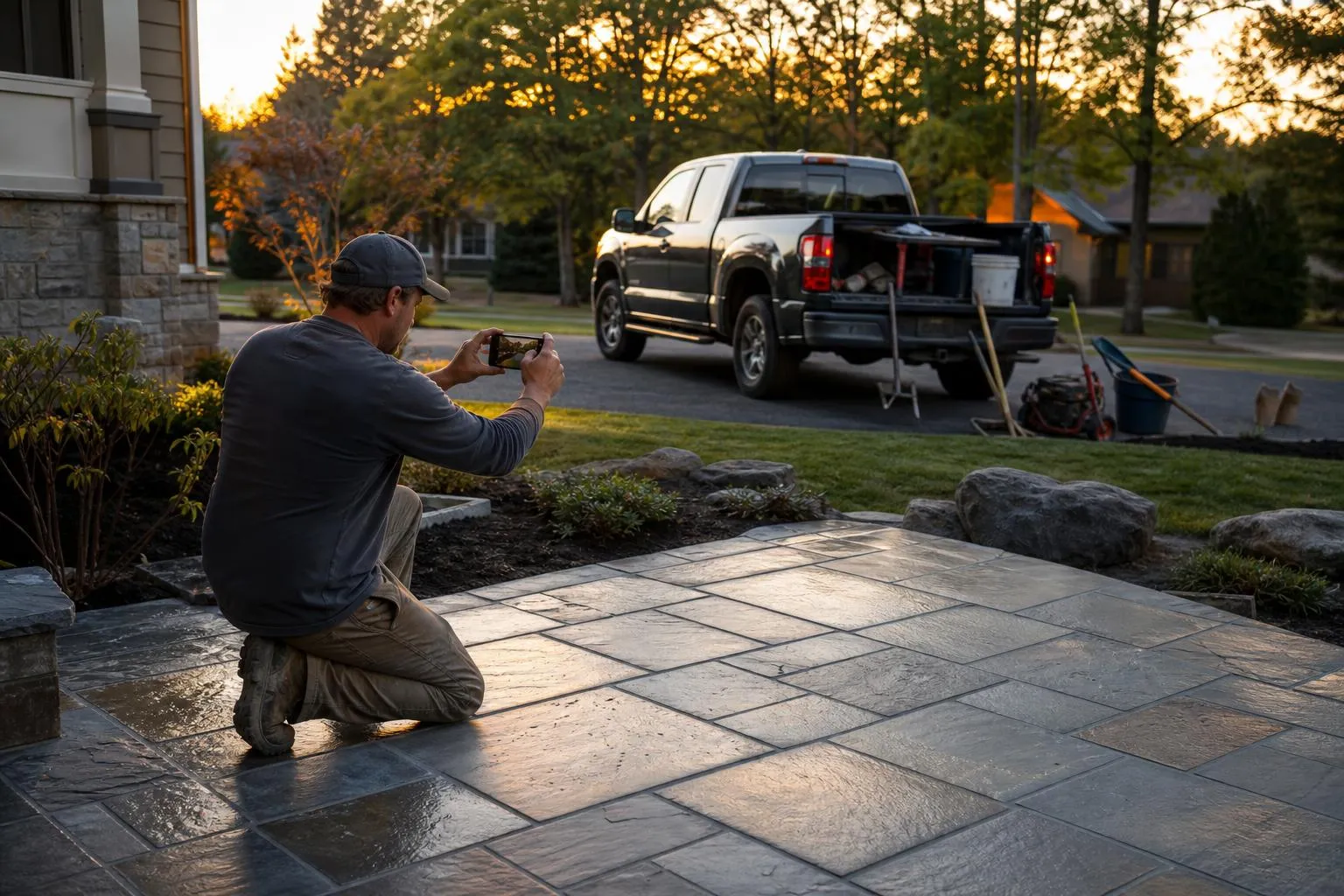
How much do you need to start a landscaping business

“How much does it cost to start a landscaping business” has three honest answers, not one, because a guy with a push mower in his trunk and a company running a two-truck crew are both technically landscapers. What you actually need depends on which of three tiers you are launching, and the difference between them is roughly $1,500 versus $80,000. The trap is spending like tier three when your route only justifies tier one. Here is what each tier really costs, line by line, and how much cash to keep behind it.
The three tiers, and which one you actually need
Tier one is the mow-only bootstrap: a used commercial push mower, a trimmer, a blower, and whatever vehicle you already own, under $1,500 all in. You service small suburban lawns on a tight route and reinvest every dollar. Tier two is the funded solo launch: a used zero-turn, a full tool set, a used truck or trailer, and the legal-plus-insurance stack, $5,000 to $15,000. Tier three is the truck-and-crew launch: a reliable work truck, an enclosed trailer, commercial mowers, and enough cash to make payroll before the accounts fill, $30,000 to $80,000.
Almost every first-timer should start at tier one or two and let the route pull them up. The no-money starting guide covers tier one in depth, and the best way to start explains why selling the route before buying the iron is what makes the low tiers work.
Where the money actually goes
Here is the funded solo launch (tier two) broken out. This is the realistic number most people mean when they ask, and the biggest line is almost always the vehicle, not the mower everyone fixates on.
| Line item | Lean cost | Note |
|---|---|---|
| Used work truck or van | $6,000 to $18,000 | Half-ton pickup, high miles ok if serviced |
| Enclosed or open trailer | $1,500 to $7,000 | Enclosed doubles as locked storage |
| Used commercial zero-turn | $4,000 to $9,000 | Scag/Exmark off a retiring operator |
| Trimmer, edger, blower, hand tools | $1,000 to $2,500 | Commercial grade, buy once |
| LLC, license, permits | $200 to $800 | One-time filing and fees |
| Insurance (first installments) | $400 to $1,200 | GL plus commercial auto, billed quarterly |
| Software + phone + fuel float | $500 to $1,500 | Jobber/LMN, a work phone, first tanks |
That lands a tier-two launch around $5,000 to $15,000 depending mostly on how cheap a truck you find. The equipment side of this is detailed in buying equipment and supplies, and the registration line items in how to set up and register.
Keep cash behind the launch, not just in it
The mistake that sinks funded startups is spending the last dollar on equipment and having nothing left for the gap between working and getting paid. Landscaping is seasonal and clients pay slowly: a commercial account on net-30 means you fronted a month of fuel and labor before the check clears. Keep three months of operating expenses in reserve, roughly $3,000 to $8,000 for a solo operator, so a rainy stretch or a slow-paying HOA does not stop your business cold.
That reserve also carries you through the off-season. In snow markets, revenue can drop toward zero from December to March unless you add snow removal, so the reserve, or a winter service line, is what keeps the lights on. How that seasonality hits profit is covered in how much profit a landscaping business makes.
Bootstrap under $1,500 (tier one)
- Almost no risk: your downside is a used mower and some gas, not a loan.
- You reach profit in the first month because you have nearly no fixed costs.
- Every dollar of early revenue compounds into equipment you own free and clear.
Bootstrap under $1,500 (tier one)
- You are capped at small lawns and a solo schedule until you can afford to scale.
- Push-mowing large properties is slow, so your revenue ceiling is low at first.
- No reserve means one broken mower can stop all revenue until you fix or replace it.
Bootstrap if you have more time than money and want zero debt; fund the tier-two launch if you have the capital and want to reach a full route and larger properties faster. Both work; borrowing tier-three money for a tier-one route does not.
Getting found is the part that decides everything
Your budget does not matter if the phone does not ring. Two free moves this week: fully build out your Google Business Profile with real photos of finished lawns, and text every happy client a review link the day the job wraps. Your first 15 to 20 reviews pull more calls than any paid channel, and the local promotion checklist shows how to stack them fast and cheap.
The paid part is high-stakes. A landscaping website is not a brochure; it loads fast on a phone, ranks for “lawn care near me,” puts reviews and a click-to-call button up top, and turns a searching homeowner into a booked estimate. The gap between a converting site and a pretty one is invisible until you compare the numbers. That is our work. To have the site handled instead of guessed at, get a free video walkthrough. For ads and SEO, see our services. If you have the idea but not the plan, start at expntl.com.
Frequently asked questions
How much does it cost to start a landscaping business?
It depends on the tier. A mow-only bootstrap with a used push mower and your own vehicle runs under $1,500. A funded solo launch with a used zero-turn, a truck or trailer, and the legal-and-insurance stack runs $5,000 to $15,000. A truck-and-crew launch runs $30,000 to $80,000. Most first-timers should start at the low end and let route revenue fund the upgrades.
What is the single biggest startup cost?
Usually the vehicle, not the mower. A used work truck runs $6,000 to $18,000 and an enclosed trailer another $1,500 to $7,000, which together dwarf a used commercial zero-turn at $4,000 to $9,000. If you already own a suitable truck, you can cut your startup cost dramatically and start closer to the bootstrap tier.
How much cash should I keep in reserve?
About three months of operating expenses, roughly $3,000 to $8,000 for a solo operator, on top of your startup spend. Landscaping is seasonal and clients often pay net-15 to net-30, so you routinely front fuel and labor before checks clear. That reserve is what carries you through a wet spring, a slow-paying account, or the winter off-season without stopping the business.
Can I start a landscaping business with no money?
Close to it. With a used mower, a borrowed or owned vehicle, and a business license, you can start a mow-only operation for a few hundred dollars and grow from cash flow. You will be limited to smaller lawns and a solo schedule at first, but reinvesting revenue lets you buy better equipment debt-free. The full approach is in the no-money starting guide linked above.
What are the ongoing monthly costs?
For a solo operator, the fixed monthly nut, insurance, software like Jobber or LMN, fuel, phone, and any truck payment, runs about $600 to $1,500 a month before variable costs. Add fuel and materials that scale with the work, plus wages once you hire. Because those fixed costs run whether it rains or not, keeping your route dense enough to cover them is the difference between profit and a break-even grind.
Your move
Reading this does not book a job.
The owners who pull ahead are the ones who change one thing this week. If you want that one thing to be a website that sells and ads that put it in front of the right people, we build and run both for you.
Straight answer on whether we can help, usually the same day.