Buying equipment and supplies for a landscaping business
The equipment mistake that quietly kills first-year landscapers is not spending too much. It is buying the wrong grade of everything at once. A garage full of $150 box-store trimmers that grenade in August will cost you more in downtime and replacements than one commercial unit that runs for a decade. The operators who last buy commercial-grade, buy in the order the jobs demand it, and judge every purchase on cost per hour over its life, not the sticker on the shelf. Here is how to spend the equipment budget like someone who has to make payroll off these machines.
Buy the grade that survives a season, not a summer
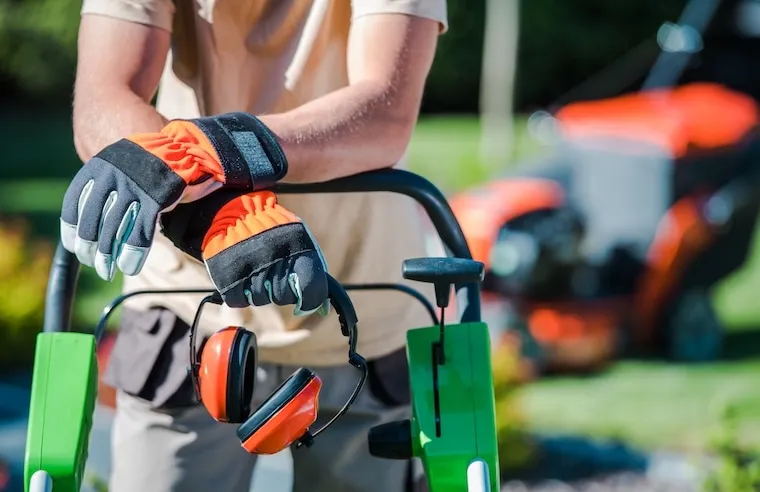
The single line that separates a professional from a weekend mower is homeowner-grade versus commercial-grade. Box-store equipment is engineered for someone who mows their own lawn 30 times a year. Run it eight hours a day, five days a week, and it dies in weeks. A commercial string trimmer (Stihl FS 91, Echo SRM-2620) costs $300 to $400 versus $150 for a homeowner model, but it has a real crankshaft, a rebuildable engine, and a dealer who stocks parts. You will buy the box unit three times before the commercial one wears out.
The same holds for mowers, blowers, and hedge trimmers. Commercial is not a luxury tier, it is the tier built to be run all day and serviced instead of thrown away. The one place to save is by buying that commercial grade used: a two-year-old Exmark off a retiring operator can be half price with plenty of life left. Buying the right first kit is covered in the best way to start, and how it fits the whole launch is in the step-by-step guide.
Buy in the order the jobs demand it
You do not need an aerator, a dethatcher, a stump grinder, and a skid steer to start. Buy the tools your booked work actually requires, and add specialty gear the week a job pays for it. The core mow-and-maintain kit comes first; everything else waits for demand. Here is the rough sequence and what each tier costs.
| Tier | Gear | Ballpark cost | Buy it when |
|---|---|---|---|
| Core (day one) | Commercial push mower or used ZTR, string trimmer, edger, backpack blower | $2,000 to $6,000 | Before your first paid route |
| Growth | 48 to 60 inch zero-turn (Scag, Exmark, Ferris), enclosed trailer | $10,000 to $22,000 | Route is full, push-mowing is the bottleneck |
| Seasonal add-ons | Aerator, dethatcher, overseeder, leaf loader | $1,500 to $6,000 | You have booked aeration/cleanup jobs to pay for it |
| Hardscape / install | Skid steer or compact track loader, plate compactor, mini-ex | $30,000 to $75,000+ | You are selling install jobs, not maintenance |
Rent before you buy on anything you use a few times a year. A stump grinder or a skid steer rents for $150 to $400 a day; owning one that sits idle 340 days a year is dead capital. The how much you need to start breakdown puts real dollars on each tier.
Judge cost per hour, not the price tag
Sticker price is the wrong number. What matters is cost per operating hour over the machine’s life, and by that math the expensive commercial mower is usually cheaper. A $4,000 box-store riding mower might last 500 to 800 commercial hours before it is scrap. A $10,000 commercial zero-turn runs 2,500 to 3,500 hours with maintenance and holds resale value. Spread the price over the hours and the “cheap” mower costs you more per hour and strands you mid-season when it dies.
Fuel burn compounds it. A well-maintained commercial engine sips less per acre than a strained homeowner unit working past its design, and over a season of 40-hour weeks that difference is real money. Buy for the hours, maintain on schedule, and the equipment line on your P&L shrinks even as the sticker prices rise.
Buy your equipment outright
- No monthly payment, so a slow week or a rained-out month does not threaten a note.
- You own the asset free and clear and can sell it or trade up whenever you want.
- Section 179 lets you deduct the full purchase in year one, a real tax cut when profit is high.
Buy your equipment outright
- A $12k zero-turn drains cash you might need for payroll, fuel, or a truck repair.
- You carry all the depreciation and repair risk instead of spreading it over payments.
- Buying too much iron early ties up capital before the route exists to run it hard.
The call: buy core equipment outright because it earns every day and the Section 179 deduction rewards it, but finance or lease the big-ticket install machines you cannot yet keep busy, so a $60k skid steer is not a payment with nothing to dig.
Getting found is the part that decides everything
The best-equipped crew in town still starves if the phone does not ring. Two free moves matter this week: fully build out your Google Business Profile with real photos of your gear and finished work, and text every satisfied client a review link the day the job wraps. Reviews of “clean, fast, professional” crews pull calls that flyers never will, and the local promotion checklist lays out the sequence.
The paid part is where it gets serious. A landscaping website is not a brochure; it loads fast on a phone, ranks for “landscaping near me,” puts reviews and a click-to-call button up top, and turns a searching homeowner into a booked estimate. The gap between a site that converts and a pretty one that sits there is invisible until you compare the lead numbers. That is our work. To have the site handled instead of guessed at, get a free video walkthrough. For ads and SEO, see our services. If you have the idea but not the plan yet, start at expntl.com.
Frequently asked questions
What equipment do I actually need to start a landscaping business?
For a maintenance route, the core kit is a commercial mower (a used 21-inch push mower or a used zero-turn), a commercial string trimmer, a stick edger, and a backpack blower, roughly $2,000 to $6,000. Add a trailer to haul it. Everything beyond that, aerators, dethatchers, skid steers, should wait until you have booked the jobs that require them, and should often be rented rather than owned.
Should I buy commercial or homeowner-grade equipment?
Commercial, without exception, for anything you run daily. Homeowner gear is built for 30 hours of use a year, not 40 hours a week, and it fails fast under professional use. Commercial equipment costs two to four times more up front but lasts many times longer, is built to be repaired instead of replaced, and comes with a dealer who keeps you running during peak season. Buy that commercial grade used if cash is tight.
Is it better to buy or lease landscaping equipment?
Buy core equipment outright when you can: it earns every day, holds value, and qualifies for the Section 179 deduction. Finance or lease the big install machines, skid steers, compact loaders, that you cannot yet keep busy, so you are not carrying a large payment against idle iron. And rent anything you use only a handful of times a year rather than owning a machine that sits.
What is Section 179 and how does it help?
Section 179 of the tax code lets you deduct the full purchase price of qualifying equipment in the year you buy and put it in service, rather than depreciating it over several years. For 2024 the limit is $1,220,000, far above what a starting landscaper spends. Buy a $10,000 mower in a profitable year and you can write off the whole $10,000 against that year’s income. Confirm the current-year rules with your accountant.
Where should I buy landscaping equipment?
Buy from a local commercial dealer for Stihl, Echo, Scag, Exmark, and Ferris rather than a big-box store, because the dealer relationship gets you parts, service, and loaners when a machine goes down mid-season. For used commercial gear, watch dealer trade-ins, retiring operators, and auctions. The 10% you might save buying homeowner gear online evaporates the first time you lose a day to a failure with no parts on the shelf.
Your move
Reading this does not book a job.
The owners who pull ahead are the ones who change one thing this week. If you want that one thing to be a website that sells and ads that put it in front of the right people, we build and run both for you.
Straight answer on whether we can help, usually the same day.