Your HVAC Website Isn't Broken. It's Just Not Selling: 7 Signs It's Quietly Costing You Jobs
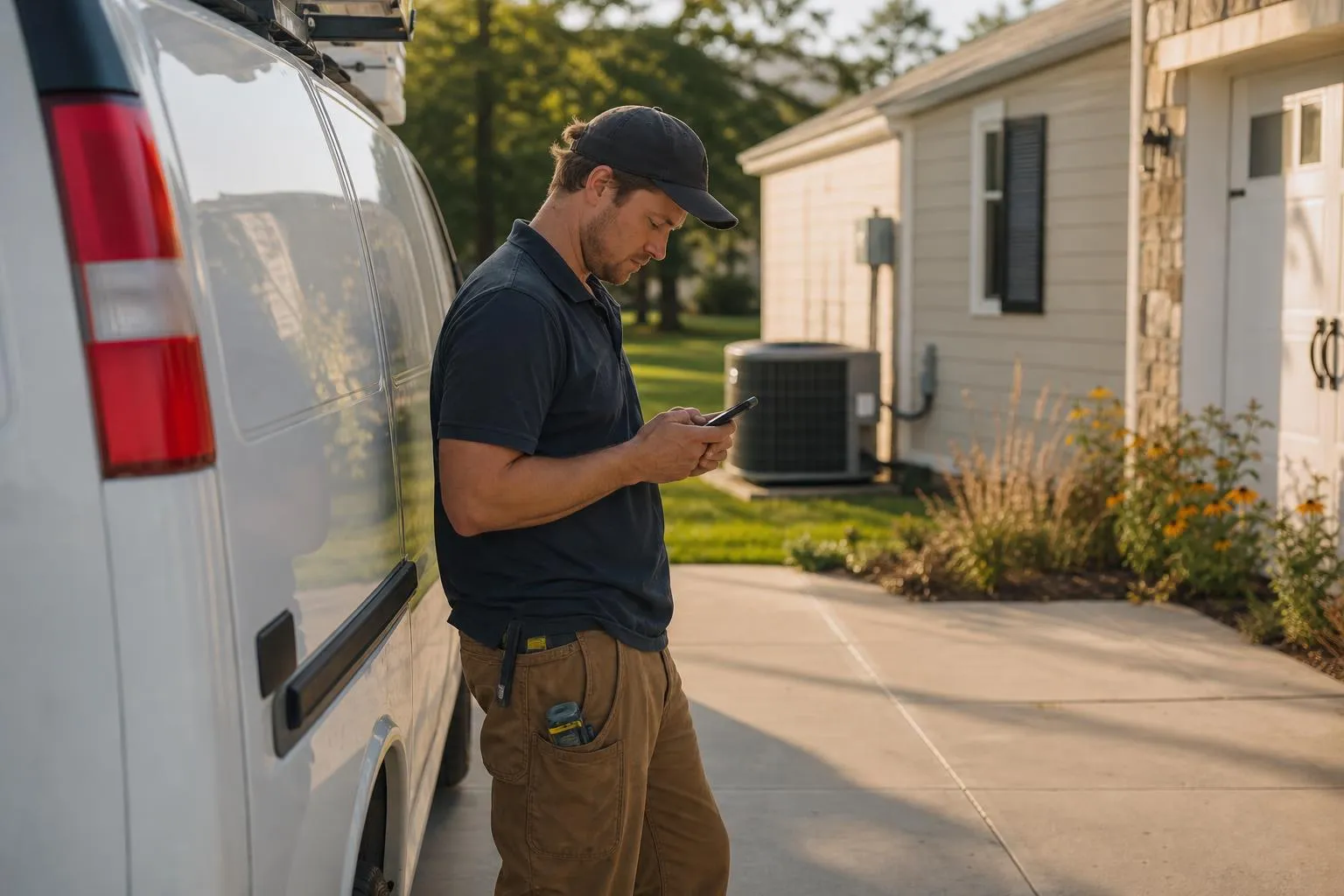
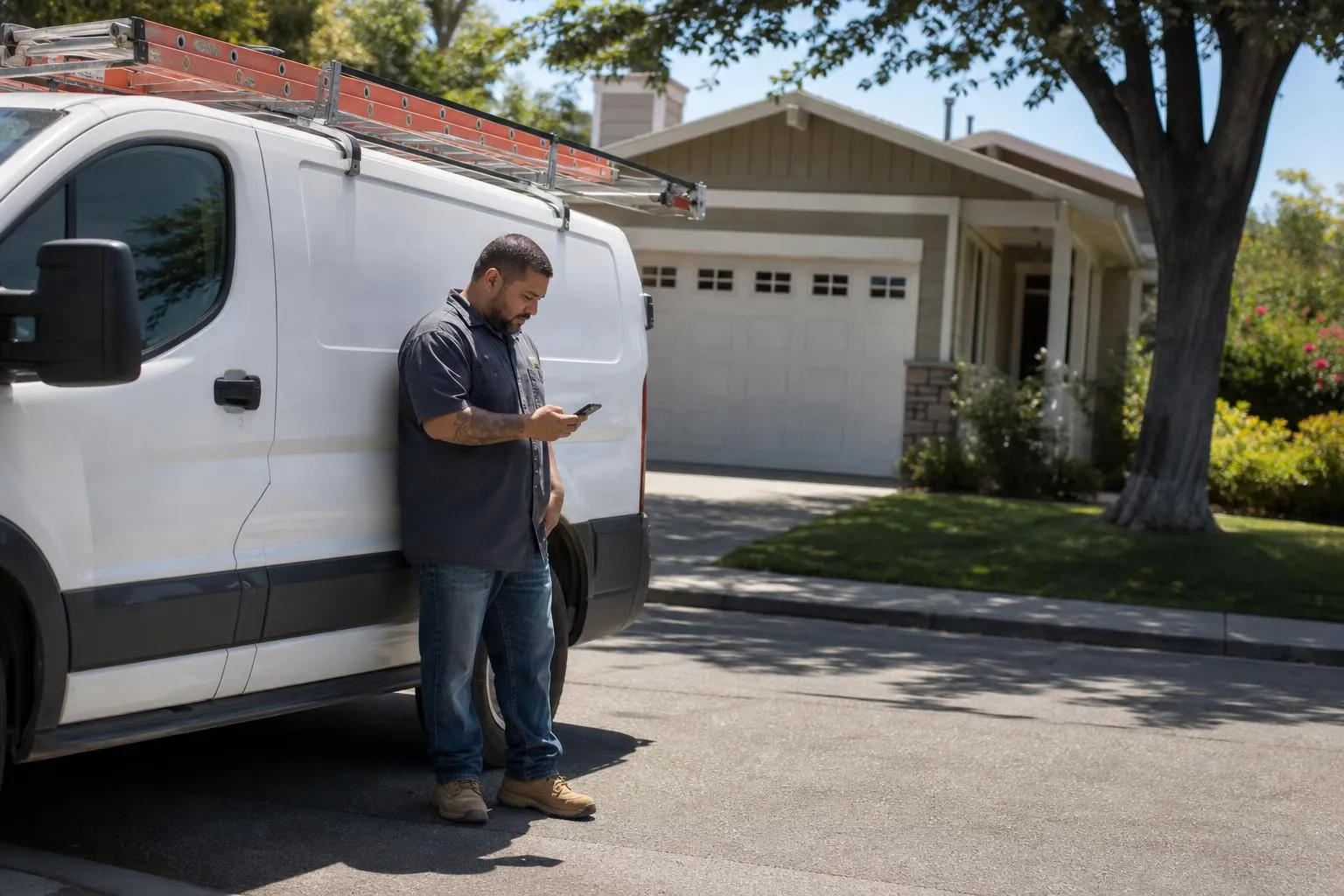
Picture the tech you’d hire if you could design one from scratch: on call every hour of every day, never asks for overtime, never takes a sick day, works Christmas morning if a furnace dies. Now ask that hire how many jobs it booked you last month.
That hire is your website. It’s live around the clock, it’s the first impression most homeowners get of your company, and if you’re honest, you can’t say when it last put a job on the board. Nothing about it looks broken. The phone number is there. That’s the trap: a website that quietly fails never forces the conversation. Here are seven signs yours already has.
The lead column in your head is empty
Sign 1: you can’t recall a single stranger who called from the website. Not a neighbor, not a repeat maintenance customer, an actual stranger who found you on Google and dialed. Go back a full month. If that column comes up blank, the site isn’t generating business, it’s just sitting there.
Sign 2: you text photos instead of sending people to the site. When a homeowner asks what a new system looks like or what your reviews say, do you text them a screenshot because you know the site won’t close it for you? Routing customers around your own website is a confession.
You’re running on referrals alone
Sign 3: every install and every service call traces back to word of mouth. Referrals are the highest-trust lead you’ll ever get, and they should stay central to how you grow. But when they’re the only engine, your growth rate is capped by how fast neighbors talk to each other. A working site is the second engine, pulling in the homeowners nobody referred you to. Getting customers for an HVAC business maps the full channel mix, but organic search is the one that never clocks out.
Nobody can call you fast
Sign 4: a homeowner can’t reach you in five seconds. Open your site the way someone standing in a 90-degree living room would. Time it from landing to a ringing phone. If the number isn’t a tappable link, if it’s buried below three scrolls, if there’s a five-field contact form standing in the way, you’re losing people at every step.
The average visitor gives your page about 8.6 seconds before deciding. A homeowner watching the thermostat climb doesn’t read your About page; they tap the first number that looks legitimate.
The site hasn’t moved since it launched
Sign 5: the copyright year in the footer is stale and the photos are older than your newest truck. A frozen site tells a homeowner one of two things: this company is too swamped to bother, or it might not exist anymore. Neither one gets you a callback.
Sign 6: there’s no proof anywhere on the page. A homeowner can’t judge refrigerant pressure or brazing quality, so they judge what’s visible: reviews, real install photos, your license number, a face they recognize from the truck. Roughly 88% of people trust online reviews as much as a friend’s recommendation, so the company showing 60 real Google reviews wins the click over the one showing a stock photo of a smiling actor in a hard hat, which signals the opposite: nothing real to show.
Your customers have never seen the version they see
Sign 7: almost every one of your customers meets your site on a phone, usually mid-crisis. Most emergency HVAC searches happen on mobile, from a hot kitchen or a cold hallway at 6am. If you’ve only ever pulled the site up on your office monitor, you and your customers are looking at two different products, and theirs decides whether the phone rings. That split deserves its own read: how mobile customers actually use HVAC websites.
Phones are also where a slow build gets caught out. The data doesn’t leave room for interpretation:
| Page load time | What it does to your visitors |
|---|---|
| Over 3 seconds | 53% of mobile visitors abandon the page (Google) |
| Each extra second from 0 to 5 | Conversions drop about 4.4% per second (Portent) |
| 1 second slips to 5 seconds | Bounce probability rises 90% (Google) |
| 1 second slips to 10 seconds | Bounce probability rises 123% (Google) |
If your homepage needs 7 seconds to render on a driveway with two bars of signal, most of the people searching in that moment never see it long enough to call. How a slow HVAC website loses jobs breaks down exactly where those seconds disappear.
What an HVAC site that actually works does
None of this is an argument for a prettier homepage. Pretty isn’t the job. A working site does three things without exception: it ranks when locals search (the fight for the Google top 3 map pack), it earns trust in the first few seconds a stranger spends on it, and it makes calling the obvious next move on every page. That’s the entire spec. Testimonial carousels and paragraphs about “decades of comfort excellence” are furniture, not function.
So, patch the current site or rebuild it?
Patching the current site
- Cheapest option this week: a click-to-call number and fresh reviews can go live today
- Keeps your existing URL and whatever local ranking it has already earned
- No rebuild eating into the middle of your busy season
Patching the current site
- An old template caps your load speed no matter how much you trim
- The mobile layout is fixed in place, and mobile is where nearly every emergency call starts
- Every change still runs through whoever built the site, on their schedule, not yours
- You keep paying for hosting and maintenance on an asset that has never once generated a job
The gap between a brochure and a lead engine doesn’t show up in a screenshot, which is exactly why capable HVAC owners sit on quiet sites for years without noticing. It shows up in one place: how often the phone rings before you’ve even opened for the day. If two or more of these signs sounded familiar, take ten minutes and watch the free video walkthrough of a live HVAC site built to convert: click-to-call on every page, structured for “emergency AC repair” plus your city, done for you start to finish, live in 7 days, and you own it outright. Pricing is posted, no contracts required. Once the calls start, ongoing growth services can push the volume further.
Frequently asked questions
How do I know if my HVAC website is actually costing me jobs?
Count strangers, not page views. If you can’t name a single person in the last 30 days who found you through search and called, the site isn’t producing. Track your call log for two weeks and the pattern becomes obvious fast.
Can’t I keep growing on referrals and maintenance renewals?
Referrals and renewals should stay your foundation, but they only grow as fast as your existing customer base talks about you. Even referred homeowners quietly check your site before calling, and an abandoned-looking one costs you some of them anyway.
How much does an HVAC website that actually books jobs cost?
The Standard build is $2399£1,899 one-time, and the Growth package is $7500£5,900 one-time, pricing posted openly with no contracts. Launch takes 7 days, edits go live within 24 hours, and you own everything outright.
Should I patch my current site or replace it?
If the underlying bones are solid, add a tappable number, current photos, and real reviews this week. If it fails the 3-second phone test and every edit requires a developer, patching is just paying rent on a dead asset.
Next in this series: why the worse HVAC company across town keeps winning the jobs you deserve
Your move
Reading this does not book a job.
The owners who pull ahead are the ones who change one thing this week. If you want that one thing to be a website that sells and ads that put it in front of the right people, we build and run both for you.
Straight answer on whether we can help, usually the same day.