How to Promote HVAC Business on Instagram
Instagram is not a direct lead engine for HVAC. It’s a trust-builder. When a homeowner Googles your business name after seeing your van, your Instagram is the third or fourth tab they open. If it’s empty or polished-corporate, you lose. If it shows real techs doing real work, you close. Here’s how to run it without it becoming a second job.
What to Post and How Often
Two posts a week plus 2-3 Stories per workday is plenty. You’re not trying to go viral. You’re trying to look like a credible, active operator.
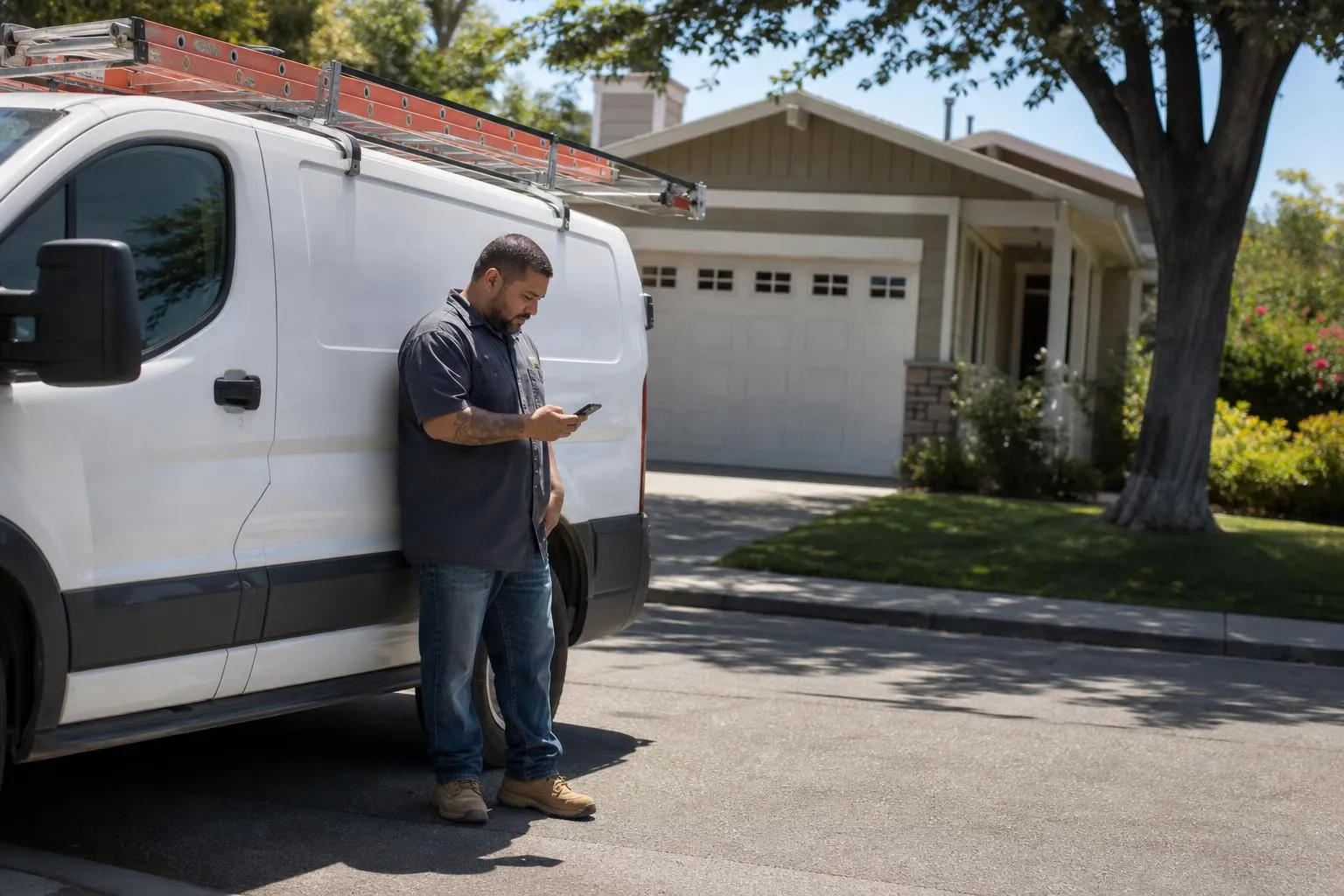
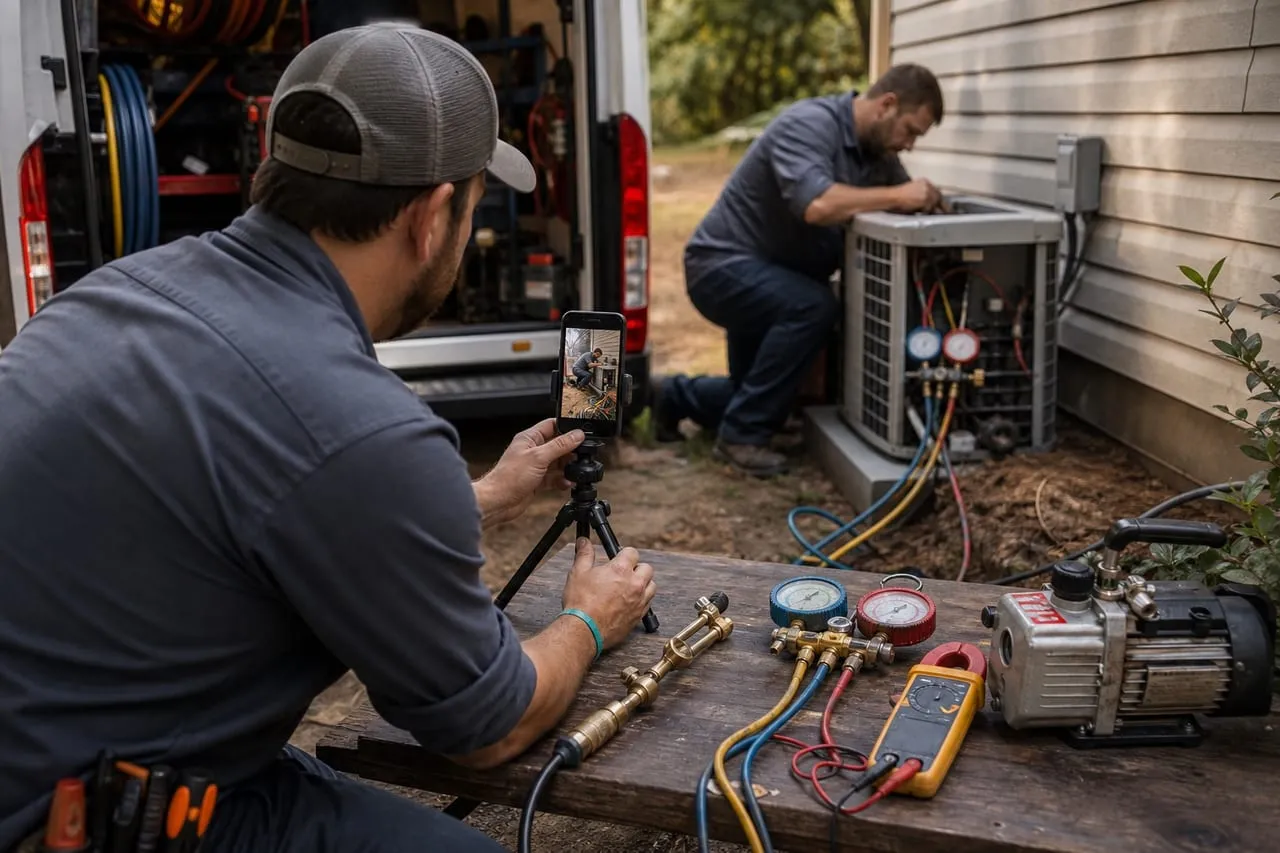
- Tech-on-job photos. Capacitor swap, condenser install, brazing close-up. Caption is 2-3 sentences with the neighborhood (“In the Riverside neighborhood today fixing a 14-year-old Carrier with a blown blower capacitor…”). 2-3x per week.
- Before/after replacement photos. Old rusted condenser next to brand new install. These get the highest saves and DMs.
- IAQ educational. What UV lights do, why your filter matters, ductwork dust. Short carousel posts (3-5 slides).
- Customer review screenshots as Stories. Daily. Take a screenshot of a fresh Google review, post to Story, tag a location. Cumulative trust signal.
- Tech profile posts. Introduce each tech with a short bio. Customers like knowing who’s coming to their house.
- Reels. 15-30 second clips of completed jobs, quick diagnostic tips. Reels get 3-8x the reach of static posts.
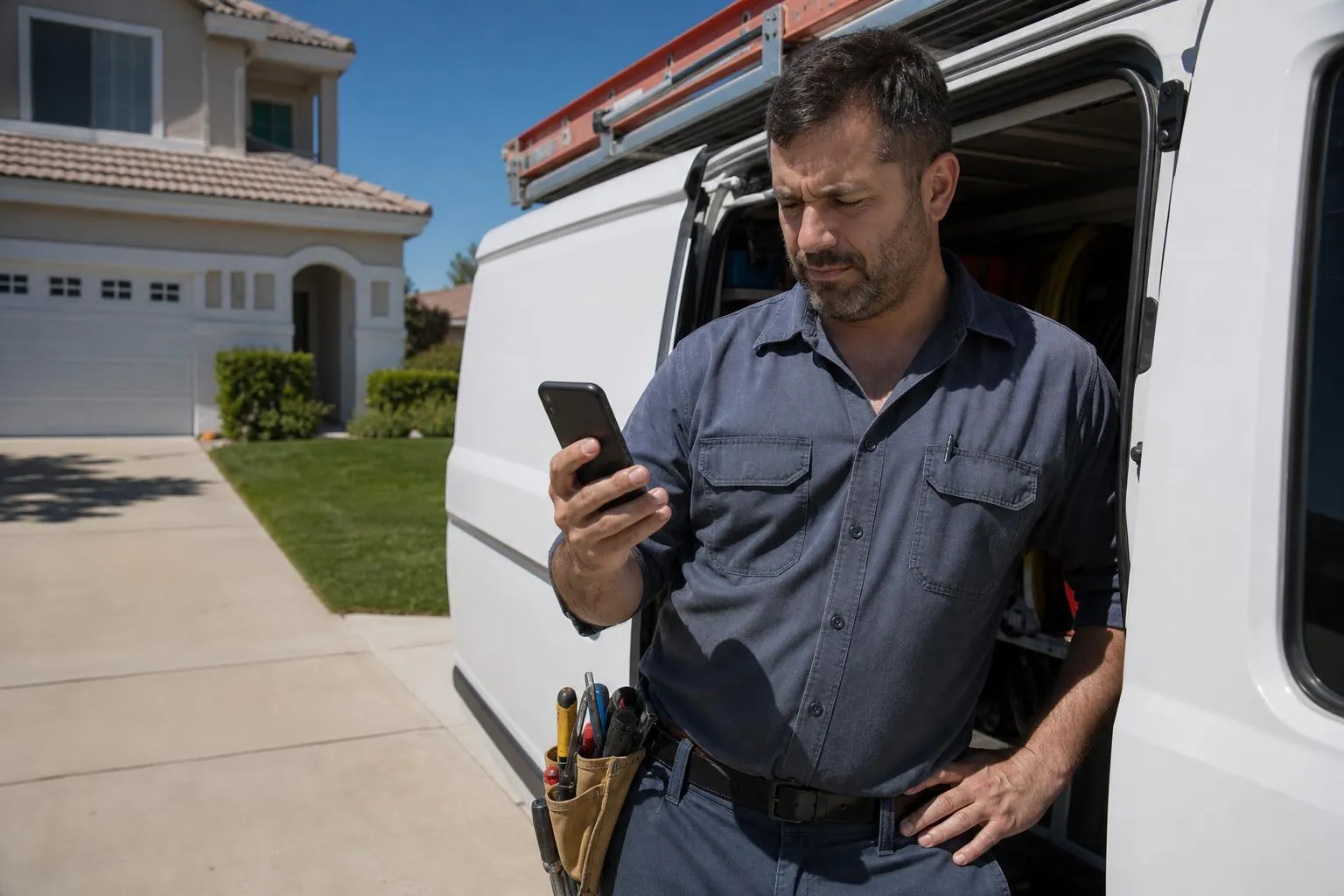
Stay away from generic stock photos, motivational quotes over sunset backgrounds, and memes. Real techs, real work, real customers.
The reason before/after replacement photos outperform everything else is that they match the highest-stakes moment of the customer journey. A homeowner staring at a $9,000-14,000 replacement quote is the one visitor who will study your grid for ten minutes, looking for evidence of clean linesets, level pads, and tidy electrical whips. Service customers skim; replacement customers study. Build the grid for the studier, because that is where the money decision gets made.
Name the neighborhood in every caption, not just the city. “Replaced a 16-year-old condenser in Maple Grove this morning” does two jobs at once: it reads as proof that you actually work where the viewer lives, and over a year it turns your grid into a map of your service area that no competitor ad can fake. Generic captions build neither.
Post With the Season, Not Against It
HVAC demand is a sine wave. Cooling peaks June through August, heating peaks December through February, and the spring and fall shoulders are when maintenance plans get sold. Your content calendar should run four to six weeks ahead of that curve, because homeowners act on what they saw weeks ago. A “book your tune-up” post in July is wasted; the July customer needed to see it in May.
| Season | Content focus | Business goal |
|---|---|---|
| Mar-May | Tune-up walkthroughs, “is your AC ready” checks, plan pitches | Sell maintenance plans before the cooling peak |
| Jun-Aug | Same-day save stories, install before/afters, emergency response | Capture peak cooling demand, harvest reviews |
| Sep-Nov | Furnace checkups, CO safety, plan renewal pushes | Sell plans before the heating peak |
| Dec-Feb | No-heat rescue stories, heat pump content, frozen line prevention | Capture peak heating demand |
Build the Profile Right
Your bio is your billboard. Most HVAC Instagram bios are wasted on emojis and tag lines instead of the things that drive a phone call.
- Profile photo. Your logo, square crop, high contrast. Not a photo of your van (gets lost at 80x80px).
- Name field. “[Business Name] | HVAC [City]” so you show in search.
- Bio. Three lines: what you do, who you serve, what to do next. Example: “Heating + cooling service in [City]. Licensed + insured. Tap below to schedule.”
- Link in bio. To your website’s services page or a Linktree with phone, schedule, reviews, services.
- Highlights. Pinned Stories organized by category: “Reviews”, “AC Installs”, “Furnace Work”, “Maintenance Plans”, “Meet the Team”.
- Switch to Business account. Gets you insights, contact buttons (call, email, directions), and Shopping if you ever sell IAQ products.
For the website link, send to your services page or a specific landing page, not your homepage. See how to make a website.
Use Instagram for Recruiting + Brand, Not Cold Leads
Instagram’s real ROI for HVAC is twofold: building trust before the call, and recruiting techs. Don’t expect 30 DMs a week asking for service quotes.
- Trust before the call. Homeowners who see your Instagram before calling close 1.4x more often. It’s a closer’s tool, not a finder’s tool.
- Recruiting. Young techs (22-32) live on Instagram. Posting tech-friendly content (good wages, good benefits, fun crew culture) builds a passive applicant pipeline. By year 3 this matters more than ads.
- Local hashtags. #[CityName]HVAC, #[CityName]Contractors, #SmallBusiness[City]. National hashtags (#HVAC, #HVACLife) attract other techs, not customers.
- Geotag every post. Location tag your city. Instagram surfaces locally-tagged posts to local users.
- Cross-post to Stories from your TikTok and Facebook. Don’t create three separate content calendars. See how to promote on TikTok.
One repurposing rule keeps the workload sane: film long explainers once for YouTube, where content compounds for years, then clip the best 30 seconds into a Reel. See the YouTube strategy for what to film.
Instagram alone produces 0.5-2 direct leads per month for a typical HVAC shop. Don’t measure it that way. Measure it as a multiplier on your other channels’ close rate.
You will never get clean attribution on any of this, and chasing it wastes time. The proxies that tell you it is working: profile visits trending up in Insights, “saw you on Instagram” answers when you ask every caller how they found you, and recruiting DMs arriving without a job posting. Follower count is the one number to ignore; 300 local homeowners beat 5,000 techs from other states who found your brazing Reel.
Run It Yourself or Hire It Out?
For the first six months the answer is forced: you run it, because nobody else has access to the work, the customers, or the voice. The real decision arrives when posting starts slipping during busy weeks.
Owner-run: pros
- The voice is authentically yours, and both customers and recruits can tell
- Zero cash cost, and shooting fits the dead minutes between calls
- You learn which content drives calls before you delegate it
Owner-run: cons
- It is the first thing dropped during a June heat wave
- Caption writing and editing quietly eat your evenings in peak months
- Owners tend to over-polish; raw job photos outperform branded graphics
When you do hand it off, split the job in half. You and your techs keep shooting, because field photos are the asset nobody else can produce. The $400-900/mo content manager (or your office manager with five trained hours a week) takes editing, captions, scheduling, and DM triage. Shops that hand off the shooting end up with a stock-photo feed inside two months, and a stock-photo feed is worse than no feed, because it tells the studier you have something to hide.
Should you run Instagram ads yourself, or hand them off?
The organic grid on this page should stay in your hands, because nobody can fake your techs, your jobs, or your voice, and that is exactly what makes the account work. Paid social is a different animal: if you decide to put money behind Meta lead-gen, the build and the tracking are where DIY quietly stops paying. We wrote an honest breakdown of when to keep the ads in-house and when to hand them off: 6 signs it’s time to hand off your Facebook and Instagram ads. Keep shooting the content either way. When you want the paid side handled, request a free proposal.
Frequently asked questions
How many followers do I need before Instagram pays off?
It’s not followers, it’s posting consistency. 200 local followers who actually live in your service area beat 5,000 random ones. Focus on local follower growth via geotags and engaging with local business accounts.
Should I run Instagram ads?
Mostly no, for direct HVAC lead-gen. Facebook lead-gen ads (which can also show on Instagram via Meta Ads Manager) work better. Use Instagram for organic content. See how to advertise on Facebook.
Who should run the Instagram?
You for the first 6 months, until you’ve built a content rhythm. Then a part-time content person or your office manager can take over with you sending photos from the field. Budget $400-$900/mo for a content manager at scale.
What’s the realistic time commitment?
15-25 minutes per day max. Snap 2-4 photos and a Reel during your day, batch-edit in the evening, schedule via Buffer or Later. Don’t over-engineer it. See the full channel mix and how to promote locally.
Your move
Reading this does not book a job.
The owners who pull ahead are the ones who change one thing this week. If you want that one thing to be a website that sells and ads that put it in front of the right people, we build and run both for you.
Straight answer on whether we can help, usually the same day.