How to start a home cleaning business
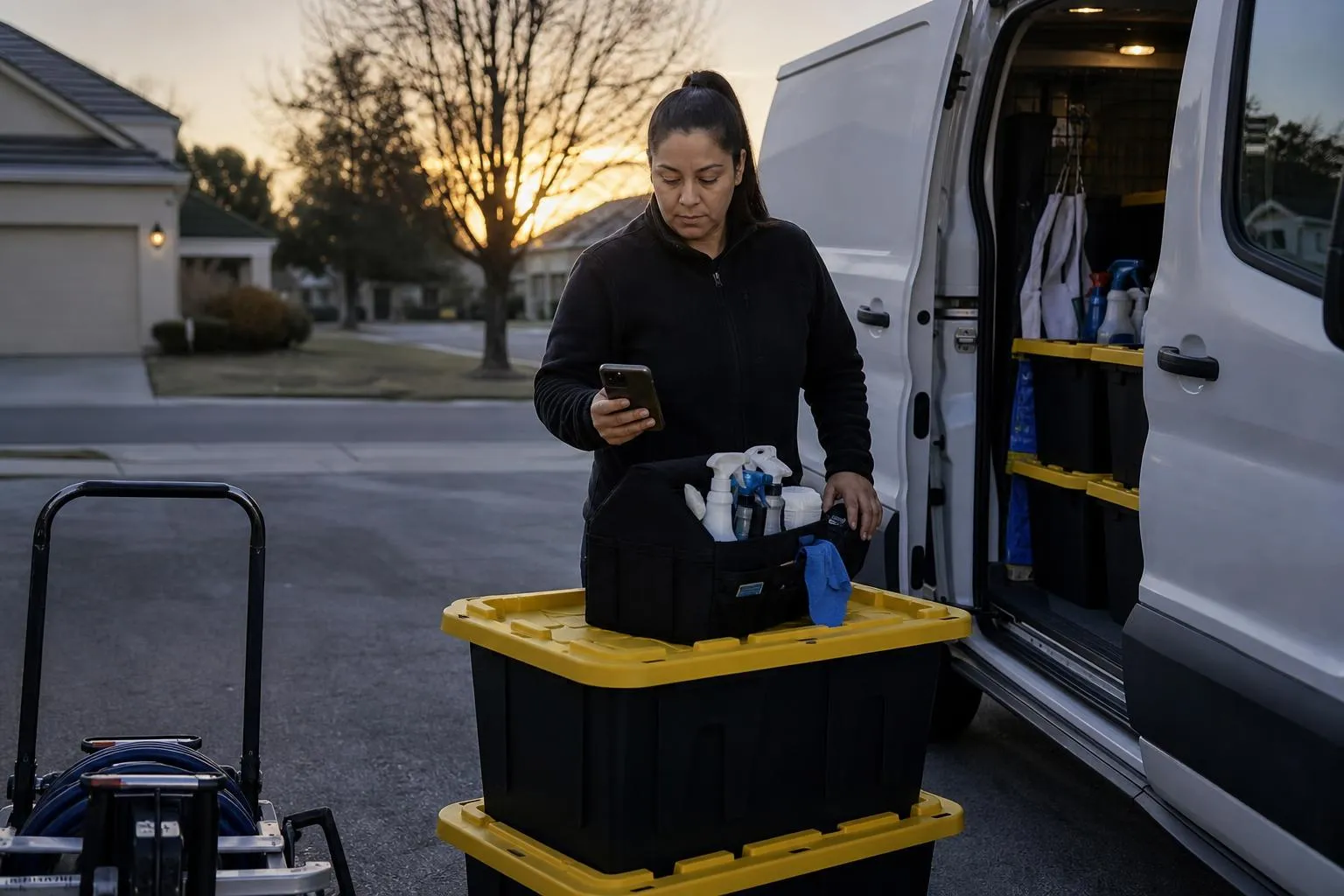
Most people who start a home cleaning business get in for the wrong number and quit over the right one. The startup cost is small, often $300 to $2,000 to be legal and working solo. The number that ends most of these businesses is the one nobody budgets for: the cost of being found, and the gap between a clean today and the invoice that pays in three weeks. Get the boring setup right and this is one of the highest-margin trades you can launch from a closet and a car.
What a home cleaning business actually costs to start
Home cleaning has the lowest entry cost of almost any service trade because you supply the labor, the customer supplies the building, and the gear fits in a trunk. A solo cleaner with a good vacuum, a caddy of supplies, and a magnet sign on the car can be legal and earning for under $1,000. The spread above that floor comes from three optional decisions: a wrapped vehicle, a second pair of hands, and how much you spend to get found. Here is a realistic line-by-line for a one-to-two-person residential start, in typical ranges rather than quotes.
| Cost item | Lean solo start | Established start |
|---|---|---|
| Business license + registration | $50 to $300 | $300 to $800 |
| General liability insurance | $400 to $700 | $1,000 to $2,000 |
| Janitorial / surety bond | $100 to $300 | $300 to $700 |
| Equipment (vacuum, mops, caddy) | $200 to $600 | $600 to $1,500 |
| Supplies + chemicals (first month) | $100 to $300 | $300 to $600 |
| Marketing (first month) | $200 to $800 | $1,500 to $5,000 |
| Cash reserve (1 to 2 months) | $1,000 to $2,500 | $4,000 to $10,000 |
Add $0 to $200 a month for scheduling and invoicing software on top. The lean column lands around $2,000 to $5,000 with a reserve, and what barely moves is the legal and insurance floor: the homeowner letting a stranger into an empty house wants the same proof of insurance whether you are scrappy or polished. Price that floor first and treat everything above it as speed you are buying. For the launch order, see start a cleaning business step by step.
Licensing, insurance, and the home-business gotcha
In most states, house cleaning is not a licensed skill the way plumbing or electrical work is, so there is no exam before your first paid job. A business license or registration from your city or county, usually with a DBA or LLC filing, runs $50 to $300 for a solo start. General liability runs $400 to $700 a year for a solo cleaner. A janitorial or surety bond, which protects the client against theft, runs $100 to $300 a year and is often what gets you hired over the uninsured cleaner down the street. The home-based angle then adds a wrinkle most new owners miss.
An LLC separates your personal assets from business liability, well worth the modest cost the day a client claims you ruined a $3,000 floor. The moment you hire your first W-2 employee, workers compensation becomes mandatory in nearly every state. The full entity, EIN, and registration walkthrough is in set up and register a cleaning business.
Pricing and the profit math that decides year one
Home cleaning is a healthy-margin trade when you price like a business, not an hourly employee. The most common new-owner mistake is quoting a rate that only covers time on site, forgetting supplies, drive time, fuel, insurance, and the unpaid hours spent quoting and scheduling. Residential typically bills $25 to $50 per cleaner-hour, or a flat $100 to $200 per standard home, with deep cleans and move-outs at one and a half to two times that. Your billed rate needs to be two to three times what you pay a cleaner per hour, because that multiple covers overhead and still leaves profit. Net margins commonly land between 10% and 30%, and the gap is mostly pricing discipline and job mix.
Recurring weekly and biweekly homes are the whole game: they smooth cash flow and cost nothing to re-sell. Build the calendar around them and treat one-offs as gap-fillers that audition for a standing slot. See how much to charge and how much profit a cleaning business can make.
Your first hire: W-2 or subcontractor
The first time you are too booked to clean alone, you hit the decision that quietly defines your margins and your legal exposure.
W-2 employee vs 1099 subcontractor
- You control schedules, methods, and quality, which is the entire product in home cleaning
- You can train to a checklist so a client’s home looks the same no matter who shows up
- Workers comp on payroll protects you when a cleaner is hurt in a client’s home
W-2 employee vs 1099 subcontractor
- Payroll taxes and workers comp add roughly 10% to 15% on top of the wage
- More admin: onboarding, scheduling, and compliance you skipped as a solo
- A fixed cost that does not pause for a slow week the way a subcontractor invoice does
The decision rule is W-2, not 1099, the moment you direct the work: if you set the hours, supply the products, and dictate how the home gets cleaned, the IRS and your state almost certainly call that an employee, and misclassifying to dodge payroll taxes is the most expensive mistake in this trade. True subcontracting only fits arms-length specialty work, like a carpet crew you do not supervise. The hiring playbook is in hire and train staff for a cleaning business.
Operations: the systems that decide your margin
The gap between a cleaner who nets $40,000 and one who nets $80,000 is rarely skill with a mop. It is two systems. The first is route density: drive time is the silent margin-killer, so cluster clients by neighborhood and book one area per day. A cleaner who drives 15 minutes between homes instead of 45 banks an extra billable hour, which is why your radius should stay tight at the start, usually 20 to 30 minutes from home base. See ideal locations for a cleaning business. The second is a per-room checklist: once you hire, it is your actual product, the only thing that makes an employee’s clean look like yours, and it turns training into a one-day job. For the gear behind it, see buying equipment and supplies for a cleaning business.
Getting found: the cost most home cleaners forget
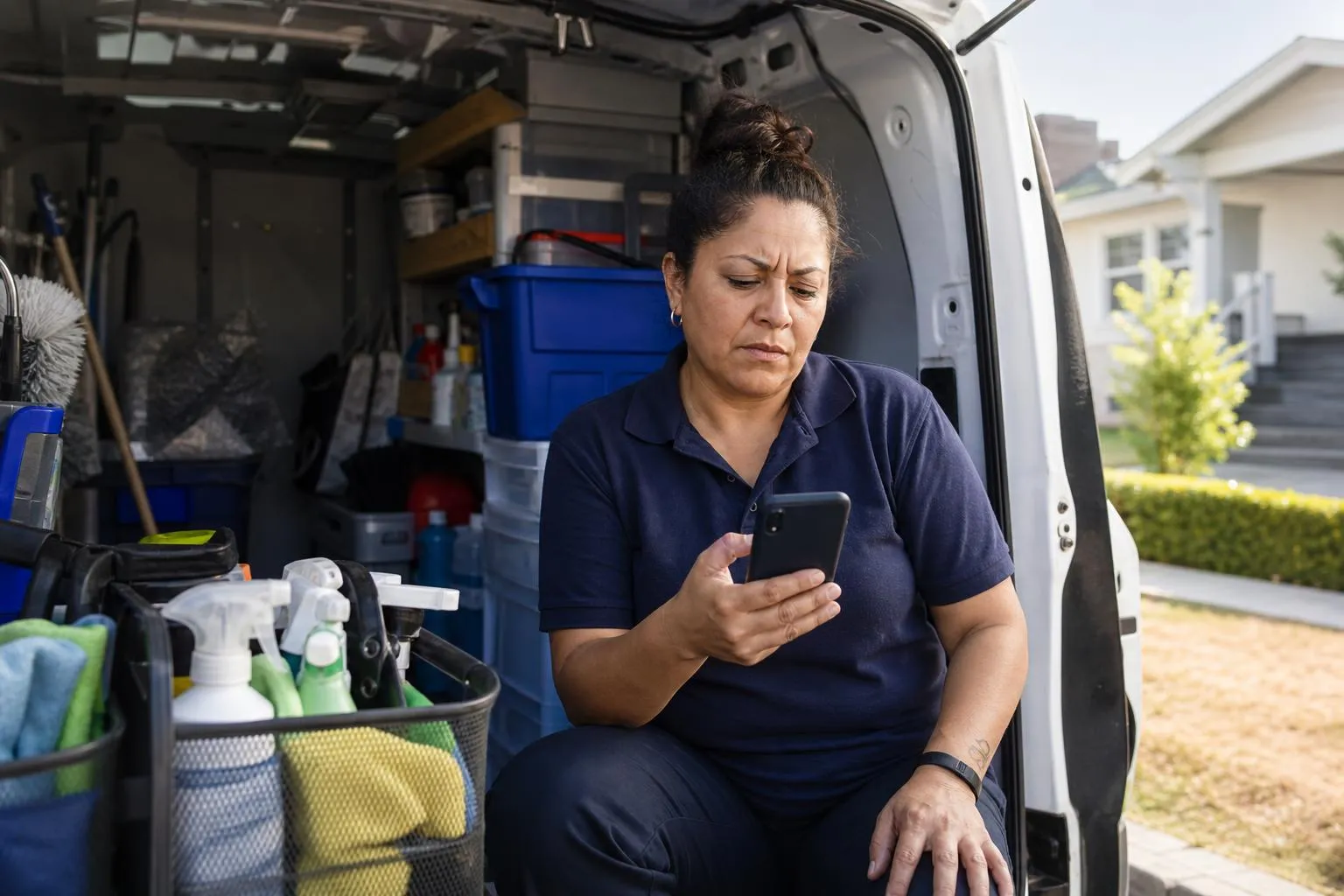
Here is where new home cleaners quietly bleed money. They spend the launch budget on a logo and a car wrap, then assume the phone rings on its own. It does not. A spotless reputation is invisible if the homeowner three streets over searches “house cleaning near me” and finds a competitor first.
But the channels that fill a recurring calendar are expensive and high-stakes to get wrong. A website that does not turn visitors into booked cleans is just a digital business card, and ads aimed at the wrong searches burn budget on tire-kickers while a sharper competitor pays less for better leads. Good here is specific and measurable: a site that loads in under three seconds on a phone, leads with the exact service the customer searched for, puts tap-to-call and instant-quote in the thumb zone, and shows insured, bonded, and reviewed trust signals above the fold. You never see the leads a weak page lost. You just see a thin calendar and blame the season.
This is the part we do so you can stay on the job. If you want a website engineered around turning hard-won traffic into booked recurring cleans, get a free video walkthrough. For the ads, SEO, and paid social that drive that traffic, see our services. And if you have not nailed down the plan for the whole business yet, start there first.
Frequently asked questions
Can I really start a home cleaning business for a few hundred dollars?
Yes, and this is one of the few trades where that is honestly true: solo in residential with a good vacuum, basic supplies, a business license, and liability insurance, you can be legal and working for $300 to $1,000. The catch is the low ceiling, so treat the first jobs as funding for the bond, a reserve, and a way to get found. For a no-budget path, see start a cleaning business with no money.
What is the single biggest startup expense for home cleaning?
For a home-based start it is almost always the first year of insurance and bonding, since the equipment is so cheap. Budget $500 to $1,000 for general liability plus a bond, versus $300 to $600 for your entire kit.
Do I need an LLC to clean houses?
You can legally start as a sole proprietor, but an LLC separates your personal assets from business liability for a modest cost, which matters the day a client claims you damaged an expensive floor. Most owners start as a sole proprietor or LLC and add an EIN when they hire. See set up and register a cleaning business.
How do I get my first clients without a marketing budget?
Start with the free, high-trust channels: a verified Google Business Profile, reviews from your first few jobs, and your own network, since people let a referred stranger into their home far faster than a cold one. The paid channels come once you have proof and a calendar to protect.
How much can a home cleaning business realistically make?
A disciplined solo cleaner nets $35,000 to $50,000 a year, and an owner who hires and systemizes can clear $75,000 to $150,000 or more as the crew grows. The lever is not hours, it is pricing, recurring clients, and route density. See how much profit a cleaning business can make.
Your move
Reading this does not book a job.
The owners who pull ahead are the ones who change one thing this week. If you want that one thing to be a website that sells and ads that put it in front of the right people, we build and run both for you.
Straight answer on whether we can help, usually the same day.