Start cleaning business with no money and for free
Cleaning is one of the few trades you can genuinely start this week with a near-empty bank account. The barrier is not capital, it is the order of operations: book the first paid job with gear you already own, then let that money buy the next thing. The owners who stall are the ones who spend $3,000 on a van wrap and a fancy backpack vacuum before they have a single client. Here is how to start a cleaning business with almost no money, and what to spend the first dollars on once they come in.
Start with the gear you have, not the gear you want
The fantasy starter kit (commercial backpack vacuum, color-coded microfiber system, a wrapped van) is a $3,000 trap for someone with no money. A residential cleaning kit you can actually start with costs $150 to $400, and half of it is consumables you rebuy from job income, not upfront capital.
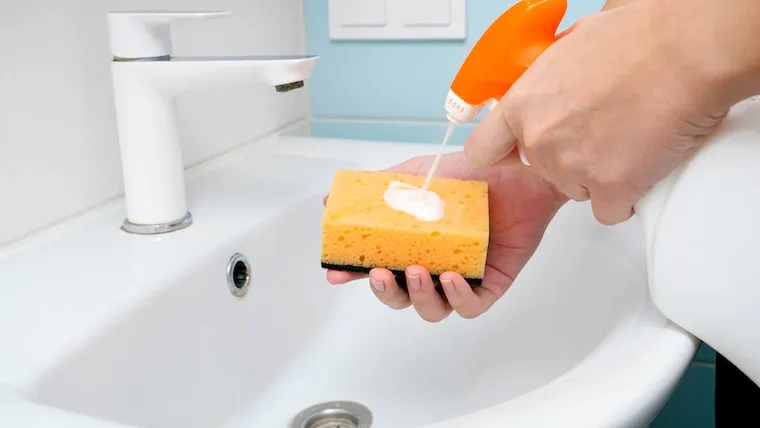
The real list for a solo house cleaner: a decent vacuum (the one in your closet is fine for the first month), a mop and bucket, a caddy, microfiber cloths in two or three colors so you are not wiping a toilet and a counter with the same rag, a few HDX or Lysol all-purpose cleaners, a glass cleaner, a bathroom cleaner with bleach, and nitrile gloves. That is a $120 to $200 run at Walmart or a restaurant-supply store, and you can put off the upgrades.
Borrowing genuinely works here, but be specific about what to borrow versus buy. Borrow the durable stuff (a relative’s shop vac, a pressure washer for the odd exterior job). Buy your own consumables and anything that touches a client’s bathroom, because showing up with a borrowed half-empty bottle reads as exactly the hobby operation you are trying not to be. For the full ramp from starter caddy to a stocked van, see buying equipment and supplies for a cleaning business.
Get legal cheaply: register, license, and the one insurance you can’t skip
You can be legal for well under $200, and skipping it is the expensive mistake, not the registration fee. Starting as a sole proprietor costs $0 to set up. You report income on a Schedule C and you are operating legally the moment you do paid work. A DBA (“doing business as”) to use a brand name instead of your legal name runs $10 to $100 at the county. A business license, where your city requires one for a cleaning service, is typically $50 to $150 a year. Many home-based solo cleaners need only the local license, not a state one, but rules vary by city, so make one call to your city or county clerk before you assume.
An LLC ($50 to $500 depending on state, plus annual fees in some states) buys liability separation. Most cleaners start as a sole proprietor and convert to an LLC once revenue is steady, which is a perfectly normal path. For the step-by-step paperwork, see set up and register your cleaning business.
The non-negotiable is insurance. A general liability policy runs roughly $40 to $70 a month for a solo cleaner, and it exists for the day you knock a TV off a stand or a client’s dog bolts out a door you left open. If you ever hold a client’s house key or use their alarm code, add a janitorial bond ($100 to $300 a year). Property managers and offices will ask for proof of both before they let you in the door, so this is also a sales tool, not just protection.
Price for profit on day one, not for “cheapest in town”
The instinct with no money is to be the cheap option. It is the single fastest way to burn out, because cleaning is physical labor and there is a hard ceiling on hours you can work. You do not want to be fully booked and still broke.
Price off labor hours, not vibes. Solo residential cleaners realistically need $35 to $55 per labor hour to cover supplies, gas, insurance, self-employment tax, and actually pay themselves. Translate that into the quoting model clients expect. A standard clean of a typical 3-bed house takes one person 2 to 3.5 hours, which lands around $120 to $180 flat. Deep cleans and move-out jobs run 1.5x to 2x that. New customers understand a flat price; you keep the hourly math private to check you are not underwater.
For the deeper pricing models (per-room, per-square-foot, recurring discounts), see how much to charge for cleaning and setting the best prices.
Get the first clients for free, without giving the work away
Your first 5 to 10 jobs should come from people who already trust you, and the move everyone botches is “free.” A free clean teaches a friend your work is worth nothing and attracts people who will never pay. Trade the early jobs for something instead: a Google review and two referrals. That is the asset you actually need.
Where free leads genuinely come from when you are starting:
- Tell every person you know, specifically, that you are taking 5 launch clients. Specific asks get referrals; “let me know if you need cleaning” gets nothing.
- Post before-and-after photos in local Facebook community and neighborhood groups (free, and homeowners actually look).
- Partner with realtors and property managers who need reliable move-out and turnover cleans on short notice. One good property manager can be a steady contract. See how to find cleaning contracts.
- Ask every satisfied client for a Google review the day you finish, while they are standing in a clean house.
You have a real decision to make here on those launch jobs:
Discount the launch jobs for reviews
- A 30 to 50% intro discount fills your first week fast, so you build momentum and a portfolio in days, not months.
- Discounted clients who you over-deliver for become your most enthusiastic referrers.
- A handful of recent 5-star Google reviews is worth more than the $200 to $400 in discounts it costs to earn them.
Discount the launch jobs for reviews
- Discount-hunters often never convert to full price and quietly expect the deal forever.
- Cap it: more than 5 to 10 discounted jobs and you have built a cheap business, not a launched one.
- A discount with no string attached (no review, no referral, no path to full price) is just lost money.
The decision rule is trade, not discount: give the intro price only in exchange for a review or a referral, and stop at 10 jobs.
Reinvest the first profits in the one thing that compounds
Once jobs are coming, the question becomes where the first reinvested dollars go. Word of mouth and free social posts get you to maybe 10 or 15 regular clients. Past that, growth gets capped by how many people you personally know, and the next tier of customers, the ones searching “house cleaning near me” at 9pm, judge you in about three seconds by whether you look like a real business online.
Claim the free pieces yourself first: set up a Google Business Profile (free), keep it filled with photos and recent reviews, and stay active in local groups. Those are genuinely free and genuinely matter.
But the website is where most cleaning startups quietly lose the customers their free marketing worked to attract. A site that books recurring cleans is not the same as a site that merely exists. Good means: it loads in under three seconds on a phone, it states your service area and starting price above the fold, it shows real reviews, and it lets someone book or request a quote in one or two taps without calling. That sounds simple and is genuinely hard to get right, because the gap between a pretty site and one that converts is the difference between traffic and booked income, and a startup gets one shot at a first impression. This is the high-stakes piece to get handled rather than improvise. If you want a site engineered to turn hard-won traffic into booked recurring cleans, get a cleaning business website and get a free video walkthrough.
When the bottleneck shifts from “I need a site” to “I need more people finding me” through Google Ads, SEO, or paid social, that is its own discipline with real money on the line, and the wrong setup quietly burns your reinvested profit. See our services rather than guessing your way through ad spend. And if you have the drive but have not nailed down the plan for the whole business yet, start there first. For the broader growth path once you are booked solid, see how to grow a cleaning business.
Frequently asked questions
Can you really start a cleaning business with no money?
Close to it. Sole-proprietor registration is $0, a basic supply kit is $150 or less, and you can buy the rest job-by-job from your first payments. The only thing you should pay for before earning is general liability insurance at $40 to $70 a month, because going uninsured is the one mistake that can actually end the business.
How do I get my first cleaning clients for free?
Make a specific ask to everyone you know that you are taking five launch clients, post before-and-after photos in local Facebook and neighborhood groups, and partner with a realtor or property manager who needs turnover cleans. Then trade those early jobs for Google reviews and referrals rather than just discounting them. Reviews and referrals are the free engine that keeps producing after the favors run out.
Should I register as an LLC or a sole proprietor when starting broke?
Start as a sole proprietor if cash is the constraint. It is free, it is legal the moment you do paid work, and most cleaners convert to an LLC ($50 to $500) once revenue is steady and the liability separation is worth the cost. Carry general liability insurance either way, since the business structure protects your assets but does not pay for a broken countertop.
What should I charge when I’m just starting?
Price so your effective rate is at least $35 to $55 per labor hour, which usually means a flat $120 to $180 for a standard 3-bed clean and 1.5x to 2x that for deep or move-out work. Quote the flat price to clients and keep the hourly math private to confirm you are not losing money. Competing on being the cheapest is the fastest route to being fully booked and still broke.
Where should the first profits go?
Replace the borrowed and worn-out gear first, then put money into how customers find and judge you online. Claim the free Google Business Profile yourself, then invest in a website that actually books jobs, since that is the piece that compounds and the place most startups leak the customers their free marketing earned.
Your move
Reading this does not book a job.
The owners who pull ahead are the ones who change one thing this week. If you want that one thing to be a website that sells and ads that put it in front of the right people, we build and run both for you.
Straight answer on whether we can help, usually the same day.