Buying Equipment and Supplies for cleaning business
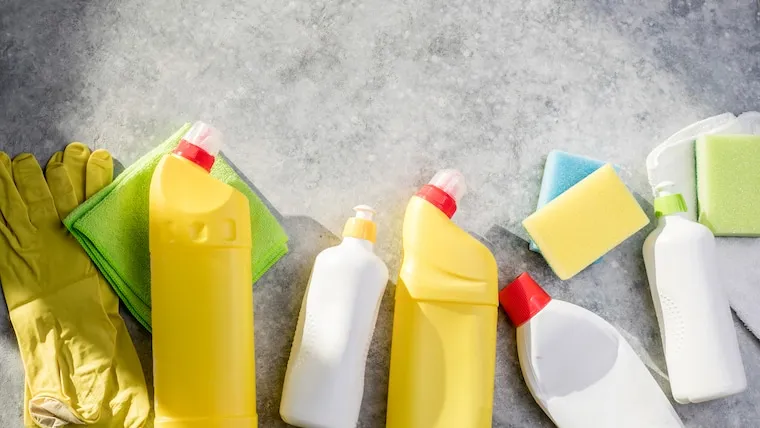
Your van is your store, your closet, and your most expensive mistake waiting to happen. Most new cleaners overspend on the first gear haul, buy the wrong vacuum twice, and tie up cash in supplies that sit in a garage. A solo residential starter kit runs $300 to $800, not the $3,000 the catalogs want to sell you. Here is what to buy, what to skip, what it costs, and how the math changes the day you hire.
Build the right kit for the work you actually book
The most common money mistake in this trade is buying for the business you imagine instead of the one you have. A new house cleaner does not need a $4,000 truck-mount extractor. Match the kit to the contracts you can sign in your first 90 days, and let the gear earn the next purchase.
A commercial backpack vacuum (Pro-Team, Sanitaire, or similar) at $250 to $450 is the one piece worth paying for: it cleans 20 to 40% faster per square foot than a consumer upright and saves your back. Add a microfiber system (flat mop frame plus 20 to 40 pads at $2 to $4 each), color-coded cloths, a two-sided bucket, and starter chemicals, and that $300 to $800 kit handles 90% of residential work. Costs climb fast once you specialize.
| Service type | Core gear | Typical kit cost | Replace or refill cadence |
|---|---|---|---|
| Residential / house cleaning | Backpack vacuum, microfiber, caddy, chemicals | $300 to $800 | Vacuum every 2 to 4 years |
| Office / janitorial | Commercial vac, floor machine, cart, restroom kit | $1,500 to $4,000 | Pads and liners weekly |
| Carpet cleaning | Portable or truck-mount extractor, wands, chems | $3,000 to $15,000+ | Solution per job |
| Pressure / exterior | Gas washer 3,000+ PSI, surface cleaner, hoses | $1,200 to $6,000 | Pump service yearly |
If carpet or exterior work is the goal, study the gear-heavy paths first: start a carpet cleaning business and start a pressure washing business live or die on equipment selection.
The vacuum decision: buy vs rent the big gear
Consumables and hand tools you always buy. The real decision is on the expensive machines, and the right move depends on how often the job that needs them recurs.
Buy the heavy machine
- Rental fees of $80 to $150 a day add up; a $1,200 machine pays for itself in 8 to 15 uses.
- You control quality and scheduling, so you never lose a job because the rental yard is out.
- The asset is yours to depreciate and resell later for 30 to 50% of cost.
Buy the heavy machine
- $1,200 to $15,000 of cash or a lease payment leaves before the work is booked.
- Idle equipment still costs you storage plus pump service of $100 to $300 a year.
- Buy too early and you own a depreciating machine for a service you rarely sell.
The decision rule is buy on frequency, not on excitement: rent until a machine is booked 10-plus times a year, then buy. Until then the rental yard is your equipment budget, and you bill the day rate straight through to the client.
Where to buy without overpaying
A 15% difference on consumables you reorder weekly is real money by year-end, so use each source for what it is good at. National distributors built for this trade (a local janitorial supplier, Uline, or a regional Imperial Dade-type house) win on consumables: their case pricing on liners, gloves, and microfiber undercuts retail, and many open a net-30 account once you have invoice history. Use a warehouse club for paper goods and Amazon only for machines and odd parts, not the staples you reorder at a 10 to 25% markup.
Two habits save the most. Buy chemicals as concentrate: a $20 gallon that dilutes 1:64 replaces dozens of ready-to-use bottles and cuts per-clean chemical cost under a dollar. And buy refurbished on the expensive machines, where a factory-reconditioned vacuum or extractor runs 30 to 50% below new with a real warranty, though only on things with a motor and a serial number, never on mops.
Don’t skip the gear that keeps you legal and insured
The catalogs sell you vacuums. They do not warn you about the paperwork your insurer and OSHA care about, where a single bad incident erases a season of profit. Cleaning chemicals are regulated, and the realities below switch on the moment you store concentrate or send a crew into a commercial site.
The cheap protective equipment is non-negotiable too: chemical-rated gloves, splash goggles, slip-resistant shoes, and N95 masks for dusty jobs. That $50 to $150 line item protects the only asset you cannot replace. Get the entity, licensing, and insurance basics squared away in set up and register a cleaning business before you spend a dollar on a mop.
Scale the kit when you hire, not before
The day you put a second cleaner in a second house, the math changes, because a crew cannot work around a broken vacuum the way a solo cleaner can. That is why “buy two of every cheap thing and one of every expensive thing” becomes the rule, alongside identical color-coded caddies so any cleaner can run any route and you reorder one list in bulk. Staffing is covered in hire and train staff for a cleaning business, and route concentration in ideal locations for a cleaning business.
Here is the part the catalogs never tell you: once the kit is dialed in, the bottleneck stops being gear and becomes inquiries. No vacuum upgrade fixes an empty schedule. On the demand side, good is concrete: a site that loads in under three seconds, is tap-to-call, ranks for your town, and books cleans instead of just looking tidy. Most cleaning sites are brochures that quietly leak every visitor. That takes architecture, speed, copy, and conversion design, which is why we build it for you. If you want a site engineered to book cleans, see get a cleaning website. Get a free video walkthrough.
Paid acquisition works the same way. Google Ads, Facebook, and local service ads can fill a calendar fast or quietly burn $1,500 a month on clicks that never call, depending on how campaigns and landing pages are built. If you want lead generation handled by people who do it every day, that is what our services are for. And if you have an idea bigger than a single cleaning route, start at expntl.com.
Frequently asked questions
How much should I budget for equipment to start a cleaning business?
For a solo residential operation, $300 to $800 covers a commercial backpack vacuum, microfiber, a caddy, and starter chemicals. Janitorial runs $1,500 to $4,000 and carpet or truck-mount $3,000 to $15,000, so start lean and let booked jobs fund the next machine.
Should I buy or rent expensive machines like carpet extractors?
Rent at $80 to $150 a day, billed through to the client, until a machine is booked at least 10 times a year. Past that volume it pays for itself in roughly 8 to 15 uses.
What cleaning supplies do clients and insurers actually require?
Commercial and janitorial accounts usually require general liability insurance and often a janitorial bond before you start, plus a Safety Data Sheet on file for every chemical under OSHA’s Hazard Communication Standard. Skipping the insurance is what turns a small accident into a business-ending claim.
How often should I replace cleaning equipment?
Replace a commercial vacuum every 2 to 4 years and microfiber pads after 50 to 100 washes. Service extractor and pressure-washer pumps yearly, and retire any machine the moment a repair costs more than half its replacement price.
Your move
Reading this does not book a job.
The owners who pull ahead are the ones who change one thing this week. If you want that one thing to be a website that sells and ads that put it in front of the right people, we build and run both for you.
Straight answer on whether we can help, usually the same day.