How to start a pressure washing business
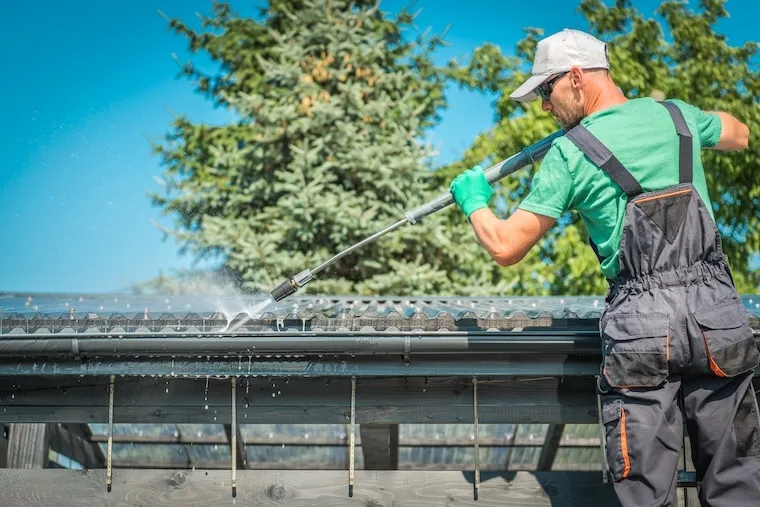
Pressure washing is one of the cheapest skilled trades to start and one of the easiest to do badly. A used 4 GPM machine, a surface cleaner, and a truck bed can get you to your first paid driveway in a weekend. But the gap between a guy with a washer and a business that clears six figures comes down to three things almost nobody gets right early: pricing by the surface instead of by the hour, carrying the insurance that actually covers water damage, and owning a way to get booked that does not depend on you posting on Facebook. This guide walks the real setup, with the numbers.
Pick your service mix before you buy gear
“Pressure washing” is four or five different businesses wearing the same hose. Flatwork (driveways, sidewalks, patios) is high volume and low skill. House soft washing uses low pressure and chemistry, not brute force, and pays better per hour. Commercial flatwork (gas stations, drive-thrus, dumpster pads) is recurring monthly revenue but needs water reclamation in many jurisdictions. Fleet and equipment washing is its own niche. Decide where you want to live before you spend a dollar, because the gear diverges fast.
Most owners start residential because the barrier is lowest and homeowners pay on the spot. The smart move is to lead with house washing and add flatwork, because soft washing a two-story house at $300 to $600 takes the same two hours as a driveway at $150 and the chemicals cost a few dollars. If you want the deeper version of the equipment decision, the equipment and supplies guide breaks it down by job type.
A related call is whether to specialize or stay broad. Going all-in on gutters or pools is a real option. See starting a gutter cleaning business if you want to compare.
What it actually costs to start
The honest range is $2,000 on the low end to $10,000 if you buy everything new. The single biggest lever is the machine. Box-store electric and 2 GPM gas units exist, but they clean at roughly half the speed of a contractor 4 GPM unit, and speed is your entire margin. Here is a realistic starter list for a solo residential operator.
| Item | Budget setup | Pro setup | Why it matters |
|---|---|---|---|
| Pressure washer | $400 used 4 GPM | $1,800 new 4 GPM gas | Determines jobs per day |
| Surface cleaner | $120 (15 in) | $400 (24 in) | Cuts flatwork time in half |
| Hoses, reels, wand, tips | $250 | $600 | Reach and uptime |
| Soft wash setup (pump, tank, mix) | $200 | $900 | Unlocks house washing |
| Chemicals (SH, surfactant, degreaser) | $150 | $400 | Recurring per-job cost |
| Water tank (if no on-site supply) | $0 (use spigot) | $700 (225 gal) | Commercial and rural jobs |
| Insurance (annual) | $500 | $1,200 | Non-negotiable, see below |
| Truck, trailer, signage | use existing | $3,500 | Looks and capacity |
Note that water is mostly free if you tap the customer’s spigot, which is normal practice. A buffer tank only becomes essential for commercial sites and houses with weak water pressure. Do not finance a trailer before you have steady bookings.
Register the business and get the right insurance
Setup is straightforward and cheap. Form an LLC to separate your personal assets from job-site risk, which costs $50 to $500 depending on your state plus a registered agent if you want one. Get an EIN from the IRS for free, open a business bank account, and register for sales tax if your state taxes services (many do for cleaning). A general business license at the city or county level usually runs $50 to $150 a year. The full walkthrough lives in set up and register your cleaning business.
The part that bites people is insurance. General liability for a pressure washing operation runs $500 to $1,500 a year, and the specific coverage you need is for water damage, overspray, and surface etching, because that is what actually goes wrong. Standard policies sometimes exclude water intrusion, so read the exclusions. Add workers comp the moment you hire anyone, even part-time, since it is legally required in most states and a single ladder fall can end an uninsured business.
Price by the surface, not the clock
Hourly pricing punishes you for getting faster. The whole game is to price by the square foot or by the job, then crush the time with better gear. Typical residential ranges: driveways and flatwork at $0.15 to $0.30 per sq ft, house soft washing at $0.20 to $0.40 per sq ft of wall, roof soft washing at $0.30 to $0.60. A solo operator who books two to four jobs a day clears $200 to $500 in revenue, and material cost on a soft wash is usually under $15.
Set a minimum service charge, typically $150 to $200, so a tiny job is still worth the drive and setup. Quote in person or from photos, never blind over the phone. As you add crew, the same math scales. The grow your cleaning business guide covers moving from solo to crews, and hiring and training staff covers the people side once you are past yourself.
Buy the gear vs rent it
- A new 4 GPM setup pays back in 5 to 6 weeks at normal booking, then every job after is pure margin on equipment.
- You can take same-day jobs and stack bookings without checking rental availability.
- Owning lets you dial in your chemical mix and tips, which is most of the quality difference.
Buy the gear vs rent it
- Upfront cash of $3,000 to $5,000 before you have proven demand.
- You eat repairs and downtime. A blown pump can cost $200 to $400 and a lost day.
- A specialty job once a quarter (a $5,000 lift for a tall commercial wall) is cheaper to rent than own.
The decision rule is buy the daily driver, rent the exception: own your core 4 GPM and soft wash rig, rent anything you touch less than once a month.
Getting booked is where most washers stall
You can be the best soft washer in town and still starve if nobody can find you or trust you before they call. This is the part owners consistently underestimate, and it is also the part that is genuinely hard and high-stakes to get wrong. Good here means a few concrete things: you show up on Google maps when someone searches “pressure washing near me,” you have a stack of real reviews, and you have a website that turns a click into a booked quote instead of a bounce. Get any of those wrong and you are paying for traffic that never converts, or worse, invisible while a competitor with worse work books your customers.
A few genuinely free moves you should do today: claim and fully fill out your Google Business Profile with your service area, hours, and photos, and ask every happy customer for a review by text the day you finish. Before-and-after photos are your single best sales asset, so shoot every job. Those two things alone put you ahead of half your local competition.
But the website and the ads are not a weekend DIY project, and treating them like one is how you burn your first marketing budget. A pressure washing site that actually converts needs fast load times, click-to-call, a quote form that works on a phone, and trust signals placed where they change the decision. We build exactly that. Get a free video walkthrough and see what a site built to book jobs looks like.
When it comes to actually buying traffic, Google Ads and paid social for a local service business are easy to spend money on and hard to make profitable. The targeting, the landing page match, the bid strategy, and the call tracking all have to line up, and getting one wrong quietly drains the budget. That is what we do for a living. If you want that handled instead of guessed at, start at our services. If you are earlier than that and just have an idea you want to pressure-test into a real plan, start at expntl.com.
Frequently asked questions
Do I need a license to start a pressure washing business?
In most areas you need a general business license at the city or county level, which is cheap, plus sales tax registration if your state taxes cleaning services. Some states or municipalities also require a contractor registration or a permit for water discharge into storm drains on commercial jobs. Check your state’s specific rules before quoting commercial work, since wastewater capture can be legally required.
How much can I realistically make in the first year?
A solo operator working steadily can gross $50,000 to $90,000 in year one, with materials and fuel taking only a small slice since the main cost is your time. Margins are high because consumables are cheap. The ceiling rises fast once you add a second crew and recurring commercial accounts, which is where the real money is.
Should I start with residential or commercial work?
Start residential. Homeowners pay immediately, jobs are smaller and forgiving, and you build a portfolio fast. Commercial pays recurring monthly revenue and is more stable, but it needs longer sales cycles, often net-30 invoicing, and sometimes water reclamation gear. Land a base of residential cash flow first, then pursue commercial contracts.
Is pressure washing or soft washing better for houses?
Soft washing, almost always. High pressure on siding, roofs, and painted surfaces causes damage and voids your insurance defense if a claim arises. Soft washing uses low pressure and a chemical mix to kill mold and algae, which is gentler and lasts longer. Use high pressure only on hard flatwork like concrete and brick.
How do I compete with the cheapest guy in town?
You do not race him to the bottom. Compete on trust signals, professionalism, and being easy to book: real reviews, clear photos, fast quotes, and a site that loads in a second. The cheapest operator usually has no insurance and no online presence, so positioning yourself as the reliable, insured, well-reviewed option lets you charge more. See tracking competitors to find where they are weak.
Your move
Reading this does not book a job.
The owners who pull ahead are the ones who change one thing this week. If you want that one thing to be a website that sells and ads that put it in front of the right people, we build and run both for you.
Straight answer on whether we can help, usually the same day.