How to make a logo cleaning business
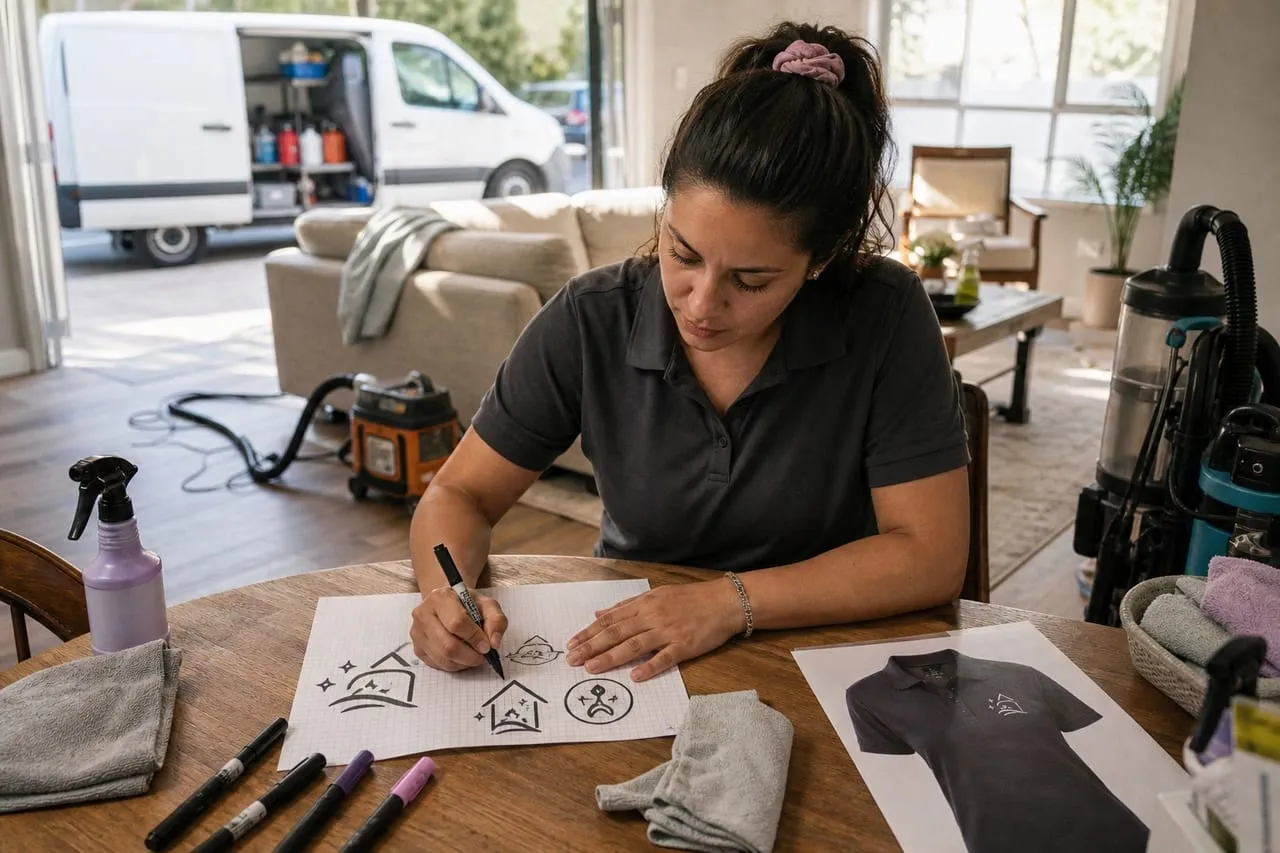
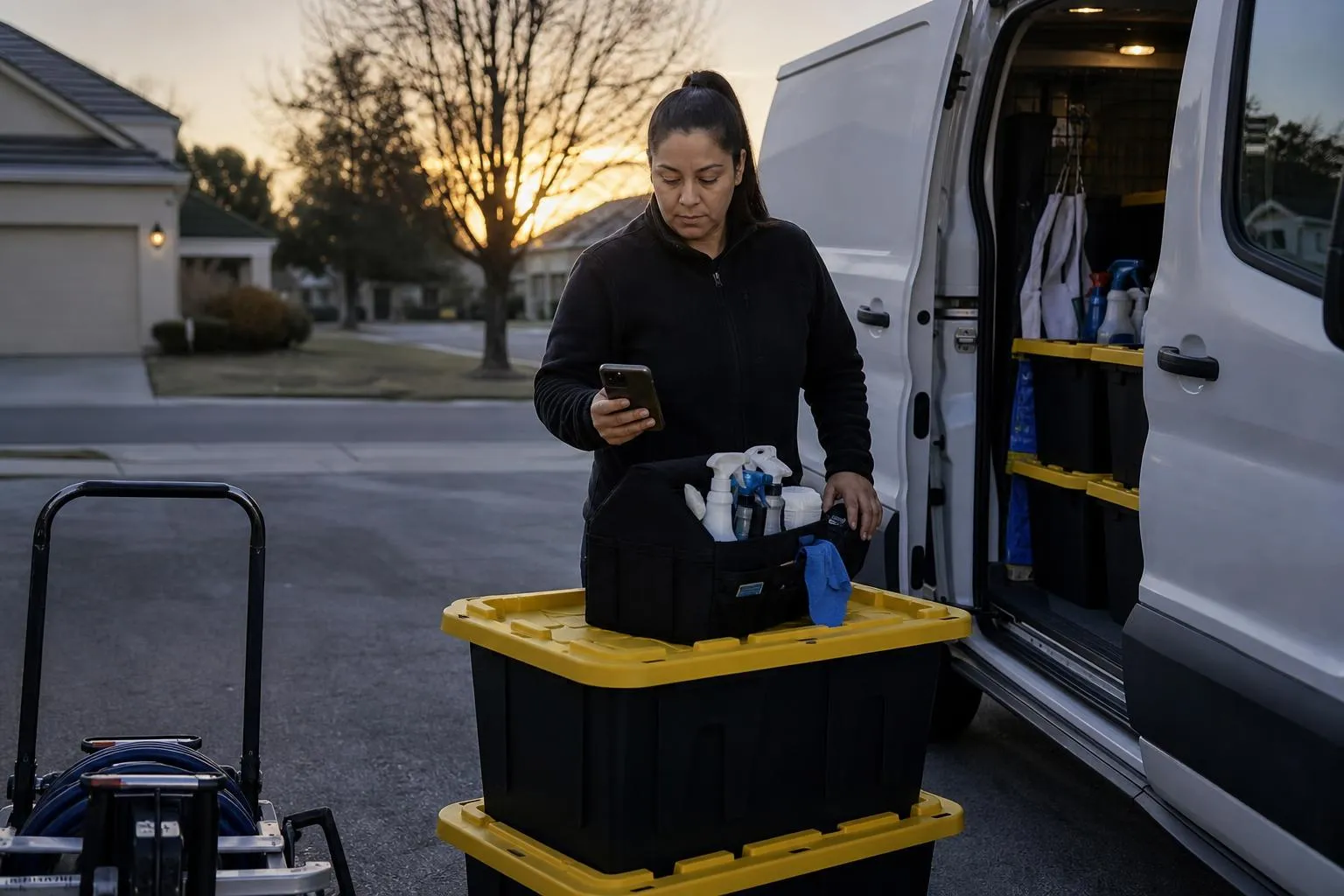
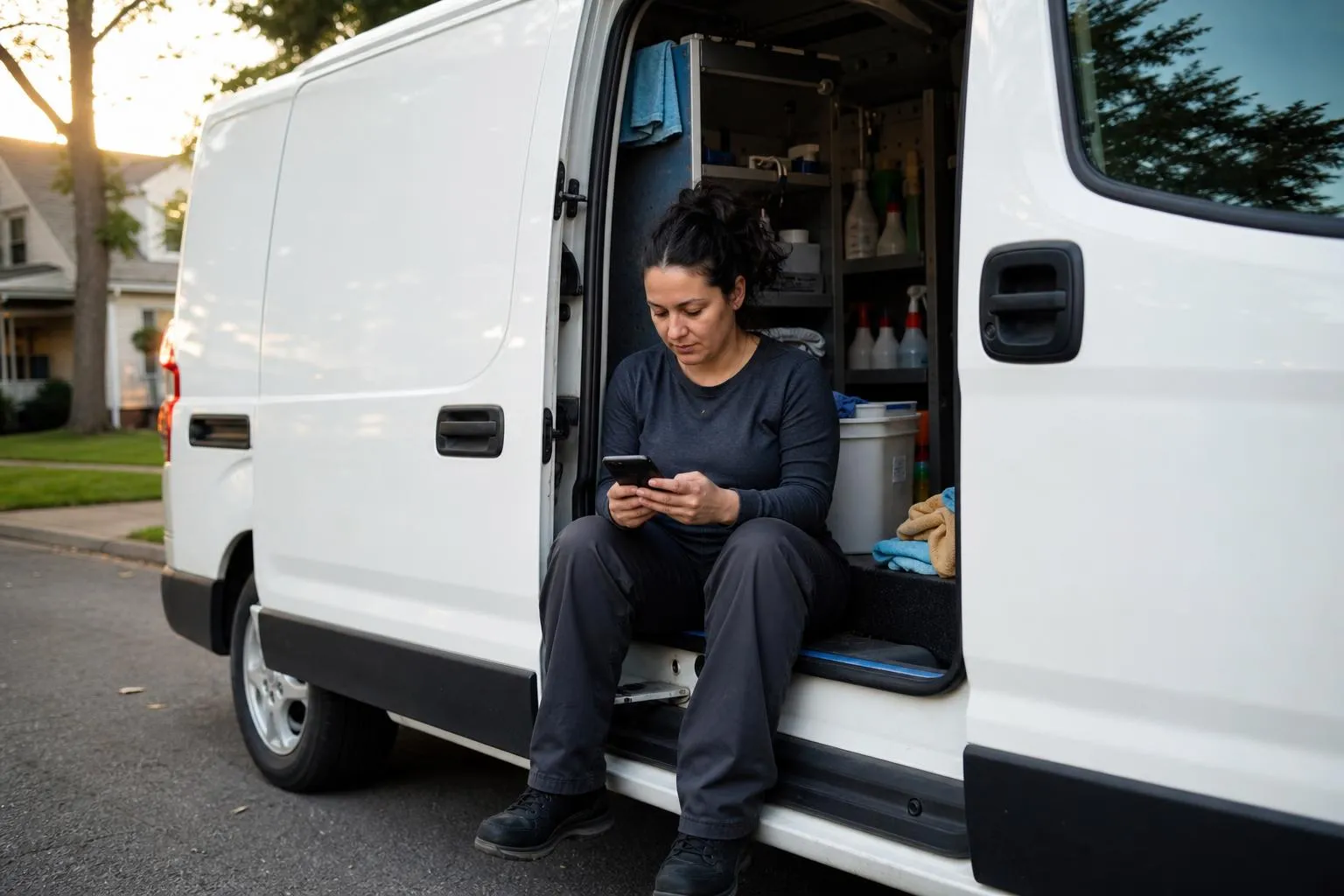
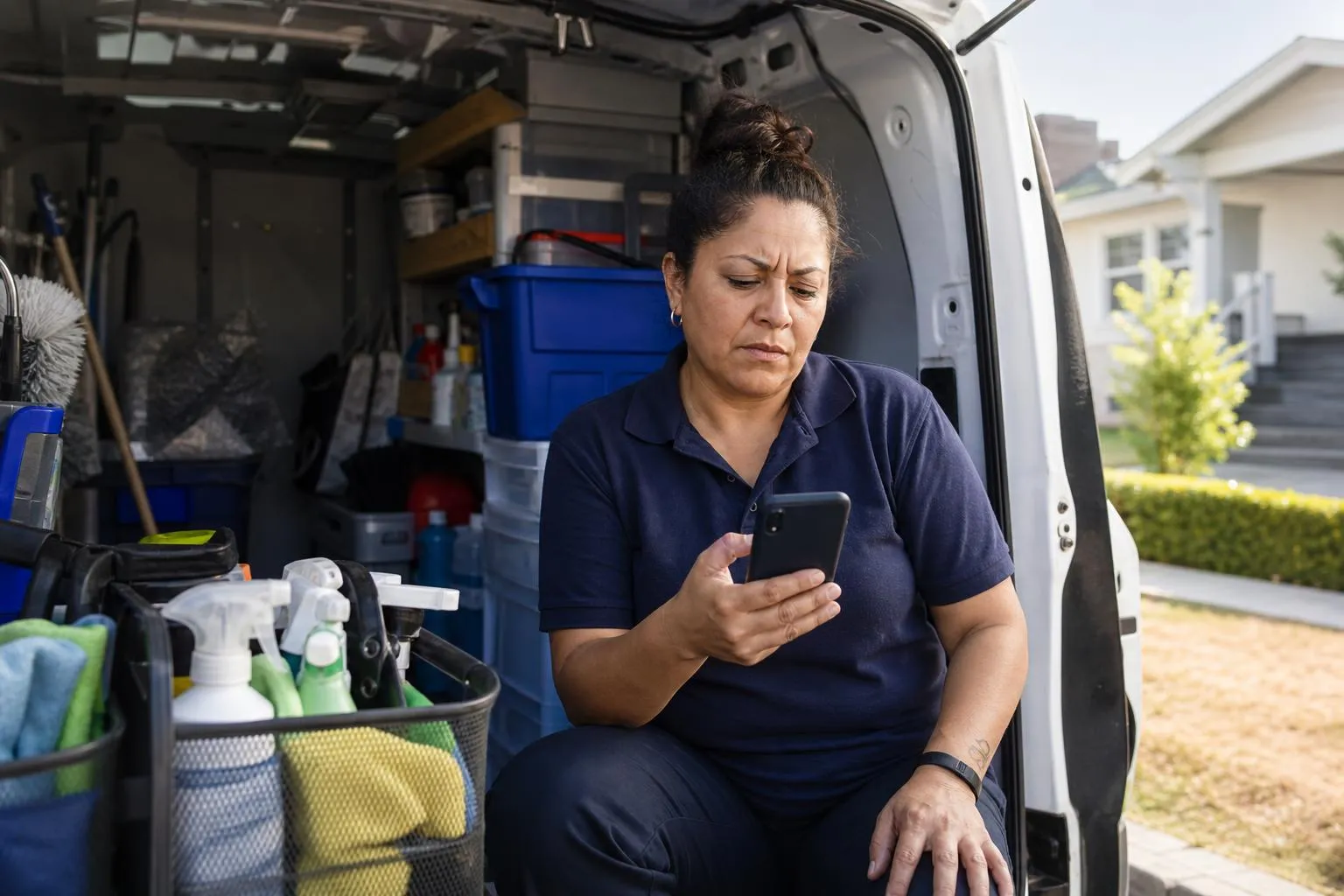
A cleaning logo does its real work in three places no design tutorial pictures: the side of a car idling in a client’s driveway, a polo shirt on the person you are about to let into your home, and a quote sitting in an inbox next to two competitors. The first has to read from across a cul-de-sac. The second has to make a stranger comfortable enough to hand over a key. Nail those and the font choices barely matter.
Design for the car and the polo, not the business card
Your logo’s natural habitat is a magnetic car sign, a yard sign at an active job, and an embroidered shirt, all glimpsed for under two seconds by someone not looking for you. The test is simple: stand where your car will park at a client’s house, and if you cannot read the business name and phone number from across the street, the design has failed. Three rules follow from that. One bold sans-serif for the name (Montserrat Bold, Poppins, or Roboto Bold all hold up; thin and script fonts smear at distance and clog an embroidery machine). Two or three high-contrast colors only, because mid-tones go muddy on a glossy car door and on a dark polo. And a phone number sized at least 60 to 70% the height of the name, since the number is the only part of the logo that actually rings.
The trade has a color reflex worth questioning. Cleaning brands default to green for “fresh” and blue for “clean water and trust,” which is exactly why both are crowded. If every maid service in your town runs a green-and-white car, the navy-and-coral or black-and-teal one is the brand a client can describe to a neighbor over the fence. Owning a color locally is free differentiation, so drive your market before you pick a palette.
Trust beats clever when you are handing over a key
Most cleaning is sold on trust, not personality. A homeowner is letting a stranger into an empty house, and a property manager is putting their reputation on whoever you send. In that frame nobody is charmed by a cartoon mascot holding a mop; they are screening for “will this person show up, do the work, and not walk off with something.” A gimmicky logo whispers fly-by-night. A clean, almost boring wordmark says “insured, here next year, does this for a living.”
What reads as established is restrained on purpose: a simple geometric mark only if you use one at all (a sparkle, a leaf, a clean droplet), solid color blocks instead of gradients, and a founding year once you have earned one. Plenty of strong cleaning brands are nothing but a bold name and a colored bar. That plain mark quietly lowers the odds, in the client’s head, that booking you is a mistake. It is the same trust you build with reviews and repeat clients and a tight day-to-day operation.
DIY tool or hire a designer: pick by the files, not the price
You do not need to spend much on a cleaning logo, but you do need to spend on the right thing: usable files, not a pretty thumbnail. The urge to save $400 with an AI logo maker is reasonable right up until the wrap shop or the uniform embroiderer asks for a vector file you never received.
DIY logo maker over a freelance designer
- Costs $0 to $100 versus $300 to $1,500, leaving cash for the car magnets and shirts that actually sell.
- Same-day turnaround, so you register, order uniforms, and book the signage this week instead of in two to three.
- Fine for a solo operator who needs a clean wordmark and a colored bar, not a bespoke custom mark.
DIY logo maker over a freelance designer
- Most export a low-res PNG, not the print-ready SVG a sign or embroidery shop needs, so you pay a second designer $150 to $300 to redraw it.
- No true ownership and no one-color or stitch-ready variant, so polos and door hangers come out wrong.
- Templated marks repeat across thousands of cleaners nationwide, so any local color edge quietly evaporates.
The decision rule is files, not price: use a DIY maker only if it hands you a true editable SVG plus a one-color version, and the moment a car wrap or embroidery is on the table, pay a freelancer. Here is how the three routes compare.
| Route | Cost | Turnaround | What you walk away with |
|---|---|---|---|
| AI / DIY tools (Looka, Canva) | $20 to $100 | Same day | Concepts, raster files, rarely true vectors |
| Contest site (99designs) | $300 to $1,300 | 1 to 2 weeks | Many options, mixed quality, final files |
| Freelance designer | $300 to $1,500 | 1 to 3 weeks | Final vectors, every format, a human who fixes it later |
For most cleaning businesses the freelance route is the sweet spot, because the deliverables outweigh the artwork. Insist in writing on all four files before you pay: an SVG (what wrap shops and sign printers need), a transparent PNG, a one-color version for embroidery and stamps, and a favicon crop. Against a startup budget that often runs $2,000 to $10,000 once you count equipment and supplies, licensing, and a liability and bonding policy, a four-figure logo is a rounding error.
Where a cleaning logo actually earns its money
A logo is a tool, not art for a wall. It only pays off on the surfaces clients see, roughly in order of return: car magnets or door lettering ($25 to $80 a pair for magnets, $300 to $800 for cut vinyl), yard signs at active jobs, embroidered polos and an ID badge so the person at the door matches the car, then invoices, door hangers, and last your website header and Google Business Profile. Recognition is a frequency game, and people generally need five to seven exposures before a brand sticks, so one decent logo used identically everywhere beats a great one split across three variants and an old version nobody updated.
The one place to stop DIY-ing: your website
Here is the honest line. Everything above you can drive yourself. The website is where that stops, because the logo’s job ends at “looks legit,” while the website’s job is to turn a “house cleaner near me” search into a booked, paying client. Those are different skills, and the second is where the money lives.
A cleaning site that works loads in under three seconds on a phone, keeps the number and the “get a quote” button tappable above the fold, ranks locally, and lets a stranger book or request a quote in one or two taps. The cost of getting it wrong is invisible: you never meet the prospect who bounced off a slow, generic page and booked the next listing instead. That gap between traffic and inquiries is exactly what is hard and high-stakes to get right, and it is not a weekend page-builder project.
The free pointers are real, so do them today: claim your Google Business Profile and ask every happy client for a review. But turning visits into booked cleans is what we do. If you would rather a built-to-convert site carry your new logo than wrestle a page builder at midnight, get a free video walkthrough. If you have a bigger idea than a website, start here, and to fill it with calls, the services side runs the ads and SEO.
Frequently asked questions
How much should I spend on a cleaning business logo?
$300 to $1,500 with a freelance designer is the realistic sweet spot. Below that you usually get a single PNG you cannot reuse, so you pay again the moment a sign or uniform shop needs vectors. The artwork is cheap; the deliverable files are what you are actually buying.
Should my cleaning logo be green or blue?
Both are the safe defaults because green reads as fresh and blue as clean and trustworthy. That is also the problem: if your local competitors all run green-and-white cars, a navy-and-coral or black-and-teal mark is the one a client can describe to a neighbor. Drive your market first, then pick the open color.
Can I just use a free AI or DIY logo tool?
For early concepts, absolutely. The trap is the files: most free tools hand back a low-resolution image, not the print-ready SVG and one-color version a car wrapper and an embroidery machine need. Produce the final set with a designer before you spend a cent on signage or uniforms.
Do I need to trademark my logo and name?
At minimum, search your state business registry and the federal USPTO trademark database for your exact name before you print anything, because the obvious cleaning names are taken almost everywhere. A formal trademark adds legal protection if you expand across regions, but the essential, nearly free step is that search at registration.
Will a better logo get me more clients?
Only up to a point. A clean, readable, trustworthy mark clears the bar and stops costing you jobs, and that is its entire job. Past that, the bookings come from your car being seen, your reviews being recent, and your website actually converting, not from the logo being prettier. Spend accordingly and put the budget where the clients are.
Your move
Reading this does not book a job.
The owners who pull ahead are the ones who change one thing this week. If you want that one thing to be a website that sells and ads that put it in front of the right people, we build and run both for you.
Straight answer on whether we can help, usually the same day.